Key takeaways
Women are building wealth as corporate leaders, business owners and skilled professionals. They control roughly one third of U.S. wealth today,1 and over the next two decades, wives and daughters are projected to inherit $47 trillion in the Great Wealth Transfer.2
The rapidly increasing wealth of women investors creates more opportunities for advisors to serve them, which can further strengthen organic growth. Over a lifetime, women make an average of 26 referrals to their advisor, compared to 11 referrals made by men.3
However, many firms remain vulnerable to losing assets when women inherit wealth from clients who pass away. Research has shown that 80% of widowed women leave their advisor within a year of their spouse’s death, often because no meaningful relationship was established before the transition.4 When this happens, the advisor’s connection to the next generation of the family is usually lost.
Engaging a woman early in the client relationship significantly improves your chances of retaining assets throughout widowhood and establishing genuine multigenerational ties. The same applies in the case of divorce. The sooner you start, the more time you will have to demonstrate your value and earn her trust.

Women clients have unique needs and preferences in several areas:
When it comes to financial conversations, women often seem like secondary attendees. This may be due to a lack of confidence in their financial knowledge or traditional beliefs about women’s involvement in the family’s finances.
Sometimes advisors unintentionally alienate women clients by directing questions or technical explanations to their husbands, which can reinforce feelings of inferiority or offend them.
No matter the cause, it’s important that you reset the dynamic and help women feel comfortable participating in the conversation. When you meet with couples, be intentional about including the woman as a primary participant in the conversation:
These actions demonstrate that you regard her as an equal partner and you respect her ideas and opinions.
Deepen your connections with women clients by periodically meeting one-on-one. Use your time together to review the family’s financial plan and ensure that she understands the household balance sheet, estate plan structure, beneficiary designations and long-term income strategy. Discuss what financial independence would look like if her circumstances changed unexpectedly.
Meeting in a private setting may help her open up to you, ask questions and share her concerns. A candid dialogue may give you valuable insight about potential or expected life transitions such as career changes, caregiving responsibilities, divorce or widowhood.
One-on-one conversations help you learn more about your client and she will be able to see the value of having you as her advisor. Keep the momentum going. Conclude your first one-on-one by asking her how often she would like to meet with you going forward.
If a client’s wife does not attend your meetings, reach out to her directly. Let her know that her input would help you better serve her family’s financial needs and ask her to meet with you one-on-one. If she declines your invitation, help her understand why it is important for her to be involved in her finances.
Tell her about a woman in your life or a client who struggled when something unexpected happened because she had been unaware of her family’s financial circumstances. Explain that you want to ensure nothing like that happens to her.
When you help clients feel more confident, their trust in you grows. Some women find financial topics intimidating, which can be an opportunity for you to build trust by educating them on investing basics.
Never assume a woman’s level of financial knowledge. She may know very little or she may know as much as you do. Approach each topic of discussion by asking “Are you familiar with…?” This shows her that you are not making assumptions and that she can feel comfortable asking you questions without judgement.
Keep your explanations simple but not patronizing. Use plain language, not jargon. Communicating with women clients in an approachable, consultative manner can help you earn trust and long-term loyalty.
Approaching a recently widowed woman is a delicate situation: While you want to take action to retain her as a client, you also need to be sensitive to her loss. Empathy and patience are key. Your specific approach depends on your existing relationship with her, but there are generally appropriate guidelines for engaging widowed women:
Your chances of retaining a multigenerational relationship depend largely on the connections you forge with the client’s children before control of the assets shifts to them. Ideally, these connections begin long before either spouse passes away.
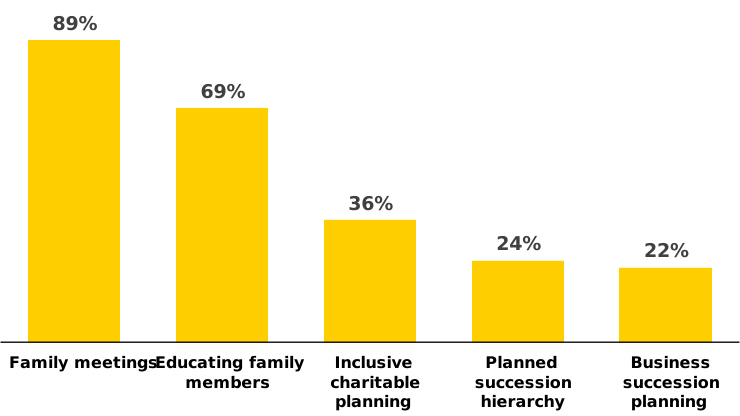
Ask your women clients if you may invite her adult children to join appropriate conversations. Explain that including her children in your meetings can help you better serve the future needs of her family. During family meetings, build trust with her adult children by demonstrating the care and stewardship you provide their mother. Advisors who focus on serving high-net-worth investors identify family meetings as the most effective strategy for intergenerational wealth transfer planning.
Additionally, offer financial education sessions and encourage your client’s children to attend in person. This creates opportunities for you to build rapport in a different setting.
Conducting family meetings is the #1 strategy for planning wealth transfers
% of high-net-worth practices identifying strategies as effective
Source: Cerulli, “The Cerulli Edge: The Americas Asset and Wealth Management Edition,” June 2025.
The relationships you forge with women investors today can be critical for the future of your business. BlackRock can help you attract and serve women investors. Learn more about the BlackRock Business Consulting team or use our online resources.