Key Takeaways
The aging of your wealthiest clients is a mounting risk for your business. An estimated $100 trillion of wealth will be passed to the next generation by 2048,1 and particularly concerning is that more than 70% of heirs are likely to leave their family’s advisor after receiving their inheritance.2 You can improve the chances of retaining assets when your clients pass away by proactively building relationships with your clients’ heirs today.
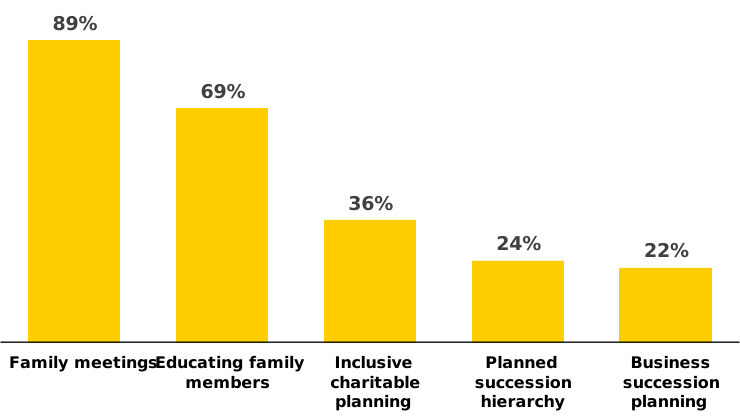
Advisors who focus on serving high-net-worth investors identify family meetings as the most effective strategy for intergenerational wealth transfer planning. Starting early is key: The more experiences a client’s spouse and adult children have with you over time, the better they can understand the importance of having an advisor and moreover, the value you uniquely provide as the advisor to their family.
Conducting family meetings is the #1 strategy for planning wealth transfers
% of high-net-worth practices identifying strategies as effective
Source: Cerulli, “The Cerulli Edge: The Americas Asset and Wealth Management Edition,” June 2025.
Helping clients communicate with their families about their estate plan, wealth and legacy is a deeply personal and valuable service you are uniquely positioned to provide. Preparing for future transitions is ideal for building rapport as it will likely require a series of meetings to ensure heirs understand the client’s wishes and the roles and responsibilities of family members. These discussions may reveal gaps in financial literacy, which opens the door for you to educate your client’s heirs and earn their trust. After the initial series of meetings, hold periodic check-ins (at least annually) to keep heirs informed of any developments and continue to build your relationships with them.
For a smaller investment of your time, you can connect with your clients’ heirs by involving them in conversations about topics that affect multiple generations of wealthy families, like education costs, charitable giving or succession planning for a family business. No matter the purpose, any conversation involving your clients’ heirs is a valuable opportunity for you to meet the inheritors of your client’s wealth and plant the seeds for future business relationships with them.
Some clients may initially decline your offer to facilitate a conversation with their family. One of the most common reasons cited by older high-net-worth clients is that they are not comfortable sharing financial information with their children.1 Preempt these concerns by explaining to clients that the discussion will focus on the family’s financial goals and values and it is not necessary to mention the amount of their wealth. Dollar signs can distract heirs from the purpose of the meeting, while framing discussions around the meaning of their inheritance can influence heirs to make better financial decisions in the future.
If a client believes a family conversation is unnecessary, help them understand why it is important by asking “What are your hopes, dreams and fears?” If you are interacting with a couple, encourage both spouses to share. Create space for clients to reflect and respond, and prompt them to elaborate. Once you believe your clients have said all they have to say, ask “Do your children know everything you just told me?” This could be an ‘ah-ha’ moment for your clients.
A family conversation is likely to be more productive when clients are involved in planning it. Ask your clients to join you for a prep session.
Once the meeting invitations have been sent, ask each of the client’s family members to meet with you individually to share their views on financial goals and values. Listen for similarities and differences in what you hear to help you anticipate where consensus may be easily reached and where tensions may arise. These one-on-ones also allow you to gauge the individual’s financial literacy and emotional readiness for the upcoming family discussion.
Be intentional about forging an authentic connection with each family member during your one-on-ones and the family meeting:
Get personal. Show family members that you are interested in getting to know them. Draw upon what you already know – where they go to college, the causes they support, a new baby – to inspire your conversation. Share something about yourself that helps them get to know you beyond being their parents’ advisor.
Keep it simple. Your client’s heirs may or may not know much about finances. Use plain language and educate as needed without patronizing. Asking “Are you familiar with…?” shows that you are not making assumptions about their level of knowledge and helps them feel comfortable asking you questions.
Be inclusive. While it’s natural to focus on your clients’ adult children, keep in mind that when a client passes away, control of the family’s assets often remains with a widowed spouse before it passes to the children. Given differences in life expectancy and other factors, there is a 95% chance3 you will need to earn the loyalty of a widowed woman who will likely control the money and also hold the key to the next generation.
Tailor your narrative. Your message will resonate more effectively when you align with the preferences and communication styles of your audience. Women investors prefer a collaborative communication style. Asking for her ideas and opinions helps her view you as a partner. Younger generations take a more active role in directing their investments. They want financial education and transparent, consultative communication.
Ask open-ended questions. You can gain more insight about your clients’ heirs by asking questions that prompt more than a “yes” or “no” answer.
Listen actively. After a family member speaks, paraphrase what you heard to confirm your understanding. This shows that you value what they have to say.
Engage every person. Create space for each person to contribute to the conversation. Before moving on to the next agenda item, invite individuals who have not spoken to share their thoughts.
While you have a captive audience of potential future clients, help them understand the value of having you as an advisor.
After the meeting, follow up with your clients. Ask for their feedback on the meeting and address any questions or concerns they may have about the outcomes. Ask what else they would like to discuss with their family and propose a cadence for future meetings.
Separately, reach out to each family member. Thank them for attending the meeting, share your contact information and invite follow-up questions. Take this opportunity to remind them how you can help with their own financial matters. Ask if they would like to receive your newsletter or invitations to events and informational sessions. Invite younger family members to connect with you on social media.
The BlackRock Business Consulting team can help you engage high-net-worth families and improve asset retention as your clients’ wealth passes to the next generation. Contact your BlackRock representative for more information or explore our online resources.