Key takeaways
High-net-worth (HNW) households ($5 million+) will be transferring $62 trillion of generational wealth by 2048. Their assets are already moving to heirs at a rate of $1 trillion annually, and the pace will accelerate with the aging of Baby Boomers.1
Clients over the age of 60 hold 75% of HNW assets today,2 and the risk to advisors is significant as 70% of clients’ adult children are likely to take their inheritance elsewhere or choose to manage the assets themselves.3 Advisors can reduce asset attrition by engaging their clients’ heirs long before the wealth transfers. While 91% of HNW advisors involve their clients’ spouses in financial conversations, only 43% involve their clients’ children.4
Asset retention during the time wealth is inherited is a critical objective for advisors, but the next generation on its own presents new growth opportunities as they create their own wealth. Self-made Gen Z and Millennial business owners and high earners are likely to reach HNW status earlier in their lives than in prior generations.
Winning the next generation of HNW clients requires advisors to rethink how they position their value, deliver advice and cultivate relationships. That starts with understanding how young investors are different and deliberately adapting your approach across three key areas: portfolio strategy, wealth planning and trust-building.
Next-generation HNW clients approach investing with a different lens. While your current clients are likely comfortable with conventional allocations, younger clients prefer innovation and customization. They expect real-time transparency and digital access to their investments, and many want to be involved in portfolio decisions and learn from you. Adapt your portfolio strategy to resonate with this informed and inquisitive client base by delivering on their preferences:
Given the availability of advanced investing tools and digital platforms today, younger clients could invest on their own if they want to. If your value proposition focuses on investment performance alone, you will be competing against AI bots for their business.
Instead, focus on what you do that makes you valuable to them. They want you to discuss investing and goal-based planning ideas with them, answer their questions and help them make sense of financial information and market volatility. Position yourself as a trusted guide who helps them navigate important decisions.
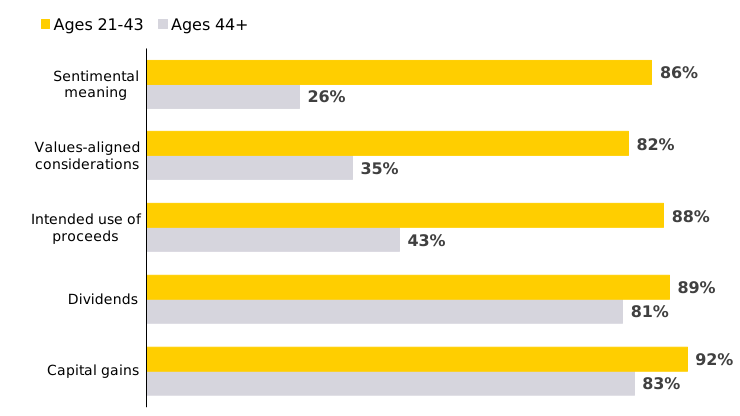
Personal considerations are important drivers of investment decisions for the next generation
Investment decision considerations by age
Source: Bank of America, “2024 Study of Wealthy Americans.”
Younger HNW clients are navigating non-linear careers, entrepreneurship and multiple side hustles. Their income can be volatile due to equity compensation, start-up exposure, bonus-heavy pay structures or income streams across geographies and digital currency platforms.
Reframe wealth planning conversations with younger HNW clients to expand from the traditional preservation and legacy to include flexibility, growth and optionality. Integrate their financial plans with their evolving real-life priorities. This might include liquidity needs tied to business ownership, planning for milestones such as home purchases, education funding, philanthropy and traveling, or complex tax and international considerations.
Take a practical approach to the HNW services you provide. While wealth transfer planning may not be top of mind for them, younger clients often need estate documents earlier than previous generations due to a faster creation of wealth. On the other hand, there may be services you provided to their parents that they don’t need yet given their level of wealth or life stage.
Don’t assume younger clients understand why you serve them the way you do. Clarify how their needs differ from their parents and how the services they receive will evolve with the stages of their financial lives. Communicating what they can expect now and in the future positions you as an essential partner rather than a periodic service provider.

Forming durable relationships with younger clients begins with understanding their mindset. Having grown up during periods of market disruption, rapid technological change and a proliferation of financial content across digital platforms, next-generation clients tend to be informed but skeptical and often have strong opinions. Earn their trust by responding to their psychological needs:
The Great Wealth Transfer can be a looming risk or a significant growth opportunity for your business. Adapting your approach to delivering portfolios, providing planning services and building trust can help you retain assets through multiple generations of HNW families and capture new flows as wealth continues to shift.
The BlackRock Business Consulting team can help you strengthen your strategy for attracting and serving the next generation of HNW clients. Contact your BlackRock representative and explore our free online HNW practice management resources.