


Aperio Tax-Managed

We have 25+ years of experience in the direct indexing space, specializing in personalized, tax-managed separately managed accounts (SMAs).

Explore our full spectrum of strategies

Yellow tile of long/short tax managed strategies

Long/Short strategies

A tax-managed long/short approach seeking enhanced tax-loss harvesting with differentiated return potential.
Yellow tile of direct indexing tax managed strategies

Direct Indexing strategies

Tax-managed, direct indexing portfolios designed to provide loss harvesting opportunities and customized exposure.
Yellow tile of values aligned tax managed strategies

Values Aligned strategies

Customized portfolios aligned to client goals with disciplined tax management.

Built to support after-tax outcomes

Institutional scale meets tax expertise. BlackRock integrates research, technology, and portfolio management to deliver tax-managed equity solutions for complex client needs.

Increase25
Years of industry experience
$149
Billion In assets under management
Increase33,000
Accounts managed

BlackRock as of 12/31/2025

The Aperio Tax-Managed difference

Tax-managed SMAs provide ownership of individual securities, enabling greater personalization and tax management than traditional index strategies. BlackRock continues to innovate on a spectrum of tax-managed equity solutions — from direct indexing to long/short, customized to serve the complex needs of high-net-worth clients.

Number 1 in black circle

Tax management

We use tax-loss harvesting1 to seek higher after-tax returns, while thoughtfully transitioning portfolios tax efficiently.
Number 2 in black circle

Thoughtful personalization

Our after-tax wealth, investment and values-aligned strategists work alongside advisors, guiding clients along their investing journey.
Number 3 in black circle

White glove service

Dedicated teams partner with advisors to deliver personalized solutions and support throughout the client journey from portfolio reviews.

Enhance the power of loss harvesting with long/short

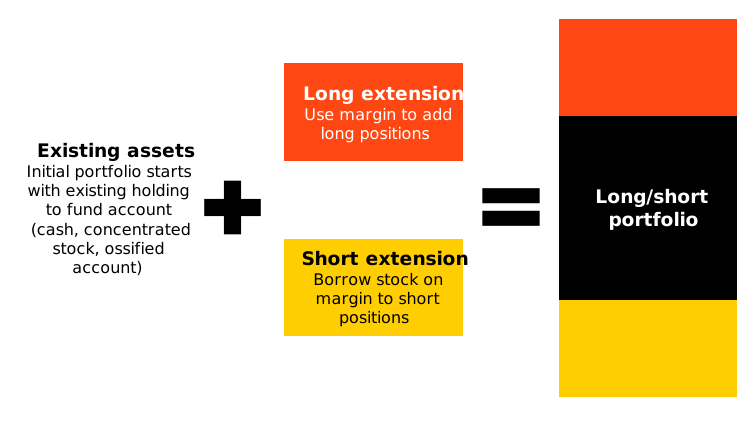
A tax-managed long/short strategy builds on traditional direct indexing by creating additional opportunities to generate capital losses, seeking to improve after-tax outcomes.

Turn complexity into opportunity

For investors with upcoming liquidity events, appreciated portfolios, or concentrated positions, long/short strategies offer differentiated return potential while amplifying tax‑loss harvesting, extending tax awareness, and/or accelerating diversification.
image showing existing assets, long extensions and short extensions separately and then all three together

My Managed Accounts

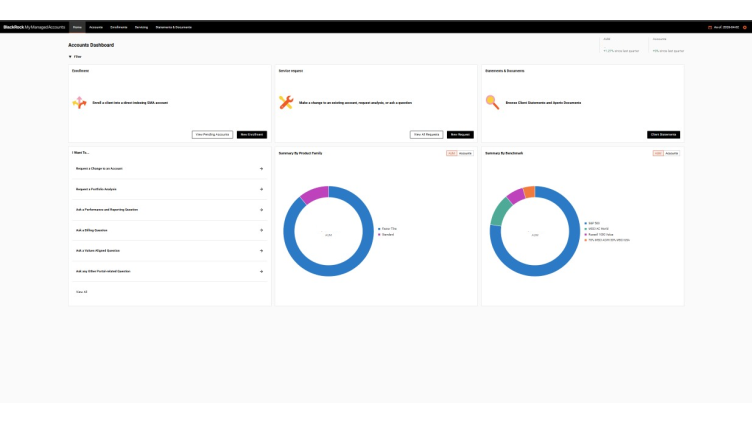
My Managed Accounts brings together portfolio analytics, account enrollment, servicing, and reporting into a single experience, making it easier to manage personalized portfolios at scale.
image showing a preview of BlackRock's My Managed Accounts

Connect with an SMA specialist

If you are a financial advisor, you can sign in to schedule a meeting with one of our SMA specialists. They can review available SMA strategies, portfolio customization capabilities, and generate client-friendly sample portfolios.
BLK person icon

FAQs

  • Direct indexing is an investment approach that provides direct ownership of individual securities rather than pooled vehicles. This structure enables greater personalization, tax management, and transparency while seeking to track the returns of a benchmark index.

  • Our approach was built for direct indexing, combining decades of experience with research, technology, and scale to deliver personalized portfolios aligned to client goals, tax considerations, and preferences.

  • Because direct indexing uses individual securities, portfolios can be actively managed to identify tax-loss harvesting opportunities and manage capital gains over time. This tax-aware approach is not typically available in pooled investment vehicles.

  • Yes. Aperio portfolios can incorporate values-aligned screens, exclusions, and tilts based on client preferences. Advisors can work with Aperio to translate values into portfolio guidelines while considering risk, tax, and tracking implications.