

Market Insights

If the last few years felt a bit like walking through a casino where almost every table was paying out, 2025 has been the point in the night when the lights come up a bit and you notice the house edge again.
From 2020 through 2024, the equity market rewarded almost any risk you took. In that period, more than half of S&P 500 companies delivered annualized returns above 15%, and about 90% had positive annualized returns. In other words, simply “putting chips on the table” worked unusually well.
This year has been different. As 2025 winds down, around 40% of the S&P is heading for a negative year.
That shift in the odds is the core of how we’re thinking about 2026. The coming year looks less like a casino and more like an investor’s market. You win not by chasing every hot trade, but by sizing positions thoughtfully and focusing on high-probability outcomes.
Inflation’s Storm Has Passed; Labor Is the New Pothole
The good news first: the inflation storm that dominated the last few years looks largely behind us.
Shelter inflation, which had been a source of stickiness, has moderated back toward pre-COVID trends when you look at six and three-month measures. Underlying price volatility tells a similar story: the standard deviation of month-over-month core inflation is back in line with the remarkably stable 1990–2020 period.
Tariffs added noise, but even there the data suggests a one-time level shock. The data shows roughly 0.5 percentage points of tariff pass-through already behind us in core PCE inflation, and perhaps another 0.4 points to come—important, but not grounds for a new inflation spiral. Markets seem to agree, five-year inflation break evens are hovering around 2.3%, a level that would have looked almost ideal to policymakers in many prior cycles.
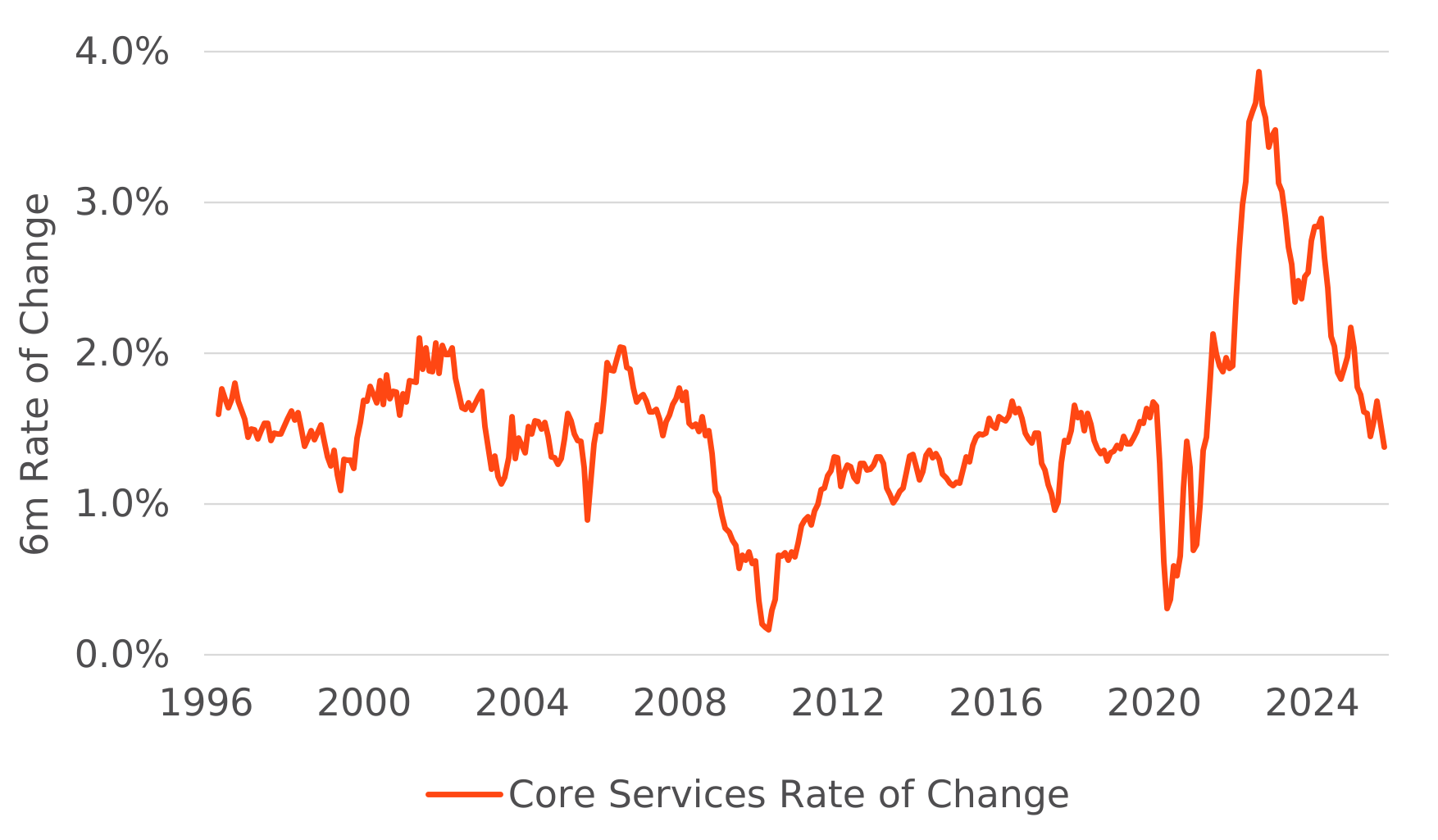
Bureau of Labor Statistics (BLS), as of 09/30/2025
If inflation is no longer the central problem, what is? Labor.
Behind the headline numbers, virtually every measure of underlying slack is moving the wrong way. The share of workers who are “marginally attached” to the labor force or not in the labor force but wanting a job, has been drifting higher. Layoff announcements show that roughly 70% of October’s job cuts were framed as efficiency initiatives—cost-cutting, automation, restructuring—rather than classic cyclical weakness.
At the same time, healthcare has done almost all of the heavy lifting for job creation. The three-month moving average of total job growth excluding healthcare is now negative for the first time outside of recession in more than 25 years. Put differently, the rest of the economy is no longer creating net new jobs, even as the headline payroll numbers still look respectable. That support is also beginning to fade, as hiring in healthcare slows toward more normal run-rates.
The October and November jobs reports reinforce this picture. Hiring has clearly downshifted, and the underemployment rate has risen to 8.7%, the steepest increase since the pandemic. Wage growth is also rolling over toward the mid-3% range year-on-year. This combination of slower hiring, a clear increase in slack, and moderating wages is not the backdrop for keeping policy restrictive.
An equally important part of the story is affordability. Even with inflation cooling, many key prices (housing, transport, insurance, basic services) have reset higher and stayed there. Higher rates have also made homeownership less accessible. The result is a more uneven distribution of wealth and consumption. Higher-income households can mostly absorb the shock, while lower and middle-income households are feeling a much tighter squeeze.
It’s no surprise, then, that household surveys show expectations for the job market over the next year at some of the worst levels on record.
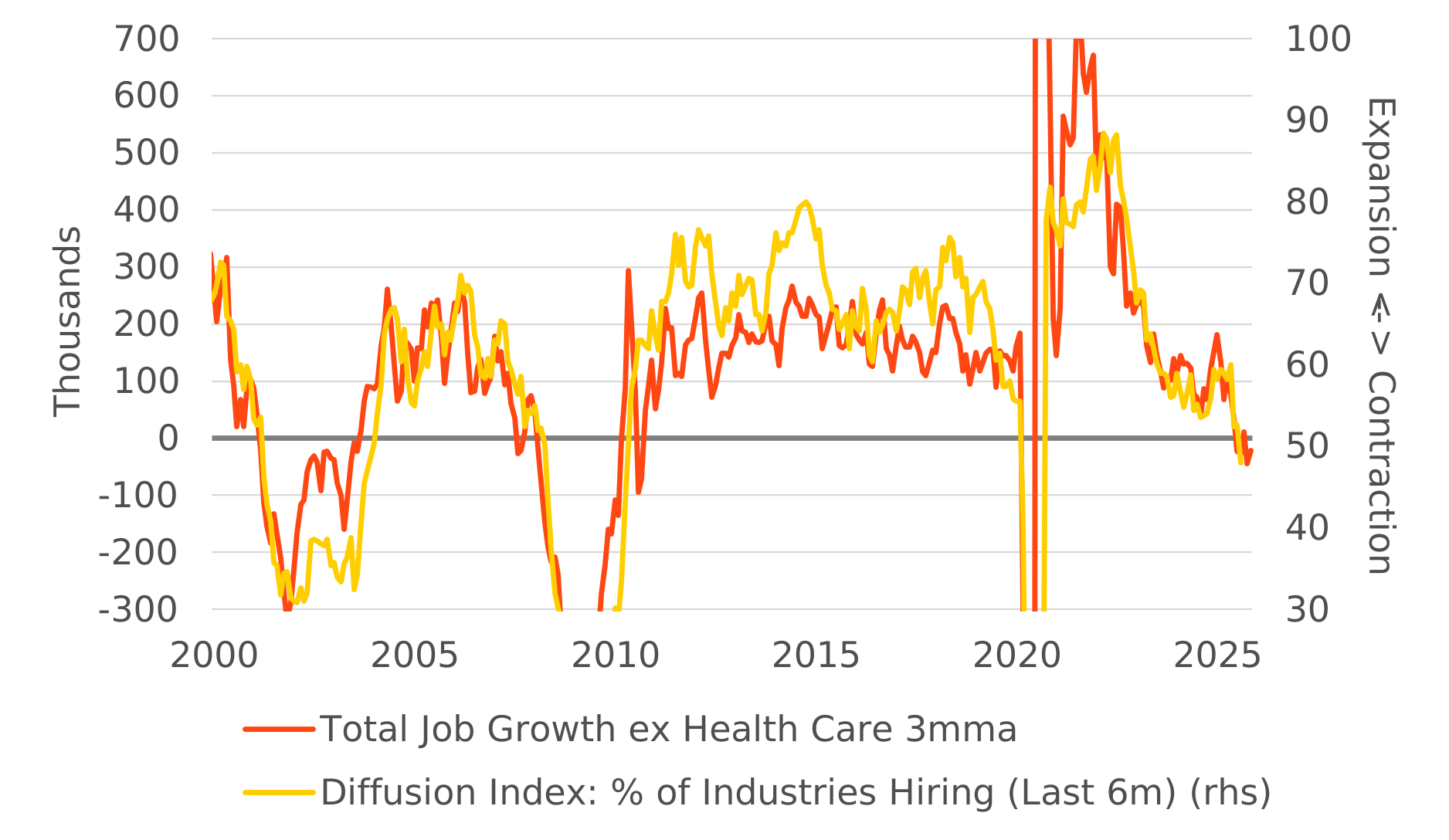
BLS, as of 11/30/2025
Taken together, this is why we’ve been arguing that the Fed’s challenge in 2026 is no longer about taming inflation - it’s about avoiding unnecessary damage to the parts of the economy that are already under pressure. With the inflation storm largely behind us and labor potholes ahead, we reiterate the need to move away from restrictive policy toward a more balanced stance.
AI: A Cost Revolution More Than a Revenue Story
One of the reasons the labor backdrop feels so different is that technology is increasingly being deployed to reduce headcount and raise productivity, not just to build new products.
Corporate commentary this year has been remarkably consistent. Across industries, management teams are talking about “being more efficient,” “reducing bureaucracy,” “removing layers,” and “shifting resources” toward their “biggest bets.” The language varies by company, but the theme is the same. Automation and AI are central levers in cost management and earnings growth.
The long-term implications of this are profound. Today, labor accounts for roughly 55% of total business-sector costs. If AI and related technologies can reduce labor’s share of corporate costs by even 5%— from 55% to 50%—and if 75% of those savings accrue to corporates and 25% to AI service providers, the present value of those cash flows is enormous. On aggregate, that would generate roughly $1.2 trillion in annual labor cost savings, translating into about $878 billion in incremental after-tax corporate profits each year. The present value of the corporate piece alone is on the order of $82 trillion, with another $27 trillion accruing to AI providers.
For perspective, that $110 trillion combined present value doesn’t come from new revenue lines. It comes from shifting cost structures, with labor as the obvious loser. Mechanically, a 9% reduction in labor costs translates into roughly 31% higher earnings for corporates. The market doesn’t need every sector to experience that magnitude of change for the equity and credit implications to be significant.
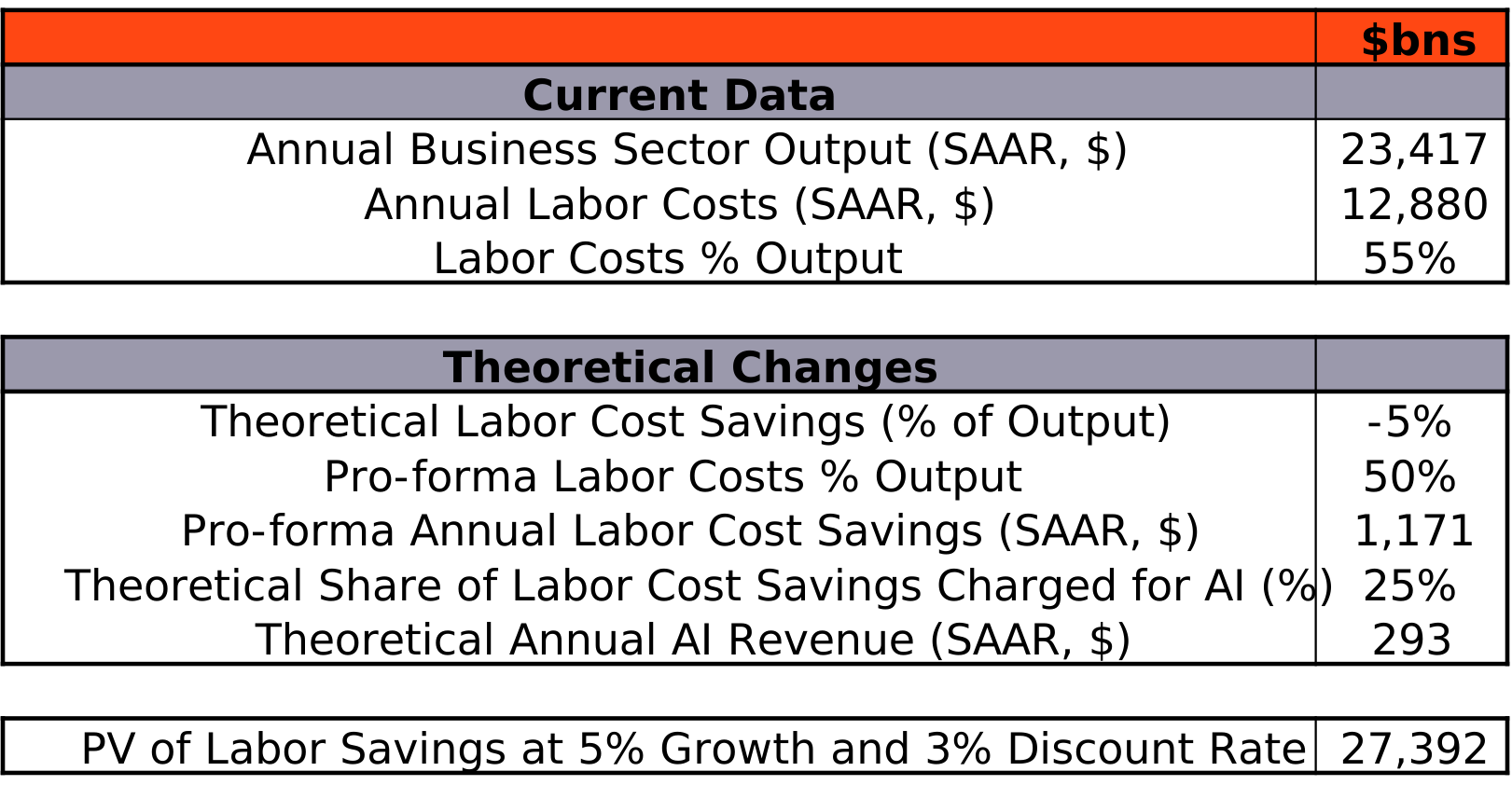
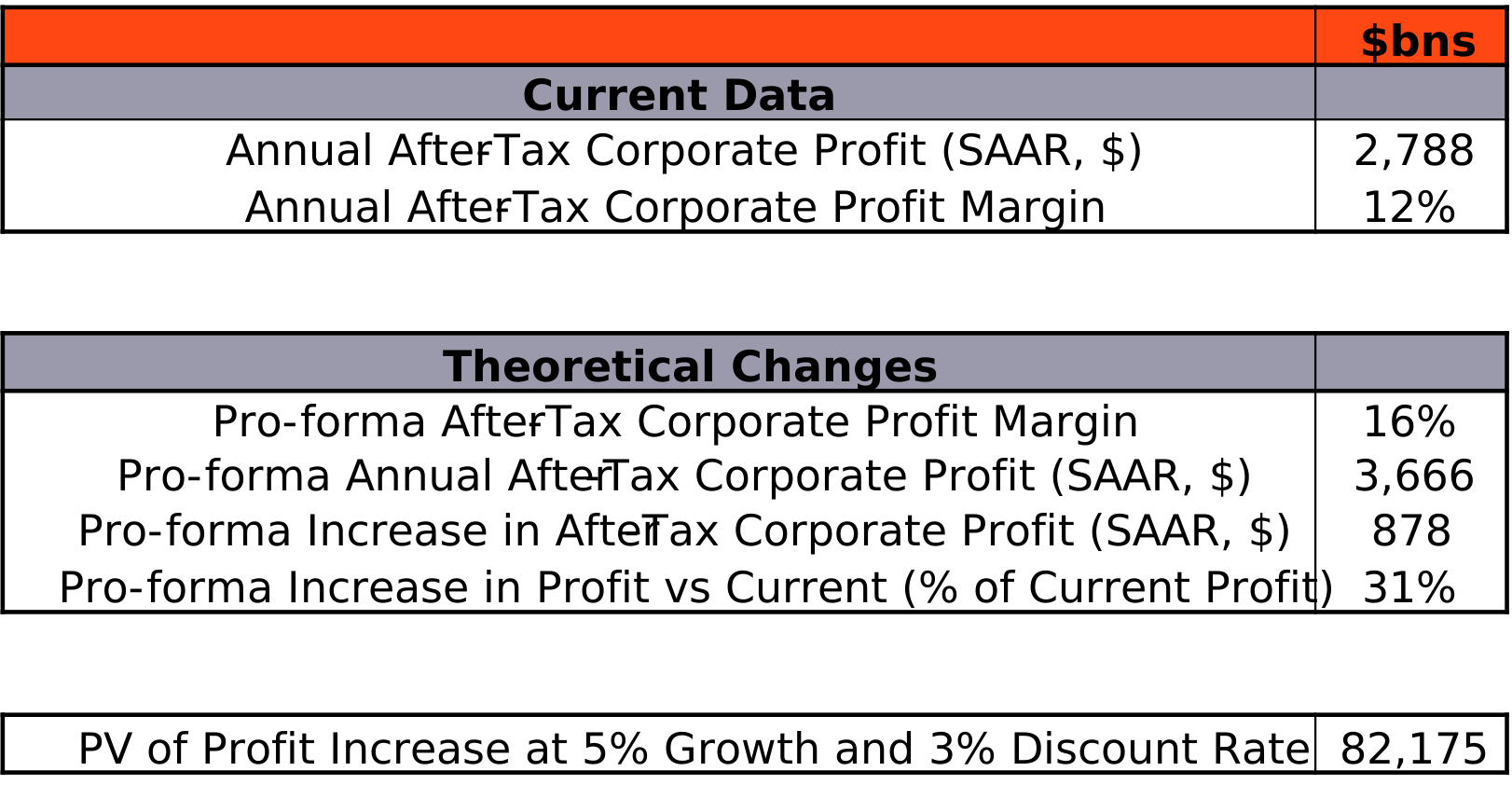
Bureau of Economic Analysis, as of 6/30/2025 and BlackRock Analysis, as of 12/15/2025. This is an illustrative example not intended to represent actual or future performance of any product, market or strategy. Hypothetical results have inherent limitations and do not reflect real-world conditions, trading, or market behavior.
This is why we continue to see AI as, first and foremost, a cost and margin story. Over time, it should support higher returns on equity for the companies that deploy it well.
For investors, the key is to own the beneficiaries of that transition on both the equity and credit side - businesses with scalable models, durable cash flows, and clear plans for harnessing AI to lift productivity over time.
2026: Strong Growth, Weaker Labor, More Dispersion
So where does that leave the macro regime as we look into 2026?
A few points stand out:
- Growth can remain resilient even as labor softens. Real private domestic final purchases continue to point to an economy growing in the neighborhood of 2% in real terms, boosted by robust investment in intellectual property, software, and the AI-related build-out of data centers and power infrastructure.
- Policy is still broadly supportive. Fiscal deficits remain large, liquidity is not scarce, and the Fed should continue moving the rate to neutral, all of which provide a meaningful cushion against a classic demand-side recession.
- Yet the distribution of outcomes is widening. After a decade-plus of financial repression, with rates anchored at the floor, the return to a higher cost of capital is re-introducing dispersion—across sectors, across balance sheets, and across countries. We expect more frequent idiosyncratic defaults and downgrades, even if the aggregate macro data remains respectable.
In that world, 2026 looks like a year in which both upside surprises and downside accidents become more common. It is, in many ways, the best opportunity we’ve seen since the Global Financial Crisis to play both sides of the distribution: to own high-quality income and durable growth where you’re being paid for the risk, and to be selective (and sometimes short) where valuations ignore fragility.
That’s fundamentally an investor’s market, not a gambler’s.
Letting Income and Time Do the Heavy Lifting
Even a healthy market doesn’t move in a straight line. We’ve already lived through several clear “air pockets” since 2023—periods where markets stepped down meaningfully before recovering—and there will almost certainly be more as the regime shifts from easy money and broad speculative upside toward something more normal and dispersed.
For us, those episodes are a reminder of what investing actually is. In a gambling framework, everything depends on the next spin of the wheel. You either win quickly or you walk away. In an investing framework, what matters is whether you own assets that can keep generating cash flow through those air pockets, and whether your time horizon is long enough to let that income and compounding work for you.
That’s why we put so much emphasis on durable yield. When markets wobble, income keeps showing up. Over time, that reinvested income does a lot of the work in pulling a portfolio back toward its longer-term path, even in stormy weather.
The key, in our view, is to go into this next phase of the cycle owning cash-flow-generative assets, accepting that there will be air pockets, and relying on income and time—rather than short-term luck—to drive outcomes.
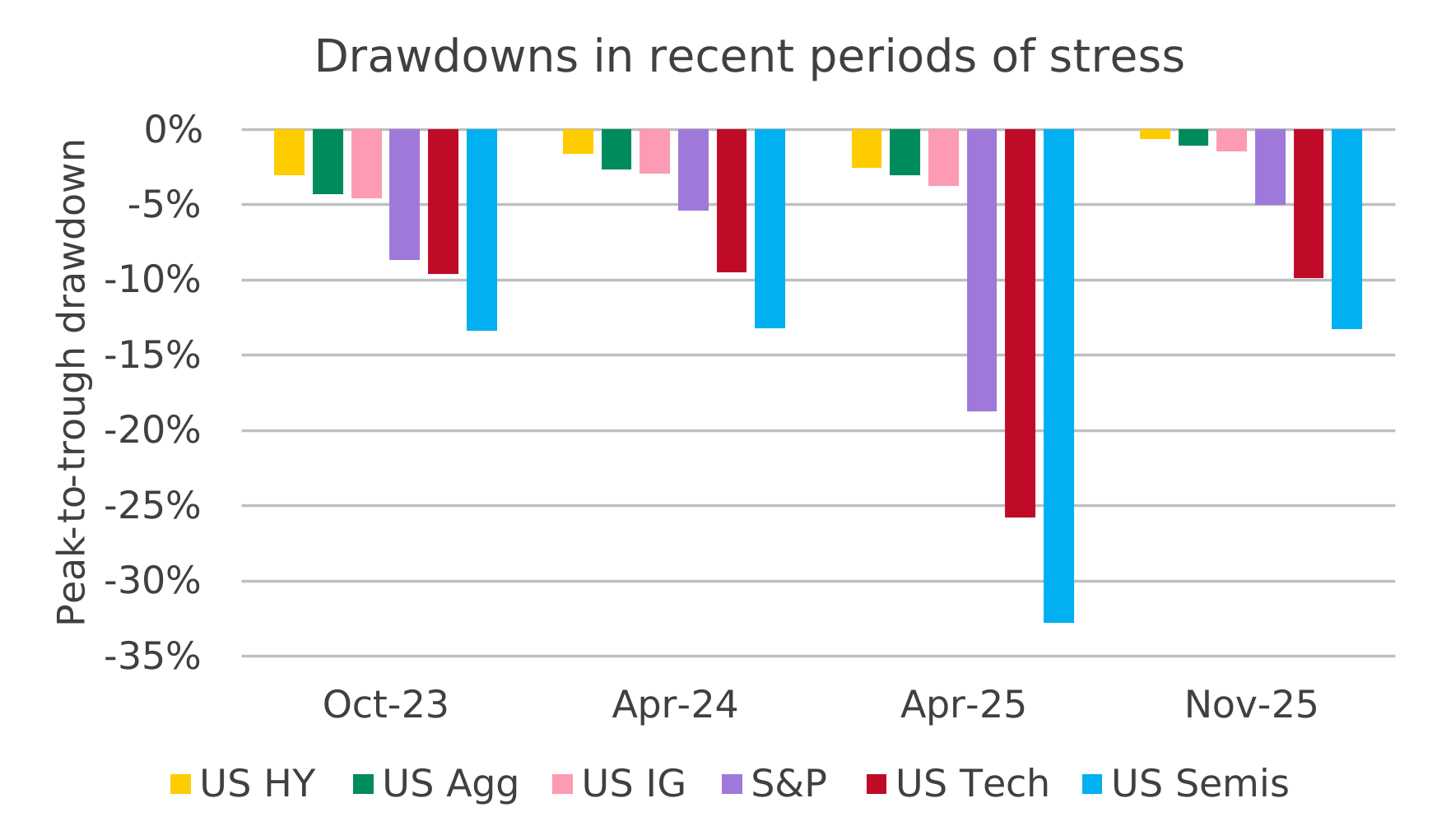
Bloomberg, as of 12/15/2025. US HY = Bloomberg US Corporate High Yield Index, US Agg = Bloomberg US Aggregate Index, US IG = Bloomberg US Corporate Bond Index, S&P = S&P 500 Index, US Tech = S&P 500 Information Technology Index, US Semis = Philadelphia Semiconductor Index.
Where We’re Putting Chips to Work
With that backdrop, how are we allocating capital as we head into 2026?
- Quality Fixed Income
Investment grade credit does not look especially cheap today, so broad beta exposure is unlikely to be a major source of excess return from here. Where this part of the market remains interesting, in our view, is when you can lock in historically high yields lending to solid balance sheets, and in the opportunity to be tactical. That includes leaning into periods of heavy supply, particularly from large hyperscaler and infrastructure related issuers, when new deals offer concessions that are not consistently available in the secondary market.
Within that high-quality core, we also see a role for mortgages and securitized assets as part of the income sleeve. These markets can provide a meaningful yield pickup over government bonds with strong structural protections and diversification benefits, particularly when investors can be selective about structure and collateral quality.
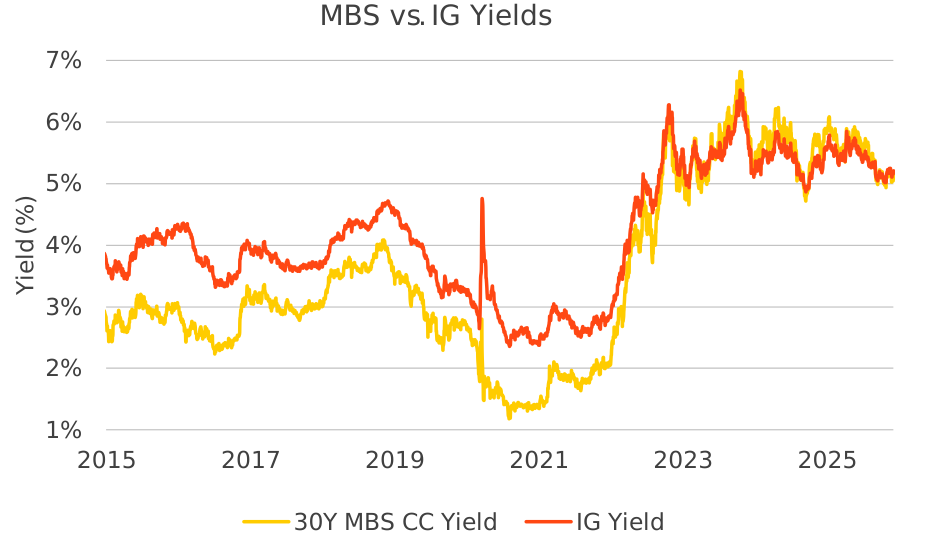
Bloomberg, as of 12/05/2025. 30Y MBS CC Yield = 30 year mortgage backed security current coupon.
- Select High Yield and Private Opportunities
Below investment grade, we are more selective. A higher cost of capital and a more discriminating market should translate into more defaults and downgrades among weaker issuers.
Against that backdrop, we prefer idiosyncratic opportunities—stronger balance sheets, customized protections, and efficient parts of the capital structure tied to cash-generative businesses—over broad exposure to the lowest-quality segments of the market.
Within that high-quality core, we also see a role for mortgages and securitized assets as part of the income sleeve. These markets can provide a meaningful yield pickup over government bonds with strong structural protections and diversification benefits, particularly when investors can be selective about structure and collateral quality.
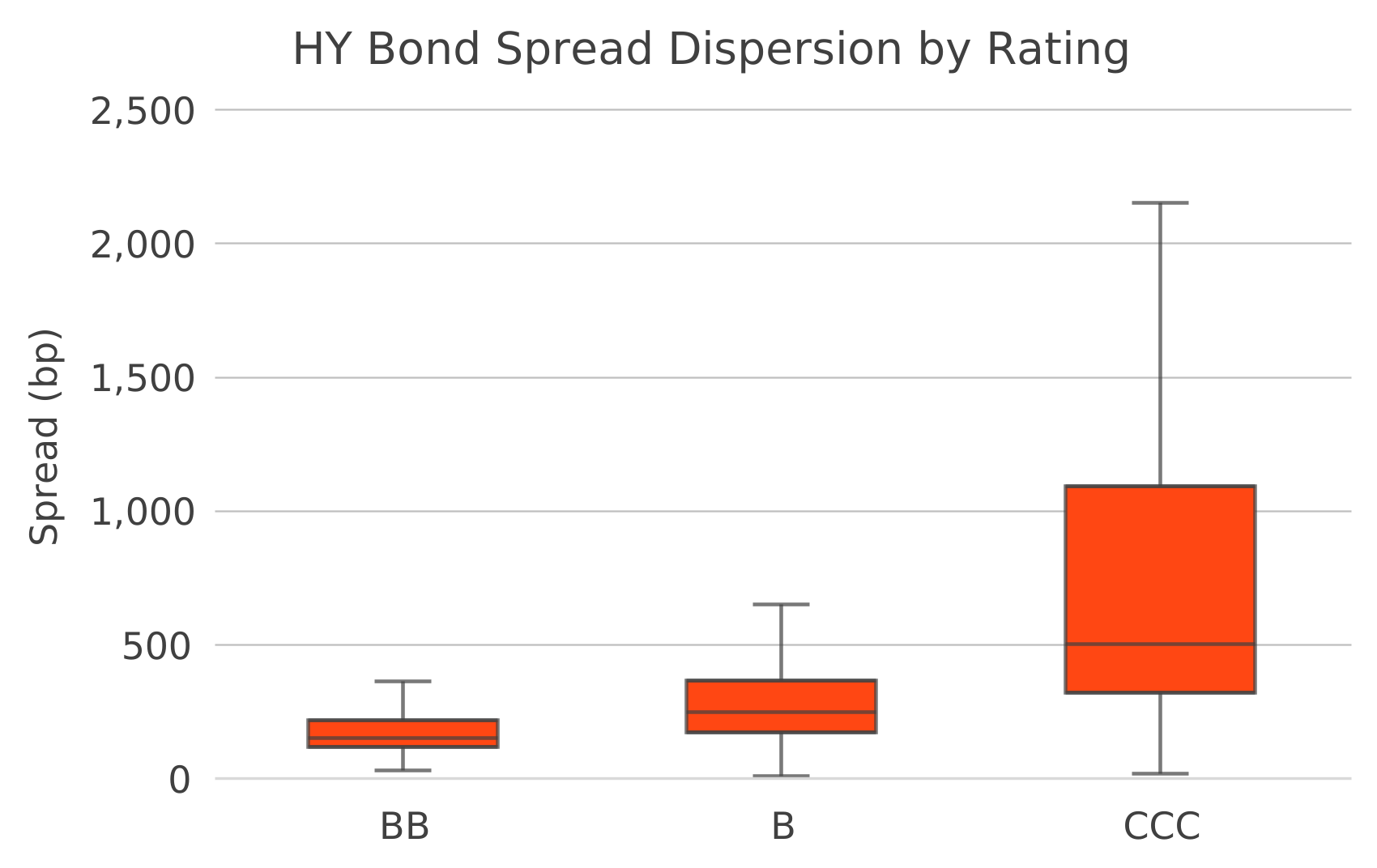
Bloomberg, as of 12/05/2025. bp = basis point.
- Emerging-Market Debt as a Diversifier
We also see a role for emerging-market debt as an effective diversifier. Many emerging economies are on different fiscal and demographic paths than the U.S., and in some cases have been ahead of developed markets in lowering rates and fiscal deficits.
Select local-currency and hard-currency positions can help diversify the fiscal and rate risk embedded in a purely U.S.-centric bond portfolio, particularly when starting yields are attractive.
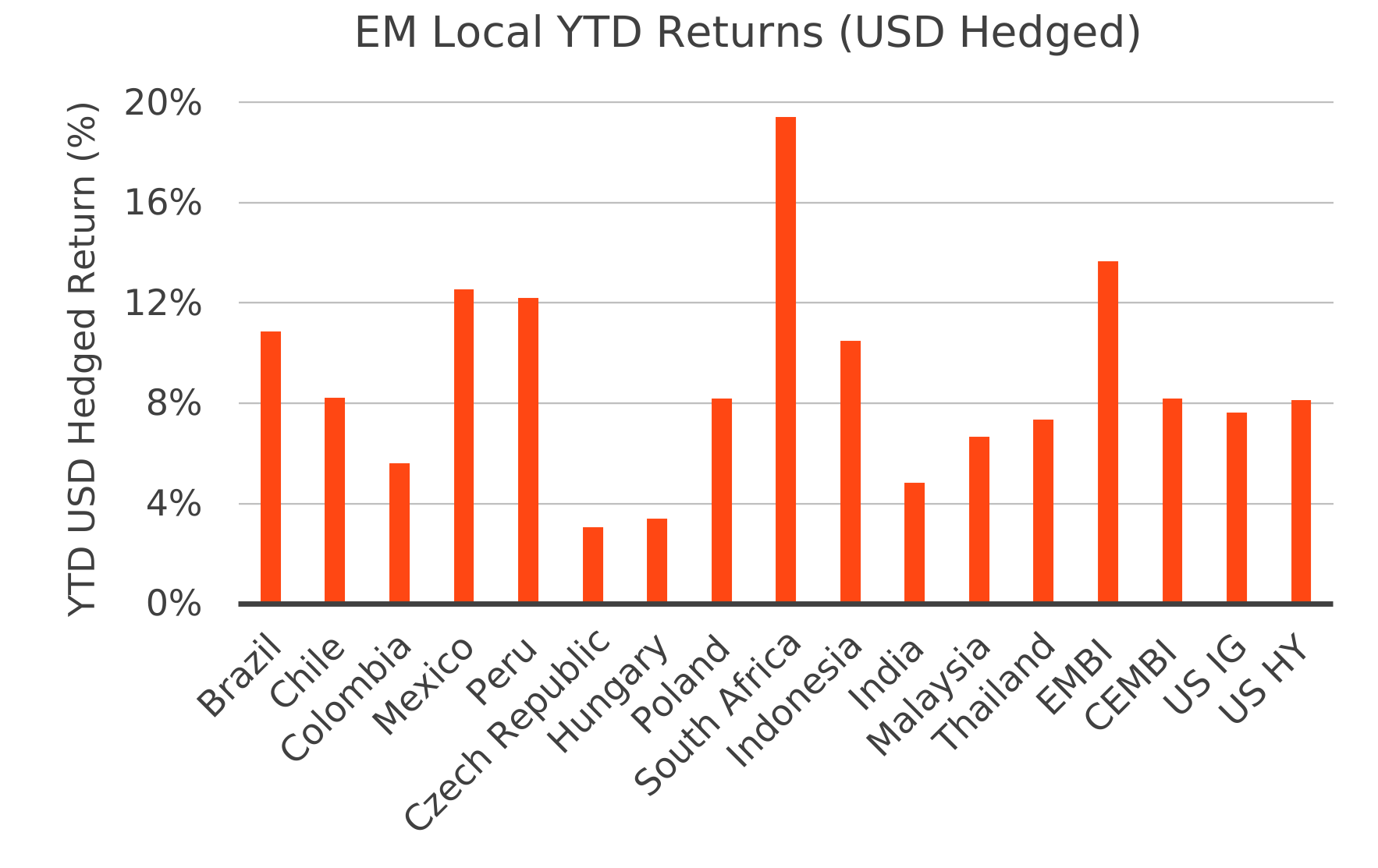
JP Morgan and Bloomberg, as of 12/05/2025. EMBI = JP Morgan Emerging Markets Bond Index, CEMBI = JP Morgan Corporate Emerging Markets Bond Index.
- Equities on the Right Side of AI
On the equity side, the key question for us is who is on the right side of the AI cost revolution. A narrow group of large, AI-exposed companies has led markets for good reason, but dispersion is widening.
We focus on businesses with durable profitability, strong balance sheets, and credible paths to using AI to improve margins or deepen competitive moats—not companies that are adding buzzwords to their earnings calls. In a world where the rising tide will lift fewer boats, that quality and proof of concept filter matters far more than it did a few years ago.
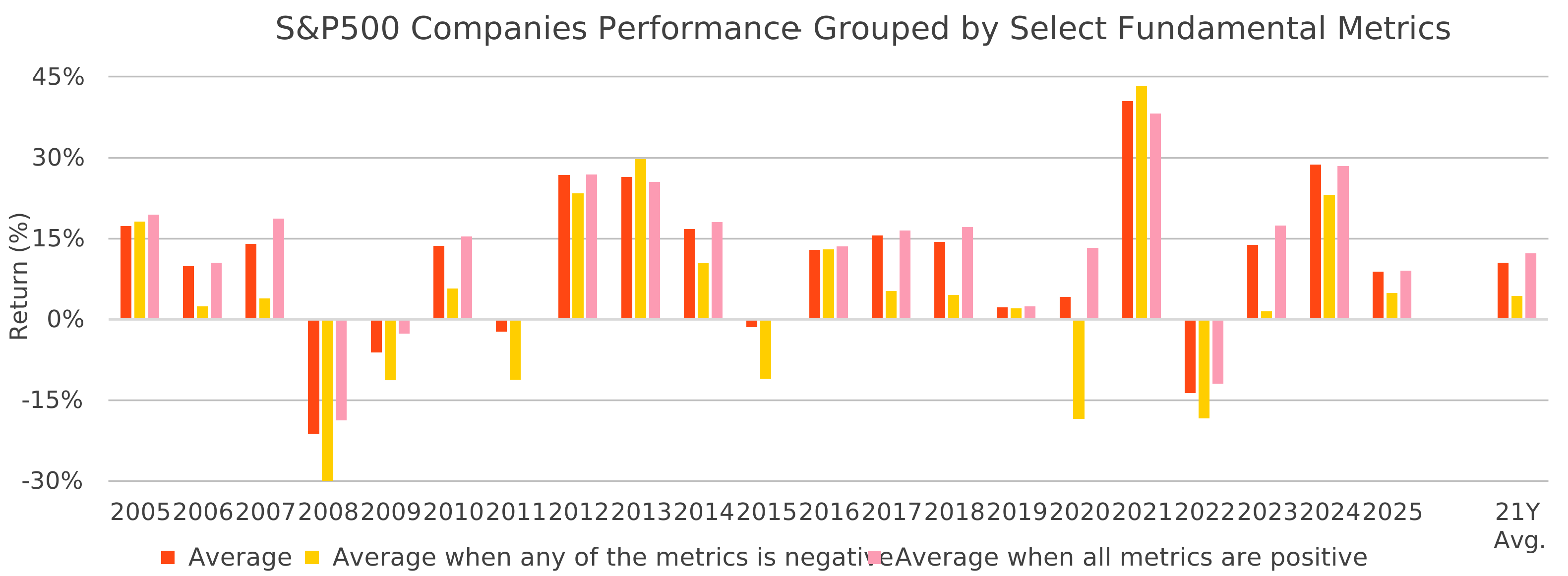
Bloomberg, as of 12/03/2025
From Gambling to Investing
If there’s a single message we’d leave you with as we head toward 2026, it’s this: the game has changed.
The period when nearly every chip you placed in the market seemed to pay off is behind us. Inflation is no longer the central issue. Labor dynamics and the distributional effects of AI now matter more, and policy is likely to move from overtly restrictive toward something closer to neutral. Growth can remain resilient, but dispersion and default risk are rising.
That’s an environment where gambling in markets offers much worse odds than it did a few years ago. Investing, by contrast, still offers very good odds: owning durable income, strong balance sheets, and businesses on the right side of the productivity revolution, and then giving those positions time to compound. In our view, the opportunity now belongs to those willing to act like investors, not gamblers — leaning into selectivity, patience, and discipline in a market that is once again distinguishing between quality and everything else.
Performance data quoted represents past performance and is no guarantee of future results.
To obtain more information on the fund(s) including the Morningstar time period ratings and standardized average annual total returns as of the most recent calendar quarter and current month end, please click on the fund tile.
The Morningstar Rating for funds, or "star rating", is calculated for managed products (including mutual funds, variable annuity and variable life subaccounts, exchange-traded funds, closed-end funds, and separate accounts) with at least a three-year history. Exchange-traded funds and open-ended mutual funds are considered a single population for comparative purposes. It is calculated based on a Morningstar Risk-Adjusted Return measure (excluding any applicable sales charges) that accounts for variation in a managed product's monthly excess performance, placing more emphasis on downward variations and rewarding consistent performance. The top 10% of products in each product category receive 5 stars, the next 22.5% receive 4 stars, the next 35% receive 3 stars, the next 22.5% receive 2 stars, and the bottom 10% receive 1 star. The Overall Morningstar Rating for a managed product is derived from a weighted average of the performance figures associated with its three-, five-, and 10-year 60-119 months of total returns, and 50% 10-year rating/30% five-year rating/20% three-year rating for 120 or more months of total returns. While the 10-year overall star rating formula seems to give the most weight to the 10-year period, the most recent three-year period actually has the greatest impact because it is included in all three rating periods.

Rick Rieder
Chief Investment Officer of Global Fixed Income and Head of the Global Allocation Investment Team

Russell Brownback
Head of Global Macro Positioning Team within Global Fixed Income

Navin Saigal
Head of Fundamental Fixed Income, Asia Pacific

Dylan Price
Director, Global Fixed Income

Charlotte Widjaja
Director, Global Fixed Income
Read our latest articles
Investments
Insights
Retirement
Tools
Resources
About Us


Investing involves risks, including possible loss of principal. Past performance is no guarantee of future results. Index performance is shown for illustrative purposes only. It is not possible to invest directly in an index.
Performance data quoted represents past performance and is no guarantee of future results. Investment returns and principal values may fluctuate so that an investor’s shares, when redeemed, may be worth more or less than their original cost. All returns assume reinvestment of dividends and capital gains. Current performance may be lower or higher than that shown. Refer to blackrock.com for most recent month-end performance.
Carefully consider the Funds' investment objectives, risk factors, and charges and expenses before investing. This and other information can be found in the Funds' prospectuses or, if available, the summary prospectuses which may be obtained by visiting www.iShares.com or www.blackrock.com. Read the prospectus carefully before investing.
Fixed income risks include interest-rate and credit risk. Typically, when interest rates rise, there is a corresponding decline in bond values. Credit risk refers to the possibility that the bond issuer will not be able to make principal and interest payments. International investing involves risks, including risks related to foreign currency, limited liquidity, less government regulation, and the possibility of substantial volatility due to adverse political, economic, or other developments. These risks may be heightened for investments in emerging markets. International investing involves risks, including risks related to foreign currency, limited liquidity, less government regulation and the possibility of substantial volatility due to adverse political, economic or other developments. These risks may be heightened for investments in emerging markets.
Stock and bond values fluctuate in price so the value of your investment can go down depending on market conditions. Non-investment-grade debt securities (high-yield/junk bonds) may be subject to greater market fluctuations, risk of default or loss of income and principal than higher rated securities. Asset allocation strategies do not assure profit and do not protect against loss.
Actively managed funds do not seek to replicate the performance of a specified index, may have higher portfolio turnover, and may charge higher fees than index funds due to increased trading and research expenses. There is no guarantee that an active fund will meet its investment objective.
Past performance is no guarantee of future results. Index performance is shown for illustrative purposes only. You cannot invest directly in an index.
This material is not intended to be relied upon as a forecast, research, or investment advice, and is not a recommendation, offer or solicitation to buy or sell any securities or to adopt any investment strategy. The opinions expressed are as of December 31st, 2025, and may change as subsequent conditions vary.
The information and opinions contained in this commentary are derived from proprietary and non-proprietary sources deemed by BlackRock to be reliable, are not necessarily all-inclusive and are not guaranteed as to accuracy. As such, no warranty of accuracy or reliability is given and no responsibility arising in any other way for errors and omissions (including responsibility to any person by reason of negligence) is accepted by BlackRock, its officers, employees, or agents.
This commentary may contain “forward-looking” information that is not purely historical in nature. Such information may include, among other things, projections, and forecasts. There is no guarantee that any forecasts made will come to pass. Reliance upon information in this post is at the sole discretion of the reader.
Prepared by BlackRock Investments, LLC, member FINRA.
©2026 BlackRock, Inc. or its affiliates. All rights reserved. BLACKROCK is a trademark of BlackRock, Inc. or its affiliates. All other marks are the property of their respective owners.
FFI0126-5085240-EXP0127