Skip to content
Switch your user type.
You're on the BlackRock site for advisors. Do you want to change your user type to advisor?

Fixed Income

The electric screwdriver was invented in 1889 to make the job faster and easier, but only when it's calibrated correctly. Set the torque too high and you strip the screw. Apply too much force and the damage is harder to undo than the problem you started with. This is an apt description of the monetary policy tool today: a blunt instrument being asked to manage an economy that is diverging in ways that no single setting can address. AI is flooding the system with productivity and profits at the top, while the cost of borrowing is quietly crushing the balance sheets at the bottom. Some of these economic trends are so jaw-droppingly divergent in scale and impact that they expose the limitations of relying on one singular tool, the Fed funds rate, to influence all of them. The result is an environment that demands precision and care, not indiscriminate force.
AI and the economy in 2026: the force multiplier
The transition from manual screwdrivers to electric drills didn't simply make tasks faster; it fundamentally changed throughput. One worker could suddenly apply far more power, far more consistently, across many more tasks. AI is exhibiting the same dynamic in cognitive work, and it is now measurable in the macro data.
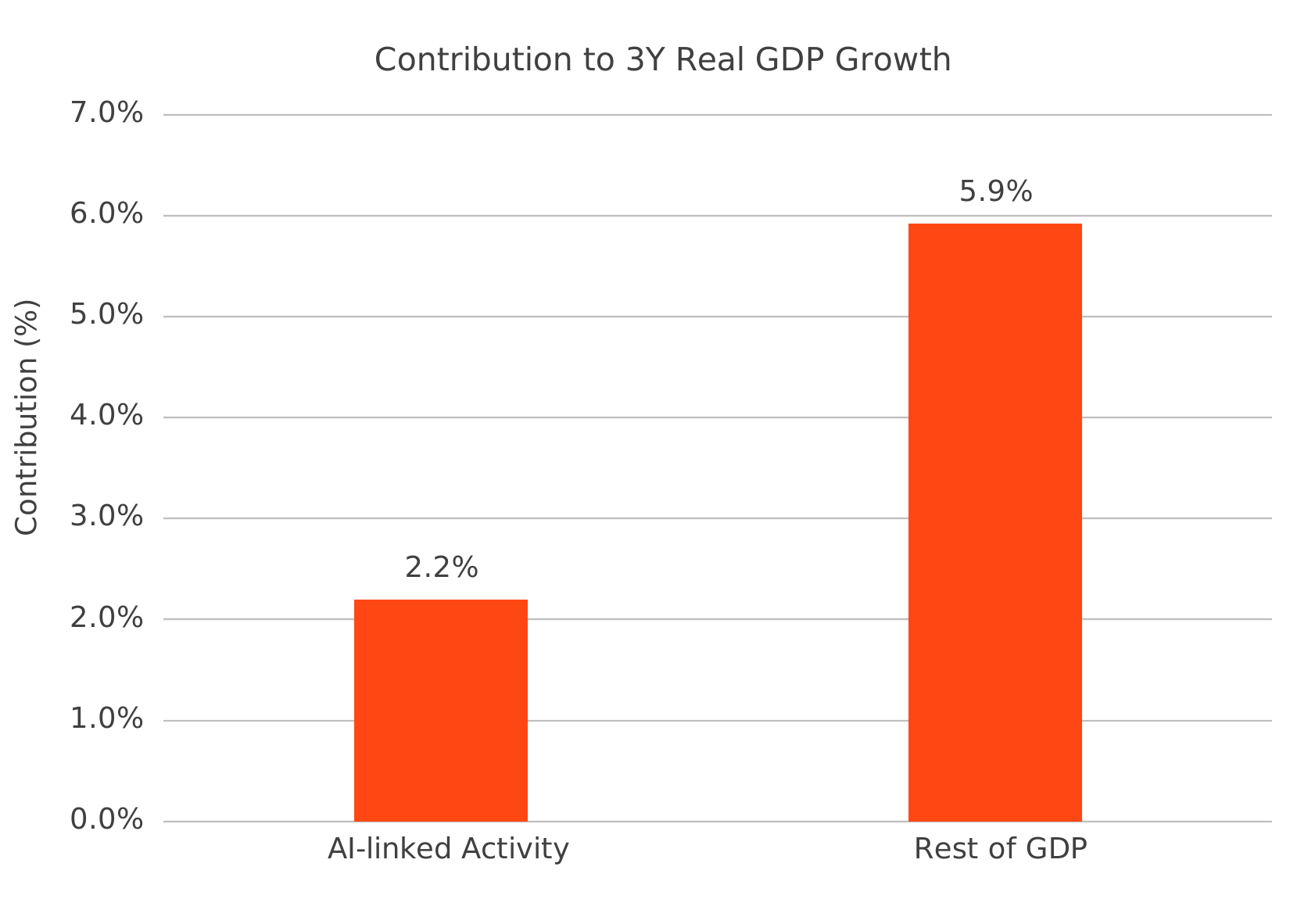
AI-linked activity has contributed nearly 30% of real U.S. GDP growth over the last three years1. The "AI 33," the 33 companies most directly tied to the AI buildout, have contributed roughly 78% of the S&P 500's year-to-date return1. Data center investment alone has reached an estimated $1.5 trillion, annualizing at $214 billion per year, dwarfing the inflation-adjusted cost of the Interstate Highway System ($620 billion over 37 years) and the Apollo Program ($257 billion over 14 years)2. This is not a speculative boom. It is an infrastructure buildout with tangible demand pulling it forward.
1. Bloomberg and Bureau of Economic Analysis, as of 05/15/2026
2. Company Reports, Epoch AI, FHWA, NASA, CRS, GAO, and Brookings, as of 04/29/2026
But here's the tension: this boom is profit-heavy, not labor-heavy. AI was the leading driver of April layoffs, accounting for 26% of total job cuts. The technology sector announced 33,361 job cuts in April alone, bringing the year-to-date total to 85,411, up 33% from the same period last year1. When repetitive cognitive workflows compress, one worker handles significantly more volume, and the labor embedded in each unit of service falls. Historically, force-multiplying technologies raise productivity first; labor share adjusts later (and often declines), as output scales faster than employment.
1. Challenger, Gray & Christmas, as of 04/30/2026.
AI capex vs. the consumer economy: the K-shaped boom
The investment boom is real, but it is narrow. AI and information-processing equipment are growing much faster than the rest of real goods demand, and the benefits are not spreading evenly.
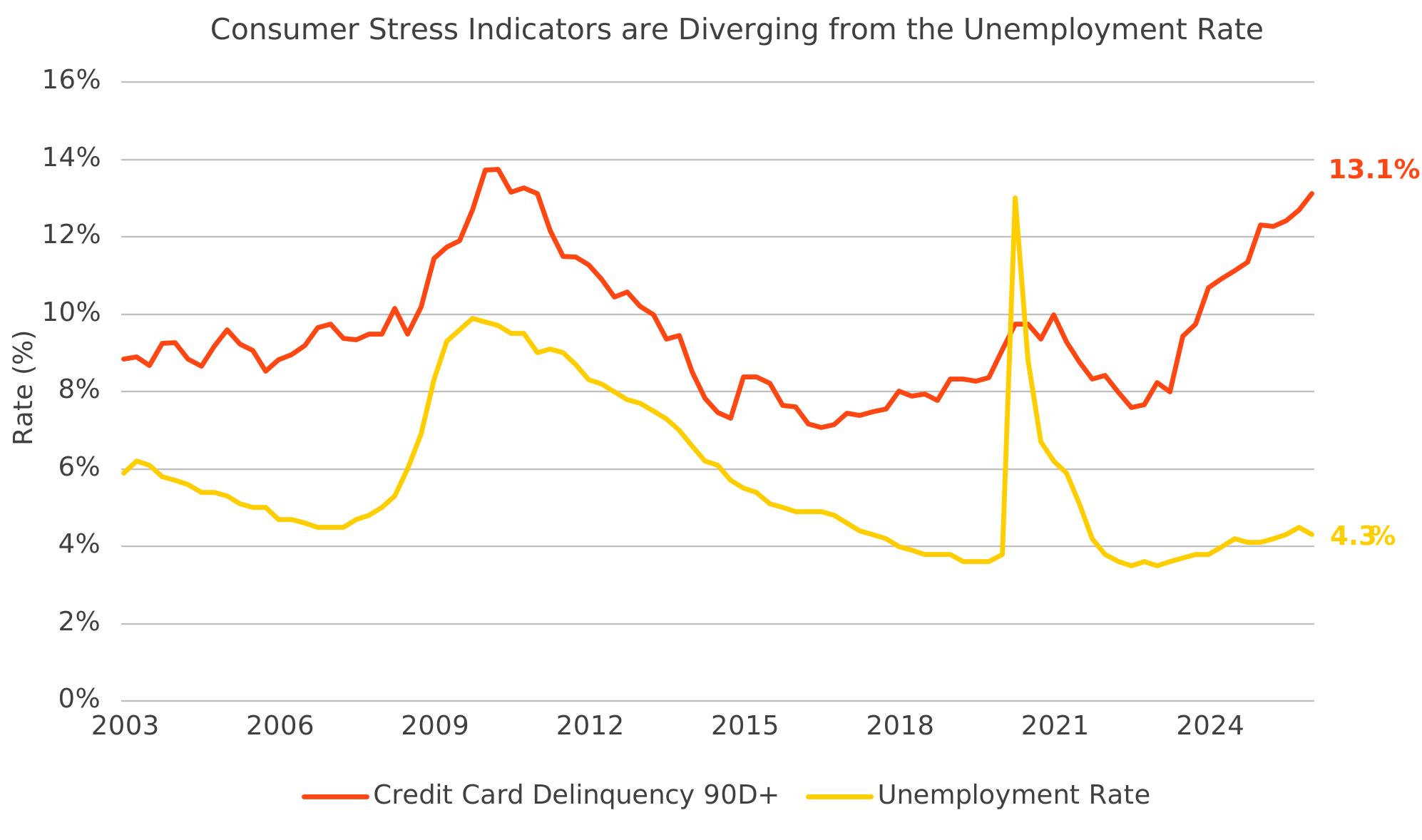
After-tax wage growth for the top income tercile is pulling away from the bottom. The top 20% of households now account for roughly 40% of all consumer spending — a share large enough to keep headline consumption resilient even as the lower end weakens. Credit card delinquency rates have risen to levels last seen during the financial crisis, and unemployment hasn't even breached 5%1. Twenty percent of auto loan payments now exceed $1,000 per month. If these are the stress indicators at near-full employment, the question becomes: what happens if growth actually slows?
1. Bank of America, as of 04/06/2026.
2. BLS and New York Fed Consumer Credit Panel/Equifax, as of 03/31/2026.
This is where the screwdriver analogy hits hardest. The Fed funds rate cannot simultaneously cool the AI-fueled capital boom at the top and relieve the affordability burden crushing the bottom. Higher rates keep housing supply constrained, shut lower-income households out of the mortgage market, and raise the government's own financing costs, all while doing essentially nothing to temper the spending of the wealthiest cohort that is driving headline consumption.
The cost of higher rates in 2026: $300 billion in hidden damage
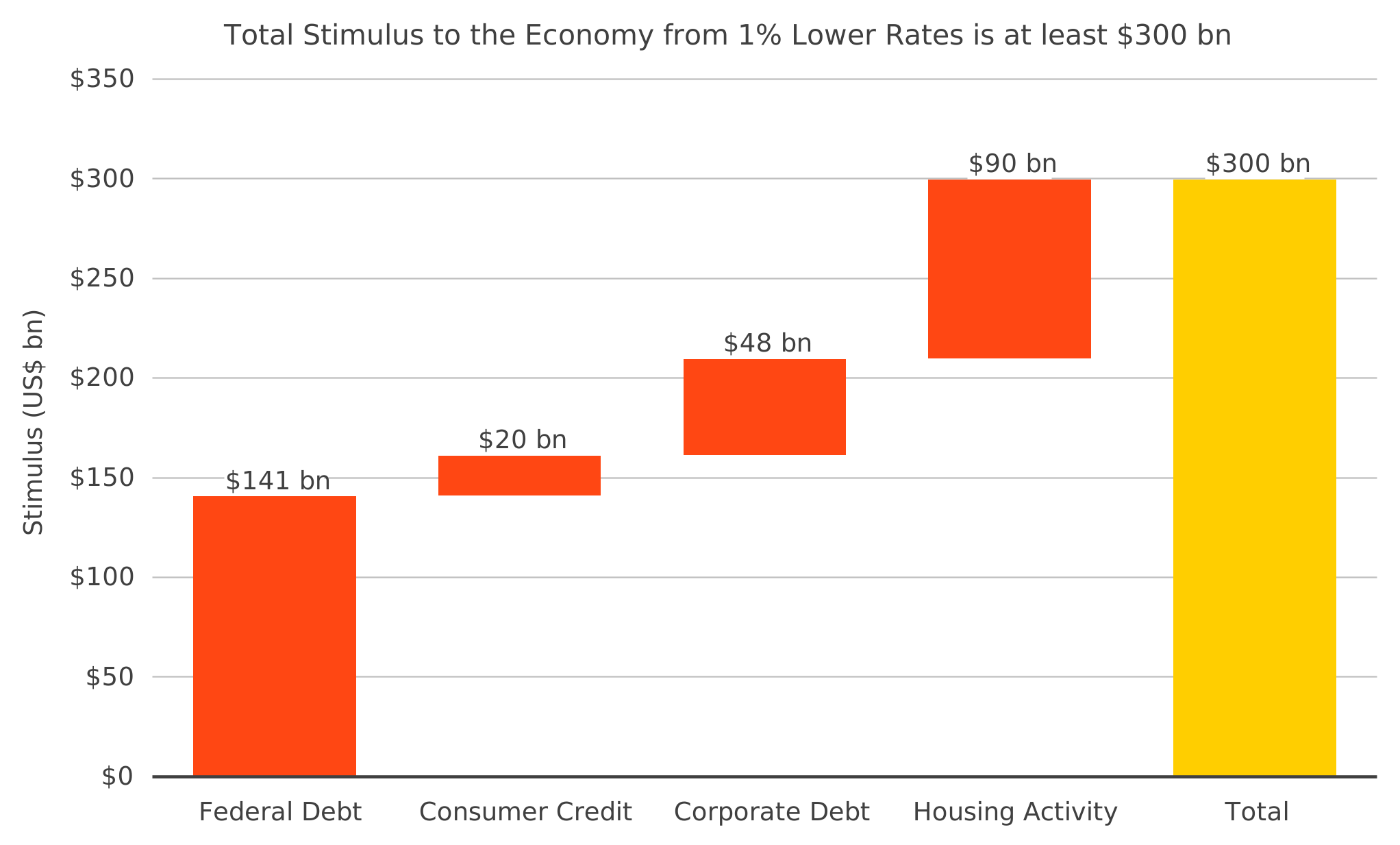
Nearly half of all marketable Treasury debt, roughly $14 trillion, matures within two years, meaning it constantly reprices at today's rates. If the Fed held rates 1% lower, the government would save $141 billion annually1. That's figure alone is significant. It becomes even more significant when you consider that net interest expense is on track to exceed all non-defense discretionary spending for the first time in decades.
The benefit would extend well beyond the Treasury's balance sheet. Higher rates elevate the weighted average cost of capital compared to lower-rate economies, directly impairing competitiveness for every capital project that isn't AI-related. And for ordinary Americans, the math is even starker: buying a first home now takes half a working life. The combination of elevated mortgage rates, constrained housing supply (which is itself a consequence of rate policy locking existing homeowners into their low-rate mortgages), and home prices that never corrected has created a supply-demand dilemma that rate hikes cannot fix, only deepen. Shelter inflation, ironically, is one of the few components of CPI that is actually elevated by higher rates rather than reduced by them. The largest and wealthiest companies and households are net lenders, not borrowers — higher rates only squeeze the Americans and businesses that need to borrow. This is the exact demographic that is already under significant economic strain.
1. US Treasury and BLK Analysis, as of 12/31/2025
Together, these channels sum to roughly $300 billion in combined annual relief from Treasury savings, housing affordability, and consumer balance sheets, before multiplier effects. But with gasoline nearing $5 and the energy disruption extending deeper than markets anticipated, the near-term path to cuts remains blocked. Keeping rates on hold makes sense for now, but overtightening from here could be very damaging.
Fixed income and credit markets: income is the liquid ballast
For bond investors, the post-pandemic regime is defined by very different characteristics than the 40-year bull market that preceded it. Globalization has given way to protectionism. Disinflation has been replaced by inflation shocks, though AI should be structurally disinflationary over time. Downside growth shocks have flipped to upside surprises. In this world, interest rate exposure is episodic as a hedge rather than a surety, and income is the anchor.
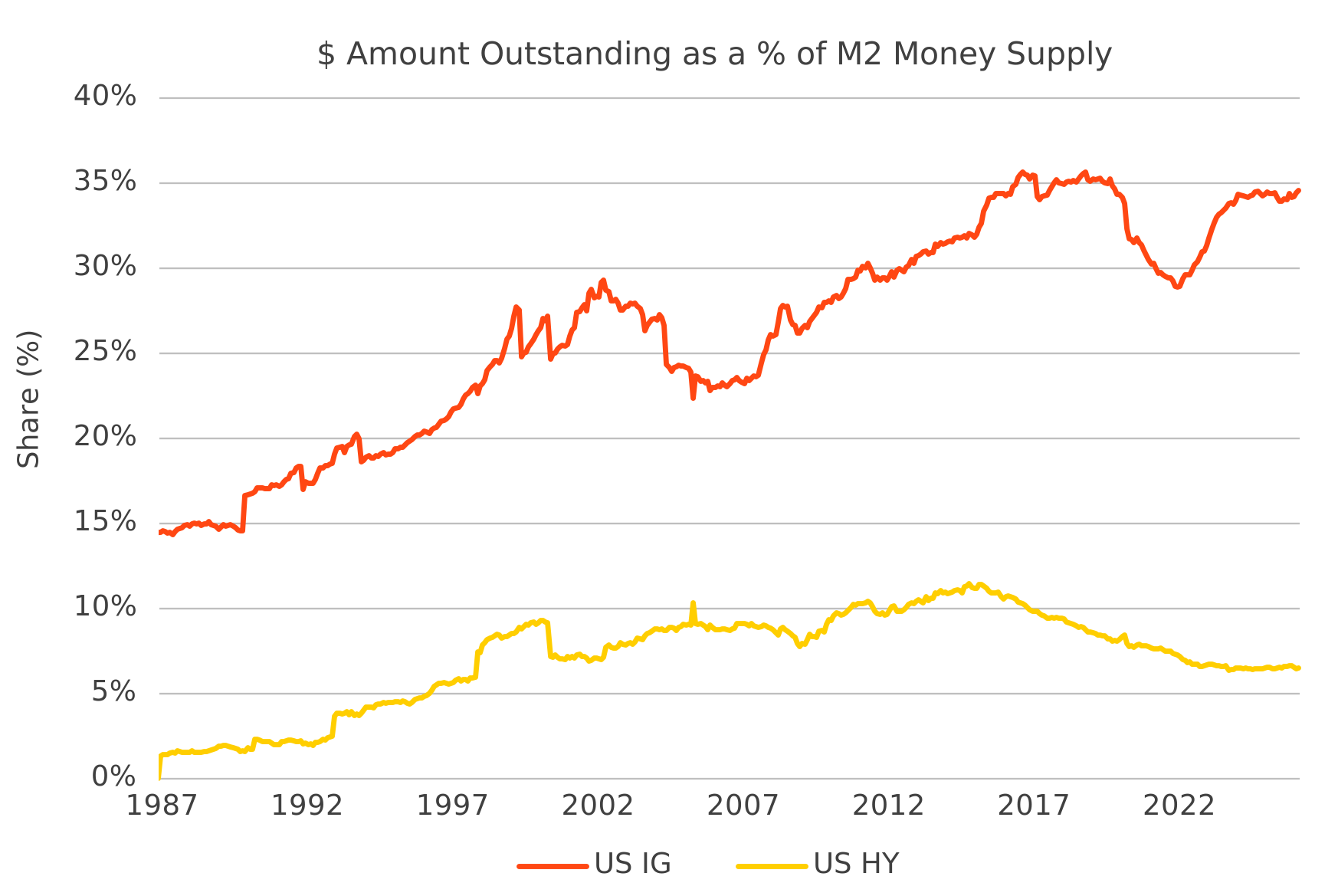
The good news is that all-in yields across fixed income remain historically attractive. Real rates are elevated, and for pension funds that are now overfunded after riding years of double-digit equity returns, locking in some of these real rates makes tremendous sense. Even taking into consideration potential credit losses, high-yield default-adjusted yields remain compelling. HY BB now makes up nearly 60% of the U.S. high-yield market, making this a fundamentally higher-quality asset class than it was a decade ago. The U.S. and European HY markets as a percentage of M2 money supply have been shrinking since 2016, creating a scarcity dynamic that supports spreads even at tight levels1. Ownership has become more diverse and stickier, dominated by natural yield-buyers rather than momentum-driven capital.
1. Bloomberg and Federal Reserve, as of 03/31/2026
Europe has also become a compelling yield opportunity. The ECB faces similar overtightening risks to 2011, when premature hikes deepened the European recession. European peripheral sovereign yields, particularly when FX-hedged, offer attractive income for patient capital. Select emerging market local rates also stand out on a yield basis, with government bonds in Brazil, Mexico, and Colombia offering double-digit or near-double-digit coupons that can serve as a useful diversifier within a broader allocation. Outside of traditional credit, data center ABS (currently ~5% of the ABS market, expected to reach mid-double digits by 20281), CMBS, and other securitized sectors offer differentiated yield without requiring excessive duration or credit risk.
The flexibility to look beyond traditional aggregate indices, which predominantly focus on treasuries and the largest issuers, has rarely been more valuable. The aggregate bond index misses the entire opportunity set available in securitized, global, and alternative markets.
1. JP Morgan and Morgan Stanley, as of 5/15/2026
Equity market outlook: earnings-led rallies deserve respect
The equity rally off the March lows has been extraordinary, and leadership has been supported by a genuine reset higher in forward earnings expectations, particularly in technology and semiconductors. This distinction matters enormously. A price move driven by multiple expansion is fragile; a price move driven by earnings growth has real cash flow behind it.
Some have historically been quick to label moves like this a bubble, but the earnings tell a different story. Forward earnings estimates have seen massive upward revisions; this is not valuation driven. In fact, multiples have actually contracted during this rally: tech has compressed from 30.7x to 23.9x since October, and semis from 28.7x to 25.7x, even as forward EPS growth runs at 45% and 88% respectively. The companies leading this rally are generating real cash flow growth at scale, and their valuations look far more reasonable when measured against the trajectory of those cash flows rather than against historical averages that predate the AI era. Since 1926, just 46 companies accounted for half of the $91 trillion in net wealth created by nearly 30,000 U.S. stocks2. Concentration has been a persistent feature of equity markets, not an anomaly.
The technical backdrop reinforces this. The U.S. equity market now represents nearly 72% of total global market capitalization. The top 10 U.S. stocks alone command over $25 trillion, larger than every equity market outside the U.S. combined and bigger than any single economy ex-U.S.1 Buybacks have outpaced IPOs by a massive margin for years, steadily shrinking the available float. The number of publicly listed U.S. companies has been declining for over two decades. At the same time, the pool of capital that needs equity-like returns, from pensions to sovereign wealth funds to retail 401(k) flows, keeps growing. The result is an enormous amount of money chasing a shrinking universe of investable assets, and the largest, most liquid names absorb the lion's share. This structural imbalance is a powerful support for equity valuations that is often overlooked when focusing solely on P/E multiples.
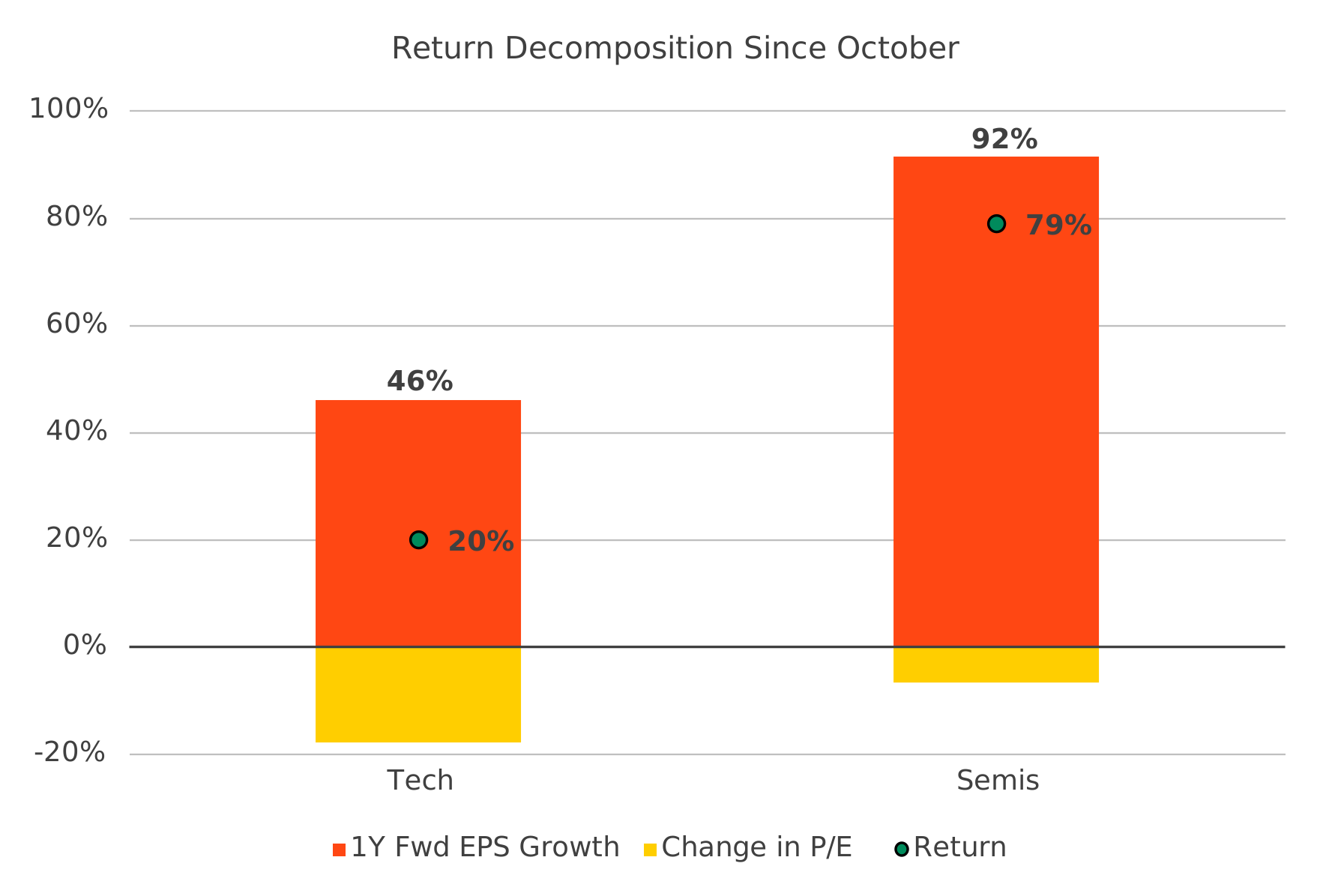
1. Bloomberg, as of 05/26/2026
2. CNBC, as of 05/08/2026
With implied volatilities elevated across the board, particularly at the single-name level, tactical overwrites on core holdings offer an attractive way to harvest income from the very positioning dynamics that are the subject of investor anxiety. Covered calls on high-conviction names allow investors to generate premium while maintaining long-term exposure. Equity allocations should remain concentrated where earnings visibility is highest, and thoughtful options strategies can supplement that conviction by turning elevated volatility into a source of return.
Bottom line: Dynamic Patience in a world that demands precision
The electric screwdriver works best when the operator matches the tool to the task. Using different bits, different tension, different force, or simply using it too much or too little can have consequences that are harder to undo than the original problem. The same is true for portfolios today.
We continue to advocate for Dynamic Patience, being tactical around news flow (which markets consistently overreact to), while recognizing that the gap between the best and worst outcomes in any given portfolio decision is wider than it has been in years. But that is also what makes this environment rich with opportunity. Yield is abundant across credit, securitized, and global markets for those willing to look beyond the index. Earnings growth continues to fund equity valuations at a pace that warrants respect, not dismissal. And the tools available to express conviction, from tactical positioning to volatility harvesting to bespoke structuring, have never been more varied or more necessary. Portfolios built with precision, not just conviction, are the ones that will compound through this environment.
The performance quoted represents past performance and does not guarantee future results. Investment returns and principal values may fluctuate so that an investor’s shares, when redeemed, may be worth more or less than their original cost. Current performance may be lower or higher than the performance data quoted. All returns assume reinvestment of all dividend and capital gain distributions. Click on the fund tile to obtain performance data as of the most recent quarter end and current to the most recent month-end.
The Morningstar Rating for funds, or "star rating", is calculated for managed products (including mutual funds, variable annuity and variable life subaccounts, exchange-traded funds, closed-end funds, and separate accounts) with at least a three-year history. Exchange-traded funds and open-ended mutual funds are considered a single population for comparative purposes. It is calculated based on a Morningstar Risk-Adjusted Return measure (excluding any applicable sales charges) that accounts for variation in a managed product's monthly excess performance, placing more emphasis on downward variations and rewarding consistent performance. The top 10% of products in each product category receive 5 stars, the next 22.5% receive 4 stars, the next 35% receive 3 stars, the next 22.5% receive 2 stars, and the bottom 10% receive 1 star. The Overall Morningstar Rating for a managed product is derived from a weighted average of the performance figures associated with its three-, five-, and 10-year 60-119 months of total returns, and 50% 10-year rating/30% five-year rating/20% three-year rating for 120 or more months of total returns. While the 10-year overall star rating formula seems to give the most weight to the 10-year period, the most recent three-year period actually has the greatest impact because it is included in all three rating periods.

Rick Rieder
Chief Investment Officer of Global Fixed Income and Head of the Global Allocation Investment Team

Russell Brownback
Head of Global Macro Positioning Team within Global Fixed Income

Navin Saigal
Head of Global Fixed Income, Asia Pacific

Dylan Price
Director, Global Fixed Income

Charlotte Widjaja
Director, Global Fixed Income
Investments
Insights
Retirement
Tools
Resources
About Us


Investing involves risks, including possible loss of principal. Past performance is no guarantee of future results. Index performance is shown for illustrative purposes only. It is not possible to invest directly in an index.
Performance data quoted represents past performance and is no guarantee of future results. Investment returns and principal values may fluctuate so that an investor’s shares, when redeemed, may be worth more or less than their original cost. All returns assume reinvestment of dividends and capital gains. Current performance may be lower or higher than that shown. Refer to blackrock.com for most recent month-end performance.
Carefully consider the Funds' investment objectives, risk factors, and charges and expenses before investing. This and other information can be found in the Funds' prospectuses or, if available, the summary prospectuses which may be obtained by visiting www.iShares.com or www.blackrock.com. Read the prospectus carefully before investing.
Fixed income risks include interest-rate and credit risk. Typically, when interest rates rise, there is a corresponding decline in bond values. Credit risk refers to the possibility that the bond issuer will not be able to make principal and interest payments. International investing involves risks, including risks related to foreign currency, limited liquidity, less government regulation, and the possibility of substantial volatility due to adverse political, economic, or other developments. These risks may be heightened for investments in emerging markets. International investing involves risks, including risks related to foreign currency, limited liquidity, less government regulation and the possibility of substantial volatility due to adverse political, economic or other developments. These risks may be heightened for investments in emerging markets.
Stock and bond values fluctuate in price so the value of your investment can go down depending on market conditions. Non-investment-grade debt securities (high-yield/junk bonds) may be subject to greater market fluctuations, risk of default or loss of income and principal than higher rated securities. Asset allocation strategies do not assure profit and do not protect against loss.
Actively managed funds do not seek to replicate the performance of a specified index, may have higher portfolio turnover, and may charge higher fees than index funds due to increased trading and research expenses. There is no guarantee that an active fund will meet its investment objective.
This material is not intended to be relied upon as a forecast, research, or investment advice, and is not a recommendation, offer or solicitation to buy or sell any securities or to adopt any investment strategy. The opinions expressed are as of May 2026, and may change as subsequent conditions vary.
The information and opinions contained in this commentary are derived from proprietary and non-proprietary sources deemed by BlackRock to be reliable, are not necessarily all-inclusive and are not guaranteed as to accuracy. As such, no warranty of accuracy or reliability is given and no responsibility arising in any other way for errors and omissions (including responsibility to any person by reason of negligence) is accepted by BlackRock, its officers, employees, or agents.
This commentary may contain “forward-looking” information that is not purely historical in nature. Such information may include, among other things, projections, and forecasts. There is no guarantee that any forecasts made will come to pass. Reliance upon information in this post is at the sole discretion of the reader.
Any opinions or forecasts represent an assessment of the market environment at a specific time and is not a guarantee of future results. This information should not be relied upon by the reader as research, investment advice or a recommendation. This material does not constitute investment advice and is not intended as an endorsement of any specific investment.
Investment involves risk. Information and opinions are derived from proprietary and non-proprietary sources.
©2026 BlackRock, Inc. or its affiliates. All rights reserved. BLACKROCK is a trademark of BlackRock, Inc., or its affiliates. All other marks are the property of their respective owners.
FFI0726-5703921-EXP0727