



The ability to keep your composure in the face of the unexpected is a key trait of every great chess player.
Garry Kasparov
The greatest chess players in history rarely won by launching dazzling attacks. They won by building positions so strong that their opponents were eventually forced into making mistakes. There is an almost exact parallel to investing today. March's war-driven volatility was the market launching an attack: a rapid, vicious repricing across every asset class. And yet, within days, the board had reset. The S&P made new all-time highs in fewer than 12 days after falling more than 6%, the fastest such recovery since 1928. The attack was sharp; the position held.
This is where we find ourselves: in a fundamentally sound environment where the best move isn't a bold gambit. It's Dynamic Patience: the discipline to build income, hold your squares, and have the flexibility to act decisively when opportunity emerges.
March 2026 market volatility: the shock was real, the damage was not
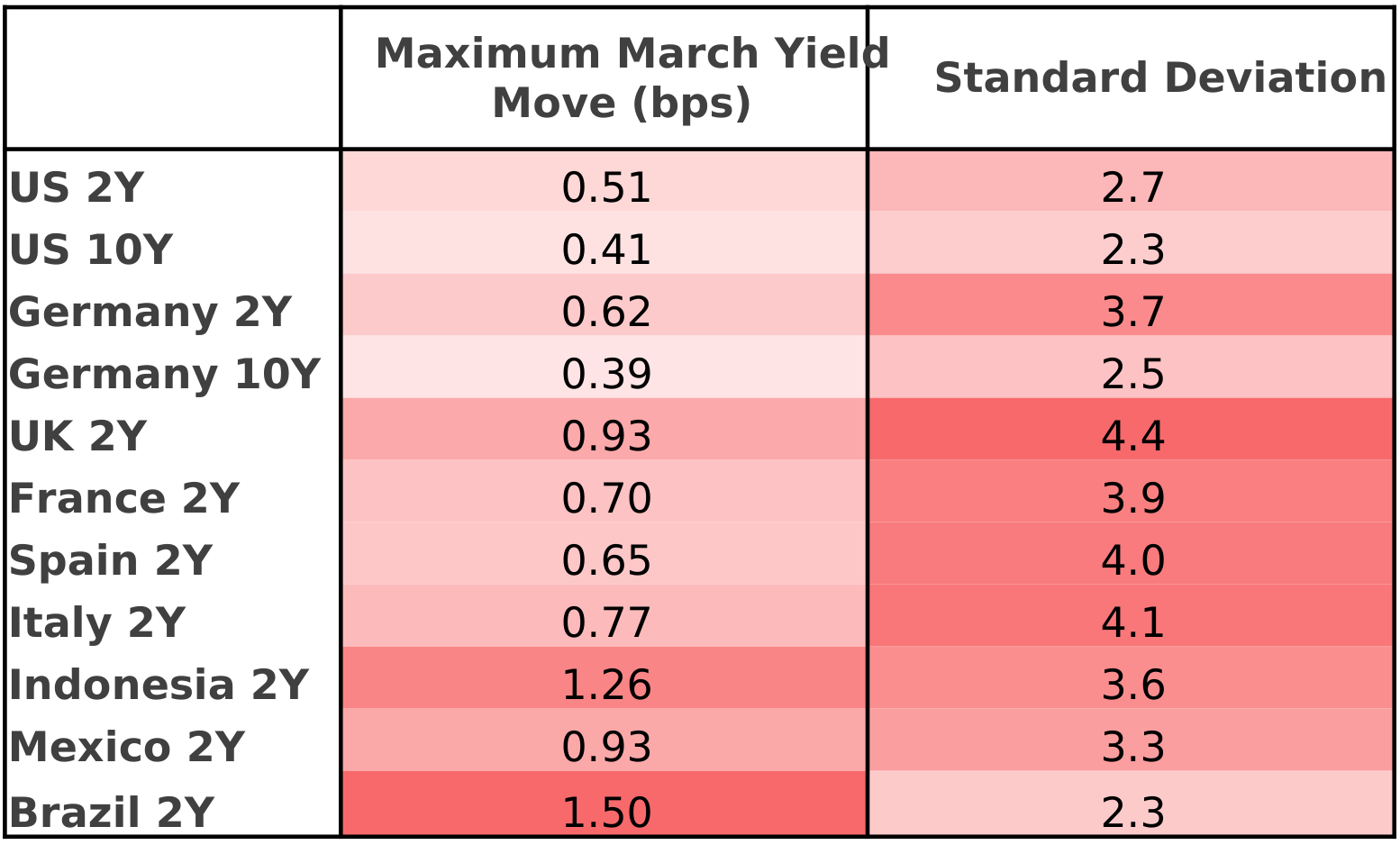
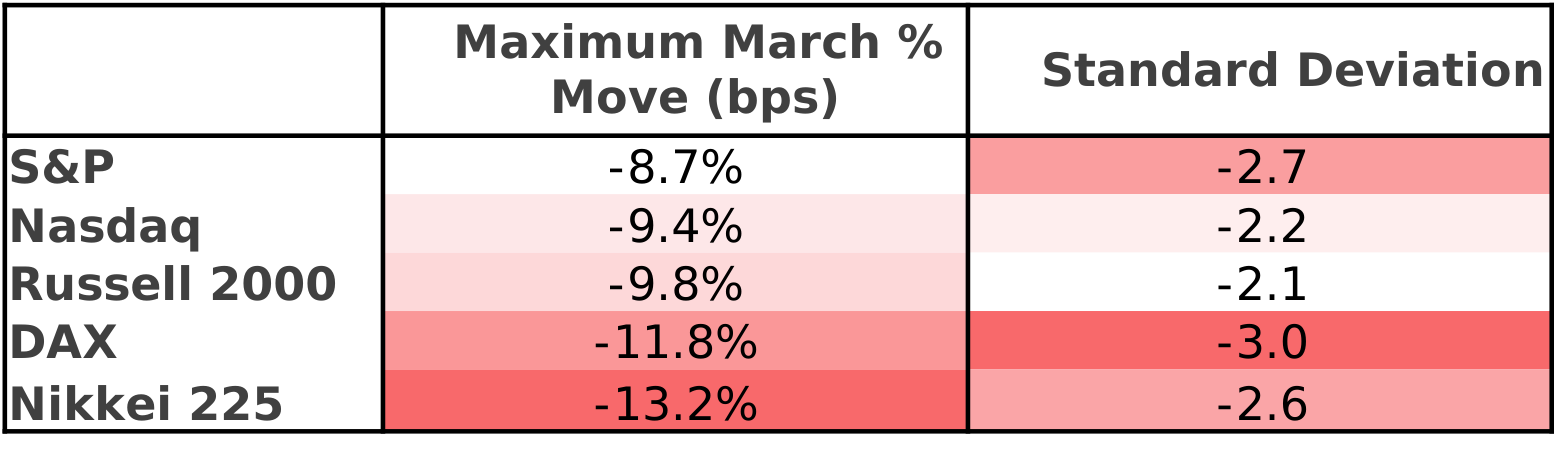
Make no mistake, March was violent. Front-end rates across developed and emerging markets saw 3 to 4 standard deviation moves. The German 2-year moved 72 basis points. Brazil's 2-year moved 158. The S&P fell 8.7%, the Nikkei fell 13.2%, and the DAX dropped 11.8%. Oil spiked to the front of the curve in a way that immediately reshaped inflation expectations, pushing European markets to price hikes instead of cuts.
And yet, credit barely flinched. US IG 10-year spreads widened just 15 basis points. High yield BB widened 54, a fraction of what you'd expect in a move that took equities down nearly 10%. By the time markets stabilized, spreads had already retraced most of the widening, equities were back near where they started, and EM front-end yields were normalizing fast. The real question isn't what happened in March. It's where the opportunity is now that the dust has settled.
Bloomberg, as of 3/31/2026
US economic outlook: harder to break than it looks
We've been saying this for the better part of three years, but it bears repeating: the structural components of the US economy are in remarkably good shape. Real household wealth is near all-time highs with the lowest debt-to-net-worth ratio in seven decades. Consumption has cooled from the post-pandemic boom but is holding steady. And capital spending remains elevated, with the AI buildout providing a massive and durable source of support. This is not an economy falling off a cliff.
The more nuanced story, and the one that actually matters for investing, is the extraordinary dispersion under the surface. The top 30% of consumers by income account for roughly 50% of all spending. The top 10% account for 23%. Wealth has become dramatically more concentrated in both higher incomes and older generations, and these cohorts are driving a robust top-line growth number that masks genuine stress for everyone else. The airline industry tells the story well. Premium and loyalty revenues have been growing at mid-teens rates, even as economy-class volumes have softened. The same plane, the same route, but an increasingly different experience depending on where you sit. That dynamic extends well beyond airlines: luxury hotels have seen yearly revenue growth of over 5% while economy-oriented hotels contracted nearly 4%.
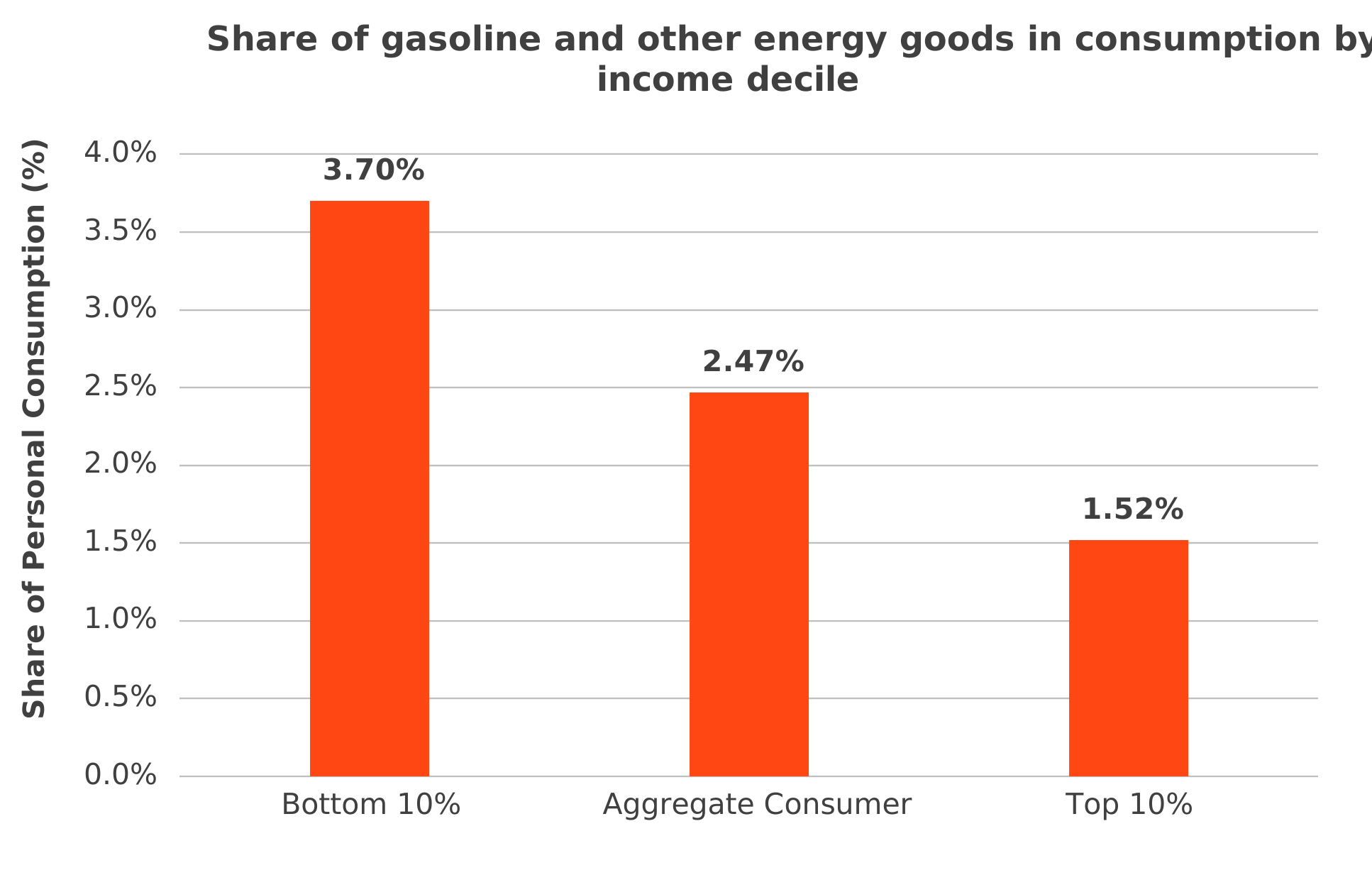
Younger, lower-income cohorts carry substantially more non-mortgage debt, spend a larger share of their income on gasoline (3.7% for the bottom decile versus 1.5% for the top), and have almost no room for further compression in discretionary spending. An oil shock doesn't hit these groups linearly; it compounds an already difficult situation. And yet, our GDP forecasts aren't down dramatically. Even with crude at $100, we expect 2.1% Q4/Q4 real growth. Why? Because this is a services-oriented, tech-driven economy, not a labor-intensive one, and the cohorts doing most of the spending are the least sensitive to the shock.
Bureau of Economic Analysis and Bureau of Labor Statistics, as of 12/31/2023
AI productivity and the labor market: no longer theoretical
AI is no longer a thesis about the future. It is reshaping the economy now. Agentic compute grew from nearly zero to a majority of all compute by the second half of 2025. Eric Schmidt noted last August that the moment AI agents could instruct other AI agents would represent a "zenith" of computation, a cycle that accelerates faster than humans can follow. That moment arrived in Q1 2026.
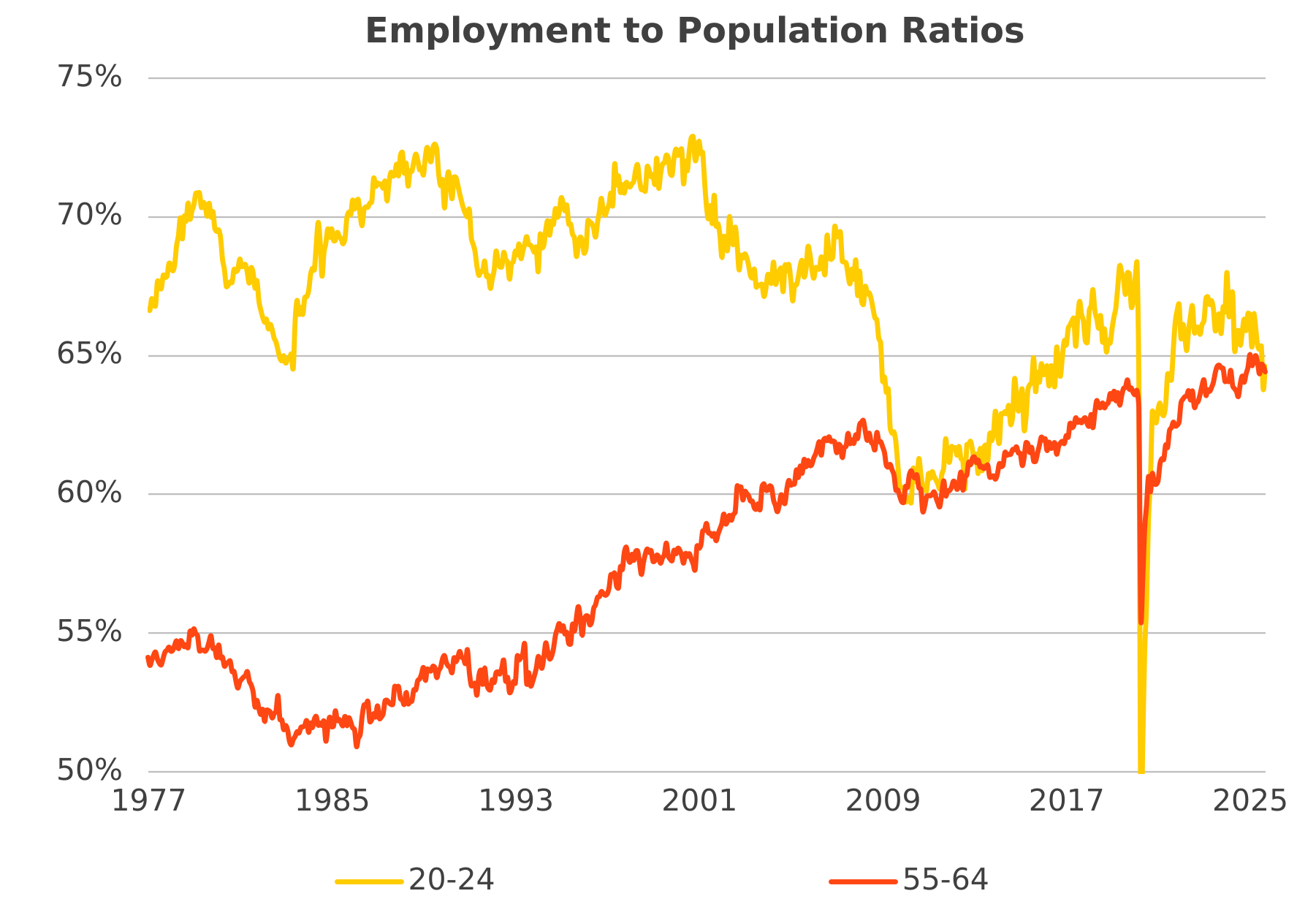
The numbers are staggering. Hyperscaler capex has risen from $70 billion in 2019 to an estimated $610 billion in 2026. Task durations that took a skilled human 16 hours to complete in 2019 now take under an hour. And this isn't just creating efficiency for tech companies. It is actively reshaping the labor market. Rolling 11-month job growth excluding healthcare has turned negative (at -266,000), labor costs as a share of business output continue their multi-decade decline, and for the first time, the 55-64 age cohort is more likely to be employed than the 20-24 cohort. Company surveys are predicting 2026 will be the worst college grad job market in five years. Just this month, Meta announced a 10% reduction in its workforce and Microsoft began offering voluntary buyouts for the first time in its history. This is close to 20,000 roles across both companies, even as each commits record capital to AI infrastructure. These aren't struggling businesses cutting costs. They are among the most profitable companies in the world, actively choosing to replace labor with technology. That pattern is unlikely to stay confined to tech.
This is a genuine inflection point, and one worth watching closely, both for its investment implications and because it will likely shape the policy response over the coming years. For now, the net effect on the economy is positive: more output per unit of input, lower unit labor costs, and a productivity tailwind that supports corporate margins and, ultimately, asset prices.
Federal Reserve Economic Data, as of 12/31/2025
US national debt and Fed policy: the elephant is still in the room
None of this changes the fact that the US fiscal position remains a critical variable for markets. US front-end issuance now exceeds 100% of GDP, more than triple what it was just 10 years ago. On a typical week, the Treasury issues more debt than Singapore, Poland, or Saudi Arabia have outstanding in total. The math is straightforward: at 4% rates and 3% nominal GDP growth, debt-to-GDP reaches 137% by 2035. At 2% rates and 5% nominal growth, it stays near 94%. The interplay between the path of rates and growth over the next decade will largely determine whether the US outgrows its debt burden or is increasingly constrained by it.
This is one reason why the evolution of monetary policy is so important to watch. The composition of the Fed's voting body is shifting, and the range of potential rate outcomes for year-end 2026 is wide. What matters most for investors is less about predicting the exact path and more about recognizing that the fiscal backdrop creates a structural incentive for policymakers to keep rates from staying too high for too long.
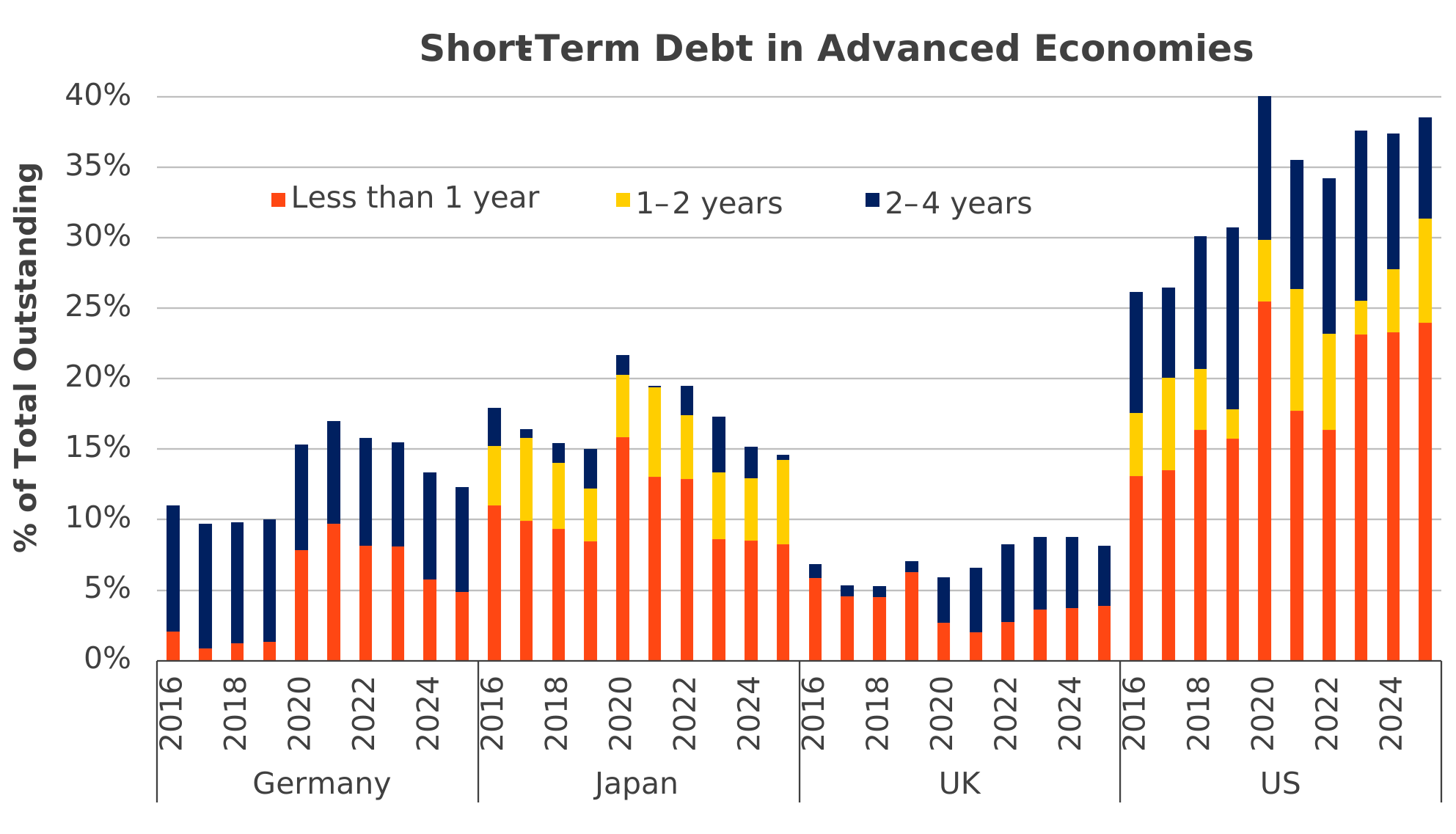
International Monetary Fund, as of 4/15/2026
Fixed income yields in 2026: get paid to be patient
We think about investing along two axes: Environment and Opportunity. The Environment is defined by growth, inflation, policy, and productivity. Opportunity is defined by valuations. Today, the environment is quite good: growth at the 54th percentile of historical data, core inflation at the 55th, policy at the 65th, and productivity at the 95th. But the opportunity set is more nuanced. Equity valuations have reset meaningfully, with the S&P's forward P/E now at the 32nd percentile. Credit spreads, by contrast, sit at just the 5th percentile, near the tightest levels of the last eight years. That divergence is the key to understanding where patience pays and where it doesn't.
In fixed income, the environment is supportive but spreads are offering almost nothing. The opportunity shows up in yields instead. All-in yields have risen alongside rates, and on that measure, fixed income today sits in the top-right quadrant of our framework for the first time in over a decade. This is the tension at the heart of Dynamic Patience: the carry is excellent, the total return potential on spread is mediocre at best.
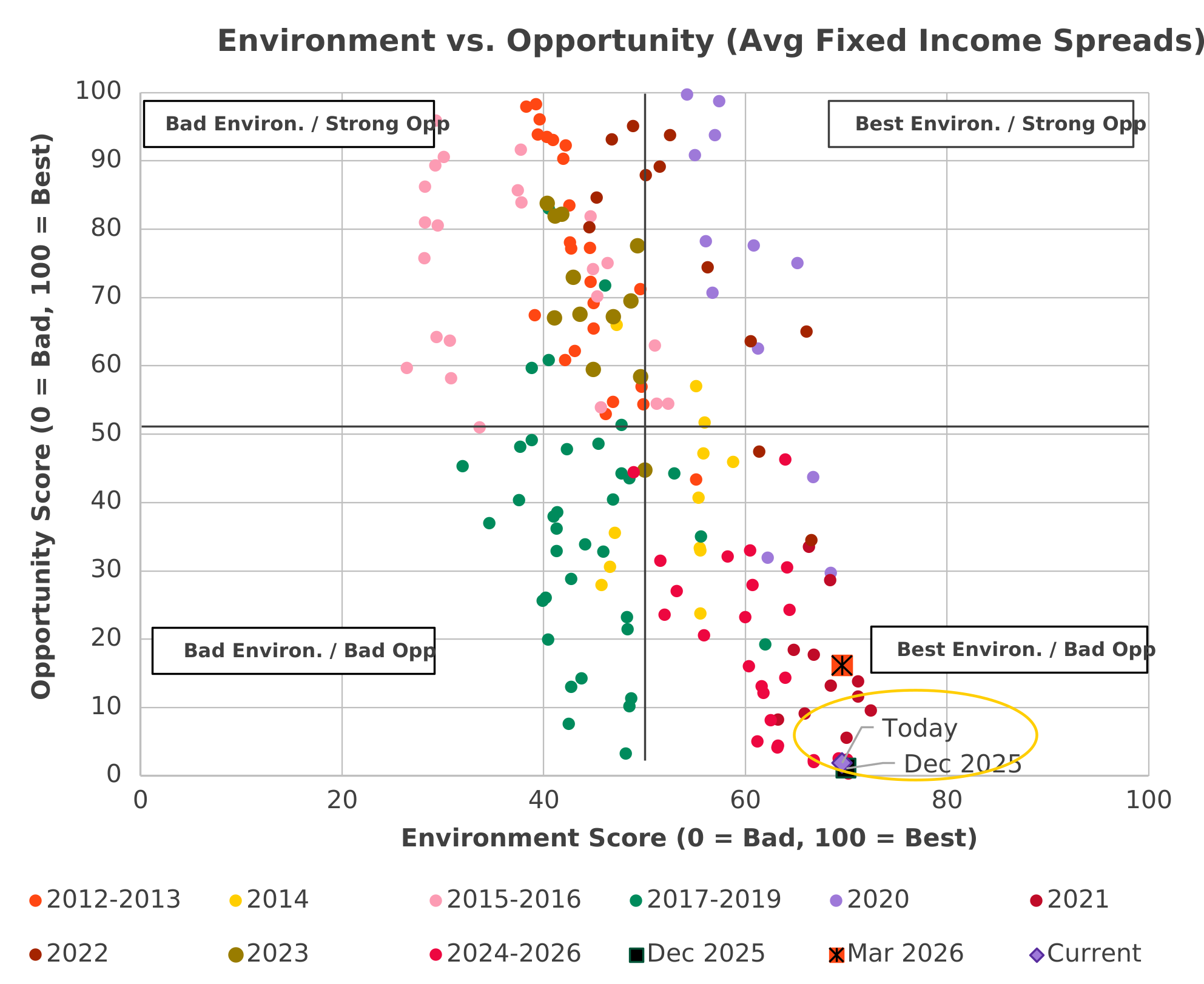
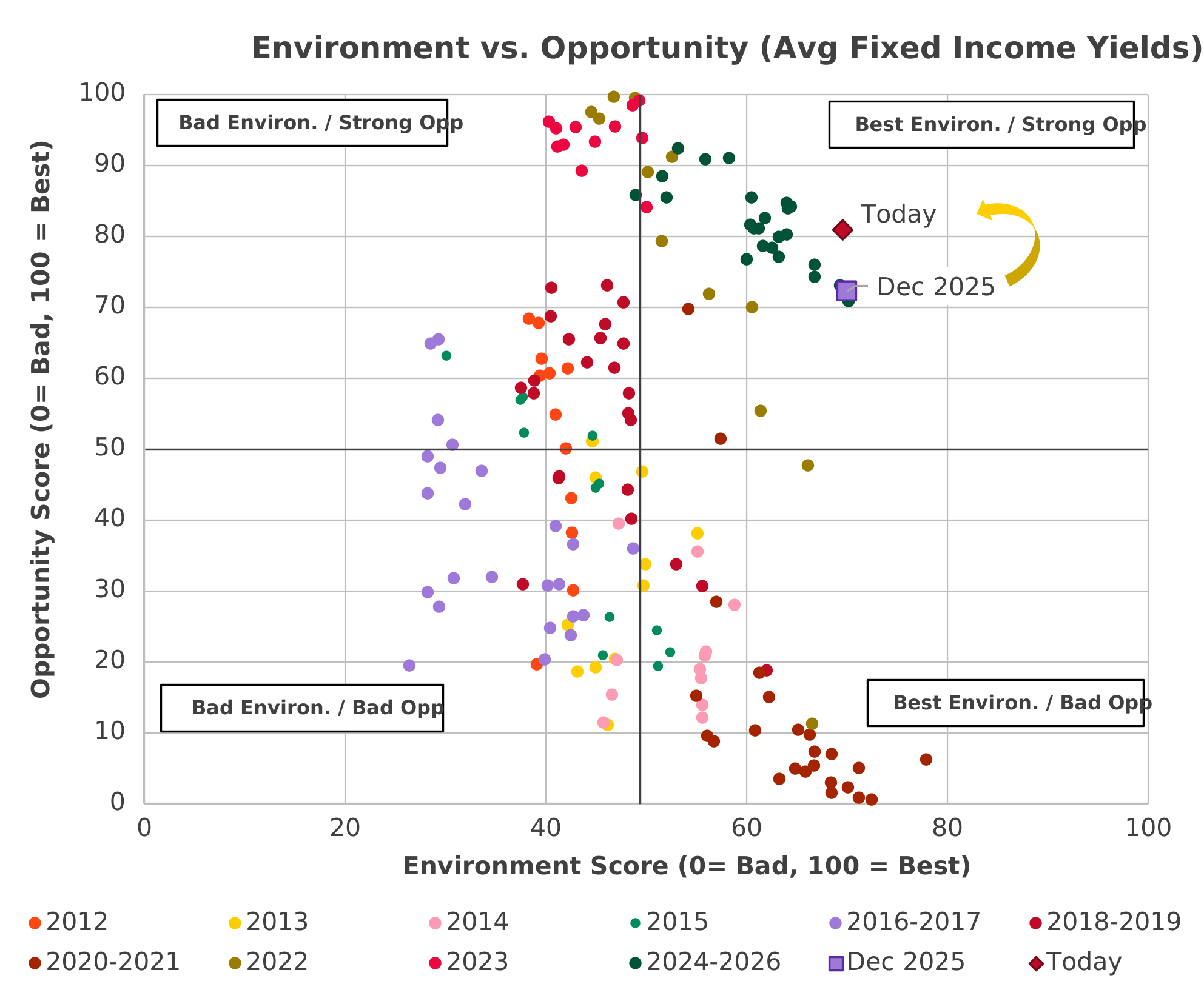
Bloomberg and BlackRock, as of 4/20/2026
So why would you sacrifice 2% of income in your fixed income allocation to concentrate in assets that aren't even protecting you in a drawdown? We all remember 2022, but it's worth noting that in every year since, core bonds have posted negative returns alongside every meaningful equity selloff. That pattern is not a coincidence. It's the consequence of a rate-volatile regime where duration is a source of risk, not a hedge.
A diversified, income-oriented approach that uses the full fixed income universe (securitized assets, European credit, overwriting strategies, and emerging markets) has the potential to generate north of 6% in yield today, compared to roughly 4.6% for the US Agg. That kind of income advantage, sourced across a broader set of risk drivers with less concentration in duration, has the potential to compound meaningfully over time.
In credit specifically, the dynamic part of patience means being selective across names and sectors rather than reaching for index beta. Mortgages at nearly 1% spread with declining rate volatility are an attractive diversifier of credit risk. European peripheral rates, where the FX hedge works in your favor, offer a better "spread product" than traditional corporate credit. And credit volatility remains elevated relative to realized spreads, which means there are opportunities to earn additional income beyond what cash bonds alone can provide.
Equity market: where concentration makes sense
Equities tell a different story on our framework. The March repricing pushed Tech into the "Best Environment / Strong Opportunity" quadrant for the first time in 15 years, and much of the hand-wringing over valuations is detached from what these companies are actually earning. The six largest tech companies grew forward EPS by 42% year-over-year. The technology sector grew 59%. Semiconductors grew 102%. Returns here have been driven entirely by earnings growth, not by multiple expansion. Fundamentals have done all of the work.
At the March lows, Tech multiples compressed to 20.6x – below the average since 2018. Today, they sit at 24.6x, still below the 27.8x average. You could argue the fastest-growing companies in the world are cheap relative to their own recent history. Yes, concentration carries risk. A single earnings miss or regulatory shift can move billions in market cap. But the top 10 US stocks represent $25 trillion in market cap, bigger than every equity market outside the US combined and larger than any non-US economy. There are simply not enough generous-returning assets in the world to justify diversifying away from the strongest cash flow compounders, and the earnings durability of these businesses has been tested repeatedly, through a pandemic, a rate-hiking cycle, and now a war, and has held up each time.
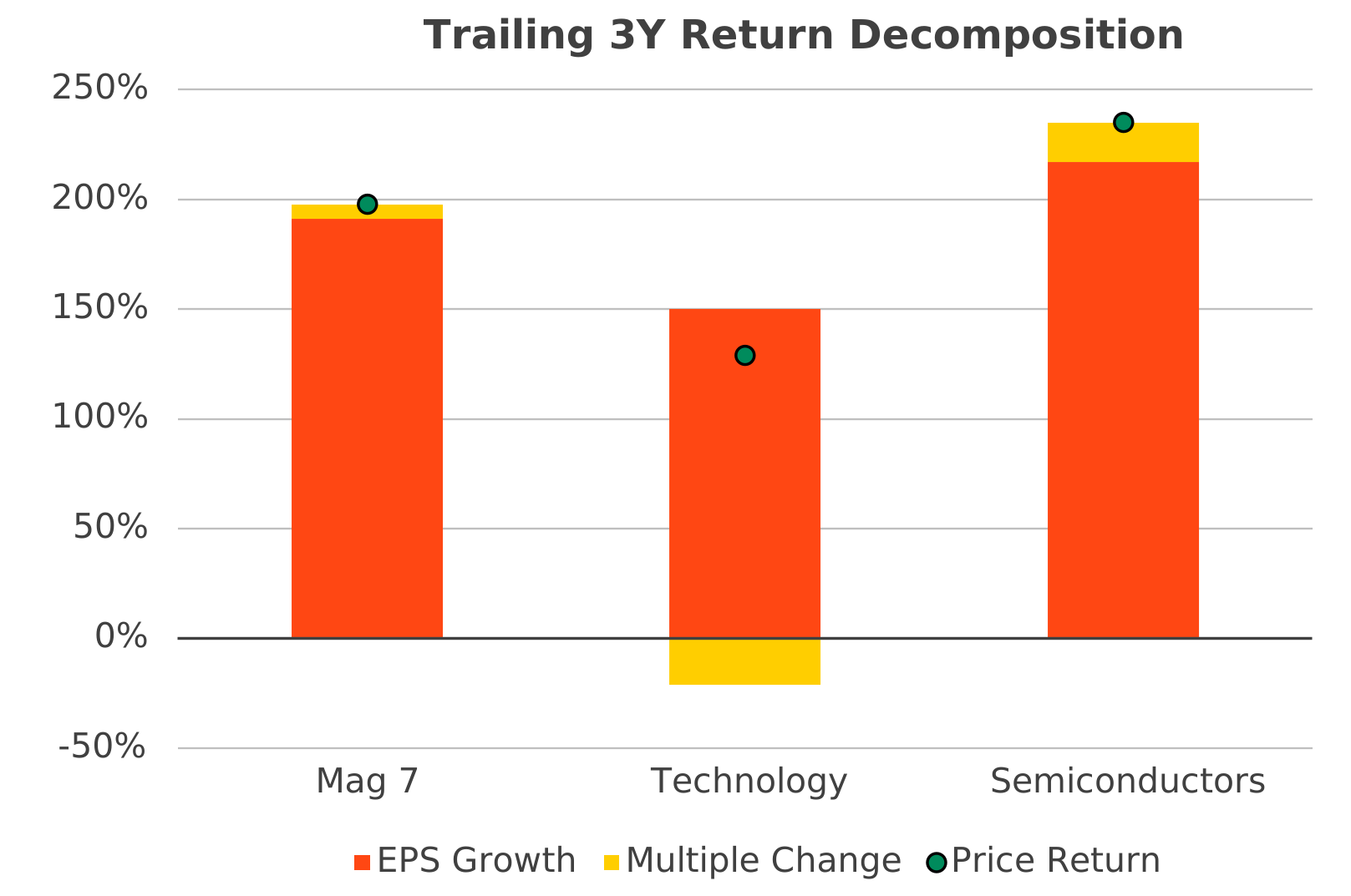
Bloomberg, as of 4/22/2026
The compounding gap makes the difference in long-durated assets even more stark. Mag 7 ROE is 30.6%. Technology ROE is 34.3%. Equities and long Treasuries have delivered very different outcomes since 2023, not because of froth, but because growing cash flows from earnings compound in a way that fixed coupons fundamentally cannot. As we've written before, concentrate equity risk where free cash flow compounds and reinvestment runways are long. Use income as the patient, compounding ballast. Pairing the two, in the right sizes, is how you build a portfolio that works across the widest range of outcomes.
Asset class outlook: what we're watching
Dynamic Patience means different things in different parts of the market. But the underlying principle is the same everywhere: over horizons beyond roughly 90 days, carry overtakes volatility as the dominant driver of return. The tortoise beats the hare. That logic shapes how we think about every asset class on this list:
- US Rates: Mixed environment but higher carry makes "clip and wait" more compelling than big duration calls.
- European Rates/Peripherals: One of the cleanest patience trades available – a more asymmetric policy background, attractive carry, and the FX hedge working for you.
- Volatility: Elevated implied vol across FX, rates, credit, and equities offers opportunity to harvest additional income.
- High Yield Credit: Tougher environment as dispersion rises; only durable cash-flow stories merit exposure. Spreads aren't attractive, yields are.
- Securitized Credit: Structure, yield, and dispersion make this a strong "precision income" space for patient investors.
- Emerging Markets: Front-end dislocations have provided very compelling opportunity in recent weeks; FX also provides attractive income.
- Private Growth Equity: Large private companies, especially AI beneficiaries, continue to delay IPOs, making selective access to late-stage growth equity increasingly valuable.
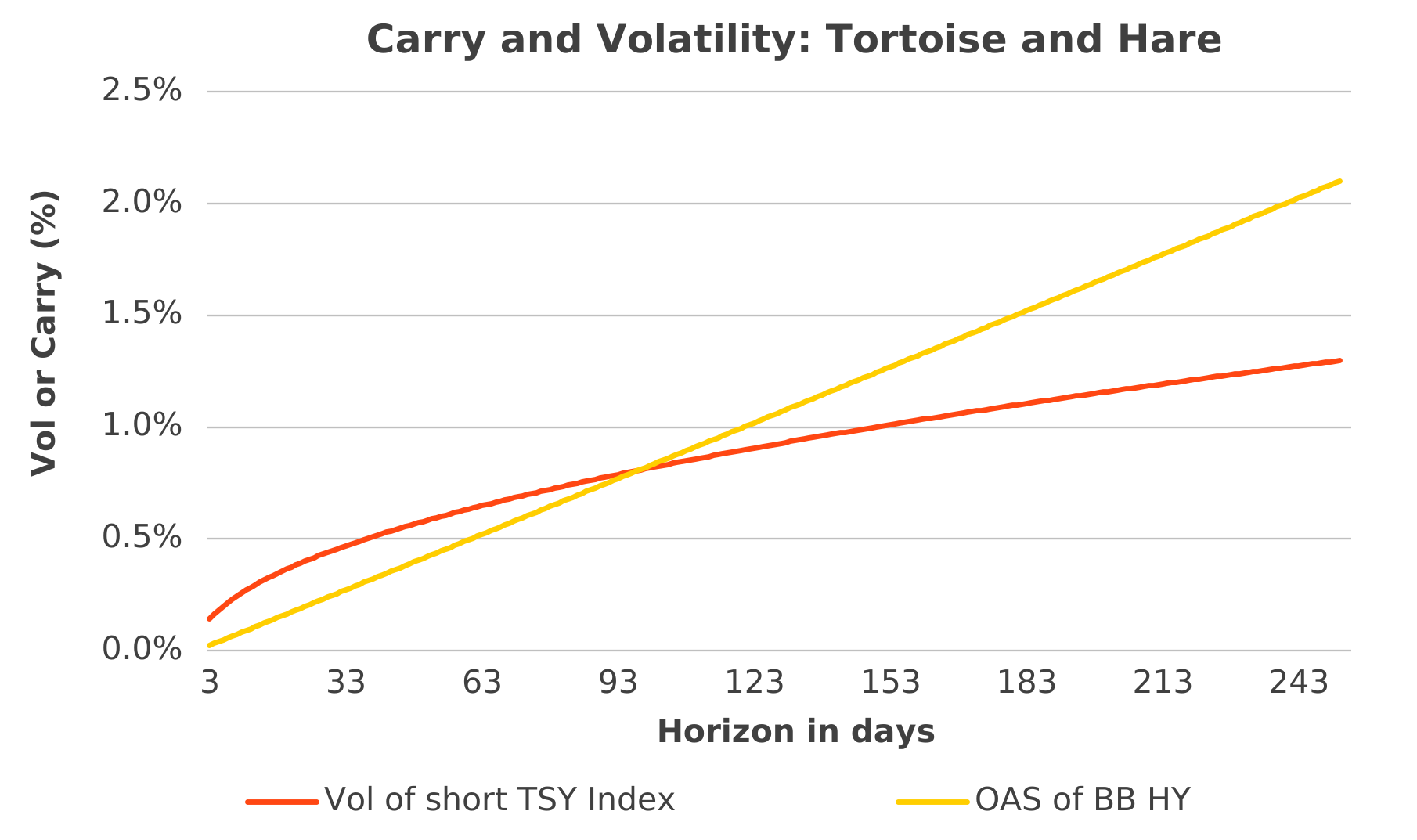
Bloomberg, as of 4/16/2026
Bottom line: how to position portfolios today
The best chess players know that a strong position, held with discipline, is often more powerful than a brilliant attack. In today's market, the position is strong: a resilient economy, a productivity revolution still in its early innings, and an income opportunity set that is historically rare. The risk is that impatience – chasing spread, overreaching for duration, or overtrading the equity market – erodes the advantages you already have.
We have all watched portfolios lose more to overreaction than to the events themselves. The investors who kept their composure through March, positioned in durable income and quality cash flows, came through it with their compounding intact. Build your income. Concentrate your equity risk where cash flows compound fastest. And be dynamically patient enough to act when the opportunity is right, rather than forcing one that isn't.
The performance quoted represents past performance and does not guarantee future results. Investment returns and principal values may fluctuate so that an investor’s shares, when redeemed, may be worth more or less than their original cost. Current performance may be lower or higher than the performance data quoted. All returns assume reinvestment of all dividend and capital gain distributions. Click on the fund tile to obtain performance data as of the most recent quarter end and current to the most recent month-end.
The Morningstar Rating for funds, or "star rating", is calculated for managed products (including mutual funds, variable annuity and variable life subaccounts, exchange-traded funds, closed-end funds, and separate accounts) with at least a three-year history. Exchange-traded funds and open-ended mutual funds are considered a single population for comparative purposes. It is calculated based on a Morningstar Risk-Adjusted Return measure (excluding any applicable sales charges) that accounts for variation in a managed product's monthly excess performance, placing more emphasis on downward variations and rewarding consistent performance. The top 10% of products in each product category receive 5 stars, the next 22.5% receive 4 stars, the next 35% receive 3 stars, the next 22.5% receive 2 stars, and the bottom 10% receive 1 star. The Overall Morningstar Rating for a managed product is derived from a weighted average of the performance figures associated with its three-, five-, and 10-year 60-119 months of total returns, and 50% 10-year rating/30% five-year rating/20% three-year rating for 120 or more months of total returns. While the 10-year overall star rating formula seems to give the most weight to the 10-year period, the most recent three-year period actually has the greatest impact because it is included in all three rating periods.

Rick Rieder
Chief Investment Officer of Global Fixed Income and Head of the Global Allocation Investment Team

Russell Brownback
Head of Global Macro Positioning Team within Global Fixed Income

Navin Saigal
Head of Global Fixed Income, Asia Pacific

Dylan Price
Director, Global Fixed Income

Charlotte Widjaja
Director, Global Fixed Income
Filter by:
- All
- ARTICLE
- Practice Management
- Tools
Investments
Insights
Retirement
Tools
Resources
About Us


Investing involves risks, including possible loss of principal. Past performance is no guarantee of future results. Index performance is shown for illustrative purposes only. It is not possible to invest directly in an index.
Carefully consider the Funds' investment objectives, risk factors, and charges and expenses before investing. This and other information can be found in the Funds' prospectuses or, if available, the summary prospectuses which may be obtained by visiting www.iShares.com or www.blackrock.com. Read the prospectus carefully before investing.
Fixed income risks include interest-rate and credit risk. Typically, when interest rates rise, there is a corresponding decline in bond values. Credit risk refers to the possibility that the bond issuer will not be able to make principal and interest payments. International investing involves risks, including risks related to foreign currency, limited liquidity, less government regulation, and the possibility of substantial volatility due to adverse political, economic, or other developments. These risks may be heightened for investments in emerging markets. International investing involves risks, including risks related to foreign currency, limited liquidity, less government regulation and the possibility of substantial volatility due to adverse political, economic or other developments. These risks may be heightened for investments in emerging markets.
Stock and bond values fluctuate in price so the value of your investment can go down depending on market conditions. Non-investment-grade debt securities (high-yield/junk bonds) may be subject to greater market fluctuations, risk of default or loss of income and principal than higher rated securities. Asset allocation strategies do not assure profit and do not protect against loss.
Actively managed funds do not seek to replicate the performance of a specified index, may have higher portfolio turnover, and may charge higher fees than index funds due to increased trading and research expenses. There is no guarantee that an active fund will meet its investment objective.
This material is not intended to be relied upon as a forecast, research, or investment advice, and is not a recommendation, offer or solicitation to buy or sell any securities or to adopt any investment strategy. The opinions expressed are as of March 15th, 2026, and may change as subsequent conditions vary.
The information and opinions contained in this commentary are derived from proprietary and non-proprietary sources deemed by BlackRock to be reliable, are not necessarily all-inclusive and are not guaranteed as to accuracy. As such, no warranty of accuracy or reliability is given and no responsibility arising in any other way for errors and omissions (including responsibility to any person by reason of negligence) is accepted by BlackRock, its officers, employees, or agents.
This commentary may contain “forward-looking” information that is not purely historical in nature. Such information may include, among other things, projections, and forecasts. There is no guarantee that any forecasts made will come to pass. Reliance upon information in this post is at the sole discretion of the reader.
Prepared by BlackRock Investments, LLC, member FINRA.
©2026 BlackRock, Inc. or its affiliates. All rights reserved. BLACKROCK is a trademark of BlackRock, Inc., or its affiliates. All other marks are the property of their respective owners.
FFI0526-5435706-EXP0527