
Market Insights

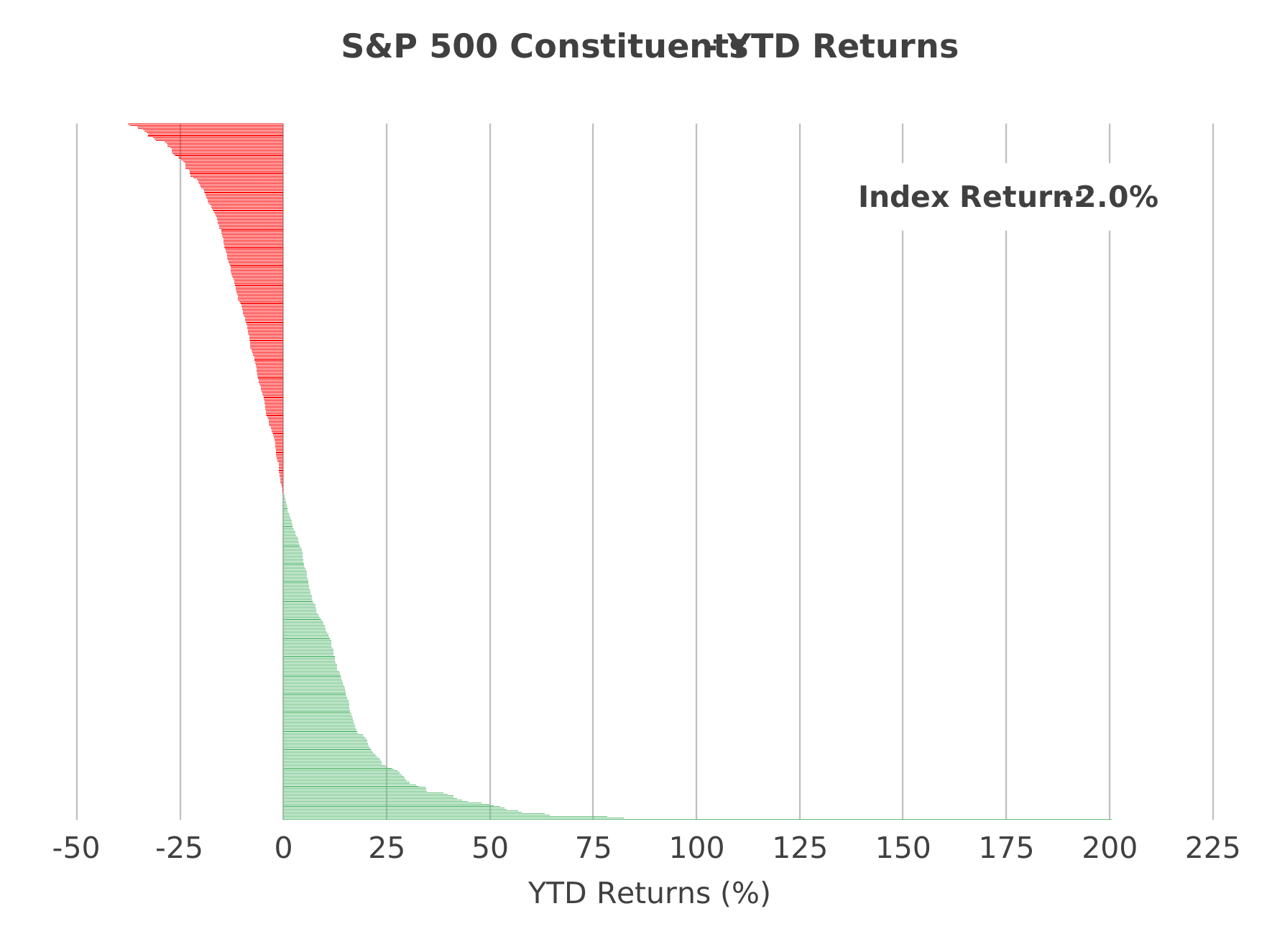
Gravity has returned, but it has arrived sideways. Rather than a broad market drawdown, it has shown up as historic dispersion. The S&P 500 is close to flat year-to-date, yet 74% of its constituents have moved 5% or more in either direction. Dispersion across the index has reached the 98th percentile, levels last seen during the GFC. Broad indices look little changed. Underneath, the market is rapidly reshuffling winners and losers.
The underlying dynamics defining this regime have not changed, but they are increasingly in tension with one another. Consumption remains supported by asset-rich households, even as lower-income cohorts feel the strain of a softening job market. Productivity is supporting headline growth, but the benefits are uneven across companies and sectors. Inflation is broadly contained on a structural basis, yet near-term readings face upward pressure from energy prices and geopolitical disruption. The Federal Reserve is biased toward easing, but the path has become more complicated.
These are not contradictions. They are the conditions that produce dispersion. What has accelerated it is the speed at which artificial intelligence is rewriting the rules of the game. Geopolitics has widened the near-term range of outcomes, which warrants more respect for risk in the months ahead. Tariff uncertainty and the sharp sell-off in software equities will continue to compete for attention. The deeper forces, productivity, technology, and the income backdrop, remain the signals worth tracking. The challenge, as always, is separating signal from noise.
Bloomberg, as of 03/15/2025
AI’s moment of acceleration
For much of the last several years, the artificial intelligence productivity thesis was forward looking. That is no longer the case. Artificial intelligence has crossed from investment thesis to operating reality.
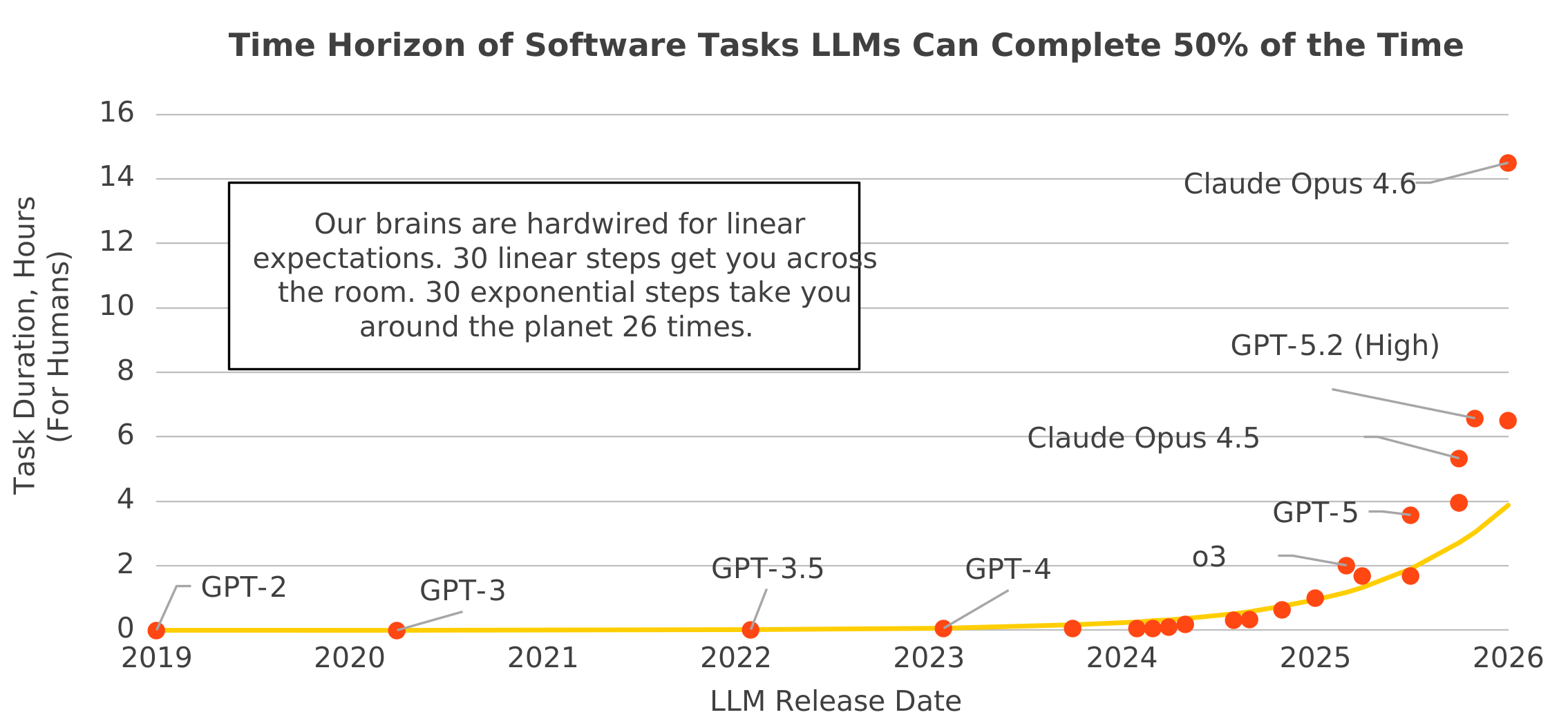
The capabilities of frontier models have advanced at a pace that is hard to contextualize. Stack Overflow fielded over 300,000 coding questions a month in 2020. Today, that number is effectively zero. Agentic compute, systems instructing other systems, grew from nearly zero to a majority of total compute by the second half of 2025. Enterprise usage has shifted decisively from augmentation to automation.
Anthropic’s Claude Cowork, a new agent productivity tool, was built entirely with artificial intelligence writing the code. The larger point is that AI can now contribute to designing better versions of itself, accelerating the cycle further.
Companies are already reporting tangible gains. Microsoft reports that 35% of its code is now written by AI. Meta has cut 21,000 jobs while increasing productivity. Intuit, ServiceNow, and Salesforce report 15% to 30% efficiency gains.
The investment cycle, projected to exceed $2.2 trillion in global infrastructure spend by 2028, is simultaneously a capital expenditure boom, a labor substitute, and a margin expander. Hyperscaler CapEx is expected to reach $610 billion in 2026, up from $360 billion in 2025. For investors, increased adoption can mean durable earnings growth at scale even if the macro environment slows.
Model Evaluation and Threat Research, as of 02/20/2026
The software sell-off is dispersion in action
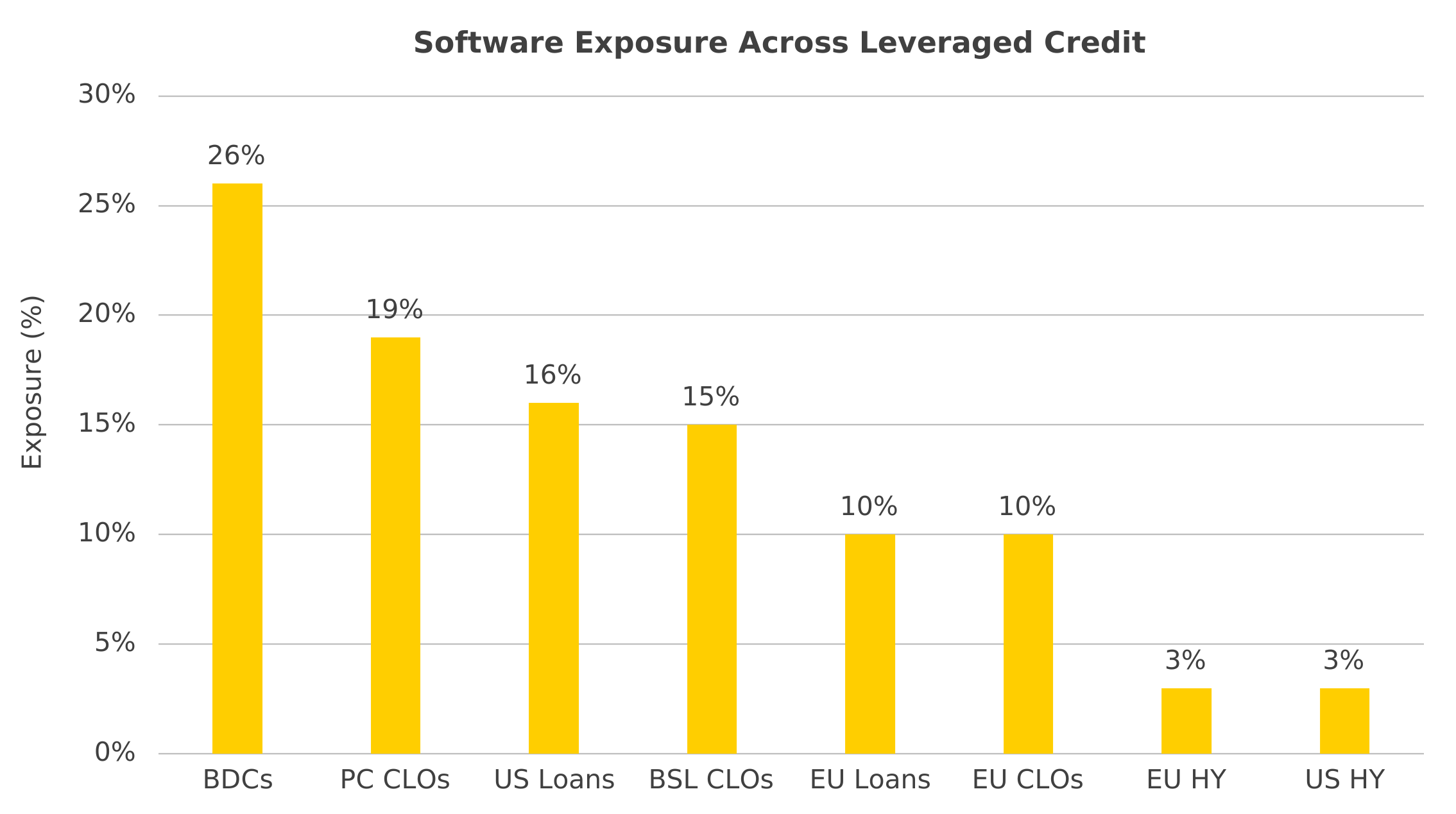
The most visible market consequence of this acceleration has been a dramatic repricing of software. Software equities are down roughly 30% year to date, and software-related leveraged loans have dropped as much as 15 to 20 points. The sell-off has spilled into business development companies and alternative asset managers, where software is a large underlying exposure.
This is unlikely to become a systemic crisis, but the pain is real and concentrated. Almost 80% of software loans are to private equity-sponsored companies, and more than 15% were originated during the pandemic boom at valuations that are not currently clearing. Deals purchased in 2020 and 2021 are still being held at multiples that do not reflect today’s disruption risk, and roughly 30% of software loans mature by 2028.
For funds and managers with outsized exposure to these vintages, the impact can be material. Some business models built around software lending at peak valuations face a genuine reckoning. Put in broader context, private credit totals roughly $2.5 trillion, with software around $400 billion. Even an extreme 25% default rate with $0.20 recovery implies $80 billion in losses against $232 trillion of private sector net worth. That is not a system-wide event. For those directly exposed, it is still a serious one, and it can create opportunity for investors who can underwrite cash flows and structure carefully.
Morgan Stanley, as of 02/09/2026
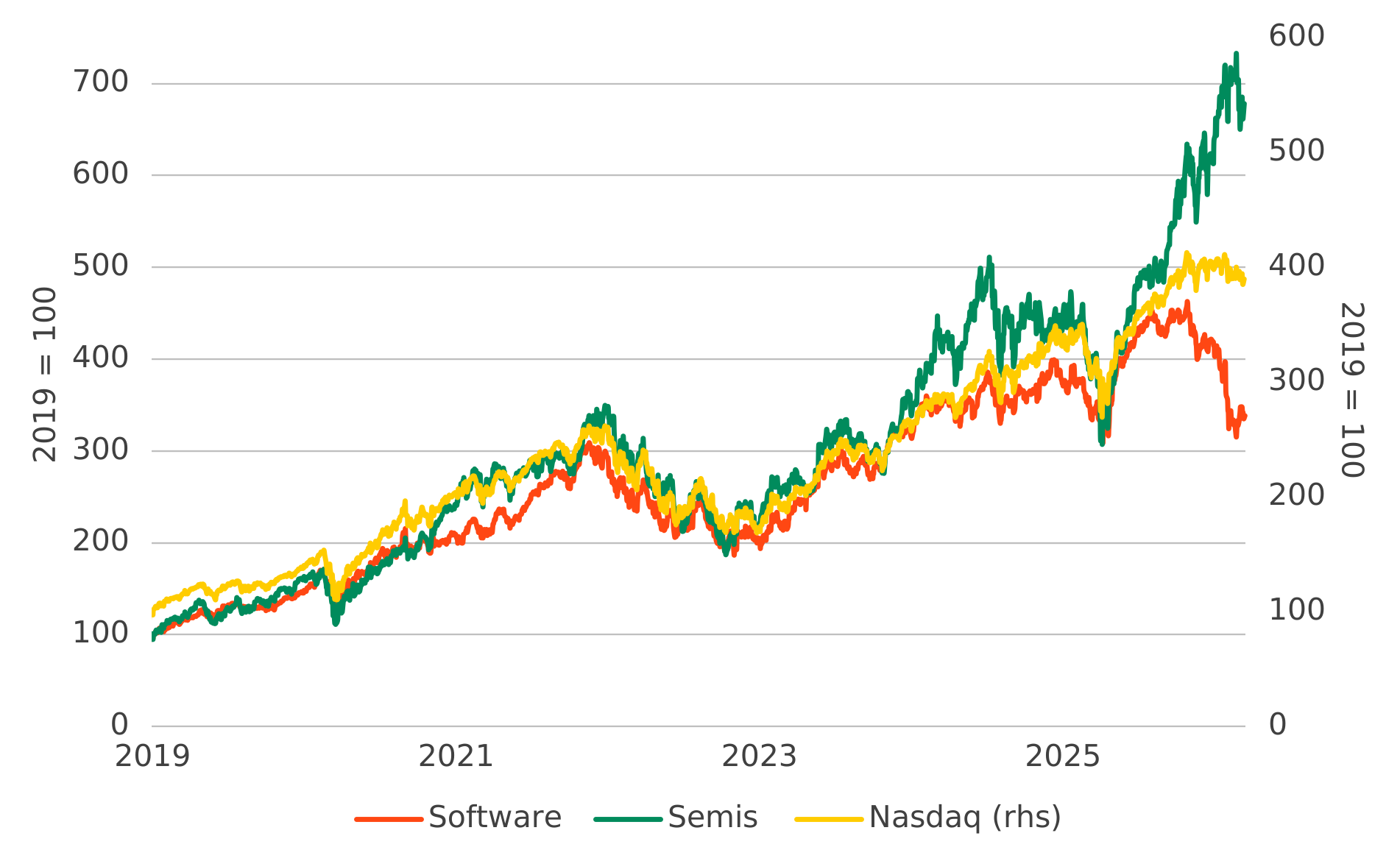
The broader point is that artificial intelligence brings a new dawn of dispersion. For the last decade, software, semiconductors, and the Nasdaq were essentially one trade. In four months, software fell 30% back to 2021 levels while semiconductors rose 30% to fresh highs. Correlations are being rewritten. The visibility of future cash flows needs to be re-underwritten, and traditional relationships should not be trusted blindly.
Bloomberg, as of 3/15/2026
Middle East Uncertainty
The escalation in the Middle East has injected a level of uncertainty that cannot be dismissed. Crude oil prices have surged, and the conflict has widened in ways that add complexity. The situation remains fluid.
For investors, the issue is less about predicting the conflict and more about what it does to the macro environment at a critical juncture. Central banks are in a difficult position. The Federal Reserve has reason to ease: the labor market is weakening, the fiscal debt burden benefits from lower rates, and housing affordability is strained. But higher energy prices feed directly into headline inflation, making near-term cuts harder to justify. The European Central Bank and Bank of England face even greater tension as energy importers.
This is a textbook dilemma: supply shock inflation that monetary policy cannot fix arriving precisely when the economy needs accommodation for other reasons. In our view this increases the chance the Fed holds policy steady to digest near-term price effects, before ultimately continuing to cut later in the year. The risk is that delay compounds the issues in a labor market that is already softening.
Growth is the bigger concern. Consumer confidence is sensitive to gasoline prices, and lower-income cohorts are the most exposed to energy cost increases. Business investment decisions can get deferred when visibility is low. The US economy is less energy dependent than it was in the 1970s, but the second-order effects on confidence, spending, and corporate decision-making are still real.
This is why the other themes in this piece matter more in periods like this. A portfolio anchored in contractual income is more resilient to geopolitical volatility than one dependent on multiple expansion. AI-driven productivity gains become more valuable if growth faces headwinds. Dispersion across credit and equities accelerates as some businesses prove resilient while others are exposed.
Growth without labor, and why it leans disinflationary
Beneath the geopolitical noise, the labor market continues to soften. Federal government layoffs are elevated, and over one million jobs were revised away from 2025 initial reports. February's payrolls print underscored the point. Job gains have been heavily concentrated in healthcare, which itself showed some weakness for the first time in four years. Excluding healthcare, the economy has shed 373,000 jobs over the last ten months.
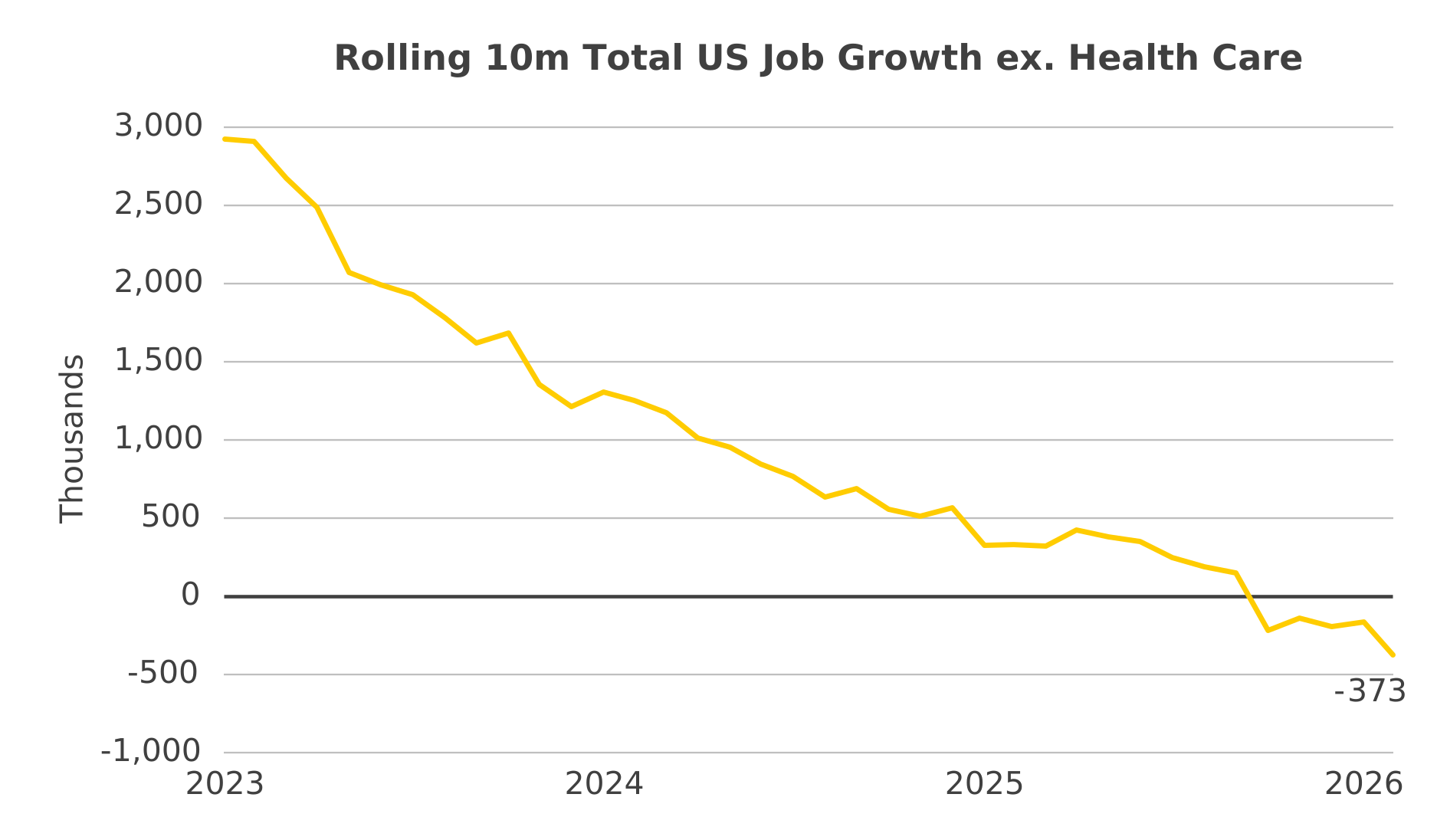
Bureau of Labor Statistics, as of 02/28/2026
And yet real GDP averaged above 2.5% over the last two quarters of 2025, with negative job growth. Productivity is doing the work. Labor costs as a share of business sector output are at all time lows. Corporations are doing more with less. S&P 500 revenue growth slowed to 5%, but EPS rose 12% year over year. Profit margins are pressing to new highs even as top line growth slows.
Throughout history, technology-led productivity revolutions (agriculture, telecoms, shale energy) have flattened supply curves, reduced unit costs, and driven prices lower. What makes this cycle unique is that AI targets cognitive labor, which has been largely immune to prior waves of automation. When companies like Travelers Insurance can consolidate four call centers down to two while doubling net income, the implications for services inflation are profound. Lower labor costs per unit of output mean companies can grow earnings without passing costs to consumers.
We see potential for firmer inflation in the near-term—particularly given the energy price surge from the Middle East conflict—but the longer-term structural direction of travel is lower.
Debt dynamics keep the bias toward lower rates
The fiscal case for lower rates has not changed. The US issues about $573 billion of debt in a typical week. Front-end issuance exceeds 100% of GDP. To keep the fiscal trajectory contained, lower rates alongside nominal GDP growth are an important pressure valve.
The near-term path has become more complicated. Energy-driven inflation can raise the hurdle for easing even as the labor market weakens and housing affordability remains strained. The tension between what the economy needs and what headline data allows is acute. We believe the direction of rates is ultimately lower, but the timing is now hostage to geopolitical developments that no central bank can control.
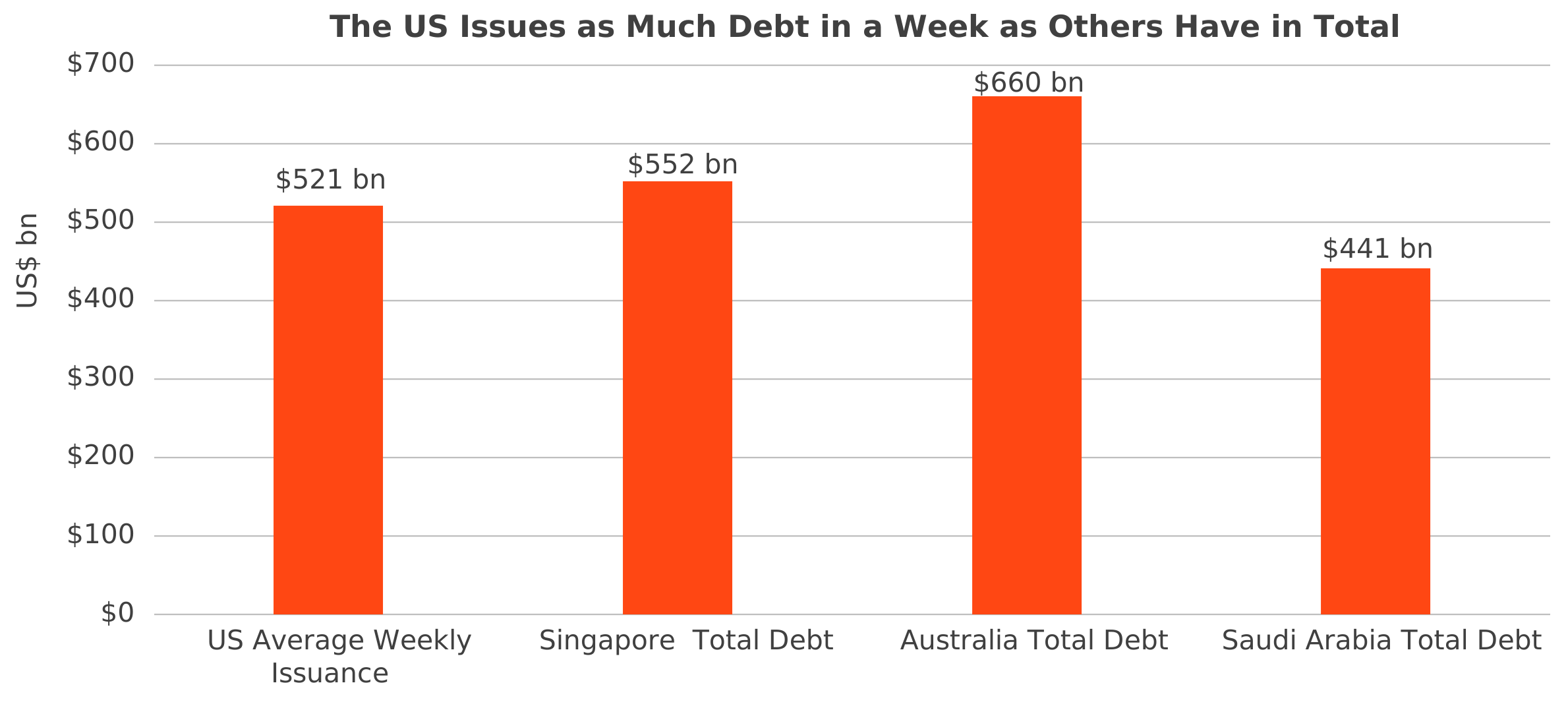
US Treasury and Bloomberg, as of 10/10/2025
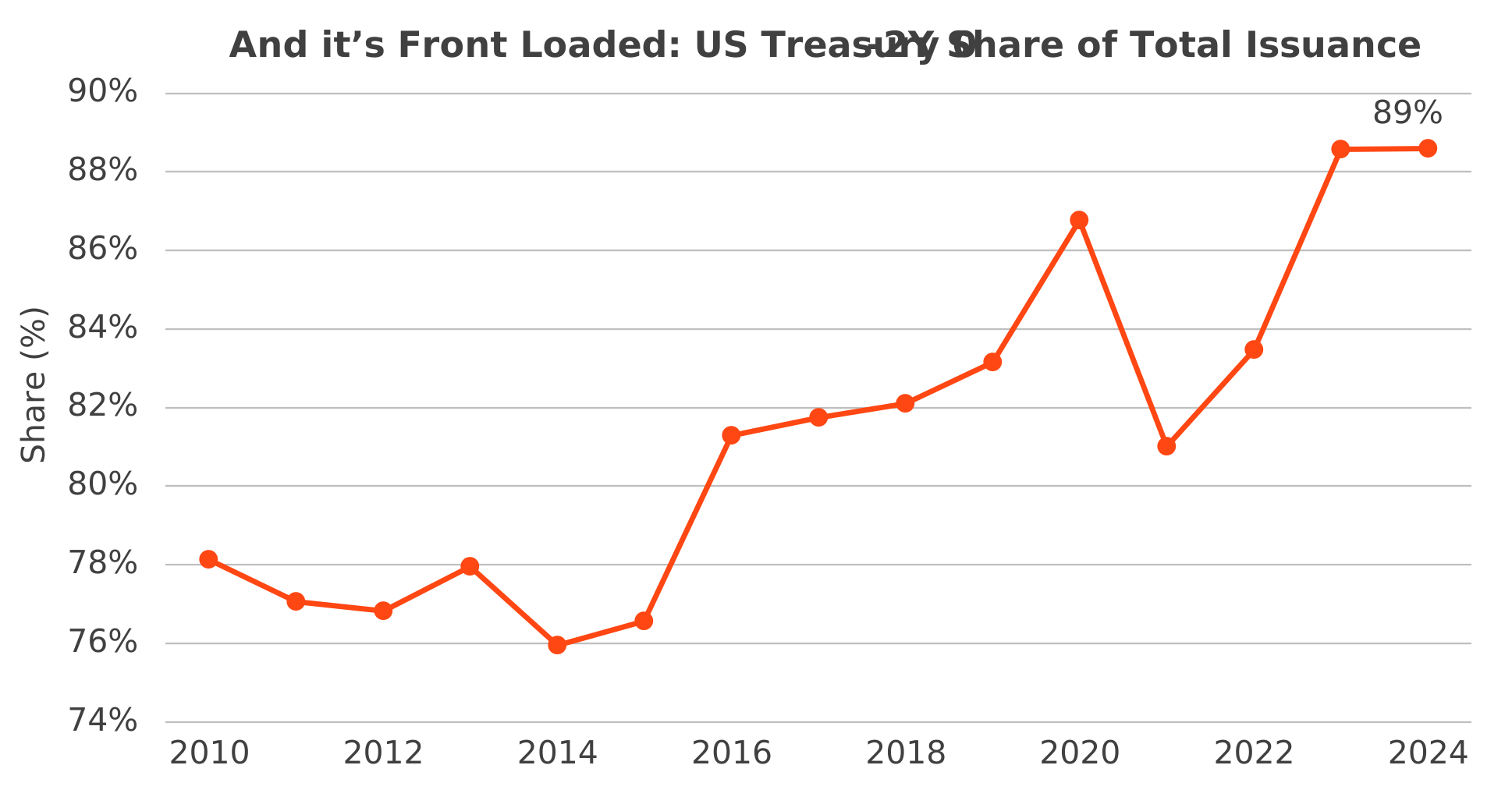
US Treasury and Bloomberg, as of 12/31/2024
The golden age of income
This remains a golden age of fixed income investing. The opportunity that emerged when yields reset in 2022 has become richer, not narrower. Real yields remain well above 2010s averages, and a high-quality portfolio can generate roughly five times the real income of cash.
The credit landscape reflects the same dispersion theme. At the top of the capital structure, AAA spreads sit at historically tight percentiles. At the bottom, CCC yields are at the 98th percentile of the last decade. In between, the range is enormous, and that range is where active management earns its keep. Among US high yield information technology names, year to date spread changes range from minus 431 to plus 1,709 basis points. That is not a market where passive exposure is an easy answer.
Securitized markets tell a similar story. In commercial real estate, new issue pricing in CMBS is highly dispersed by structure, geography, and attachment point. Precise structuring, including self-securitization, mezzanine debt, and horizontal risk retention, can pick up 35 to 300 basis points versus comparable syndicated or traded alternatives.
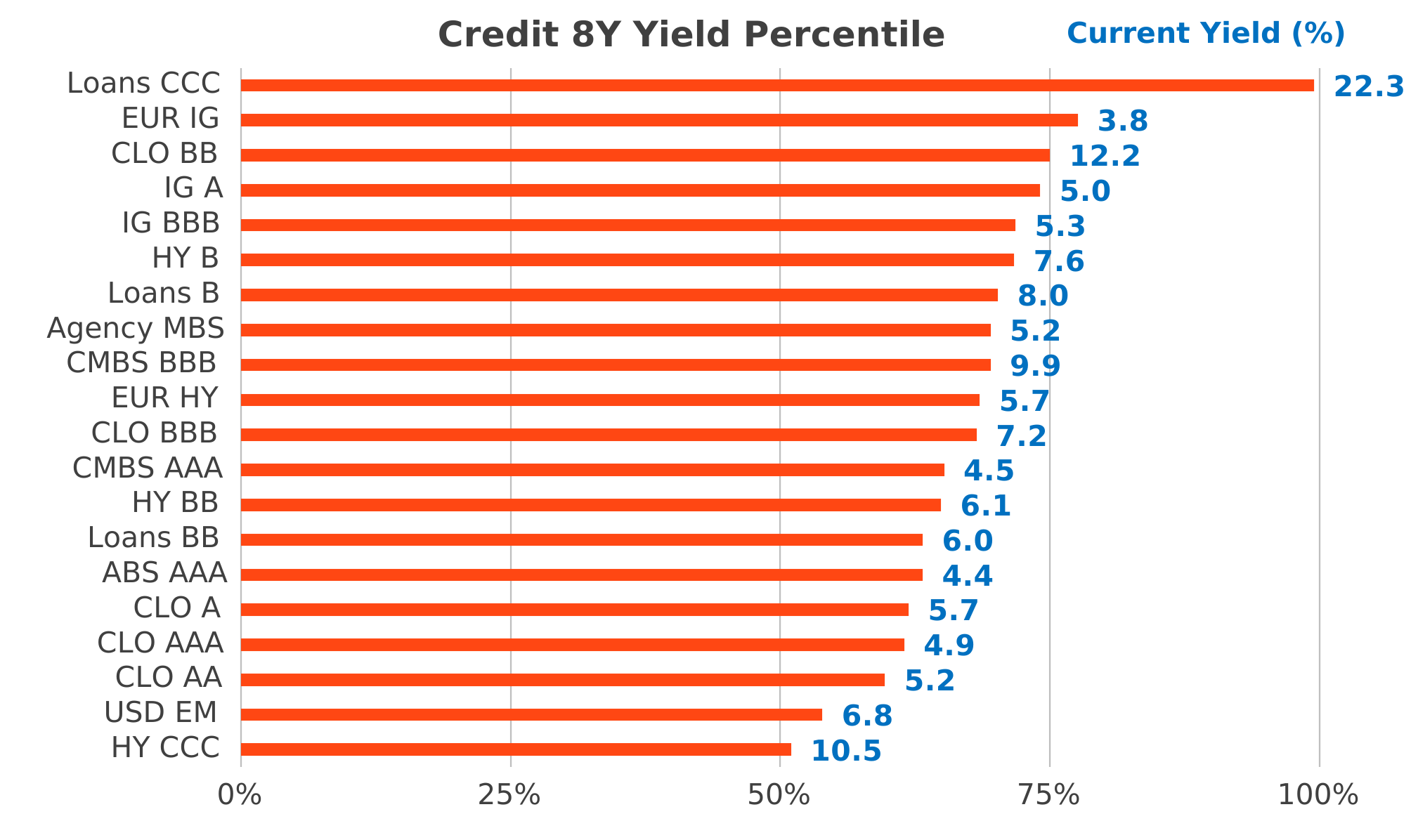
Bloomberg, as of 03/15/2026
The opportunity set is wide, but it rewards precision over broad exposure. The ability to diversify across roughly 1.5 million unique fixed income securities is a powerful risk management tool. A very different picture from equities, where the top 30 names account for nearly a third of total global market cap.
A precise allocation combining the full scope of fixed income with bottom-up security selection can potentially generate 6% to 7% income with contained drawdowns. In recent stress episodes, well-constructed income allocations experienced a fraction of the drawdowns seen in the S&P, the US Aggregate, and US high yield. Diversified income should anchor portfolios in this regime.
Equities: redefining quality
The US equity market makes up nearly 72% of total global market cap. The top 10 US stocks command $25 trillion, larger than every equity market outside the US combined. Index concentration is extreme, but the technical backdrop remains favorable. Buybacks have outpaced initial public offerings, and demand for equity-like investments remains enormous.
More importantly, the definition of “quality” is being rewritten. Previously, quality often meant low earnings variability and high gross profits. Today, “new quality” is more about durable earnings and free cash flow growth. Return on equity has expanded above 40% among leaders. Roughly 40% of S&P 500 companies do not clear their cost of capital. From 2023 to 2025, those that do delivered 22% average annual returns versus 11.6% for those that do not.
Valuation nuance matters as well. The S&P’s forward P/E looks elevated at the index level, but the share of companies at all time high valuations is only a third of what it was in 2021. Semiconductors compressed from 28x to 20x forward P/E while the top 10 companies contributed 67% of year to date forward earnings growth. Fundamental drivers now explain roughly 50% of trailing 12-month returns versus 15% for sector alone. Bottom-up analysis matters more than top-down sector bets.
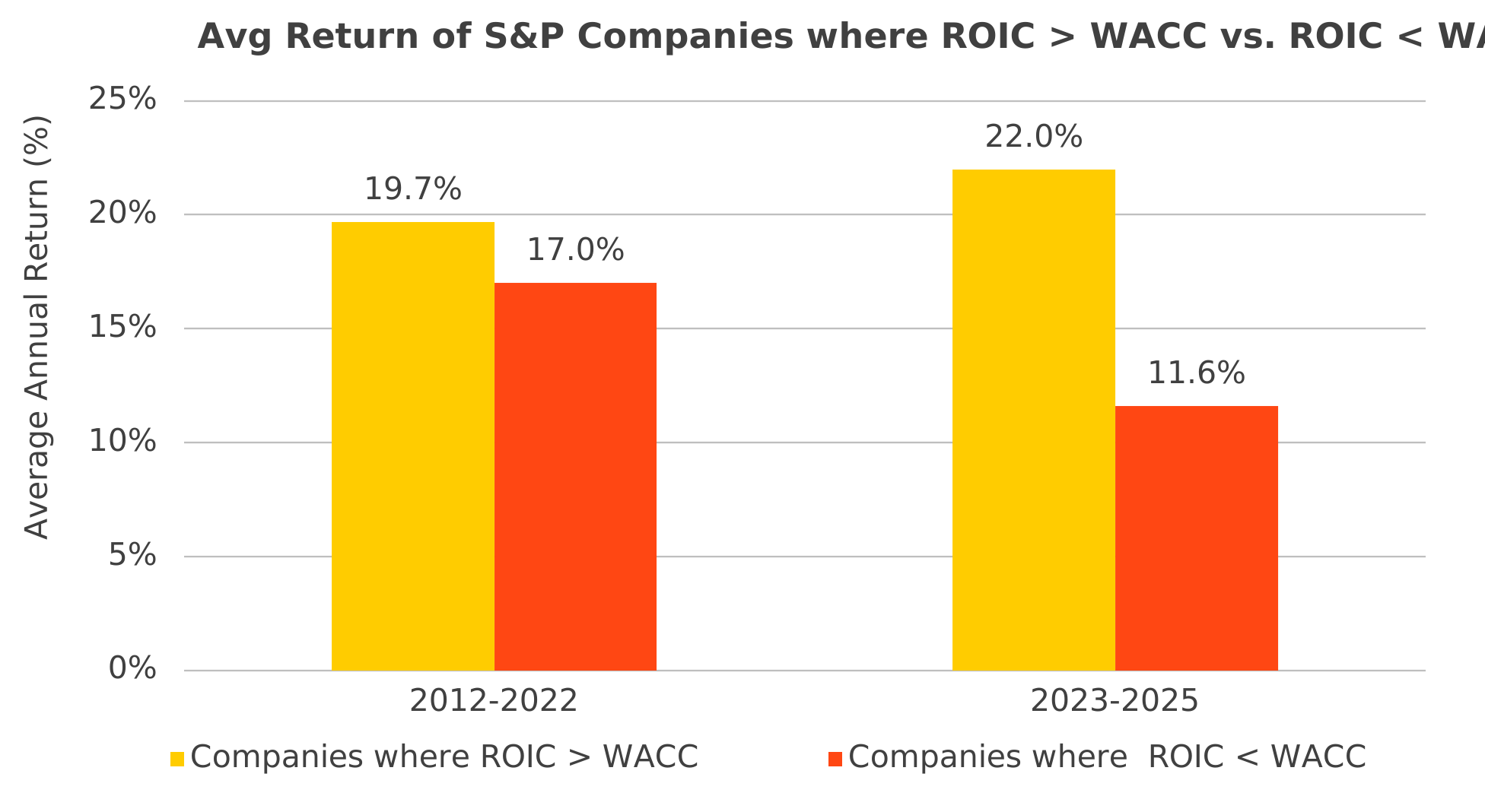
Bloomberg, as of 12/31/2025
What we are focused on
- Anchor portfolios in diversified income. A 6% to 7% income stream in high-quality fixed income against roughly 2% to 3% inflation creates a margin of safety that was absent for much of the last two decades.
- Acknowledge that geopolitical uncertainty widens the range of outcomes. The Middle East conflict will elevate volatility and adds near-term growth risk. But uncertainty is precisely when income-anchored, fundamentally driven portfolios prove their worth.
- Navigate dispersion with precision. Software-related stresses can create idiosyncratic opportunities. In equities and credit, bottom-up underwriting matters more than sector labels when correlations are breaking.
- Treat AI as the defining variable. Companies that translate AI into durable cost advantages and cash flow resilience will separate from those that cannot.
- Own equity risk where cash flow compounds. High-earnings growth, free cash flow growth, and return on equity are the markers of a strong company. Pair that with a fixed income ballast so total portfolio risk behaves well across outcomes.
2026 continues to present one of the most dynamic investment environments in recent memory. The speed of change is widening the dispersion of outcomes across every asset class. What was one trade for a decade: software, semiconductors, and the Nasdaq, has diverged by 60 percentage points in four months.
Broad indices can look little changed while the composition underneath shifts dramatically. We believe the right approach is to build return around income, be precise in security selection, and stay aligned with the structural forces that drive direction and velocity. Navigate by signal, not noise. And respect gravity.
The performance quoted represents past performance and does not guarantee future results. Investment returns and principal values may fluctuate so that an investor’s shares, when redeemed, may be worth more or less than their original cost. Current performance may be lower or higher than the performance data quoted. All returns assume reinvestment of all dividend and capital gain distributions. Click on the fund tile to obtain performance data as of the most recent quarter end and current to the most recent month-end.
The Morningstar Rating for funds, or "star rating", is calculated for managed products (including mutual funds, variable annuity and variable life subaccounts, exchange-traded funds, closed-end funds, and separate accounts) with at least a three-year history. Exchange-traded funds and open-ended mutual funds are considered a single population for comparative purposes. It is calculated based on a Morningstar Risk-Adjusted Return measure (excluding any applicable sales charges) that accounts for variation in a managed product's monthly excess performance, placing more emphasis on downward variations and rewarding consistent performance. The top 10% of products in each product category receive 5 stars, the next 22.5% receive 4 stars, the next 35% receive 3 stars, the next 22.5% receive 2 stars, and the bottom 10% receive 1 star. The Overall Morningstar Rating for a managed product is derived from a weighted average of the performance figures associated with its three-, five-, and 10-year 60-119 months of total returns, and 50% 10-year rating/30% five-year rating/20% three-year rating for 120 or more months of total returns. While the 10-year overall star rating formula seems to give the most weight to the 10-year period, the most recent three-year period actually has the greatest impact because it is included in all three rating periods.

Rick Rieder
Chief Investment Officer of Global Fixed Income and Head of the Global Allocation Investment Team

Russell Brownback
Head of Global Macro Positioning Team within Global Fixed Income

Navin Saigal
Head of Global Fixed Income, Asia Pacific

Dylan Price
Director, Global Fixed Income

Charlotte Widjaja
Director, Global Fixed Income
Investments
Insights
Retirement
Tools
Resources
About Us


Investing involves risks, including possible loss of principal. Past performance is no guarantee of future results. Index performance is shown for illustrative purposes only. It is not possible to invest directly in an index.
Performance data quoted represents past performance and is no guarantee of future results. Investment returns and principal values may fluctuate so that an investor’s shares, when redeemed, may be worth more or less than their original cost. All returns assume reinvestment of dividends and capital gains. Current performance may be lower or higher than that shown. Refer to blackrock.com for most recent month-end performance.
Carefully consider the Funds' investment objectives, risk factors, and charges and expenses before investing. This and other information can be found in the Funds' prospectuses or, if available, the summary prospectuses which may be obtained by visiting www.iShares.com or www.blackrock.com. Read the prospectus carefully before investing.
Fixed income risks include interest-rate and credit risk. Typically, when interest rates rise, there is a corresponding decline in bond values. Credit risk refers to the possibility that the bond issuer will not be able to make principal and interest payments. International investing involves risks, including risks related to foreign currency, limited liquidity, less government regulation, and the possibility of substantial volatility due to adverse political, economic, or other developments. These risks may be heightened for investments in emerging markets. International investing involves risks, including risks related to foreign currency, limited liquidity, less government regulation and the possibility of substantial volatility due to adverse political, economic or other developments. These risks may be heightened for investments in emerging markets.
Stock and bond values fluctuate in price so the value of your investment can go down depending on market conditions. Non-investment-grade debt securities (high-yield/junk bonds) may be subject to greater market fluctuations, risk of default or loss of income and principal than higher rated securities. Asset allocation strategies do not assure profit and do not protect against loss.
Actively managed funds do not seek to replicate the performance of a specified index, may have higher portfolio turnover, and may charge higher fees than index funds due to increased trading and research expenses. There is no guarantee that an active fund will meet its investment objective.
This material is not intended to be relied upon as a forecast, research, or investment advice, and is not a recommendation, offer or solicitation to buy or sell any securities or to adopt any investment strategy. The opinions expressed are as of March 15th, 2026, and may change as subsequent conditions vary.
The information and opinions contained in this commentary are derived from proprietary and non-proprietary sources deemed by BlackRock to be reliable, are not necessarily all-inclusive and are not guaranteed as to accuracy. As such, no warranty of accuracy or reliability is given and no responsibility arising in any other way for errors and omissions (including responsibility to any person by reason of negligence) is accepted by BlackRock, its officers, employees, or agents.
This commentary may contain “forward-looking” information that is not purely historical in nature. Such information may include, among other things, projections, and forecasts. There is no guarantee that any forecasts made will come to pass. Reliance upon information in this post is at the sole discretion of the reader.
Prepared by BlackRock Investments, LLC, member FINRA.
©2026 BlackRock, Inc. or its affiliates. All rights reserved. BLACKROCK is a trademark of BlackRock, Inc., or its affiliates. All other marks are the property of their respective owners.
FFI0326-5337317-EXP0327