Skip to content
Switch your user type.
You're on the BlackRock site for advisors. Do you want to change your user type to advisor?

Fixed Income

Nov 02, 2026|ByConnor StackKaren Veraa-Perry, CFAStephen Laipply
Key takeaways
- Fixed income indexing has grown rapidly, with index strategies now representing a significant share of fixed income fund assets—yet still representing a small slice of the overall bond market.1
- Bond indices and index funds have expanded well beyond “core Agg” exposures, giving investors more ways to build, customize, and express views in fixed income.
- In fixed income, implementation matters: disciplined index portfolio management can help deliver reliable, index-like outcomes at scale.
This guide builds on the findings from Demystifying Index Fixed Income Investing, which examines the growth and evolution of index fixed income investing.
Index fixed income has entered a new era
Fixed income indexing has evolved significantly over the past two decades. What began primarily as a way to access broad, core bond markets have expanded into a toolkit spanning sectors, credit qualities, maturities and portfolio outcomes. As the index universe has grown, so too has the role index strategies can play in portfolio construction, from establishing a strategic core to expressing targeted investment views.
Fixed income indexing: From niche to mainstream
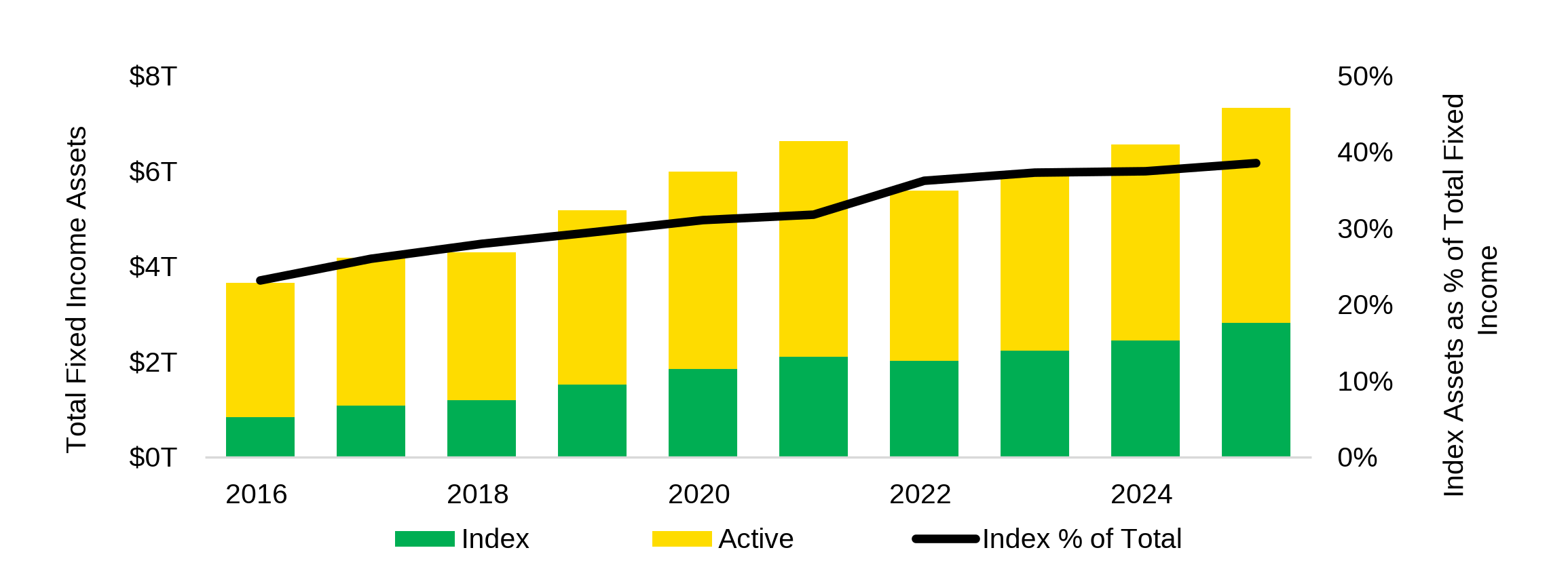
Twenty years ago, bond index funds were rare, and many doubted they could track benchmarks with thousands of securities—many of which rarely traded. Today, we estimate there is $6T in index fixed income funds and separate accounts globally, reflecting substantial growth over the past decade. An increasingly modernized and liquid bond market, more thoughtful and expanded indices, improved portfolio management techniques, the growth of efficient investment wrappers such as ETFs, and broader adoption by investors have all contributed to that growth.
Chart 1. The rapid rise of fixed income index investing
Source: Morningstar and Bloomberg, as cited in the accompanying paper (as of 12/31/2025).
Chart description: Chart 1 illustrates the growth of fixed income fund assets from 2016 to 2025. The stacked bars show assets invested in active and index fixed income mutual funds and ETFs, while the black line shows index fixed income assets as a percentage of total fixed income fund assets. As of December 31, 2025, index strategies represented approximately 40% of U.S. fixed income fund assets yet remained less than 10% of the overall bond market.
How have fixed income indices evolved?
Modern fixed income indices now map a broader opportunity set—spanning government bonds to securitized assets, investment grade to high yield, short to long duration, fixed to floating rate coupons, and U.S. to global exposures. This evolution has helped improve transparency, attribution, and portfolio construction—while enabling more targeted exposure to specific sectors and risks.
- 1970s: Early fixed income indices tracked a selection of government and corporate bonds.
- 1986: The Bloomberg U.S. Aggregate Index expanded fixed income benchmark coverage to include investment-grade U.S. government, corporate, and mortgage-backed securities.2
- 1999: The Bloomberg U.S. Universal Index expanded beyond the Aggregate Index to include additional sectors such as high yield and more emerging markets.2
- 2025: The Bloomberg U.S. Total Bond Market Index broadened further by adding exposures such as TIPS, bank loans, expanded securitized segments, and private placements.2
For investors, there are funds that seek to track these broad market indices, and hundreds more that offer ever-more granular exposures to the underlying sub-sectors. For example, for investors who want to invest in a single, broad-based holding, BTOT (iShares Total USD Fixed Income Market ETF) seeks to track the expanded index universe described throughout this piece in one trade.
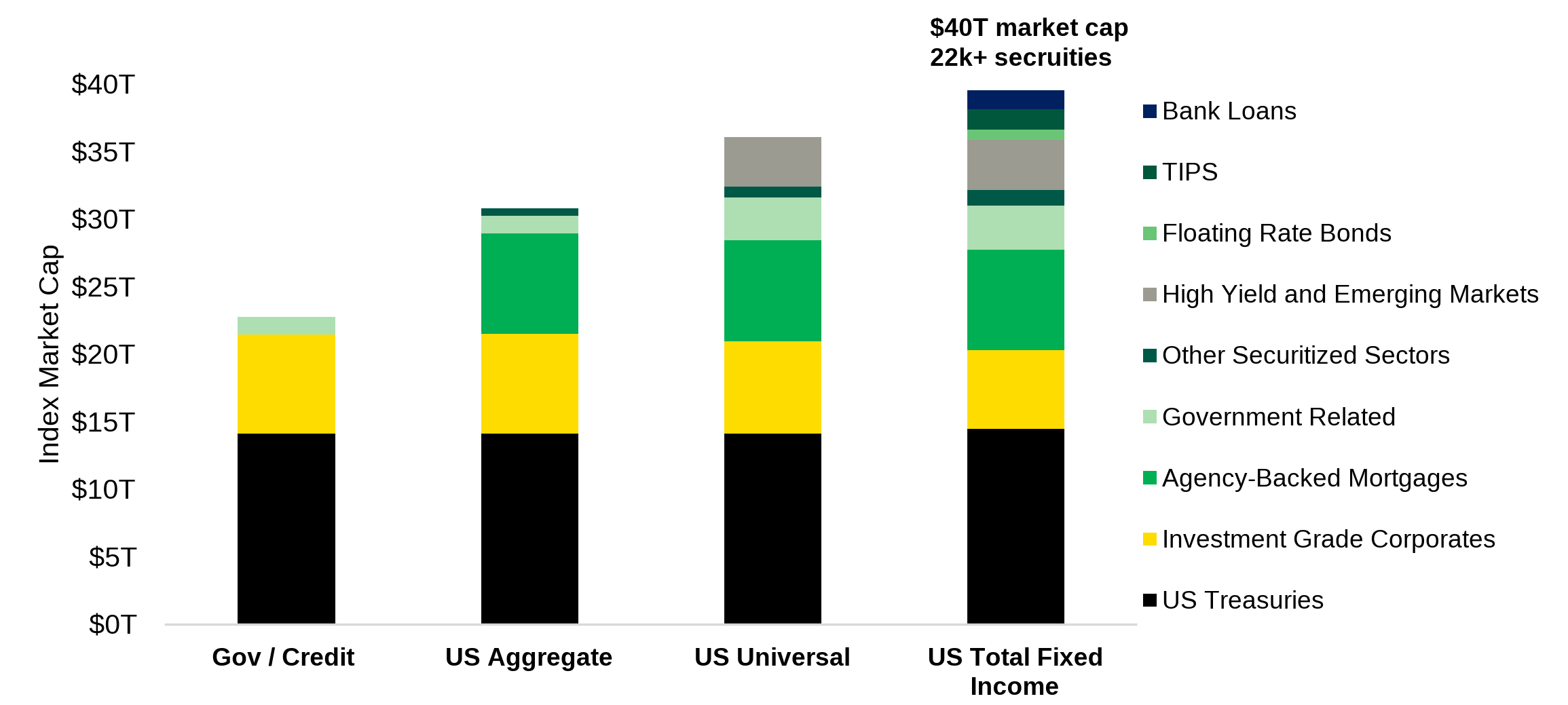
Chart 2. The breadth of today’s USD Index Fixed Income Market
Source: BlackRock as of 12/31/2025. Gov/Credit, US Aggregate, US Universal and US Total Fixed Income represented by their respective Bloomberg Indices.
Chart description: This chart compares the breadth of four major USD fixed income benchmark universes. Moving from left to right, each index expands the investable bond market by including additional sectors beyond the prior benchmark. The Bloomberg U.S. Government/Credit Bond Index consists primarily of U.S. Treasuries and investment grade corporate bonds. The Bloomberg U.S. Aggregate Index adds agency mortgage-backed securities to traditional government and investment grade corporate bonds, the Bloomberg U.S. Universal Index further expands into sectors such as high yield and emerging markets, and the Bloomberg U.S. Total Fixed Income Index broadens coverage further to include areas such as TIPS, bank loans, floating-rate bonds, and additional securitized sectors. As of December 31, 2025, the broadest benchmark represents approximately $40 trillion in market value and more than 22,000 securities.
Why does process matter in fixed income indexing?
Equity index funds can often fully replicate their benchmarks. Fixed income is different: benchmarks can include tens of thousands of bonds and rebalance regularly—so index portfolios often use an approach called stratified sampling to balance precision with trading costs. The goal is to stay closely aligned to the benchmark while thoughtfully managing turnover, liquidity, and transaction costs over time.
Four implementation levers that can matter in fixed income indexing include:
- Participating in primary issuance to potentially capture new‑issue pricing and reduce secondary trading costs.
- Continuous but patient rebalancing to avoid crowded month‑end trading and source liquidity opportunistically.
- Actively navigating credit and index events (e.g., downgrades, restructurings, reclassifications) with discretion on timing and execution.
- Leveraging scale and diverse liquidity access to help optimize transaction costs in markets where trading can be more expensive than equities.
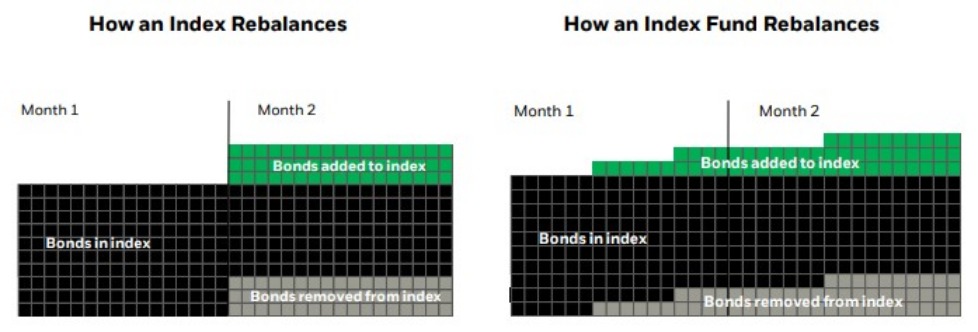
Chart 3. Index fixed income funds leverage a thoughtful rebalance process
For illustrative purposes only.
Chart description: The graphic illustrates the difference between how an index rebalances and how an index fund may rebalance to track that index. The left panel shows securities being added to and removed from the index at the monthly rebalance date. The right panel shows an index fund gradually purchasing securities expected to enter the index and reducing exposure to securities expected to leave the index ahead of the official rebalance. This approach may help the fund maintain benchmark alignment while reducing the impact of concentrated month-end trading.
Three ways investors use fixed income index exposures
Index fixed income use cases can range from forming the core of a strategic asset allocation, to a tool for implementing short-term tactical active views. Rather than building a portfolio bond-by-bond, investors can efficiently seek an outcome using one or more index funds.
- Own the market
Broad bond index funds can offer efficient exposure across major sectors (such as Treasuries, agency mortgages, and corporates), providing transparent market access in a single holding. BTOT is designed to help serve exactly this kind of core, broad-market holding.
- Modify the market
Today’s index menu is far more granular, enabling investors to adjust exposures to pursue specific outcomes—emphasizing quality, managing duration, targeting income, or improving diversification. For investors looking to modify a core allocation toward greater income potential, USHY (iShares Broad USD High Yield Corporate Bond ETF) offers a cost-efficient, broad-based way to add high yield corporate exposure to a portfolio.
- Express views
Investors can use index building blocks to tilt portfolios—overweight or underweight duration, reshape curve exposure, rotate sectors, or adjust credit risk—often alongside active strategies. Investors seeking to express a view through floating-rate income might consider USLN (iShares Broad USD Floating Rate Loan ETF), which provides diversified exposure to senior loans.
Addressing common misconceptions
Despite this growth, some misconceptions remain. As the largest provider of index fixed income strategies globally3, we have a unique perspective on how fixed income indexing has evolved and the role it can play in portfolios today.
Myth: “Index means underperformance.”
Fact: Performance comparisons can depend heavily on which benchmark is used. In some cases, what looks like outperformance from active managers versus a narrower benchmark may reflect differences in benchmark selection or exposures outside that benchmark.
Myth: “Market‑cap weighting means lending more to the weakest borrowers."
Fact: Market‑value weighting is designed to represent the investable universe. Larger issuers may also have greater capacity to service debt—so market weight does not necessarily imply higher risk.
Myth: “Index funds are tax‑inefficient.”
Fact: Index funds have historically distributed capital gains less frequently than many active funds, and ETF in‑kind mechanics can help limit realized capital gains in some circumstances.
Conclusion: Indexing as a portfolio foundation
Fixed income indexing today is not only possible, but it has also been thriving, expanding in sophistication and in how investors use it to meet different objectives. For many investors, indexing is no longer just a low‑cost option—it can be a core building block for resilient, diversified, and operationally efficient fixed income portfolios, used to own markets, modify exposures, and complement active views.
For a deeper dive into the evolution of fixed income indexing, its growing role in portfolio construction, and the innovations shaping the market, read our full paper, Demystifying Index Fixed Income Investing.
Frequently asked questions
-
Both bond index mutual funds and bond index ETFs seek to track the same types of fixed income benchmarks. The key difference is structure. Mutual funds transact once daily at end-of-day net asset value (NAV), while ETFs trade on an exchange throughout the trading day. ETFs typically offer intraday liquidity, daily holdings transparency, and, in many cases, lower costs.
-
Usually not. Because fixed income benchmarks can include tens of thousands of bonds, most index funds use stratified sampling representative basket—rather than full replication. Portfolio managers construct a representative portfolio designed to closely track the index's risk and return characteristics while balancing liquidity, turnover, and transaction costs.
-
Bond indices are far larger and more dynamic than equity indices, with constituents constantly maturing, getting issued, or getting downgraded, which is why bond index construction and rebalancing require more active portfolio management than equities.
-
Yes. Investors can use index ETFs targeting specific durations, maturities, or floating-rate structures to dial interest rate sensitivity up or down within a portfolio.
-
Tracking error measures how closely a fund's returns follow its benchmark; in fixed income, a disciplined sampling and rebalancing process is what keeps tracking error low despite not holding every bond.
-
Both. As covered above, investors can use them to own the broad market, modify a core allocation, or express short-term tactical views—often all three at once across a portfolio.
-
Many seek to distribute income monthly (more frequently than individual bonds, which typically pay semi-annually), passing through interest collected from the underlying holdings.

Karen Veraa-Perry
U.S. Head of iShares Fixed Income Product Strategy, BlackRock

Stephen Laipply
Global Co-Head of iShares Fixed Income ETFs, BlackRock

Connor Stack
Director, Fixed Income ETF Strategy

Jairo Garcia
Associate, Fixed Income Product Strategy
Investments
Insights
Retirement
Tools
Resources
About Us


1. Source: Morningstar and Bloomberg as of 12/31/2025. Index strategies represent 40% of U.S. fixed income fund assets, approximately $7 trillion globally, while remaining less than 10% of total bond market size.
2. Source: BlackRock, Bloomberg Index Services Ltd., as of 12/31/2025.
3. Morningstar as of 12/31/2025. BlackRock has over $1 Trillion in AUM across fixed income ETFs and mutual funds.
Carefully consider the Funds' investment objectives, risk factors, and charges and expenses before investing. This and other information can be found in the Funds' prospectuses or, if available, the summary prospectuses. Read the prospectus carefully before investing.
Investing involves risk, including possible loss of principal.
Fixed income risks include interest-rate and credit risk. Typically, when interest rates rise, there is a corresponding decline in the value of debt securities. Credit risk refers to the possibility that the debt issuer will not be able to make principal and interest payments.
Asset-backed securities are subject to credit, interest rate, call, extension, valuation and liquidity risk and are subject to the risk of default on the underlying asset or mortgage, particularly during periods of economic downturn. Small movements in interest rates may quickly and significantly reduce the value of certain ABS.
Non-investment-grade debt securities (high-yield/junk bonds) may be subject to greater market fluctuations, risk of default or loss of income and principal than higher-rated securities.
Mortgage-backed securities ("MBS") and commercial mortgage-backed securities ("CMBS") are subject to prepayment and extension risk and therefore react differently to changes in interest rates than other bonds. Small movements in interest rates may quickly and significantly reduce the value of certain mortgage-backed securities.
TIPS can provide investors a hedge against inflation, as the inflation adjustment feature helps preserve the purchasing power of the investment. Because of this inflation adjustment feature, inflation protected bonds typically have lower yields than conventional fixed rate bonds and will likely decline in price during periods of deflation, which could result in losses. Government backing applies only to government issued securities, and does not apply to the funds.
An investment in the Fund is not insured or guaranteed by the Federal Deposit Insurance Corporation or any other government agency and its return and yield will fluctuate with market conditions.
International investing involves risks, including risks related to foreign currency, limited liquidity, less government regulation and the possibility of substantial volatility due to adverse political, economic or other developments. These risks often are heightened for investments in emerging/developing markets or in concentrations of single countries.
Diversification and asset allocation may not protect against market risk or loss of principal.
The strategies discussed are strictly for illustrative and educational purposes and are not a recommendation, offer or solicitation to buy or sell any securities or to adopt any investment strategy. There is no guarantee that any strategies discussed will be effective.
The information presented does not take into consideration commissions, tax implications, or other transactions costs, which may significantly affect the economic consequences of a given strategy or investment decision.
The Funds are distributed by BlackRock Investments, LLC (together with its affiliates, “BlackRock”).
© 2026 BlackRock, Inc. or its affiliates. All Rights Reserved. BLACKROCK and iSHARES are trademarks of BlackRock, Inc. or its affiliates. All other trademarks are those of their respective owners.
GPS1026-MH-5890018-EXP1027