
Fixed Income

Key takeaways
- In our view, supply in the higher education sector is likely to remain elevated into 2026 as institutions face large capital programs and increasingly uncertain funding sources (tuition, federal research, state support, and philanthropy are all under pressure).
- Major rating agencies’ sector outlooks are negative for 2026, and downgrades are likely to outpace upgrades as headwinds remain unresolved.
- The spread gap between the strongest credits and mid-tier or tuition-sensitive issuers is widening – timing, structure, and liquidity matter more.1
- Unrestricted liquidity and endowment withdrawal discipline can be among the best real-time indicators of flexibility, particularly when net tuition is pressured by discounting and the enrollment mix shifts.
- Municipal solutions remain attractive for many high‑net‑worth investors due to their tax advantages, but elevated issuance and wider credit dispersion in the higher education sector make active management and rigorous credit research essential.
U.S. colleges and universities issued more than $34 billion of debt in the municipal bond market in 2025, a 28% increase from the prior year.2 While supply was well-absorbed by the market, there may be growing credit concerns across the sector. Stress is broadening beyond historically weaker small private colleges, while credit spreads increasingly reflect the university’s scale and revenue diversification. For active municipal investors, dispersion can create both opportunities (to add durable credits on concession) and risks (to be undercompensated for tail outcomes).3
Supply is a market variable again
Higher education contributed to a broader surge in municipal supply during 2025. For context, 2025 full-year municipal issuance totaled $567 billion ($533 billion tax-exempt and $34 billion taxable).4
Dealers are calling for higher education borrowing to remain elevated into 2026, though cooling modestly from 2025, as institutions balance expense pressure and funding uncertainty against large capital programs (research, clinical, utilities, housing, and technology).
Moody’s estimates $750-$950 billion of spending could be needed over the next decade for rated colleges and universities to materially address deferred maintenance, upgrade facilities, and execute strategic projects.
Higher education issuance by year
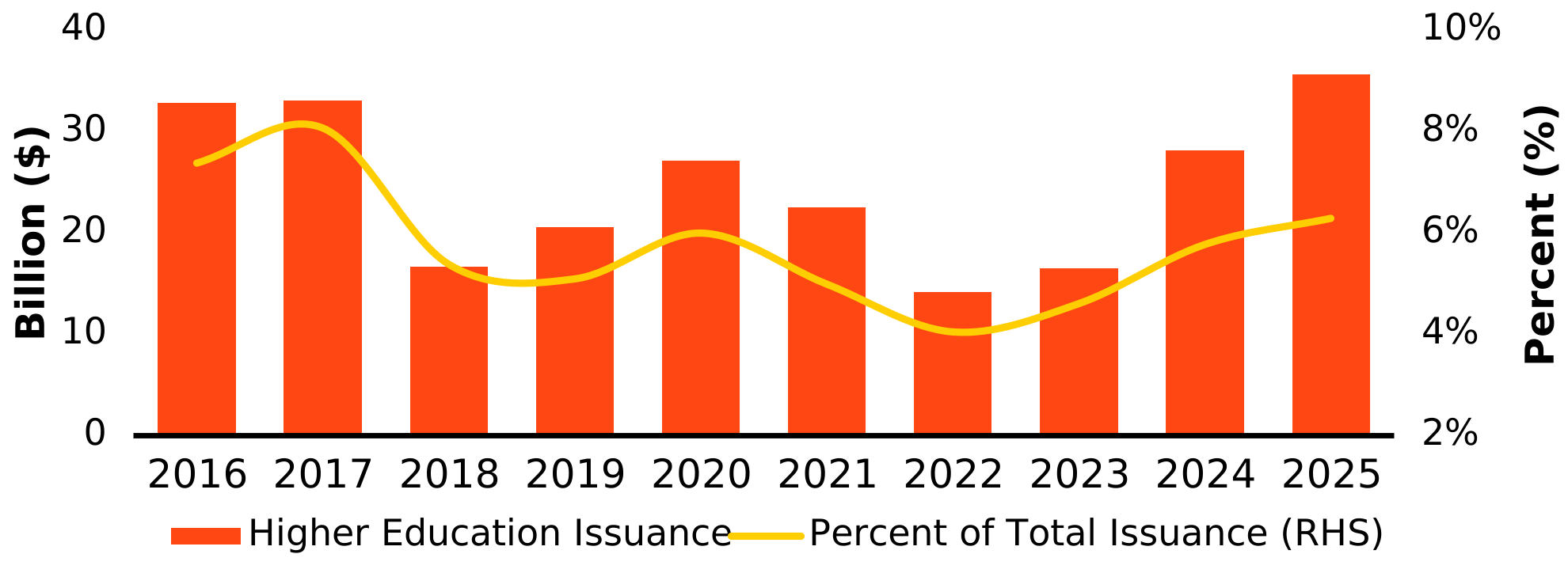
Source: Bloomberg, BlackRock, as of 12/31/25. RHS is right hand side. When combined with limited ability to self-fund on a pay-go basis (especially for tuition-dependent colleges) and episodic uncertainty around federal funding, the result is a higher baseline for borrowing – even if absolute issuance varies from year-to-year.
When combined with limited ability to self-fund on a pay-go basis (especially for tuition-dependent colleges) and episodic uncertainty around federal funding, the result is a higher baseline for borrowing – even if absolute issuance varies from year-to-year.
With issuance calendars heavy, price discovery matters more. We often see episodic spread widening in the middle of the quality spectrum, and occasional supply-driven cheapening even for flagship and elite credits. That dynamic supports a selective approach: emphasize liquidity and management quality and use concessions in strong credits to build exposure.
High school graduates, projected change from 2023
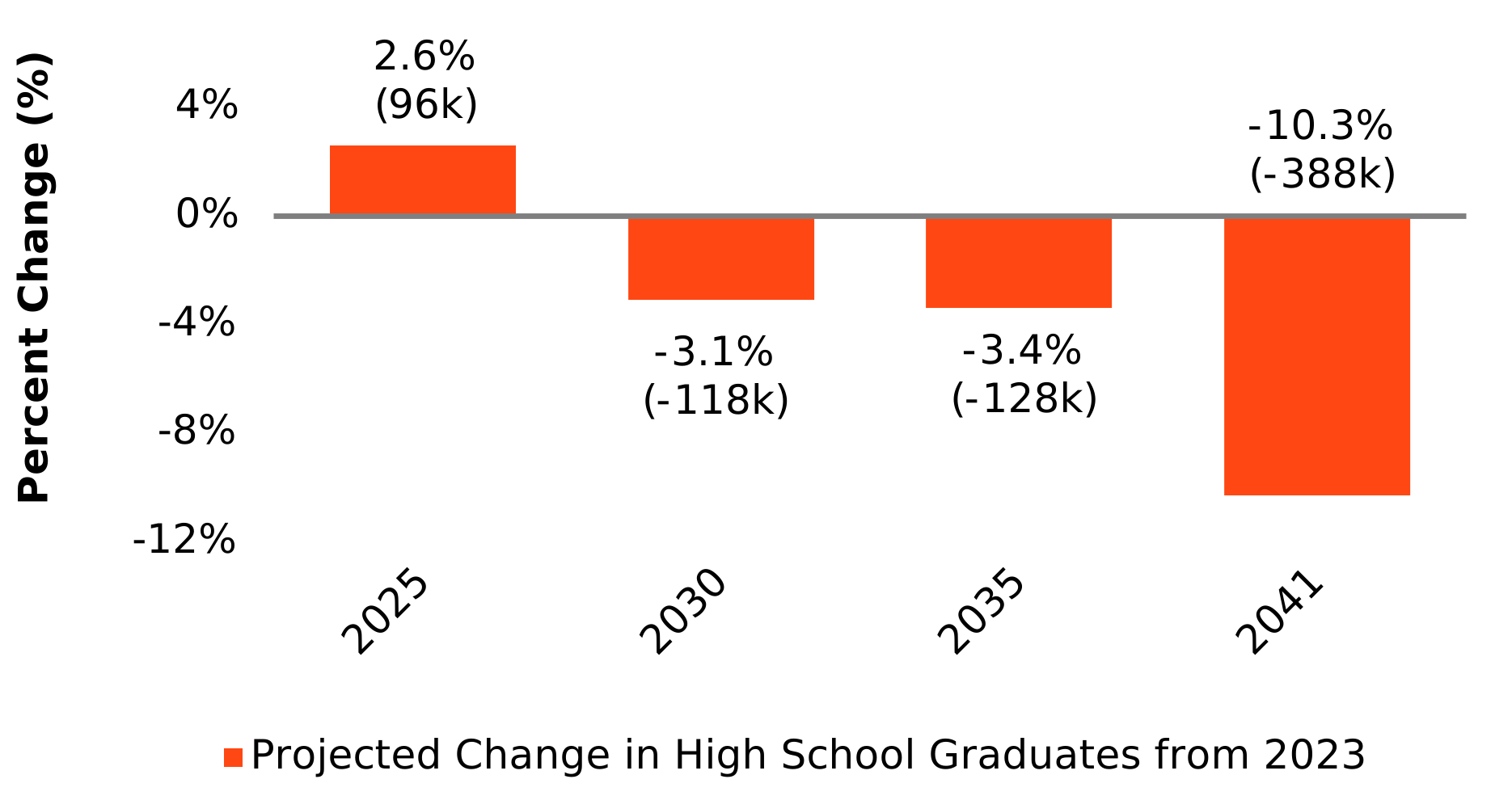
Source: Western Interstate Commission for Higher Education, as of 12/31/24. Projected change in total number of public & private high school graduates vs. 2023 total (3.8 million graduates). US only, territories not included
The operating backstop is weakening
Several long-running pressures are moving from background noise to direct credit drivers, reducing pricing power and flexibility to self-fund capital. The sector is highly heterogeneous, but the same themes historically have shown up repeatedly when credit spreads gap out: demographics, discounting, revenue concentration, and the availability of unrestricted liquidity.
- Demographics and competition. The Western Interstate Commission for Higher Education projects the national number of high school graduates will peak in 2025 and then decline steadily through 2041 (a projected 13% decline from the peak), with outsized pressure in parts of the Northeast and Midwest.5
- Affordability and discounting. Per the College Board, published tuition and fees average $11,610 (in-state public four-year) and $43,350 (private nonprofit four-year) for 2024-25.6 However, to offset weak demand, average discounts have surged to 56.3%, limiting net tuition growth and pressuring margins.7
- International enrollment. Open Doors reports 1,177,766 international students in the U.S. in 2024/25 (up 5%), but new international student enrollments fell 7% year-over-year – a meaningful risk to tuition revenue assumptions for institutions with high international student concentration.8
- Funding uncertainty and a thinner public backstop. Federal grants/research and state appropriations can swing. The State Higher Education Executive Officers Association reports FY2024 saw the largest one-year decrease in tuition revenue (3.7%), underscoring sensitivity as pandemic-era stimulus rolls off.9
- Capital needs and leverage. Large deferred maintenance backlogs and strategic projects are driving higher leverage and refinancing activity. Project governance, and the ability to pause, resize, or reprioritize capex, is increasingly important.
- Liquidity is the fault line. Unrestricted cash and investments, bank line terms, and endowment draw discipline are often better indicators of near-term resilience than GAAP operating results alone.
Dispersion is the opportunity set
We believe a negative sector outlook remains appropriate given policy uncertainty, demographic headwinds, and revenue concentration risk. Supply should stay elevated as campuses address deferred maintenance and strategic capital needs while funding sources remain uncertain.
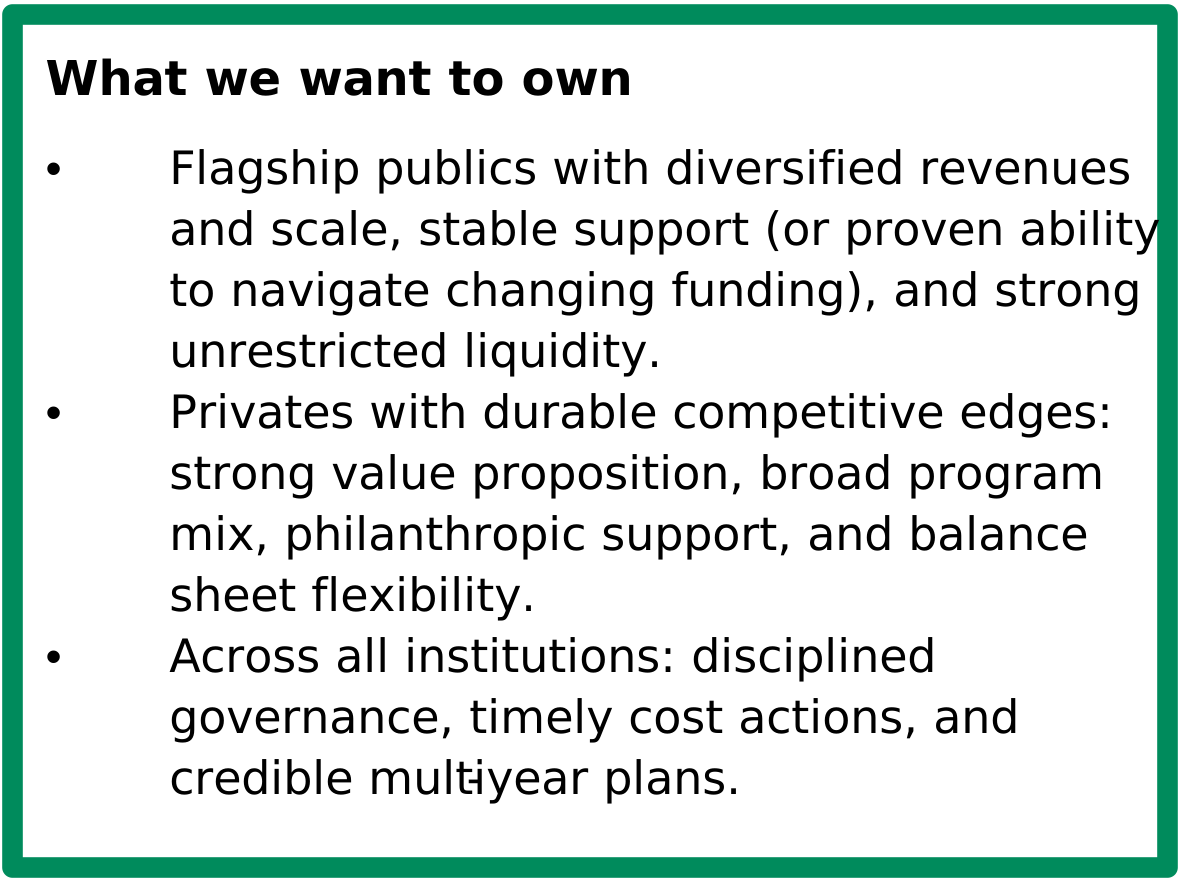
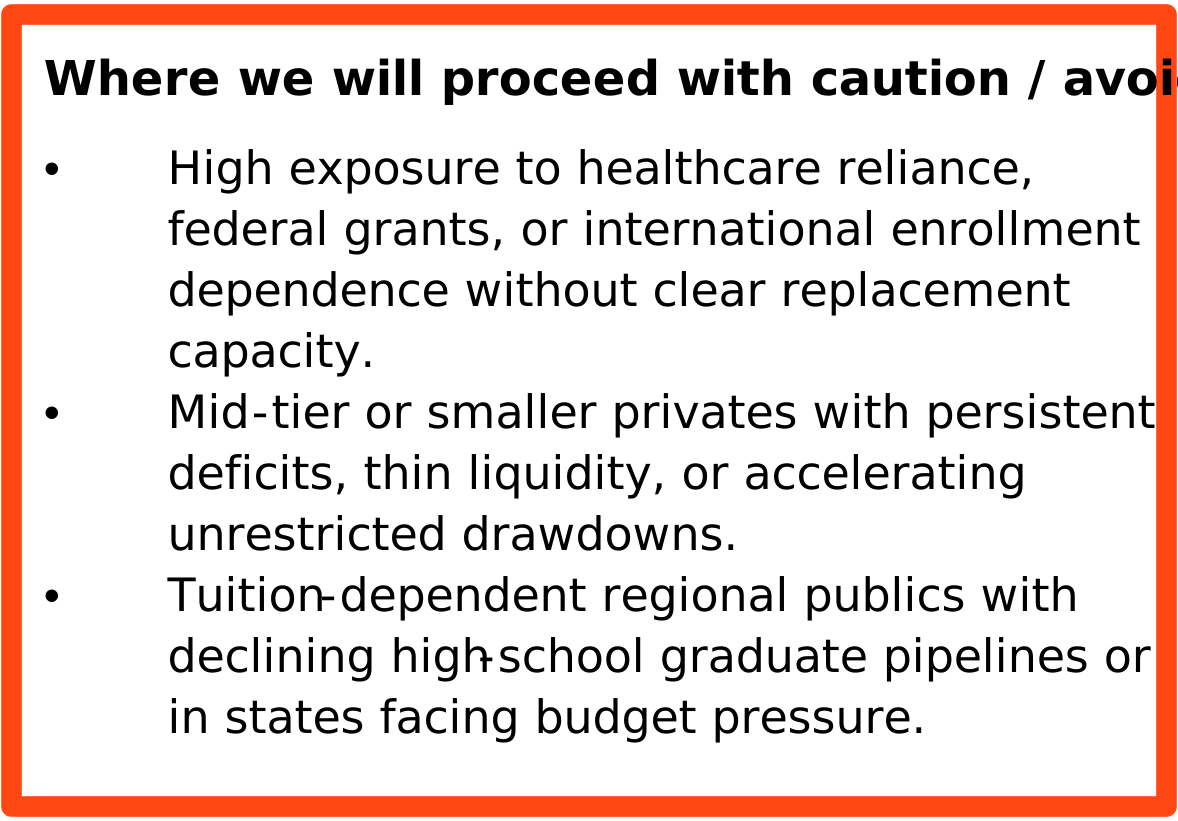
For municipal investors, we believe the main opportunity is in dispersion: add exposure to durable credits when concessions emerge, and demand meaningful spread, strong structures, and clear liquidity buffers for mid-tier issuers. Our approach remains selective and liquidity-driven, with portfolios constructed to strategically whether volatility.
As of March 31, 2026. This information should not be relied upon as research, investment advice, or a recommendation regarding any products, strategies, or any security in particular. This material is strictly for illustrative, educational, or informational purposes and is subject to change.
As of March 31, 2026. This information should not be relied upon as research, investment advice, or a recommendation regarding any products, strategies, or any security in particular. This material is strictly for illustrative, educational, or informational purposes and is subject to change.
Supported by a team of 66 investment professionals and Aladdin risk technology, BlackRock’s robust credit research capabilities can help investors to navigate the evolving risks across the entirety of the municipal market.
Interested in learning more about our solutions? Check out: Municipal Bond Offerings and Strategies | BlackRock

Patrick Haskell
Head of the Municipal Bond Group
Patrick Haskell, Managing Director, Head of the Municipal Bond Group within the Portfolio Management Group (PMG) as well as Global Head of Financial Institutions Group Investments Business.

Sean Carney
CIO of Municipal Bond Funds
Sean Carney, Managing Director and Head of the Municipal Strategy team within BlackRock's Municipal Fixed Income business in BlackRock's Portfolio Management Group.

James Schwartz, CFA
Head of Municipal Credit Research
Jim Schwartz, CFA, Managing Director, is Head of Municipal Credit Research with Municipal Fixed Income business in BlackRock's Portfolio Management


1. Source: MMD as of 13 May 2026
2. Source: Bloomberg as of 31 December 2025
3. Source: BlackRock as of 31 December 2025
4. Source: BlackRock as of 31 December 2025
5. Source: Western Interstate Commission for Higher Education, Knocking at the College Door, Projections of High School Graduates, December 2024 as of 31 December 2025
6. Source: College Board, Trends in College Pricing and Student Aid 2024, Fall 2023 Enrollment data as of 31 October 2024
7. Source: National Association of College and University Business Officers, 2024 Tuition Discounting Study as of 31 October 2025
8. Source: The Open Doors Report on International Educational Exchange, 2025 as of 31 December 2025
9.Source: State Higher Education Finance 2024 Report as of 31 December 2024
Investment involves risk, including possible loss of principal. The two main risks related to fixed income investing are interest rate risk and credit risk. Typically, when interest rates rise, there is a corresponding decline in the market value of bonds. Credit risk refers to the possibility that the issuer of the bond will not be able to make principal and interest payments. There may be less information available on the financial condition of issuers of municipal securities than for public corporations. The market for municipal bonds may be less liquid than for taxable bonds. A portion of the income from tax-exempt bonds may be taxable. Some investors may be subject to Alternative Minimum Tax (AMT). Capital gains distributions, if any, are taxable. Index performance is shown for illustrative purposes only. You cannot invest directly in an index. Past performance is no guarantee of future results.
This material is not intended to be relied upon as a forecast, research or investment advice, and is not a recommendation, offer or solicitation to buy or sell any securities or to adopt any investment strategy. The opinions expressed are as of February 23, 2026 and may change as subsequent conditions vary. The information and opinions contained in this material are derived from proprietary and nonproprietary sources deemed by BlackRock to be reliable, are not necessarily all-inclusive and are not guaranteed as to accuracy. There is no guarantee that any forecasts made will come to pass. Any investments named within this material may not necessarily be held in any accounts managed by BlackRock. Reliance upon information in this material is at the sole discretion of the reader.
©2026 BlackRock, Inc or its affiliates. All Rights Reserved. BlackRock is a trademark of BlackRock, Inc or its affiliates. All other trademarks are those of their respective owners.
Prepared by BlackRock Investments, LLC, member FINRA.
MKTG0526-5337992-EXP0527