

Fixed Income

Key takeaways
- Municipal bond yields have reset higher, creating compelling value. This is especially true for California residents who stand to benefit most from the municipal tax exemption.
- BlackRock’s Municipal Analyst team continues to highlight distinct opportunities and emerging risks across the California municipal landscape.
- BlackRock California Municipal products are designed to help investors capture these opportunities while navigating a dynamic market backdrop.
Boom or bust economy
- California remains the largest state economy in the U.S., now at $4.2T Gross Domestic Product (GDP), retaining its position as the 4th‑largest economy globally.
- Revenue performance in FY 2025–26 has outpaced expectations, with collections ~8% above forecast, easing the use of reserves.
- The state's fiscal outlook has stabilized relative to the volatile 2022–23 period but still faces long‑term structural pressures tied to income‑tax reliance.
- National context: State and local governments across the U.S. saw revenue softness in late 2025, but California benefited from a stronger‑than‑expected rebound in high‑income personal income tax (PIT) receipts.
California continues to demonstrate fiscal resilience, supported by strong liquidity balances and the absence of projected cash‑flow borrowing through FY 2026–27. However, Medicaid cost pressures, a progressive tax structure highly sensitive to equity market swings, and constitutional spending constraints remain key differentiators between California and other large states.
Economic Heat Map
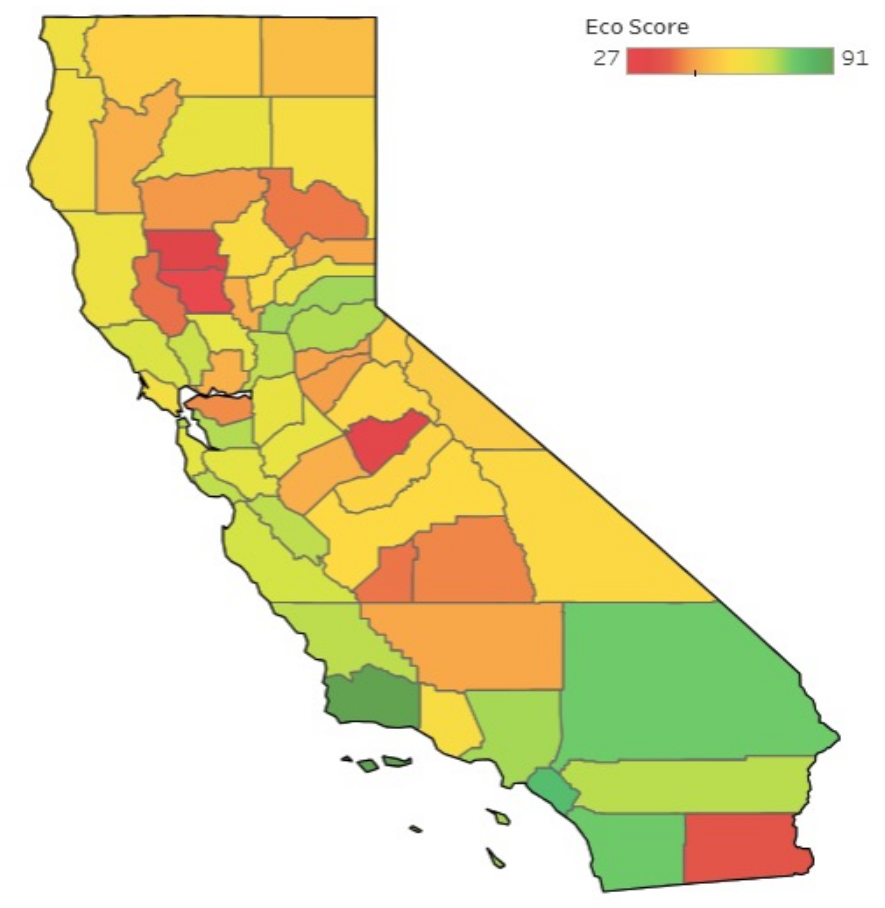
Overall, the state ranks 27th in our ranking of state economic metrics with a mix including very strong GDP per capita and per capita income (PCI) and employment growth contrasted by weaker unemployment and population growth numbers
Source: BlackRock, Federal Housing Finance Agency, Bureau of Labor Statistics, Census, Equifax, Zillow, Bureau of Economic Analysis. As of March 9, 2026. Economic model based on: employment, poverty, wealth levels, home prices, building permits
Advantages:
- California’s economy is unmatched among U.S. states: Massive, diverse economy comprises 14% of US GDP, with high PCI and strong innovation led sectors outperforming national averages.
- Strong cash flow management and liquidity: Healthy financial reserves and substantial internally borrowable resources/special funds (current $90B; 5Y avg $98B) support strong liquidity
- Improving revenue picture: FY25-26 tax collections are trending above expectations; reserves may finish >10% of spending if momentum continues
- Manageable debt burden: California’s leverage and fixed cost burdens are reasonable compared to other states, but below AA-median.
- Attractive yields and tax-equivalent yields: The Bloomberg California Municipal Index yield to worst is approximately 3.23%1, which is 0.81% above the long-term average. This translates to a tax-equivalent yield of 7.04% (based on a cumulative state and federal tax rate of 54.1%**).
Risks:
- Volatile revenue base: PIT accounts for 60% of general fund revenues, with the top 1% contributing 38%. Significantly more volatile than other states.
- Medicaid pressures: Costs are rising by >15% annually, with only modest eligibility reforms, potential federal funding cuts increase downside risk.
- High cost of living and outmigration: Population slipped to about 39.4 million, with affordability and insurance costs accelerating outward migration trends. Relative migration is a competitive headwind as other large states (TX, FL, SC) continue to attract population flows.
- Regional economic disparities: Tech-heavy coastal regions outperformed inland counties. Overall, employment remains elevated vs. national levels.
- Subject to natural disasters: Natural disasters, such as wildfires, droughts and mudslides, have been increasing in frequency and severity. Single-site education, healthcare, and development district credits are most at risk given lack of revenue diversity.
California personal & corporate income tax on the rise from swings in capital markets
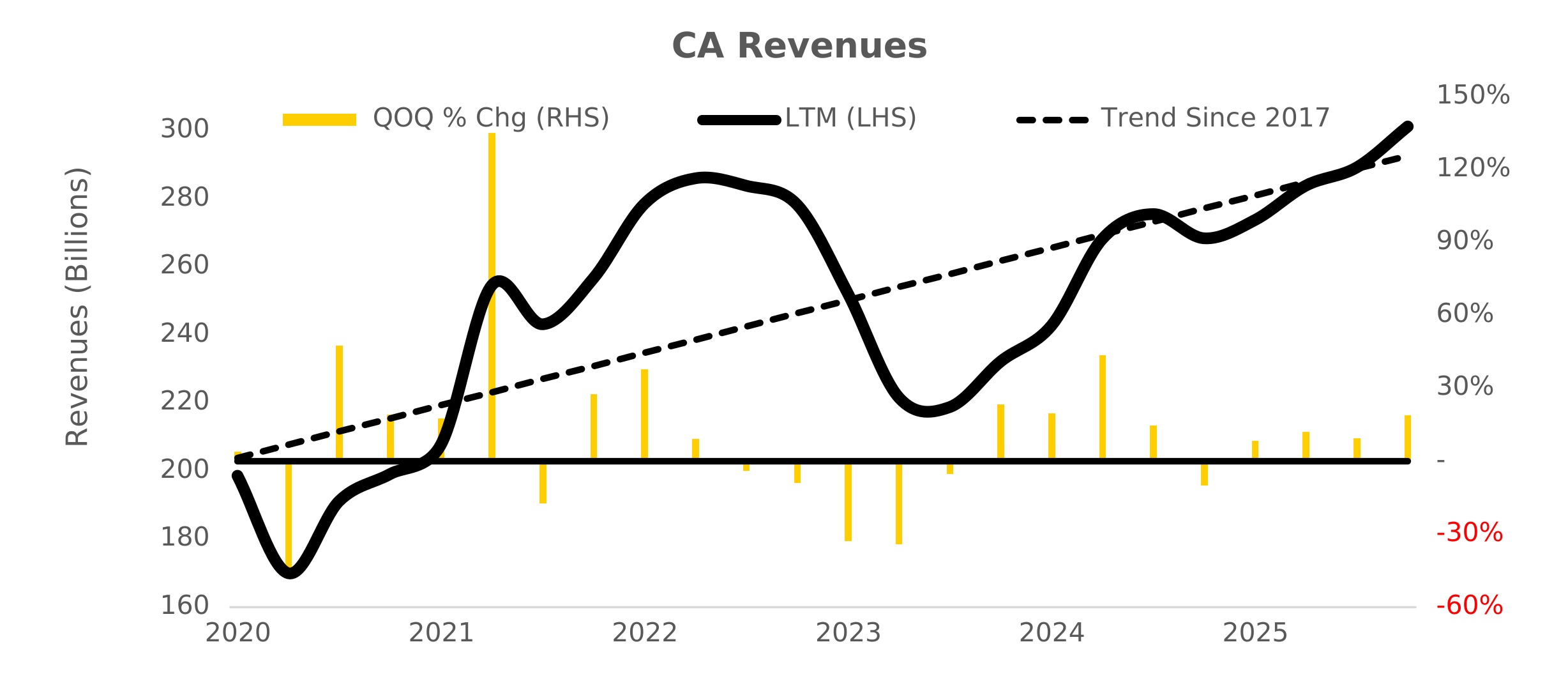
Source: Bloomberg, as of 12/31/2025.
1) Bloomberg, as of 3/10/2026. Includes 37% maximum federal tax rate, 3.8% Obama Surtax on Investment Income and 13.30% California State Tax.
Areas of Opportunity:
Strong retail demand for California bonds has resulted in tight credit spreads, which traditionally do not reflect the fundamental picture. This means investors are not getting paid for the risk they are taking on by investing in general obligation bonds issued by the state. Instead, the BlackRock Municipal Credit team prefers revenue bonds over tax-backed bonds in the state.
- Pre-paid energy bonds: Investments across this sector, backed mainly by large banks, offer attractive credit spreads, high yields, and low duration.
- Sales-tax-supported regional transportation agencies: These credits, such as the Los Angeles County Metropolitan Transportation Authority, continue to show strong margins of debt service coverage protection and conservative use of leverage. In out view, this should make these dedicated-tax bonds a defensive vehicle in the next downturn.
- Transportation bonds: We prefer large, major transportation assets (airports, bridges, toll roads, seaports) given their prominent position as international gateways to travel and trade.
- Select California hospitals: We seek entities with proactive, strategic, and disciplined management, a favorable payor mix, solid utilization statistics and scale that can provide leverage in contract negotiations with commercial providers. Given macro pressures around cost inflation, potential changes from Washington and the eventual exchange of commercial reimbursement for Medicare as the population ages, we favor multi-state systems, market leading standalones, and children’s hospitals that have the liquidity cushion to offset these factors.
The state is not without its risks and budgetary complexities. Our goal is to capture value while avoiding the pitfalls that can come with choosing the “wrong” credits. Our dedicated 18-member analyst team remains vigilant in analyzing the risks and opportunities across issuers and credits on behalf of our shareholders to ensure BlackRock portfolios are based on critical thinking and populated with our best ideas.
Active sector rotation creates opportunities
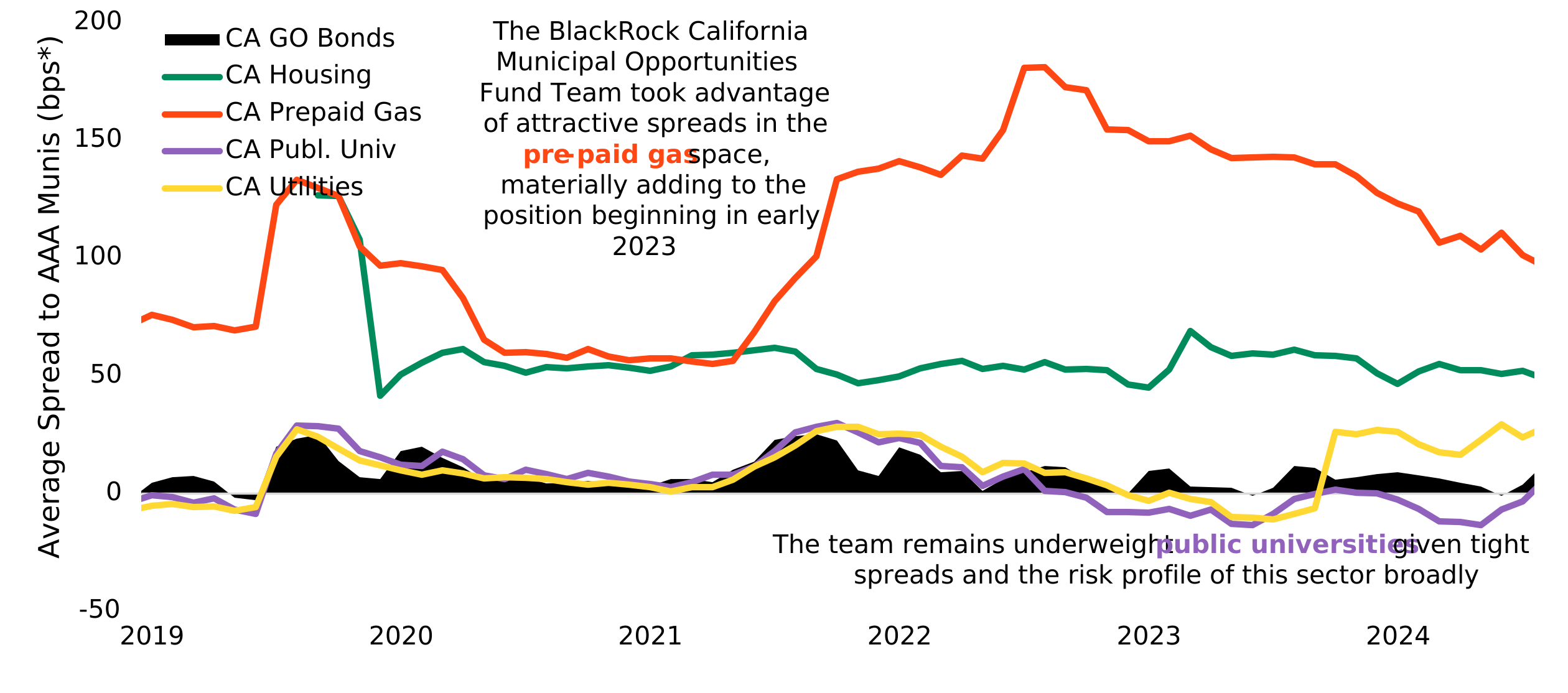
Source: BlackRock, ICE, as of February 28, 2026. *Basis points.
California Municipal Market Update
- California muni yields reached multi‑year highs nationally in late 2025, driven by stronger supply and an overall elevated interest rate backdrop.
- The CA Muni index finished 2025 with a return of 4.06%, lagging the national index by 14 basis points (bps). YTD (February 28) the CA index has returned 1.28%, lagging the broad index by 8bps.
- Tax‑equivalent yields (TEYs) remain among the highest in the country for top‑bracket CA investors, amplifying the benefit of in‑state holdings.
- CA was the highest issuing state in 2025 with $84bln of total new issuance. Through 2/28/26, the state is ranked second with just over $10bn. Meanwhile, subscriptions remain strong at over 4x.
California Muni 10-year spreads have tightened to -5bps versus National AAA 10-year, below the 1-year average of 0bps.
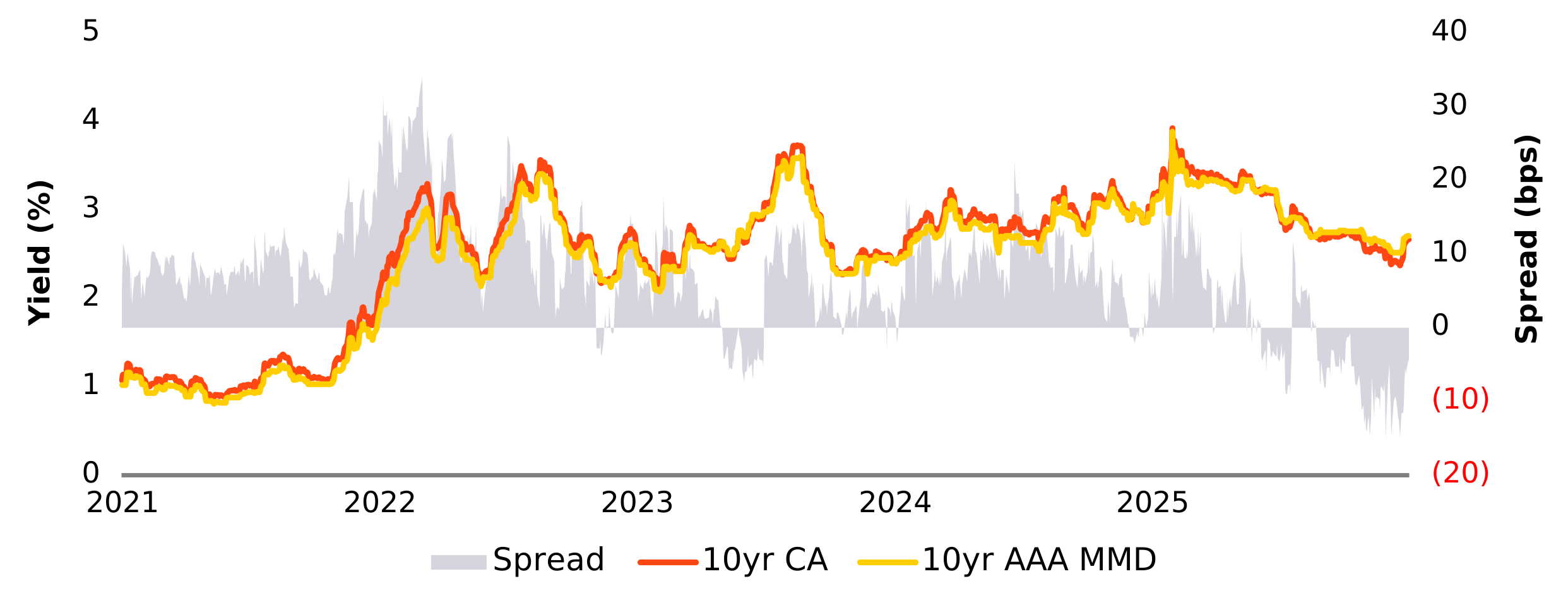
Source: Bloomberg as of March 9, 2026. Past performance does not guarantee or indicate future results. Index performance is for illustrative purposes only. You cannot invest directly in the index.
California bond yields near recent highs, giving investors the ability to lock in yields at the highest level in a generation
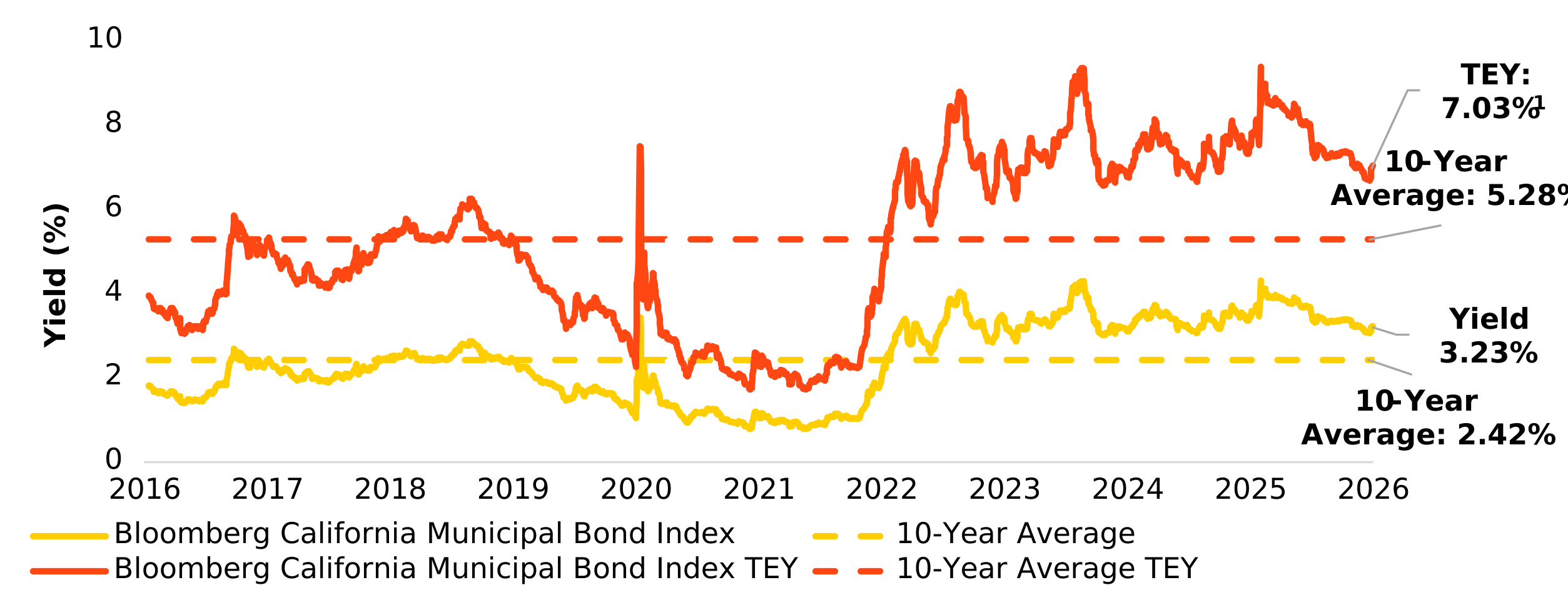
Source: Bloomberg. Bloomberg California Municipal Bond Index, yield to worst as of March 9, 2026. 1) 54.1% effective tax rate to achieve a Tax Equivalent Yield (TEY). Past performance does not guarantee or indicate future results. Index performance is for illustrative purposes only. You cannot invest directly in the index.
BlackRock Municipal Bond Offerings
- BlackRock offers a variety of solutions to help meet your needs.
- These products include California specific Active & Index ETFs, mutuals funds, and separately managed accounts.
- Invest alongside 40+ years of local municipal expertise, backed by the global reach of one of the world’s largest asset managers.
BlackRock offers a diverse range of actively managed California-specific municipal investment solutions, including the California Municipal Opportunities Fund (MACMX), the iShares Short-Term California Muni Active ETF (CALI), and the MuniHoldings California Quality Fund | MUC. Additionally, investors can find the iShares California Muni Bond ETF (CMF) and customizable separately managed accounts to tailor their California municipal exposure.
For investors seeking to potentially enhance their municipal portfolios with additional high-yield exposure, consider the iShares High Yield Muni Active ETF (HIMU). This active ETF seeks to provide targeted exposure to the municipal high yield market and harvest carry1 through active management.
1) Carry refers to the portion of a bond’s return that comes from interest income earned while the bond is held and may vary based on market conditions.
Historical performance of MACMX
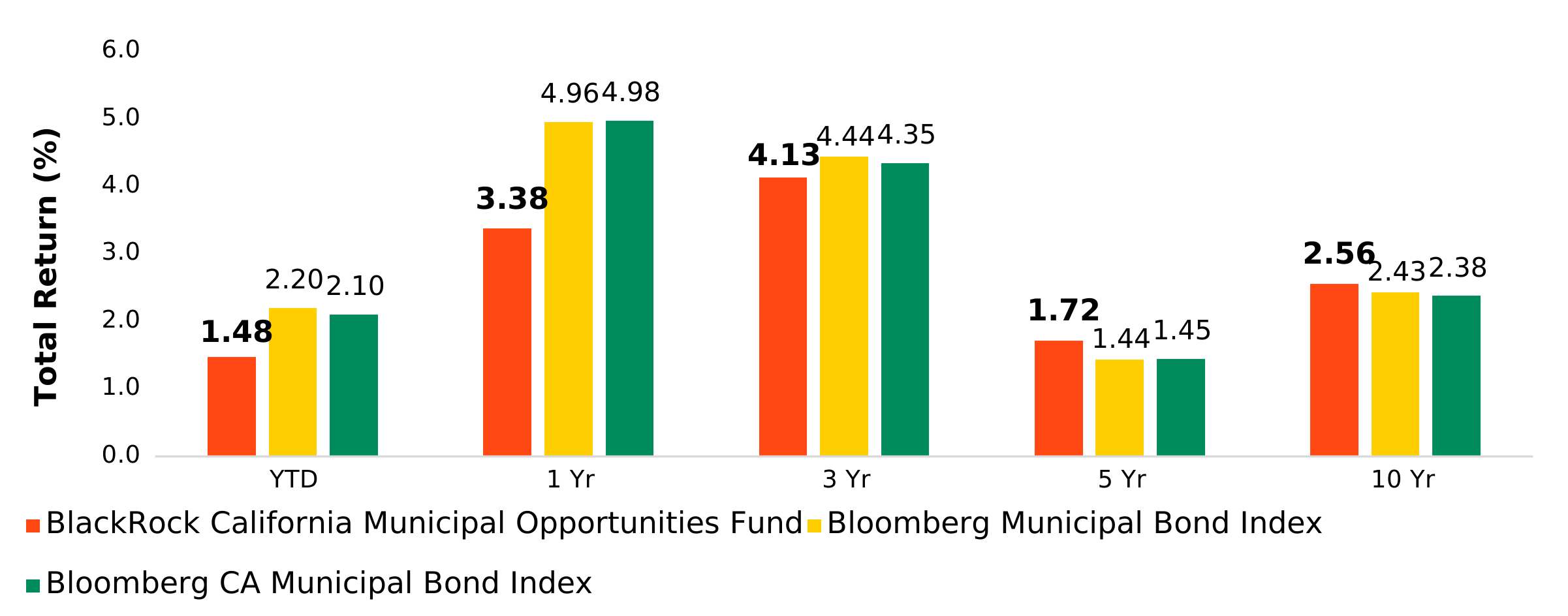
Source: BlackRock, as of February 28, 2026.
Standardized performance
|
3/31/2026 |
Fund name |
Fund inception date |
Gross/net expense ratio |
Contractual fee waiver expiration |
30-day SEC yield (with/ without waiver) |
Total return |
|||
|
Ticker |
1-year returns |
3-year |
5-year |
10-year returns |
|||||
|
MACMX |
California Municipal Opportunities Fund |
10/25/1988 |
0.49%/ |
6/30/2027 |
3.80%/ |
3.15% |
3.91% |
1.53% |
2.42% |
The difference between gross and net expense ratios are due to contractual and/or voluntary waivers, if applicable. Any applicable contractual waiver will be terminable upon 90 days’ notice. BlackRock may agree to voluntarily waive certain fees and expenses, which the adviser may discontinue at any time without notice.
To obtain more information on the funds, including the Morningstar time period ratings and standardized average annual total returns as of the most recent calendar quarter and current month-end, please visit: California Municipal Opportunities Fund
The Morningstar RatingTM for funds, or "star rating," is calculated for managed products (including mutual funds, variable annuity and variable life subaccounts, exchange-traded funds, closed-end funds, and separate accounts) with at least a three-year history. Exchange-traded funds and open-ended mutual funds are considered a single population for comparative purposes. It is calculated based on a Morningstar Risk-Adjusted Return measure that accounts for variation in a managed product's monthly excess performance, placing more emphasis on downward variations and rewarding consistent performance. The top 10% of products in each product category receive 5 stars, the next 22.5% receive 4 stars, the next 35% receive 3 stars, the next 22.5% receive 2 stars, and the bottom 10% receive 1 star. The Overall Morningstar Rating for a managed product is derived from a weighted average of the performance figures associated with its three-, five-, and 10-year (if applicable) Morningstar Rating metrics. The weights are: 100% three-year rating for 36-59 months of total returns, 60% five-year rating/40% three-year rating for 60-119 months of total returns, and 50% 10-year rating/30% five-year rating/20% three-year rating for 120 or more months of total returns. While the 10-year overall star rating formula seems to give the most weight to the 10-year period, the most recent three-year period actually has the greatest impact because it is included in all three rating periods.
Performance data quoted represents past performance and is no guarantee of future results. Investment returns and principal values may fluctuate so that an investor’s shares, when redeemed, may be worth more or less than their original cost. All returns assume reinvestment of dividends and capital gains. Current performance may be lower or higher than that shown. Refer to blackrock.com for most recent month-end performance.
BlackRock provides compensation in connection with obtaining or using third-party ratings, rankings, or data.
Subscribe to Municipal insights
Get timely market outlooks and portfolio positioning insights delivered to your inbox each month.
Please try again


Access exclusive tools and content
Obtain exclusive insights, CE courses, events, model allocations and portfolio analytics powered by Aladdin® technology.


You should consider the investment objectives, risks, charges and expenses of the fund carefully before investing. The prospectus and, if available, the summary prospectus contain this and other information about the fund and are available, along with information on other BlackRock funds, by calling 800-882-0052 or from your financial professional. The prospectus should be read carefully before investing. Investing involves risks including possible loss of principal.
Fixed income risks include interest-rate and credit risk. Typically, when interest rates rise, there is a corresponding decline in bond values. Credit risk refers to the possibility that the bond issuer will not be able to make principal and interest payments. Non-investment-grade debt securities (high-yield/junk bonds) may be subject to greater market fluctuations, risk of default or loss of income and principal than higher-rated securities. There may be less information on the financial condition of municipal issuers than for public corporations. The market for municipal bonds may be less liquid than for taxable bonds. Some investors may be subject to federal or state income taxes or the Alternative Minimum Tax (AMT). Capital gains distributions, if any, are taxable. A fund's use of derivatives may reduce a fund's returns and/or increase volatility and subject the fund to counterparty risk, which is the risk that the other party in the transaction will not fulfill its contractual obligation. A fund could suffer losses related to its derivative positions because of a possible lack of liquidity in the secondary market and as a result ofunanticipated market movements, which losses are potentially unlimited. There can be no assurance that any fund’s hedging transactions will be effective. A fund concentrating in a single state is subject to greater risk of adverse economic conditions and regulatory changes. The insurance on a bond does not protect against declines in a bonds value. Insurance guarantees are dependent upon financial strength of the insurance company.
Actively managed funds do not seek to replicate the performance of a specified index, may have higher portfolio turnover, and may charge higher fees than index funds due to increased trading and research expenses.
Prepared by BlackRock Investments, LLC, member FINRA.
©2026 BlackRock, Inc. or its affiliates. All Rights Reserved. BLACKROCK and iSHARES are trademarks of BlackRock, Inc. or its affiliates. All other trademarks are those of their respective owners.
MKTG0526-5366750-EXP0527