Cheaper AI, new earnings questions

Market take
Weekly video_20260727
Natalie Gill
Senior Portfolio Strategist
BlackRock Investment Institute
Header:
CAPITAL AT RISK. MARKETING MATERIAL.
Opening frame: What’s driving markets? Market take
Camera frame
Title slide: Cheaper AI, new earnings questions
This earnings season comes with unusually high expectations. But we think the focus should not just be on earnings beats, but on whether today’s extraordinary profit levels can be sustained as cheaper AI models reshape the economics of AI - a key theme in our Midyear Outlook. And clues are likely to come from earnings call commentary rather than from headline results.
1: Exceptional AI earnings pace
Exceptional earnings growth – not re-rating - has driven US equity returns this year, meaning valuations on a forward P/E basis don’t look so stretched if you believe this earnings strength is durable. That leaves investors looking beyond quarterly beats to what could sustain or erode the underlying driver of earnings strength, which has been the unprecedented speed and scale of the AI buildout.
2: Who captures economic rent?
The rising cost of enterprise AI, combined with the emergence of powerful Chinese AI models and other open-weight alternatives, raises a broader question: as competition intensifies, who will capture the economic rent? This earnings season is a chance to assess how companies will respond. We think the availability of cheaper AI models could create price pressure on other models and change the winners, but not the overall investment case. It reinforces our preference for AI infrastructure over the increasingly competitive model layer.
3: The changing landscape
This quarter’s headline earnings are unlikely to capture the true implications of the recent shift toward lower-cost and open-weight AI models. So, instead, investors should focus on hyperscaler capital spending plans, what management teams say on the changing competitive landscape and how companies across the broader economy are responding to the rising cost of AI.
Outro: Here’s our Market take We remain overweight the AI theme, but it requires selective and active positioning. Rather than trying to identify long-term winners in the increasingly competitive model layer, we prefer investing around AI scarcity such as power and data center infrastructure.
Closing frame: Read details: blackrock.com/weekly-commentary
US earnings remain exceptionally strong. But the focus should also be on AI profit durability, not just another round of earnings beats.
Geopolitics drove markets last week. Renewed Middle East supply risks and US tariff tensions pushed oil briefly above $100 a barrel and Treasury yields higher.
The Federal Reserve takes center stage this week. Its rate decision, alongside US GDP and PCE inflation data, could reinforce our high-for-longer rate view.
This earnings season comes with unusually high expectations. Consensus expects a second consecutive quarter of more than 20% S&P 500 earnings growth, driven largely by the AI buildout. Early results have again exceeded forecasts. Yet the bigger question is whether today’s extraordinary profit levels can be sustained as cheaper models reshape the economics of AI, a key theme in our Midyear Outlook. The clues are more likely to come from earnings calls than from headline results.
High expectations
S&P 500 12-month forward earnings, 2012-28
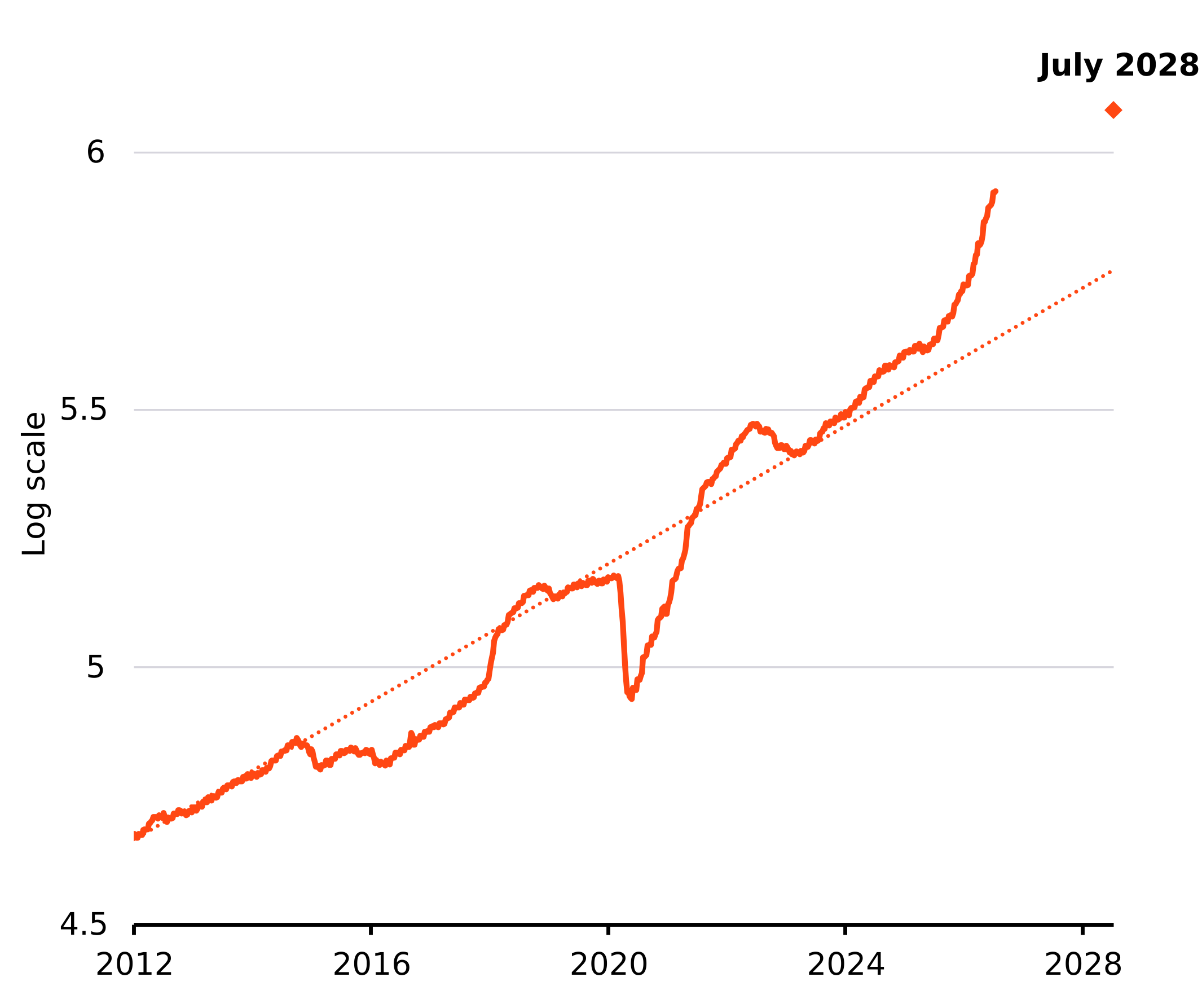
Forward-looking estimates may not come to pass. Source: BlackRock Investment Institute with data from LSEG Datastream, July 24, 2026. Notes: The dotted line shows the 20-year linear trend on a logarithmic scale, representing the long-run compound earnings growth path. The July 2028 projection is based on the latest 12-month forward earnings estimate and consensus expected earnings growth from months 12 to 24.
US equities do not look especially expensive on a forward price-to-earnings basis, but cyclically adjusted (Shiller CAPE) valuations remain historically rich. The difference reflects consensus expectations that today’s extraordinary earnings growth, supported by the unprecedented speed and scale of the AI buildout, will persist rather than revert to historical norms. See the chart. Whether that assumption holds is the question. The emergence of powerful Chinese AI models, including Moonshot's Kimi K3, could put it to the test. As competition intensifies, the debate is no longer just who will build the best model, but who will capture the economic rent. We think cheaper AI changes the winners, not the investment case. Instead, it reinforces our preference for AI infrastructure over the increasingly competitive model layer.
The cost of AI is emerging as a key concern for companies deploying it. Gartner expects worldwide spending on AI models and platforms to reach $64 billion in 2026, up 63% from 2025. As enterprise AI bills rise, companies have a stronger incentive to contain costs through model routing and lower-cost models. Reflecting that shift, OpenRouter data on the 10 most widely used AI models show Chinese models processing roughly 23 trillion tokens a week, compared with about 12 trillion tokens for US rivals. Together, these trends could erode the pricing power of frontier model developers even as AI adoption accelerates. Meanwhile, AI sovereignty is encouraging countries and companies to build their own AI capabilities, reinforcing demand for open-weight models and the infrastructure needed to train, host, and deploy AI at scale.
Earnings calls test AI’s winners
It is too early for this quarter’s reported earnings to reveal the impact of lower-cost and open-weight AI models. Instead, the first clues are likely to come from management commentary on earnings calls. We will be listening for two sets of signals. From hyperscalers, we want to know whether they remain committed to the AI buildout through their capital spending plans, how they balance capital discipline in a higher cost of capital environment, and whether those investments are generating returns. Alphabet’s earnings last week sharpened that focus after free cash flow turned negative for the first time. Decisions on whether and how to deploy lower-cost models on cloud platforms also matter because hyperscaler cash flows — and increasingly, debt financing — fund much of today’s AI ecosystem. From companies across the broader economy, we will look for comments on how they are responding to rising AI costs and the increasing importance of AI sovereignty, including how that is shaping model routing, model choice, and returns on AI adoption. Together, these discussions could offer clues about whether greater competition changes the winners rather than the investment case.
Our bottom line
Recent developments may shift where AI’s economic rent is captured. But cheaper models could also broaden AI adoption while AI sovereignty reinforces demand for AI infrastructure. We remain overweight on the AI theme, but it requires increasingly selective and active positioning. Rather than trying to identify long-term winners in the increasingly competitive model layer, we prefer investing around AI scarcity. More broadly, the US still stands out for resilient corporate earnings, even outside the AI ecosystem.
Market backdrop
Geopolitical risks returned to the fore last week. A sharp escalation in the Middle East conflict, alongside new global tariffs announced by US President Donald Trump, pushed Brent crude oil prices briefly back above $100 a barrel and lifted 10-year Treasury yields to their highest levels since early 2025 as markets priced in a greater inflation risk. Technology shares also came under pressure after Alphabet raised its capital spending plans, with the Nasdaq ending the week down more than 1%.
Markets face a packed week against a backdrop of escalating Middle East tensions and President Trump’s new global trade tariffs. Investors will watch policy decisions from the Federal Reserve, Bank of England, and Bank of Japan, alongside US GDP and PCE inflation data. Together, they will test whether resilient growth and sticky inflation still support our high-for-longer rate view.
Week ahead
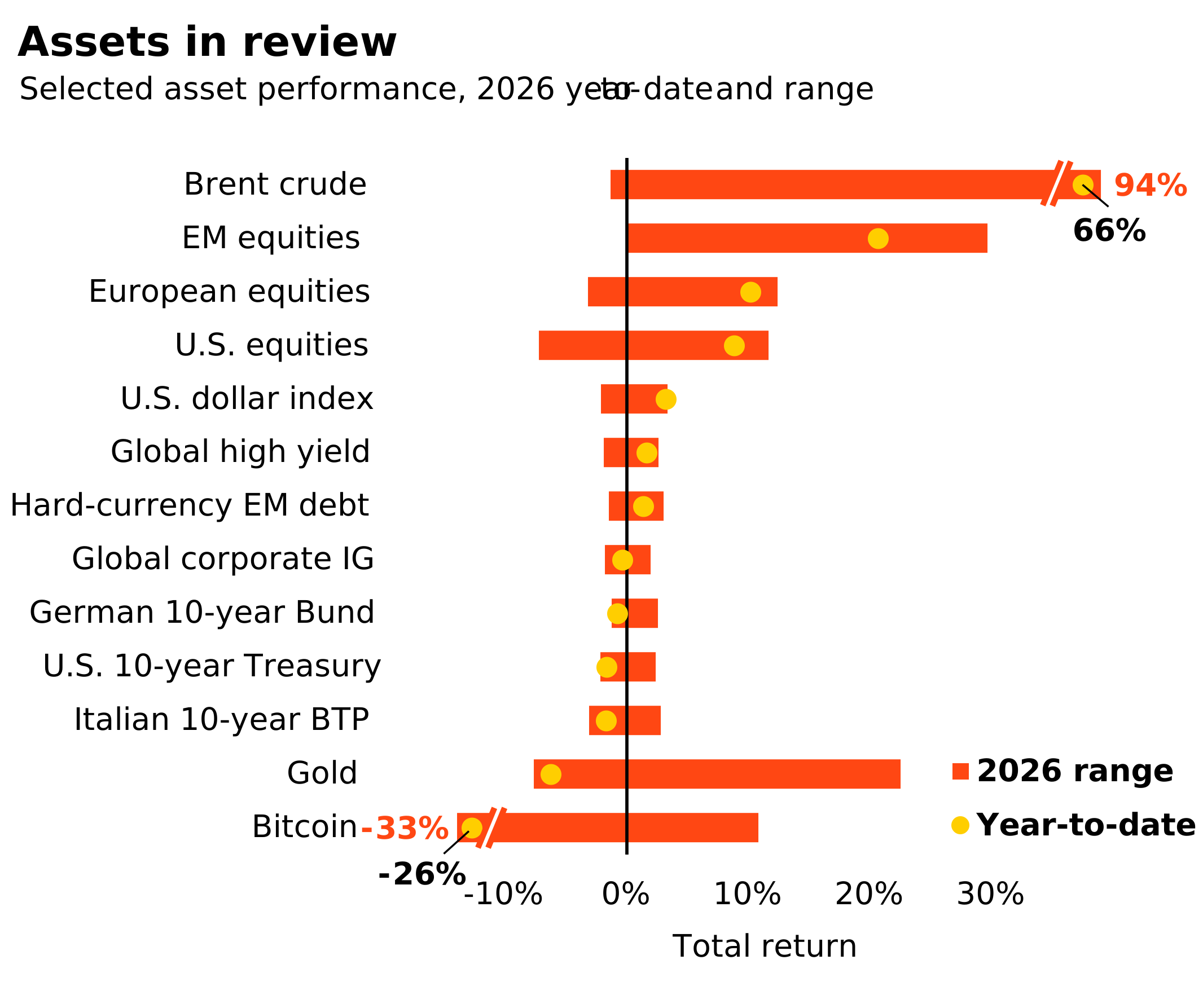
Past performance is not a reliable indicator of current or future results. Indexes are unmanaged and do not account for fees. It is not possible to invest directly in an index. Sources: BlackRock Investment Institute, with data from LSEG Datastream as of July 23, 2026. Notes: The two ends of the bars show the lowest and highest res at any point year to date, and the dots represent current year-to-date res. Emerging market (EM), high yield and global corporate investment grade (IG) res are denominated in US dollars, and the rest in local currencies. Indexes or prices used are: spot Brent crude, ICE US Dollar Index (DXY), spot gold, spot bitcoin, MSCI Emerging Markets Index, MSCI Europe Index, LSEG Datastream 10-year benchmark government bond index (US, Germany and Italy), Bloomberg Global High Yield Index, J.P. Morgan EMBI Index, Bloomberg Global Corporate Index and MSCI USA Index.
Japan services PPI
Fed rate decision
US GDP and PCE; EU GDP and unemployment; BoE rate decision
BoJ rate decision; EU HICP; UMich sentiment; China PMI
Read our past weekly commentaries here.
Intersecting mega forces
Since we launched our mega forces framework it has become clearer how their intersection shapes almost all our investment views and opens up alpha opportunities. They cut across asset class labels, spurring a rethink of portfolio construction. Investors need to be deliberate about the economic or thematic exposures they own, the vehicles they use to implement them and their investment horizons.

From drivers to portfolio expressions
Our highest conviction views, July 2026
| Driver | What we think | Portfolio expression |
|---|---|---|
| Growth and AI scarcity | The AI buildout is speeding up, making bottlenecks binding. | Overweight US equities; focus on AI bottleneck opportunities: power, chips and data centers. |
| Duration and diversification | Long bonds carry high rate sensitivity and are less reliable diversifiers. | Prefer short- and medium-term government bonds over long bonds for income. |
| Credit spreads and liquidity | Selectivity is crucial amid tight spreads and uneven fundamentals. | Credit with clear cash flows, lender protections and recovery value; higher-rated high yield. |
| Inflation and scarcity | Scarcity, secure supply and power demand carry inflation risks. | Infrastructure, energy bottlenecks, EM local debt and real-asset-linked exposures. |
| Alpha opportunity | Macro outcomes matter again in the new regime. | Macro hedge funds, venture capital, market-neutral strategies, and selected private credit and non-US alpha. |
Note: Views are from a US dollar perspective, July 2026. This material represents an assessment of the market environment at a specific time and is not intended to be a forecast of future events or a guarantee of future results. This information should not be relied upon by the reader as research or investment advice regarding any particular funds, strategy or security.
Asset class implications
Six- to 12-month tactical positioning, July 2026
This shows the implementation of our key investment views from the previous page through an asset class lens.

| Asset | Tactical view | Commentary | ||||
|---|---|---|---|---|---|---|
| Equities | ||||||
| United States |  |
We are overweight. Strong corporate earnings, fueled by the AI buildout and a favorable macro backdrop, are outpacing higher interest rate expectations. | ||||
| Europe |  |
We are neutral. We would need to see more business-friendly policy and deeper capital markets for Europe to outperform. We favor financials, infrastructure, and industrials. | ||||
| UK | |
We are neutral. Valuations remain attractive relative to the US, but we see few near-term catalysts to trigger a shift. | ||||
| Japan | |
We are neutral. Strong corporate balance sheets and governance reforms remain supportive. We prefer targeted exposures to physical AI and the buildout’s bottlenecks. | ||||
| Emerging markets (EM) |  |
We are neutral. We see opportunities where the AI buildout drives demand for infrastructure, particularly in Latin America. | ||||
| China | |
We are neutral. We see opportunities in physical AI. Cheap, open-source AI could drive adoption, but that doesn’t necessarily translate into AI-provider profitability. | ||||
| Fixed income | ||||||
| Short US Treasuries | |
We are neutral. We prefer short- and medium-term Treasuries, given the attractive risk-adjusted income on offer. | ||||
| Long US Treasuries |  |
We are underweight. We see investors wanting more compensation for holding long-term bonds amid persistent inflation and high debt loads. Long-duration bonds also are a less reliable portfolio diversifier in the new regime. | ||||
| Global inflation-linked bonds | |
We are neutral. We see inflation settling above pre-pandemic levels, but markets may not price this in the near term as economic growth could slow. | ||||
| Euro area government bonds |  |
We are overweight short- and medium-term bonds. Markets are pricing restrictive policy rates of about 3% for several years. We think that’s overdone. | ||||
| UK Gilts | |
We are neutral. We expect periods of elevated volatility given political uncertainty, longer-term bonds making up a larger market share, and buyers becoming more price-sensitive. | ||||
| Japanese government bonds |  |
We are underweight. Rate hikes, higher global term premium and heavy bond issuance will likely drive yields up further. | ||||
| China government bonds | |
We are neutral. China bonds offer stability and diversification but developed market yields are higher. A shift in investor sentiment toward equities limits upside. | ||||
| US agency MBS | |
We are overweight. Agency MBS offer higher income than Treasuries with similar risk and may offer more diversification amid fiscal and inflationary pressures. | ||||
| Short-term IG credit | |
We are neutral. Spreads are tight due to corporate strength; they could widen if issuance increases or risk appetite shifts. | ||||
| Long-term IG credit | |
We are underweight. We prefer short-term bonds less exposed to interest rate risk over long-term bonds. | ||||
| Global high yield | |
We are neutral. High yield offers attractive income. We prefer higher-rated US and European high yield over investment grade and see dispersion of returns increasing. | ||||
| Asia credit | |
We are neutral. Overall yields are attractive and fundamentals are solid, but spreads are tight. | ||||
| Emerging hard currency | |
We are neutral. Fundamentals have improved, but we see a more attractive risk-reward profile in EM local debt. | ||||
| Emerging local currency | |
We are overweight. We like the yield relative to its volatility and improving fundamentals. | ||||
Past performance is not a reliable indicator of current or future results. It is not possible to invest directly in an index. Note: Views are from a US dollar perspective. This material represents an assessment of the market environment at a specific time and is not intended to be a forecast or guarantee of future results. This information should not be relied upon as investment advice regarding any particular fund, strategy or security.
Euro-denominated tactical granular views
Six to 12-month tactical views on selected assets vs. broad global asset classes by level of conviction, July 2026
We have lengthened our tactical investment horizon back to six to 12 months. The table below reflects this and, importantly, leaves aside the opportunity for alpha, or the potential to generate above-benchmark returns – especially at a time of heightened volatility.
| Asset | Tactical view | Commentary | ||
|---|---|---|---|---|
| Equities | ||||
| Europe ex UK | |
We are neutral. We would need to see more business-friendly policy and deeper capital markets for recent outperformance to continue and to justify a broad overweight. We stay selective, favoring financials, utilities and healthcare. | ||
| Germany | |
We are neutral. Increased spending on defense and infrastructure could boost the corporate sector. But valuations rose significantly in 2025 and 2026 earnings revisions for other countries are outpacing Germany. | ||
| France | |
We are neutral. Political uncertainty could continue to drag corporate earnings behind peer markets. Yet some major French firms are shielded from domestic weakness, as foreign activity accounts for most of their revenues and operations. | ||
| Italy | |
We are neutral. Valuations are supportive relative to peers. Yet we think the growth and earnings outperformance that characterized 2022-2023 is unlikely to persist as fiscal consolidation continues and the impact of prior stimulus peters out. | ||
| Spain | |
We are overweight. Valuations and earnings growth are supportive relative to peers. Financials, utilities and infrastructure stocks stand to gain from a strong economic backdrop and advancements in AI. High exposure to fast-growing areas like emerging markets is also supportive. | ||
| Netherlands | |
We are neutral. Technology and semiconductors feature heavily in the Dutch stock market, but that’s offset by other sectors seeing less favorable valuations and a weaker earnings outlook than European peers. | ||
| Switzerland |  |
We are neutral. Valuations have improved, but the earnings outlook is weaker than other European markets. If global risk appetite stays strong, the index’s tilt to stable, less volatile sectors may weigh on performance. | ||
| UK | |
We are neutral. Valuations remain attractive relative to the US, but we see few near-term catalysts to trigger a shift. | ||
| Fixed income | ||||
| Euro area government bonds | |
We are neutral short-term European government bonds. The market has repriced the ECB policy path more in line with our view. We think increased German bond issuance to finance its fiscal stimulus package is already largely reflected in the current level of 10-year yields. | ||
| German bunds | |
We are neutral. Markets have largely priced in fiscal stimulus and bond issuance, and expectations for policy rates align with our view. | ||
| French OATs | |
We are neutral. Political uncertainty, high budget deficits and slow structural reforms could stoke volatility, but current spreads incorporate these risks and we don’t expect a worsening from here. | ||
| Italian BTPs | |
We are neutral. Demand from Italian households is strong at current yield levels. Spreads tightened in line with its sovereign credit upgrade, but a persistently high debt-to-GDP levels means they likely won’t tighten further. | ||
| UK gilts | |
We are neutral. We expect volatility in gilts over the near-term. Gas powers much of the UK’s electricity, but storage is limited – making it especially vulnerable to a resurgence in inflation. | ||
| Swiss government bonds | |
We are neutral. We don’t think the Swiss National Bank will slash policy rates to below zero, as markets expect. | ||
| European inflation-protected securities | |
We are neutral. Our medium-term inflation expectations align with those implied in current market pricing. | ||
| European investment grade | |
We are neutral. We favor short- to medium-term debt and Europe over the US An intense re-leveraging cycle to support the AI buildout could put upward pressure on US spreads, making Europe relatively more attractive. | ||
| European high yield | |
We are overweight. Spreads hover near historic lows, but credit losses have been limited in this cycle and better economic growth in 2026 could reduce them further. | ||
Past performance is not a reliable indicator of current or future results. It is not possible to invest directly in an index. Note: Views are from a euro perspective, July 2026. This material represents an assessment of the market environment at a specific time and is not intended to be a forecast or guarantee of future results. This information should not be relied upon as investment advice regarding any particular fund, strategy or security.
Meet the authors

Jean Boivin

Wei Li

Carrie King

Natalie Gill
This material is for distribution to Professional Clients (as defined by the Financial Conduct Authority or MiFID Rules) and Qualified Investors only and should not be relied upon by any other persons.
Issued by BlackRock Investment Management (UK) Limited, authorised and regulated by the Financial Conduct Authority. Registered office: 12 Throgmorton Avenue, London, EC2N 2DL. Tel: 020 7743 3000. Registered in England No. 2020394. For your protection telephone calls are usually recorded. BlackRock is a trading name of BlackRock Investment Management (UK) Limited.
Past performance is not a reliable indicator of current or future results and should not be the sole factor of consideration when selecting a product or strategy.
Capital at risk. The value of investments and the income from them can fall as well as rise and is not guaranteed. You may not get back the amount originally invested. Changes in the rates of exchange between currencies may cause the value of investments to diminish or increase. Fluctuation may be particularly marked in the case of a higher volatility fund and the value of an investment may fall suddenly and substantially. Levels and basis of taxation may change from time to time.
Any research in this document has been procured and may have been acted on by BlackRock for its own purpose. The results of such research are being made available only incidentally. The views expressed do not constitute investment or any other advice and are subject to change. They do not necessarily reflect the views of any company in the BlackRock Group or any part thereof and no assurances are made as to their accuracy.
This document is for information purposes only and does not constitute an offer or invitation to anyone to invest in any BlackRock funds and has not been prepared in connection with any such offer.
© 2026 BlackRock, Inc. All Rights reserved. BLACKROCK, BLACKROCK SOLUTIONS, iSHARES, BUILD ON BLACKROCK and SO WHAT DO I DO WITH MY MONEY logo are registered and unregistered trademarks of BlackRock, Inc. or its subsidiaries in the United States and elsewhere. All other trademarks are those of their respective owners.
