FIXED INCOME

Demystifying Securitized Assets

Apr 28, 2026
  • Connor Stack
  • Ibrahim Incoglu
  • Samir Lakhani

Key takeaways

  • Securitized assets refer to a category of fixed income instruments backed by pools of underlying financial assets, across a range of income and risk profiles, and exposures spanning housing, commercial real estate, consumer credit, and corporate lending.
  • With income likely a core objective of investor’s portfolios, more investors could be allocating to securitized assets as they may provide attractive yields, diversification benefits, and structural resilience relative to traditional corporate credit.
  • While all securitized assets share a common structural framework, the underlying risks can vary meaningfully, making security selection and structure analysis critical. An experienced portfolio management team may be beneficial to leverage when choosing to invest in this asset class.
  • ETFs can be an efficient way to access securitized assets, whether it be through a multi-sector approach or single-sector products.

The securitized asset market has grown steadily over the past several decades and now exceeds $15 trillion globally.1 While certain securitized assets (such as Agency Mortgage-Backed Securities (MBS)) are found within traditional fixed income indices, a significant percentage of the broader securitized universe remains outside these benchmarks and may be underrepresented in investor portfolios. In this paper, we focus our attention on the non-agency segments of the securitized asset market that have limited representation in today’s fixed income indices, excluding Agency MBS.

Today’s securitized market has evolved significantly, supported by increased transparency, regulatory reform, and the introduction of Securitized-Asset ETFs that have broadened investor access and interest to these markets. As a result, securitized assets may be viewed not as a niche allocation, but as a core component of the modern fixed income toolkit.

What are Securitized Assets?

Securitized assets are fixed income instruments whose principal and interest payments are backed by a pool of underlying loans. These loans may include residential mortgages, commercial real estate loans, consumer credit (such as auto loans and credit card receivables), or corporate loans.

They may also include more esoteric cash flows such as music rights royalties. Rather than relying on the balance sheet of a single issuer, investors are exposed to the cash flows generated by a diversified pool of borrowers.

The securitized asset universe spans several key sectors:

  • Residential Mortgage-Backed Securities (RMBS): Backed by residential mortgages with or without government guarantees, exposing investors to household credit fundamentals and housing market dynamics.
  • Agency MBS carries forms of government guarantees; however, we have elected to exclude the asset classes from the discussion given the difference in underlying risks where investors assume prepayment risk vs. credit, structure and liquidity risk.
  • Commercial Mortgage-Backed Securities (CMBS): Backed by loans on commercial properties such as offices, retail centers, industrial facilities, and multifamily housing. Like residential mortgages, they can be non-agency or agency backed.
  • Asset-Backed Securities (ABS): Backed by pools of consumer or commercial receivables, including auto loans, equipment leases, and credit card balances, and more esoteric cash flows such as music royalties or aircraft leases.
  • Collateralized Loan Obligations (CLOs): Backed by diversified portfolios of floating rate corporate loans.

While these subsectors differ in their underlying collateral and risk drivers, they all share a common securitization framework that allows investors to tailor exposure across a spectrum of risk and return profiles. The differences in each sub-sector also create opportunities for diversification and active management across the securitized universe itself.

Securitized assets are available across multiple geographies with key markets including the US, Europe, and Australia.

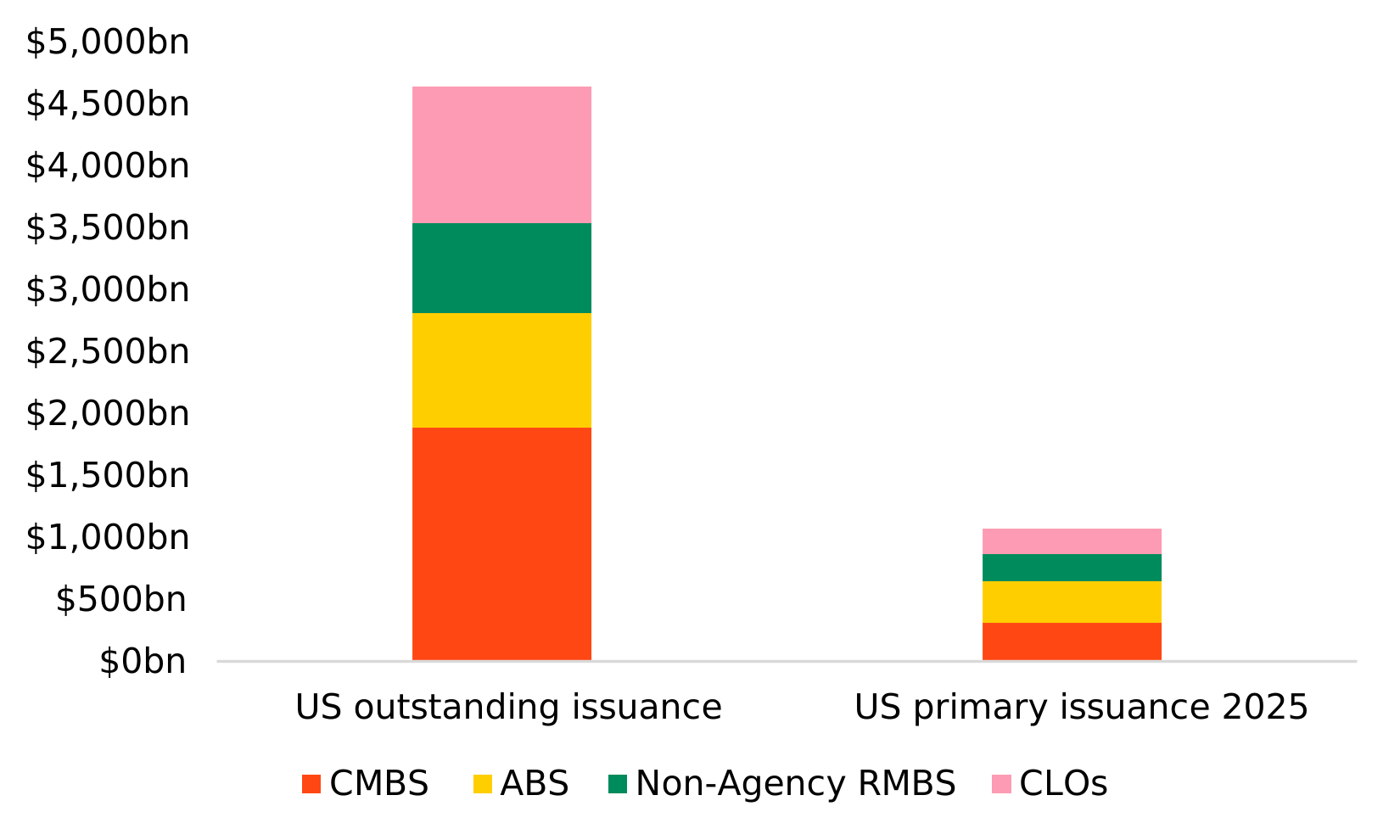
The US makes up a significant proportion, $4.6 trillion or 78% of the global universe, partly driven by the depth of our consumer credit and mortgage market.2

Focusing on the US, primary issuance for 2025 across all segments of securitized amounted to over $1 trillion. Since 2023, new issuance volumes across all securitized asset subsectors have been steadily increasing year-over-year.3 2025 marked a record issuance year with 2026 forecasts indicating volumes exceeding those.4 This coupled with increasing investor appetite creates a positive market backdrop for investors.

Figure 1
US Securitized Assets universe

US securitized assets exceed $4.6 trillion, with steady growth and over $1 trillion in annual issuance, highlighting strong market expansion.

Source: Outstanding issuance data from BofA Global Research as of 12/31/25. Primary issuance data from J.P. Morgan as of 12/31/25. Year-to-date (YTD) figures are compared to the same timeframes historically. $ in USD.

The process of securitization 

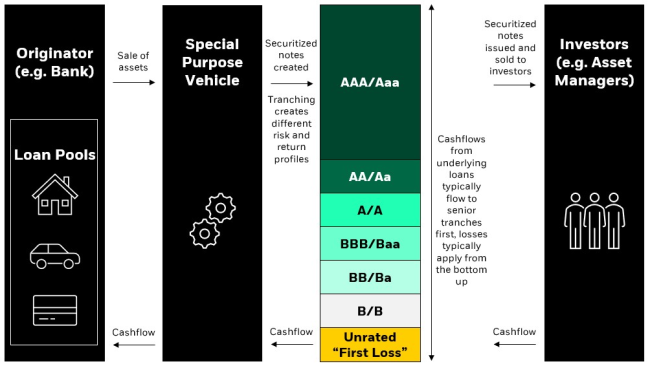
Through the process of securitization, originators —such as banks, specialist lenders, and asset managers — transfer the risk associated with pools of assets to investors via a special purpose vehicle (SPV). The creation of the SPV legally separates the underlying assets from the originator in a bankruptcy remote entity – an entity specifically structured to hold assets separate from the parent company, thereby protecting those assets in the event of the parent company’s bankruptcy.

The SPV funds the acquisition of these assets by issuing debt and equity tranches. Subsequently, the SPV utilizes the cash flows generated by the purchased assets to repay investors and provide returns through the securities it has issued.

A key characteristic of securitized assets is the implementation of tranching. This process establishes subordination within the structure, thereby improving the quality of debt issued. Lower tranches typically serve as credit enhancement for senior tranches. Cashflow are typically allocated to the higher rated tranches first, with losses generally allocated both according to a predefined order of priority, which generally ensures that AAA-rated tranches are the first to receive cashflows and the last to any incur losses.

Figure 2
Securitization process

Diagram showing securitization: assets transferred to an SPV, which issues tranches and distributes cash flows to investors by priority.

Source: BlackRock, January 2026. For Illustrative purposes only.

Investors holding lower-rated tranches historically have been offered higher yields to compensate for the increased risk, compared to those with senior positions in the capital structure. With bonds issued across the capital stack, the securitized market can offer investors the ability to choose bonds that align with their preferred risk return objectives.

The opportunity in Securitized Assets

The securitized asset market is attracting an expanding and increasingly diverse client base. While use cases may differ—for instance, pension funds may employ securitized assets within their portfolios to diversify against corporate credit, whereas wealth managers might prioritize income generation—there are overarching characteristics of the securitized asset market that consistently appeal across segments, such as:

Figure 3
Securitized opportunity set

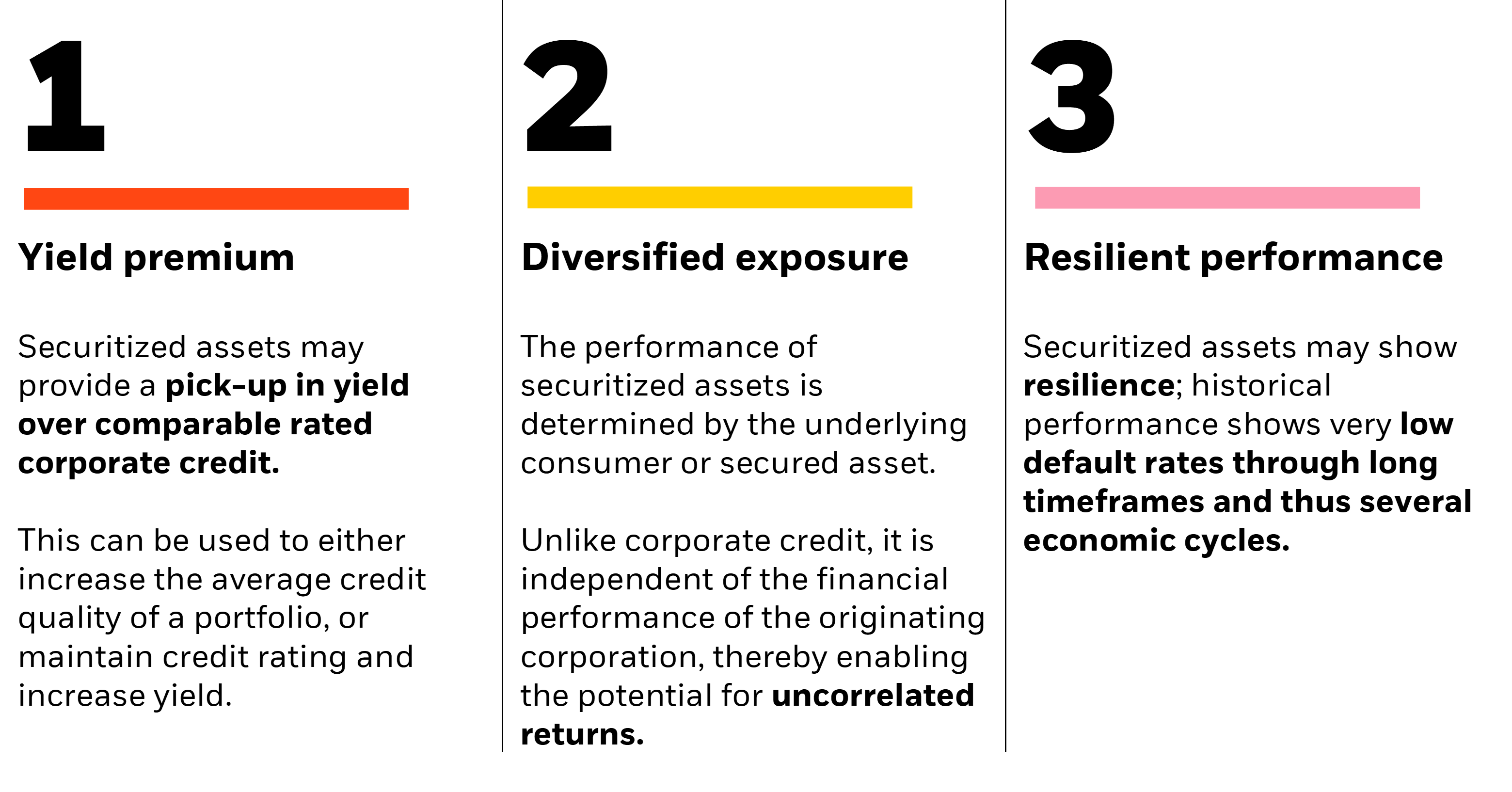
Securitized assets offer yield premium, diversified exposure beyond corporate credit, and historically resilient performance across cycles.

Source: BlackRock; January 2026. Outcomes are not guaranteed. Past performance is not a reliable indicator of current or future results.

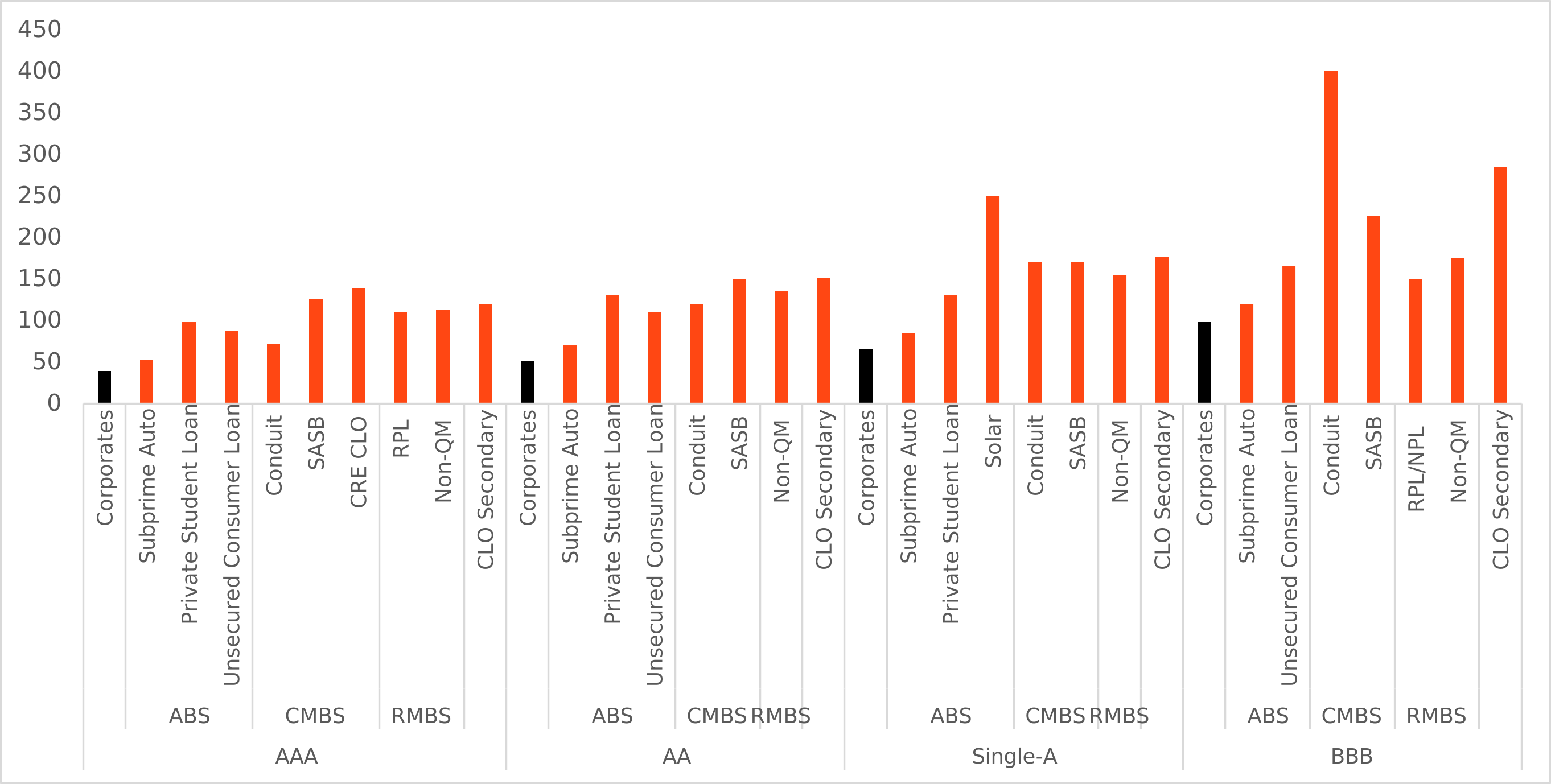
1. Yield premium: May provide a pickup in yield on a risk adjusted basis across a diverse opportunity set.

Figure 4
Corporate vs Securitized yields

Chart showing securitized assets provide higher yields than similarly rated corporate bonds across multiple credit segments

Source: JP Morgan as of 2/17/26. RMBS spreads data from Wells Fargo as of 2/17/26. After 6/30/23, LIBOR based floating rate securities transitioned to SOFR. All ratings are derived from S&P. See the Important Information at the end of this material for more information on credit ratings. Past performance is not a reliable indicator of current or future results. Indexes are unmanaged and it is not possible to invest directly in an index.

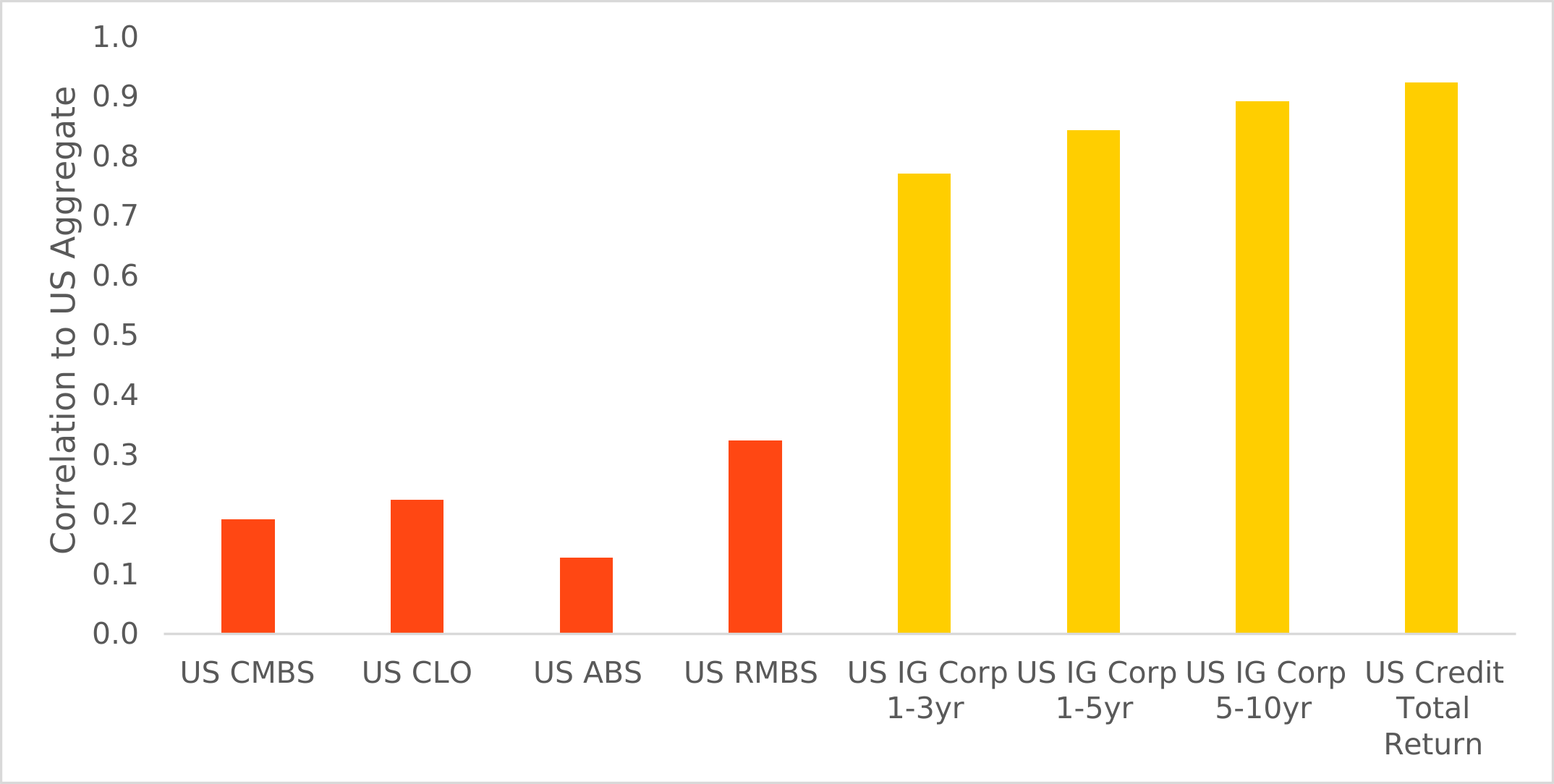
2. Diversified exposure: Presenting low correlations to traditional fixed income.

Figure 5
Return correlations to the US Aggregate Index (last 7 years)

Securitized sectors show lower correlation to US Aggregate bonds than corporate credit, indicating diversification benefits.

Source: Bloomberg as of 2/9/26. Correlations are to the Bloomberg US Aggregate index. Securitized sectors: JP Morgan Industrial AAA SASB Index, JP Morgan US CLOE Index, Bloomberg US ABS Floating Rate Index, iBoxx US Non-Agency RMBS Index. Corporate and government bond indices: Bloomberg US Corporate 1-3 Yr Index Unhedged, iShares 1-5 Year Investment Grade Corporate Bond ETF, iShares 5-10 Year Investment Grade Corporate Bond ETF, Bloomberg US Credit Total Return Value Unhedged USD.

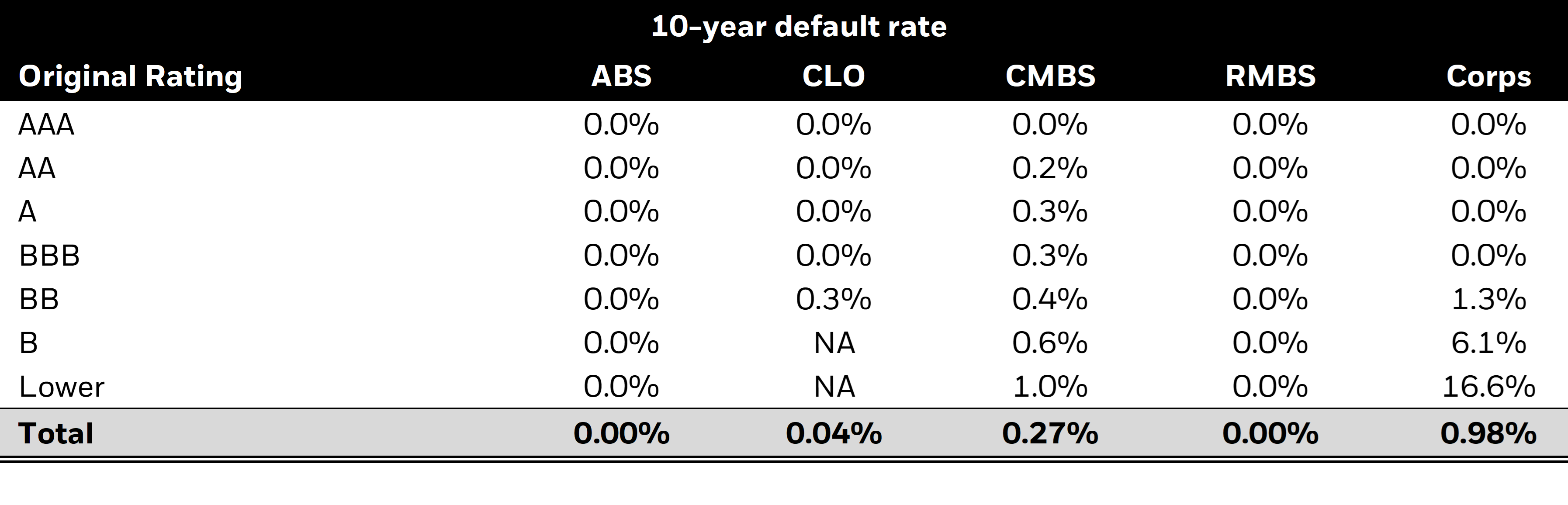
3. Resilient performance: Demonstrating strong performance through a long historical timeframe.

Figure 6
10-year default rates across securitized vs corporates

Table showing securitized assets have significantly lower 10-year default rates than corporate bonds across most credit ratings.

Source: Source: BofA Securities with data as of 12/31/25. Data demonstrates the 10-year cumulative default rate by original rating, 2015-2025. Corps demonstrates US corporate credit, by original rating. Past performance is not a reliable indicator of current or future results.

Post-GFC: a more resilient market 

Securitized assets are often associated with the Global Financial Crisis (GFC), with the most significant issues concentrated in a narrow segment of the market characterized by weak underwriting, excessive leverage, and overly complex structures.

Since the GFC, securitized markets have seen material improvement and have undergone significant regulatory reform, including stricter lending standards, enhanced transparency, mandatory risk retention by issuers, and simpler, more robust deal structures. As a result, today’s securitized markets are more regulated, more transparent, and structurally stronger than in the past.

The importance of an experienced PM team

Securitized assets differ from traditional fixed income securities in their structure, liquidity, and risk drivers. As such, investing across these markets requires specialized expertise in collateral analysis, deal structures, and relative value assessment.

BlackRock’s origins are directly tied to securitized asset markets with our founders’ pioneering efforts in the mortgage-backed securities market decades ago. Today, BlackRock is one of the largest and most experienced investors in securitized asset markets, managing over $169 billion.5 within our Global Fixed Income (GFI) platform, and diversified across all subsectors. Our dedicated teams combine deep sector expertise with the scale and resources of wider GFI platform, enabling a rigorous and repeatable investment process.

Our team spans 40 dedicated securitized asset specialists5 across public and private markets and globally located. Sourcing is key to achieving differentiated performance, and our broad market presence helps position BlackRock to access the most attractive opportunities early.

Securitized Asset ETFs and how to invest

Given their potentially attractive yields, diversification benefits, and varied interest rate profiles, securitized assets can play both strategic and tactical roles in fixed income portfolios.

BlackRock launched the industry’s first securitized ETF in 2007 – the iShares MBS ETF – and we remain the largest manager of securitized ETFs today with offerings across both index and active approaches, and both multi-sector and single-sector products.5

Investors can access the markets directly through standalone securitized ETFs such as the iShares Securitized Income Active ETF | SECU, as part of our active multi-sector strategies such as the iShares Flexible Income Active ETF and the BlackRock Strategic Income Opportunities Fund

Related Investment Funds

iShares Securitized Income Active ETF (SECU)
iShares AAA CLO Active ETF (CLOA)
iShares BBB CLO Active ETF (BCLO)
iShares Flexible Income Active ETF (BINC)


Related Articles 

2026 Views: Income, Selectivity and Dispersion | BlackRock
The Odds Are Changing: 2026 Is a Market for Investors, Not Gamblers
2026 Income Outlook: If easy income is over, what’s next?
Demystifying Collateralized Loan Obligations (CLOs)