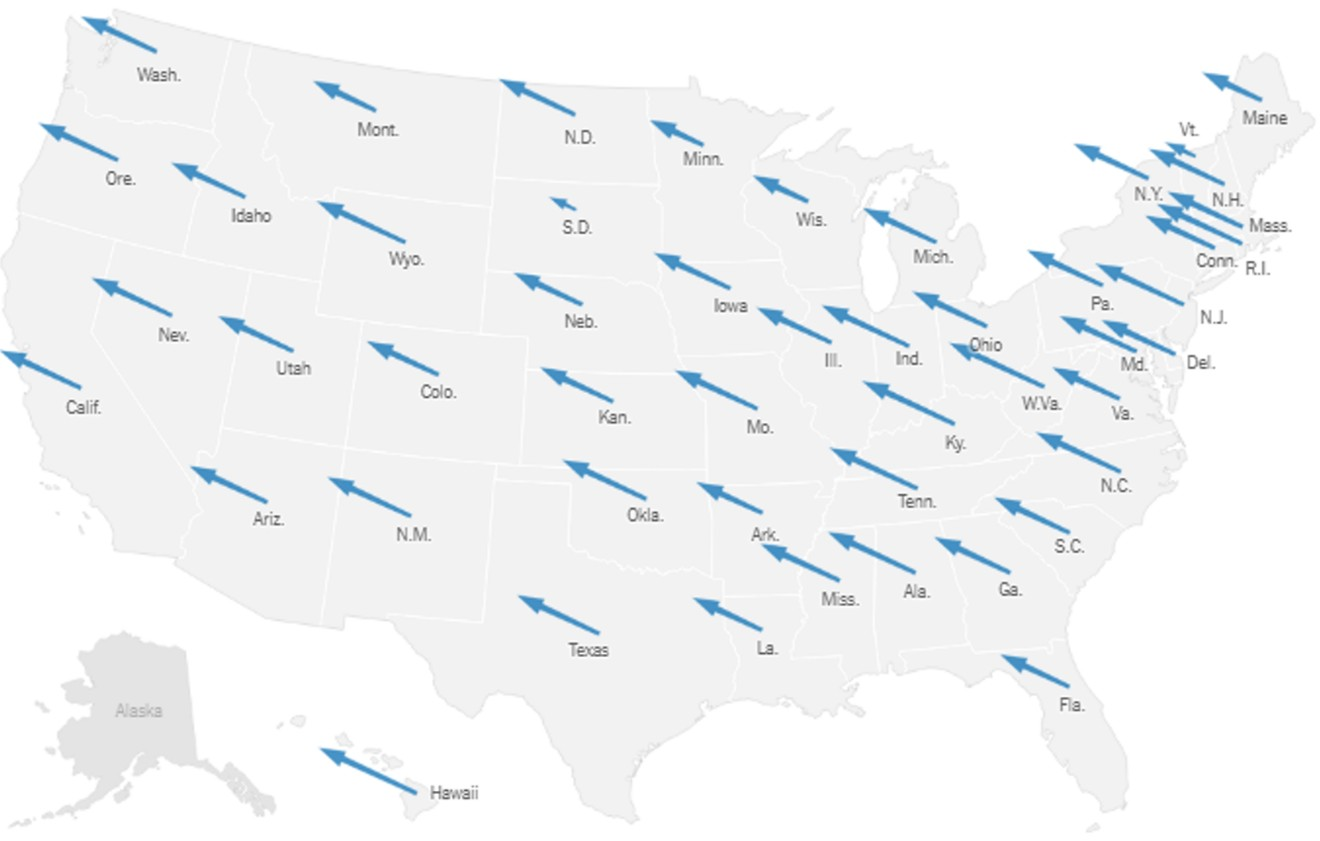
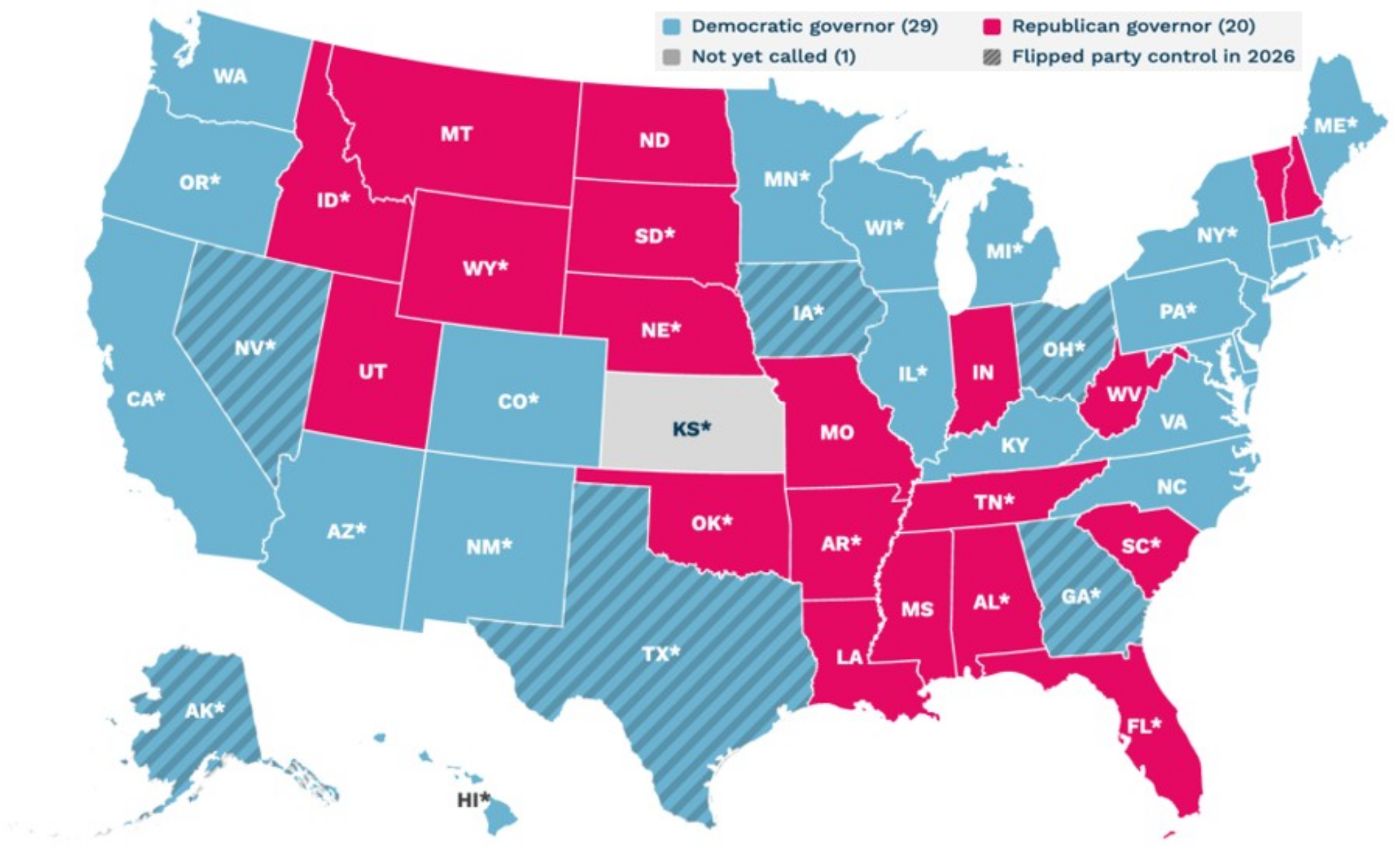
State and Local Credit: Fiscal Flexibility in Focus
California: Structural Budget Challenges Remain
Election Results: Preliminary returns favor rejection of Proposition 40's billionaire wealth tax and Proposition 41's additional tax requirements, while favoring Proposition 42's restrictions on certain future taxes. Voters approved Proposition 3, extending higher income-tax rates, and Proposition 2, expanding state rainy-day fund capacity.
Investor Implications: Rejection of the wealth tax avoids a potentially volatile, one-time revenue source but leaves California's structural budget challenges unresolved. Restoring balance will require sustainable revenue growth, spending restraint or a combination of both.
The state's reliance on high-income taxpayers and capital gains remains a significant source of revenue volatility. Extending existing income taxes preserves revenue capacity, while the expanded reserve framework is a positive development. Ultimately, expenditure discipline and the ability to build reserves during stronger revenue periods will determine whether California can improve its structural fiscal position.
Washington: More Revenue, Greater Volatility
Election results: Voters rejected Initiative 645, preserving the state's new income tax on annual individual income above $1 million, subject to ongoing legal uncertainty.
Investor implications: The tax provides another potential revenue source for education and healthcare, although meaningful collections are not expected until 2029. Greater reliance on high-income taxpayers will also increase exposure to economic and financial-market volatility.
The key question is how Washington uses the additional money. Building reserves or reducing structural deficits would strengthen its fiscal position. Using volatile collections to fund permanent spending increases could create pressure during the next economic downturn.
Ohio: School Funding Measures Highlight Operating Pressure
Election results: Ohio voters approved 51 of 63 school tax renewals but only 20 of 69 requests for additional funding, suggesting voters were considerably more willing to maintain existing taxes than approve new revenue.
Investor implications: The results could constrain school district budgets as operating expenses rise. Districts facing declining enrollment, increasing personnel costs and limited reserves may have difficulty maintaining services without additional revenue or spending adjustments.
Florida: Property-Tax Relief Pressures Locals
Election results: Voters approved Amendment 3, which expands homestead exemptions and reducing assessment-growth limits. State estimates project $45.8 billion in total local government revenue losses over five years.
Investor implications: Property-tax-dependent municipalities will face difficult budget decisions as revenue growth slows. Spending reductions, alternative taxes and additional state assistance are potential responses, although each carries its own limitations.
We expect the greatest pressure among smaller municipalities with concentrated tax bases and limited expenditure flexibility. Strong reserves may be a temporary cushion, but recurring budget gaps require recurring solutions. The impact on outstanding bonds depends on pledged revenues and existing bondholder protections.
Colorado & North Carolina: Different Approaches to Taxation
Election results: Colorado voters appear to have approved Amendment 87, replacing the state's flat income tax with graduated rates to provide funding for education and healthcare. North Carolina approved a lower constitutional ceiling on income-tax rates and a requirement for future limits on local property-tax increases.
Investor implications: Colorado gains additional revenue capacity but becomes more reliant on higher-income taxpayers. North Carolina moves in the opposite direction, placing tighter limits on future revenue flexibility.
Both outcomes reinforce the importance of evaluating revenue stability alongside revenue growth. The ability to fund recurring obligations through weaker economic periods remains central to our assessment of state and local credit quality.
Texas: Rejected Bond Measures Could Constrain Supply
Election results: Texas voters rejected billions in proposed local bond authorizations, including major school construction programs and Collin County's $817.5 million borrowing proposal. Cypress-Fairbanks ISD's $1.6 billion bond proposal and operating-tax increase were defeated.
Investor implications: Rejected bond authorizations could reduce prospective Texas municipal issuance, supporting valuations if supply falls below expectations. However, the proposals would have financed projects over several years, limiting the immediate impact on 2027 issuance.
Sector Implications and Outlook
AI Infrastructure: Local Opposition Could Redirect Investment
Election results: Democratic gubernatorial victories in Texas and Ohio could influence data center permitting and infrastructure policies. Local opposition was also evident, with 40 of 41 data center-related ballot contests producing outcomes favoring restrictions or opposing development.
Investor implications: Additional restrictions could delay projects or encourage developers to consider alternative locations. States with available electricity, transmission capacity and predictable permitting may gain a competitive advantage.
For municipal utilities, the issue is increasingly about who pays for the required infrastructure. Large data center projects can generate substantial revenue but also require significant upfront capital investment, often based on uncertain demand forecasts.
We favor utilities with enforceable minimum-payment commitments, adequate customer guarantees and protections against stranded assets. As political and development risks increase, contractual protections become even more important.
Healthcare: Potential Relief From Federal Funding Pressure
Election results: Democratic control of Congress creates an opportunity to revisit selected provisions of the 2025 federal reconciliation law, although the existing healthcare provisions remain in effect unless amended.
Investor implications: Changes to Medicaid funding reductions, provider-tax restrictions or eligibility requirements can preserve reimbursement and reduce uncompensated care, particularly for Medicaid-dependent hospitals.
We view the potential for legislative relief as constructive for selected healthcare credits. However, the benefit will vary considerably by payer mix, market position and financial flexibility. Labor expenses, capital requirements and operating margins remain important credit considerations, even if federal funding pressure eases.
Healthcare Research: Additional Borrowing Capacity
Election results: California's Proposition 38, authorizing $8.4 billion in general obligation bonds for immunology and related medical research, leads in preliminary returns.
Investor implications: Approval would support research investment and create additional state GO issuance over time. The funding is directed toward research rather than recurring hospital operations, limiting its direct impact on provider reimbursement and operating margins.
Housing: Additional Financing Creates Investment Opportunities
Election results: California approved $11.25 billion in housing-related general obligation bonds and up to $25 billion in revenue bond authority for a homebuyer financing program. Rhode Island approved $120 million for affordable housing, while Hawaii authorized a framework for local housing infrastructure bonds supported by future property-tax growth.
Investor implications: The results reinforce broad political support for housing affordability and could result in increased municipal issuance over the coming years. Actual borrowing will depend on program implementation, project readiness and financing conditions.
We remain constructive on investment-grade housing and selected high-yield LIHTC-related financings. Additional supply could create attractive entry points in mortgage revenue bonds and multifamily credits, particularly where spreads widen to compensate investors for project and financing risks.
Outlook: Credit Selection Remains Critical
The 2026 elections have created a potentially constructive backdrop for selected municipal credits. Negotiated federal policy changes could support hospitals and new housing initiatives. The picture for state and local governments is more mixed. Tax restrictions, structural budget imbalances and growing reliance on volatile revenues could weaken some issuers, even as broader market sentiment improves. Supply trends may also become more uneven. Meanwhile, growing opposition to data centers introduces another variable into public power and infrastructure investment.
We expect attractive opportunities where supportive policy developments, durable revenues and sound financial management intersect with favorable valuations. The elections could improve the municipal investment opportunity set, but credit fundamentals will ultimately determine which issuers benefit. Security selection remains our preferred approach to capturing that value.
Applying BlackRock’s Credit Research
BlackRock’s dedicated 16-member municipal credit research team evaluates how policy outcomes affect municipal credit. We view divided government as a potentially supportive backdrop for credit investing. Our fundamental research helps identify relative value opportunities across the municipal market, with an emphasis on issuers where credit fundamentals and valuations support selective risk-taking.