Key takeaways
- It’s no secret that value has been restored in bond yields, and municipal bonds are no exception – particularly for California residents who can reap the tax–exempt benefits of bonds issued by the state.
- The BlackRock Municipal Analyst team has identified several areas of opportunities and risks for investors when investing in California municipal bonds.
- BlackRock California Municipal products can capitalize on opportunities the team has identified within the market.
Boom or bust economy
The Golden State has taken a remarkable turn in terms of its financial health in the past decade. Balanced budgets and improved cash flows have led to credit rating upgrades and stable outlooks. California is now the world’s fourth-largest economy with a GDP of $4.1 trillion. Our credit team has identified several areas of opportunities, however, there are some areas of risks we are keeping a watchful eye on as well.
The state’s $228 billion fiscal year budget, passed June 27, is based on roughly $215 billion in revenues and a $7 billion draw from the budget stabilization account, with reserves expected to drop to $16 billion (6.9% of general fund expenditures). The state budget passage coincides with the One Big Beautiful Bill Act (OBBA), which introduces risks to budget stability as the state tackles changes to Medicaid and other programs. Medicaid provisions include work requirements, provider tax caps, controls on state-directed payments, and other eligibility limitations. Meanwhile, the state projects multiyear deficits through FY 2029. Historically, such gaps have been closed, but ongoing revenue uncertainty and a potential economic slowdown could complicate efforts.
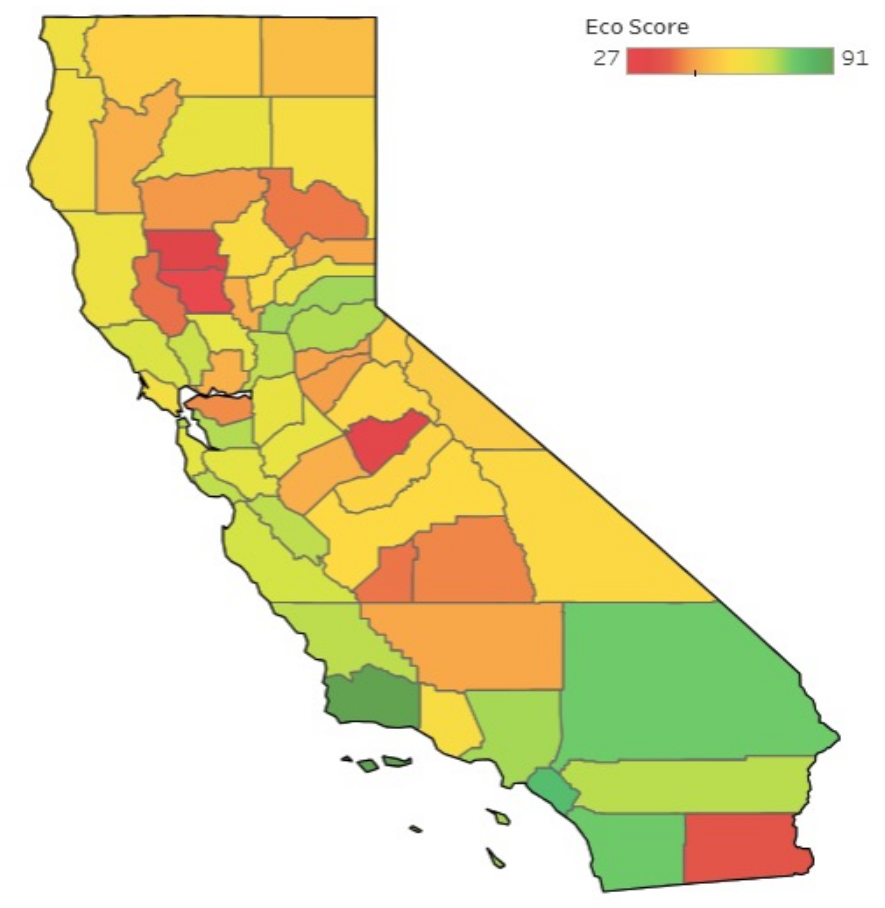
Economic heat map

Source: BlackRock, Federal Housing Finance Agency, Bureau of Labor Statistics, Census, Equifax, Zillow, Bureau of Economic Analysis. As of August 31, 2025. Economic model based on: employment, poverty, wealth levels, home prices, building permits
Advantages:
- California’s economy is unmatched among U.S. states: It is large and diverse, representing 14.6% of U.S. GDP (making it the 5th largest “country” economy in the world).
- Strong cash flow management and liquidity: The state has demonstrated fiscal discipline with an impressive record of on-time budget successes and a focus on paying down budgetary borrowings.
- Manageable debt burden: Net tax-supported debt as a percentage of state GDP is 2.9%, which compares favorably to the national median of 2.1%.
- Regional opportunities: Our proprietary economic heat map highlights regional disparities. For example, Southern California continues to see healthy economic trends, while benefiting from robust tourism and uptick in the return to office trend.
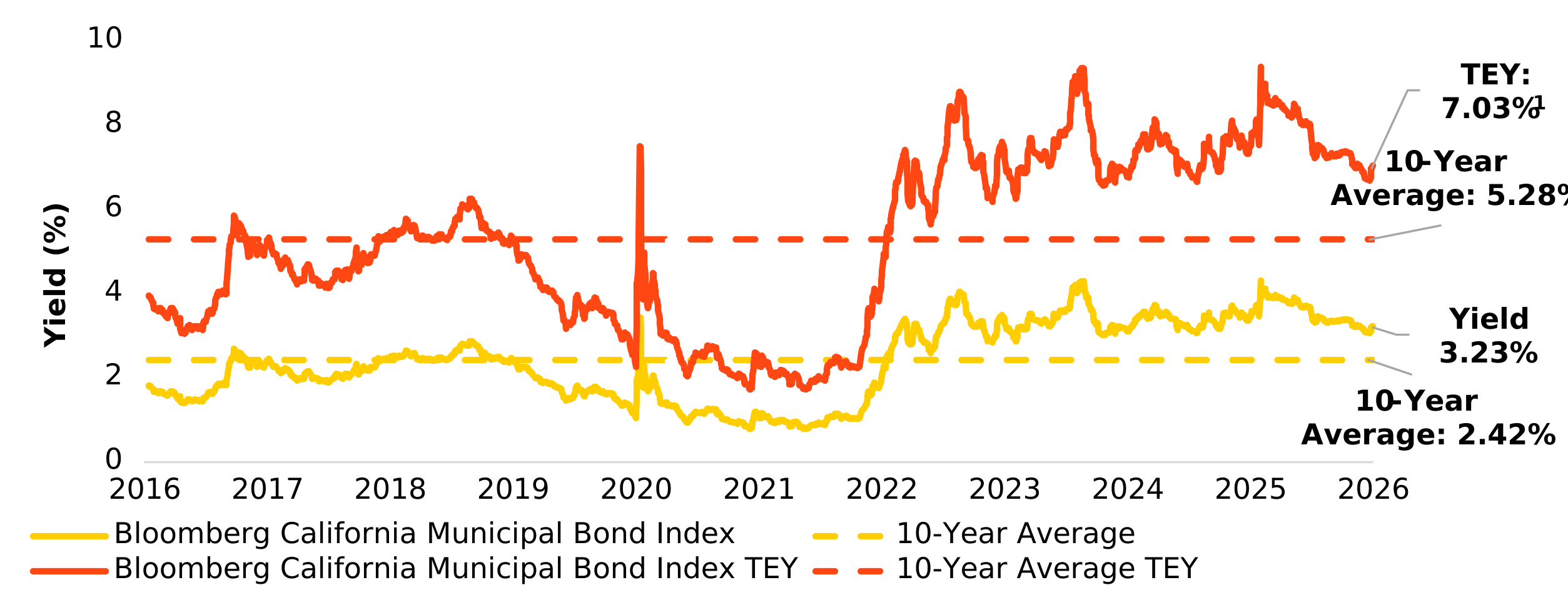
- Attractive yields and tax-equivalent yields: Today, the Bloomberg California Municipal Index yield to worst is approximately 3.92%, which is 0.42% above the long-term average. This translates to a tax-equivalent yield of 8.54% (based on a cumulative state and federal tax rate of 54.1%**).
Risks:
- Job growth lags the nation: The state has an unemployment rate of 5.3% compared to the national average of 4.2%.1
- Shrinking population due to migration: U-Haul data shows California is ranked last for one-way trips (5th consecutive year), while South Carolina, Texas, and North Carolina ranked top three in the country.2
- Regional risks: Urban areas, such as San Francisco, have large exposures to troubled commercial real estate struggling with post pandemic recovery combined with growing budgetary expenditures threaten the city’s ability to provide services for residents.
- Large pension and retirement liabilities: While funding ratios have improved due to solid returns driven by a strong equity market, OPEBs (Other post employment benefits) remain a large and growing concern.
- Reliance on high income earners: Stock market declines led to large deficits as the percentage of revenue from the top 1% of taxpayers fell from 50% to 39% for the 2022 tax year.3
- Subject to natural disasters: Natural disasters, such as wildfires, droughts and mudslides, have been increasing in frequency and severity. Single-site education, healthcare, and development district credits are most at risk given lack of revenue diversity.
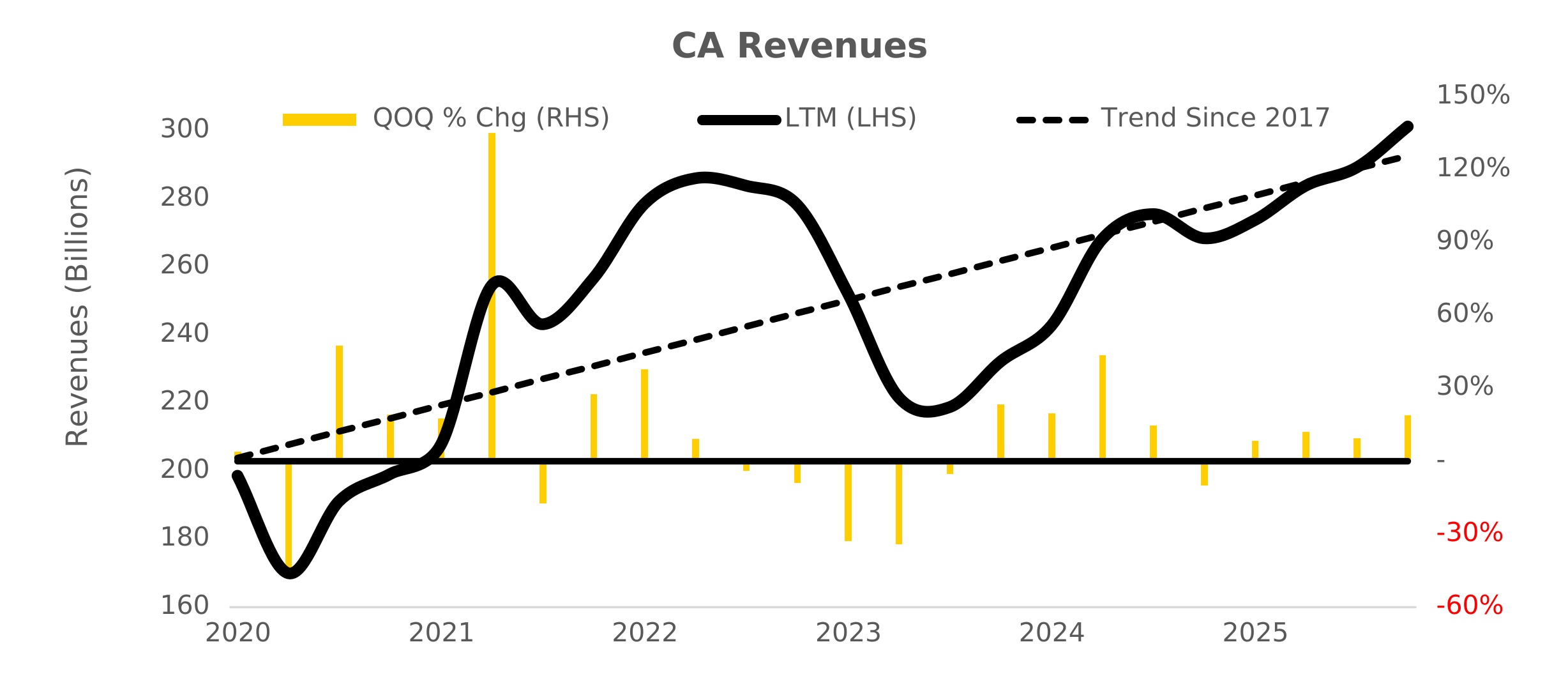
California’s revenue sources over time

Source: California Department of Finance; *estimated revenues for fiscals 2024 and 2025
** Includes 37% maximum federal tax rate, 3.8% Obama Surtax on Investment Income and 13.30% California State Tax.
1) California Employment Development Department, as of April 2025. 2) U-Haul, as of 2024. 3) California Franchise Tax Board, as of 2023
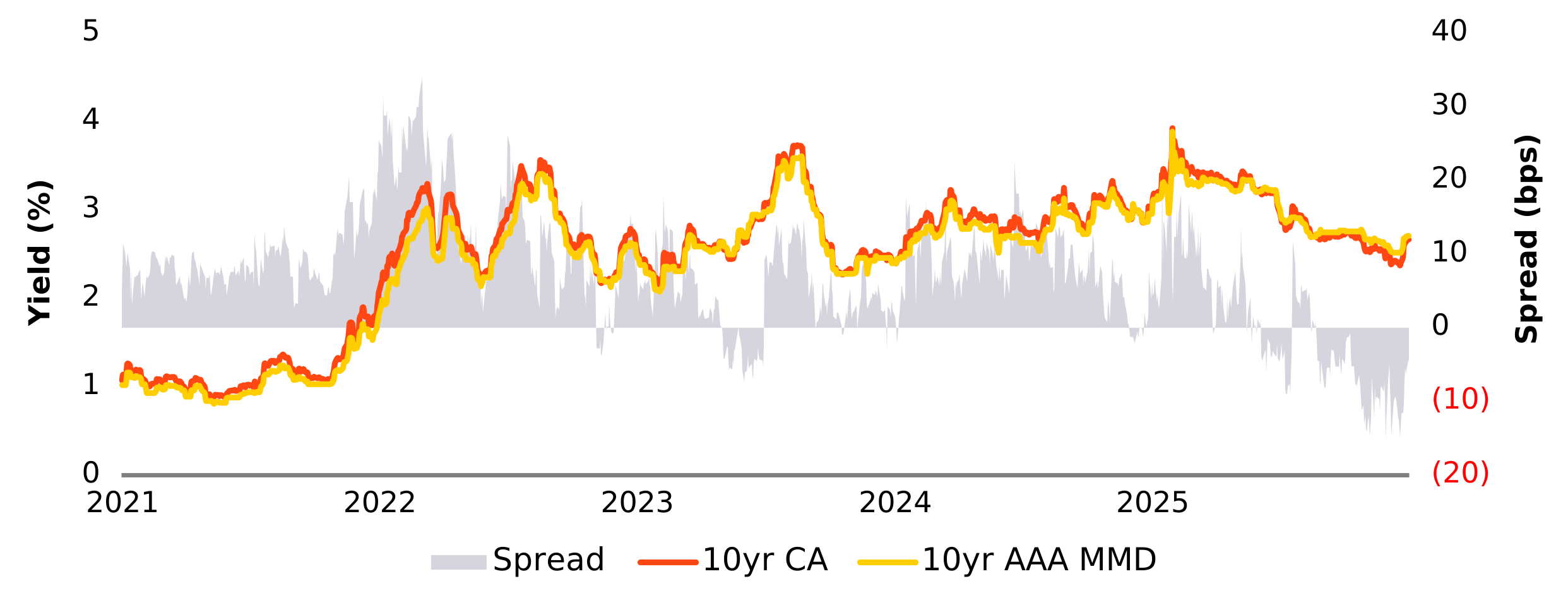
Strong retail demand for California bonds has resulted in tight credit spreads, which traditionally do not reflect the fundamental picture. This means investors are not getting paid for the risk they are taking on by investing in general obligation bonds issued by the state. Instead, the BlackRock Municipal Credit team prefers revenue bonds over tax-backed bonds in the state.
Areas of Opportunity:
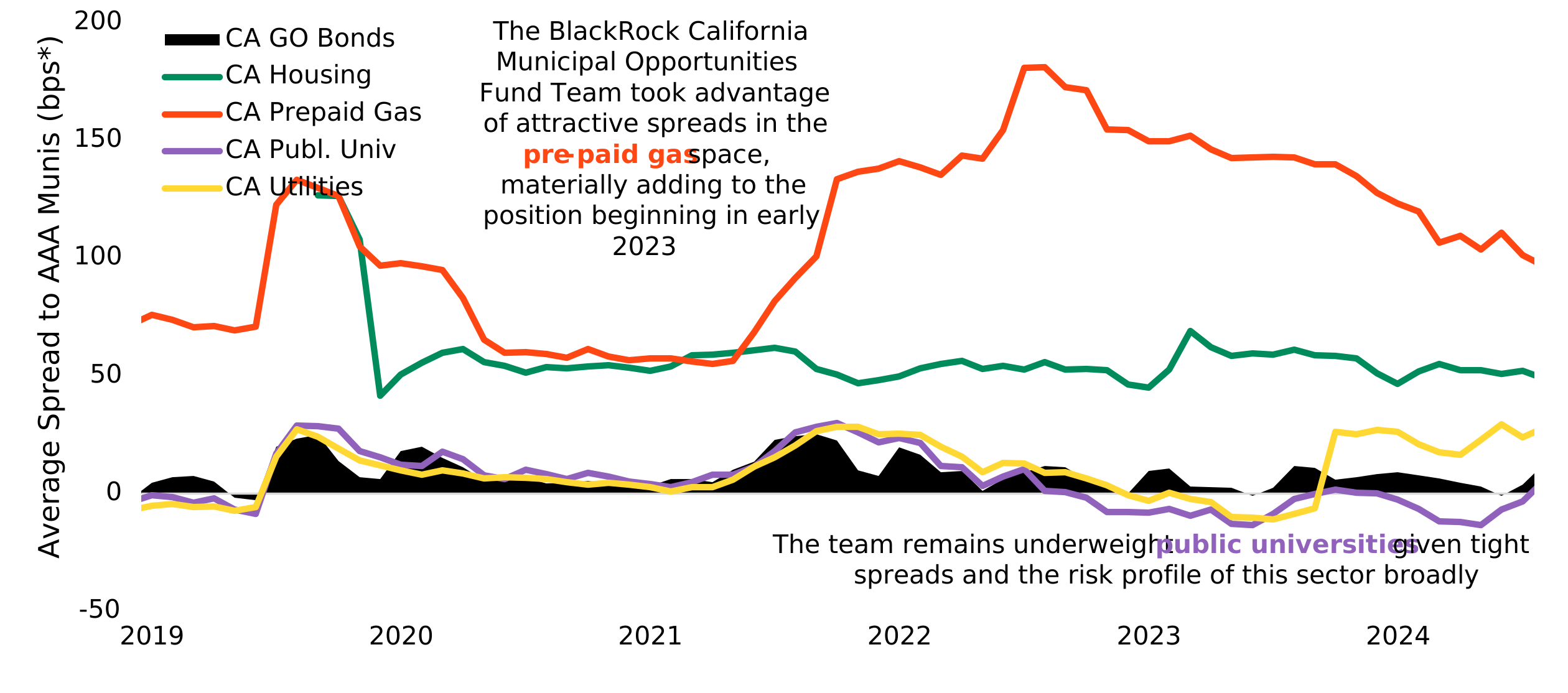
- Pre-paid energy bonds: Investments across this sector, backed mainly by large banks, offer wide credit spreads, high yields, and low duration.
- Sales-tax-supported regional transportation agencies: These credits, such as the Los Angeles County Metropolitan Transportation Authority, continue to show strong margins of debt service coverage protection and conservative use of leverage. This should make these dedicated-tax bonds a defensive vehicle in the next downturn.
- Transportation bonds: We prefer large, major transportation assets (airports, bridges, toll roads, seaports) given their prominent position as international gateways to travel and trade.
- Select California hospitals: We seek entities with proactive, strategic, and disciplined management, a favorable payor mix, solid utilization statistics and scale that can provide leverage in contract negotiations with commercial providers. Given macro pressures around cost inflation, potential changes from Washington and the eventual exchange of commercial reimbursement for Medicare as the population ages, we favor multi-state systems, market leading standalones, and children’s hospitals that have the liquidity cushion to offset these factors.
The state is not without its risks and budgetary complexities. Our goal is to capture value while avoiding the pitfalls that can come with choosing the “wrong” credits. Our dedicated 19-member analyst team remains vigilant in analyzing the risks and opportunities across issuers and credits on behalf of our shareholders to ensure BlackRock portfolios are based on critical thinking and populated with our best ideas.
California bond yields near recent highs, giving investors the ability to lock in yields at the highest level in a generation

Source: Bloomberg. Bloomberg California Municipal Bond Index, yield to worst as of August 31, 2025. Past performance does not guarantee or indicate future results. Index performance is for illustrative purposes only. You cannot invest directly in the index.
California investors may have the most to gain from the tax-exempt nature of municipal bonds

Source: Bloomberg, as of August 31, 2025. Data is showing the Bloomberg California Municipal Bond Index yield to worst. Tax rate includes maximum 37% federal income tax + 3.8% Affordable Care Act investment income surtax + 13.3% CA maximum state income tax, adding up to 54.1% combined tax rate. Past performance does not guarantee or indicate future results. Index performance is for illustrative purposes only. You cannot invest directly in the index.
Active Management in municipals allows clients to take advantage of opportunities in the California Municipal Market
The team has shifted to a long duration strategy—focusing on capturing higher yields and long-term value. This approach seeks to avoid the richer portions of the curve, which offer less relative value. Within the state, the team continues to favor revenue bonds over GOs to capitalize on market inefficiencies and relative value.
Active sector rotation creates opportunities
Source: BlackRock, ICE, as of August 31, 2025.
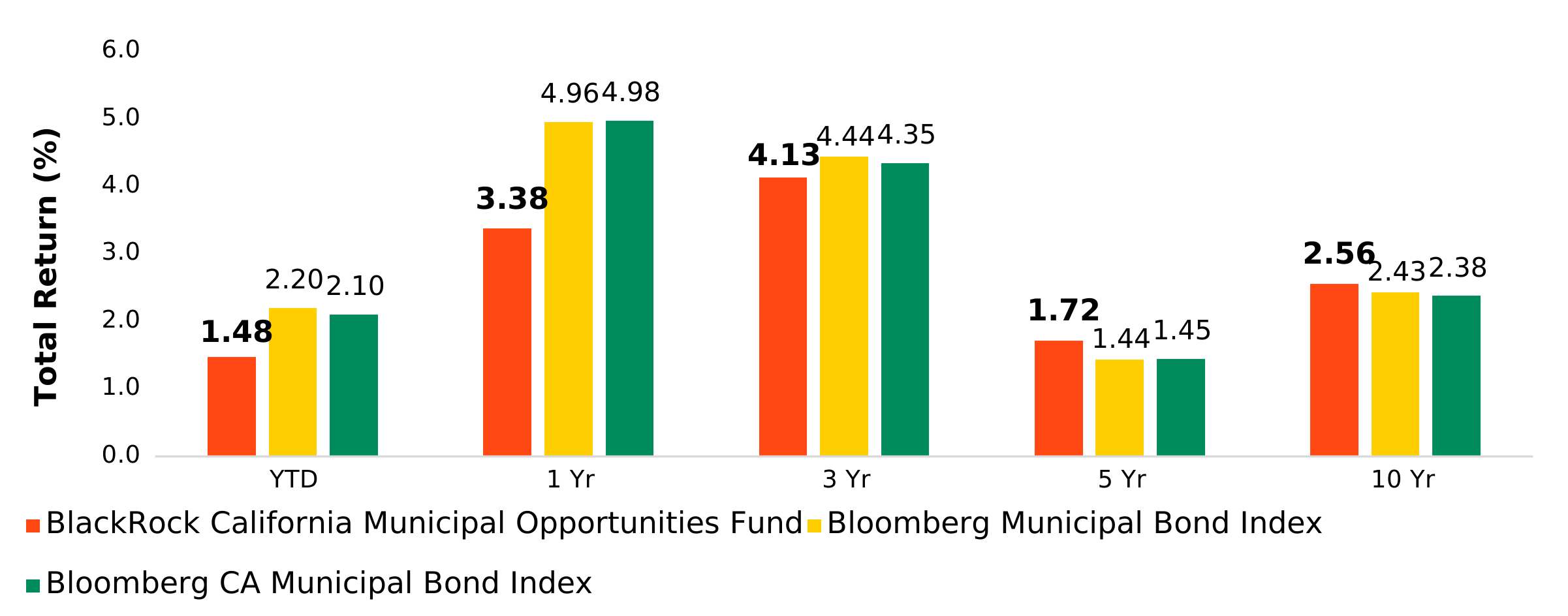
With these strategies in mind, active management has paved the way for outperformance in 2025 so far.
Historical outperformance of MACMX

Institutional shares gross annual operating expenses as of 6/30/2025 are 0.57%
Source: BlackRock, as of June 30, 2025. The performance quoted represents past performance and does not guarantee future results. Investment returns and principal values may fluctuate so that an investor’s shares, when redeemed, may be worth more or less than their original cost. Current performance may be lower or higher than the performance data quoted. All returns assume reinvestment of all dividend and capital gain distributions. Refer to California Municipal Opportunities Fund (MACMX) to obtain standardized performance data and data current to the most recent month-end.
BlackRock offers a diverse range of actively managed California-specific municipal investment solutions, including the California Municipal Opportunities Fund (MACMX), the iShares Short-Term California Muni Active ETF (CALI), and several actively managed closed-end funds. Additionally, investors can find the iShares California Muni Bond ETF (CMF) and customizable separately managed accounts to tailor their California municipal exposure.
For investors seeking to potentially enhance their municipal portfolios with additional high-yield exposure, consider the iShares High Yield Muni Active ETF (HIMU). For those prioritizing a short maturity alternative with limited duration exposure, the iShares Short Maturity Municipal Bond Active ETF (MEAR) may offer a solution. Both ETFs seek to provide targeted exposure and income flexibility in the municipal market.