Are there more stars in the sky or fish in the ocean? AI can answer that in seconds, but the answer changes depending on how you frame the question. The same is true in markets today. Daily data remains noisy, but the investment regime is becoming clearer: inflation is moderating without growth collapsing, the Federal Reserve is moving toward greater flexibility, and the artificial intelligence build-out is shifting from a broad beta story to a test of financing and cash-flow durability. For portfolios, that argues for more selectivity in equities and a broader use of starting yield, carry, and diversification in fixed income.
The Federal Reserve: less talk, more flexibility
Chair Warsh has assembled five task forces spanning communications, balance sheet policy, data sources, productivity, and inflation frameworks. At its latest meeting, the Fed left rates unchanged despite three dissents for a hike, while Warsh emphasized underlying inflation trends over individual data releases and noted that rising real rates are already providing some tightening. The direction is becoming clearer: less routine forward guidance, more conditional communication, and a deliberate move away from treating core personal consumption expenditures (core PCE) as the sole measure of price stability. We think this is constructive for markets. From 2020 to 2022, the Fed overcommunicated while holding rates too low, and the result was an explosive hiking cycle. By reducing forward guidance, the Fed gains flexibility to react to new data, which should help keep interest rate volatility in a more natural range over time.
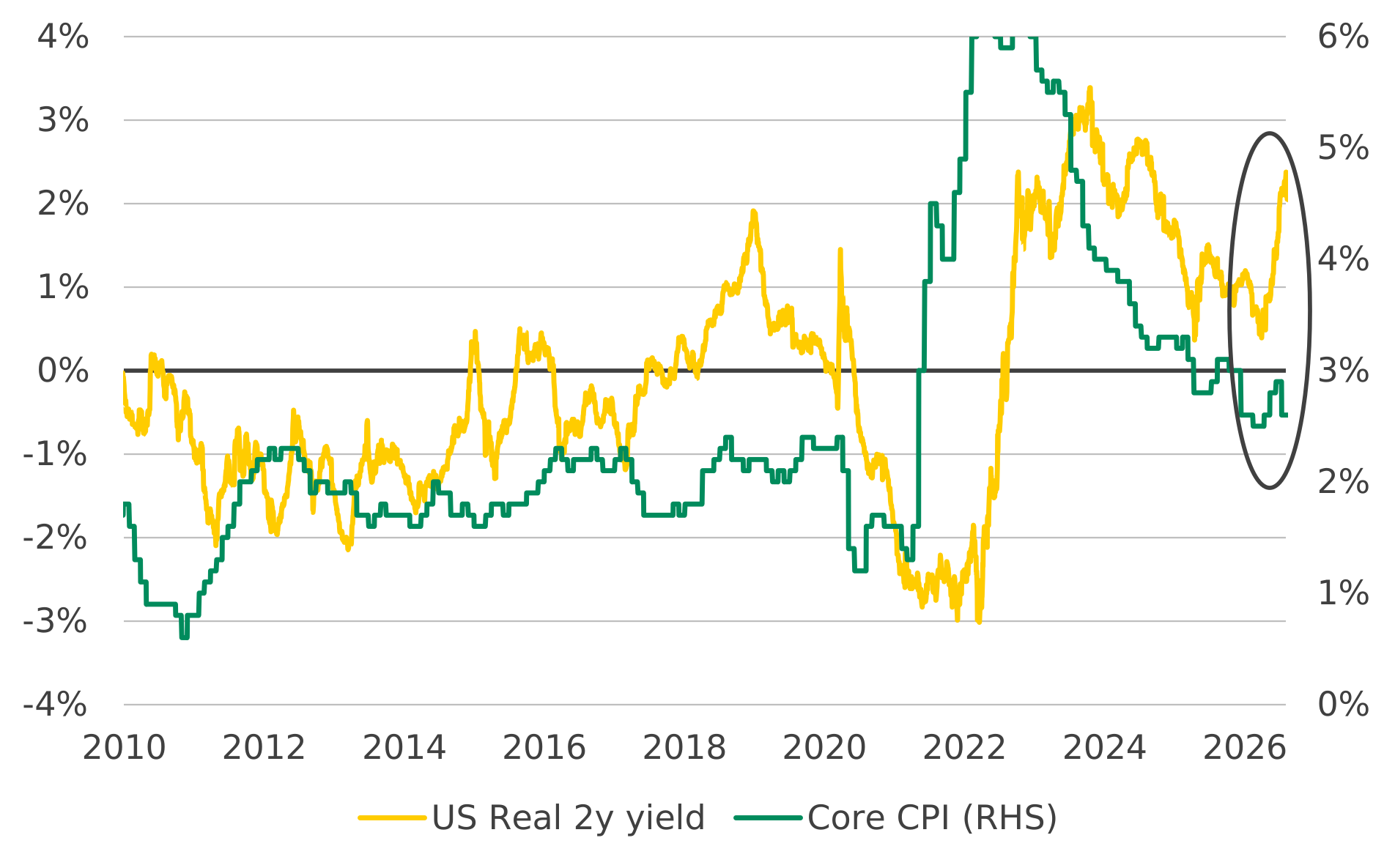
On inflation, the signal is becoming both softer and narrower. The core consumer price index (core CPI) sits at 2.6%, down 70 basis points since June 2024, and the June reading was one of the weakest for core CPI excluding shelter in nearly 20 years. Producer price (PPI) data also came in lighter than expected. The remaining pressure is concentrated in categories less responsive to rate policy, like medical care and shelter, while market-implied inflation expectations have returned close to 2%.
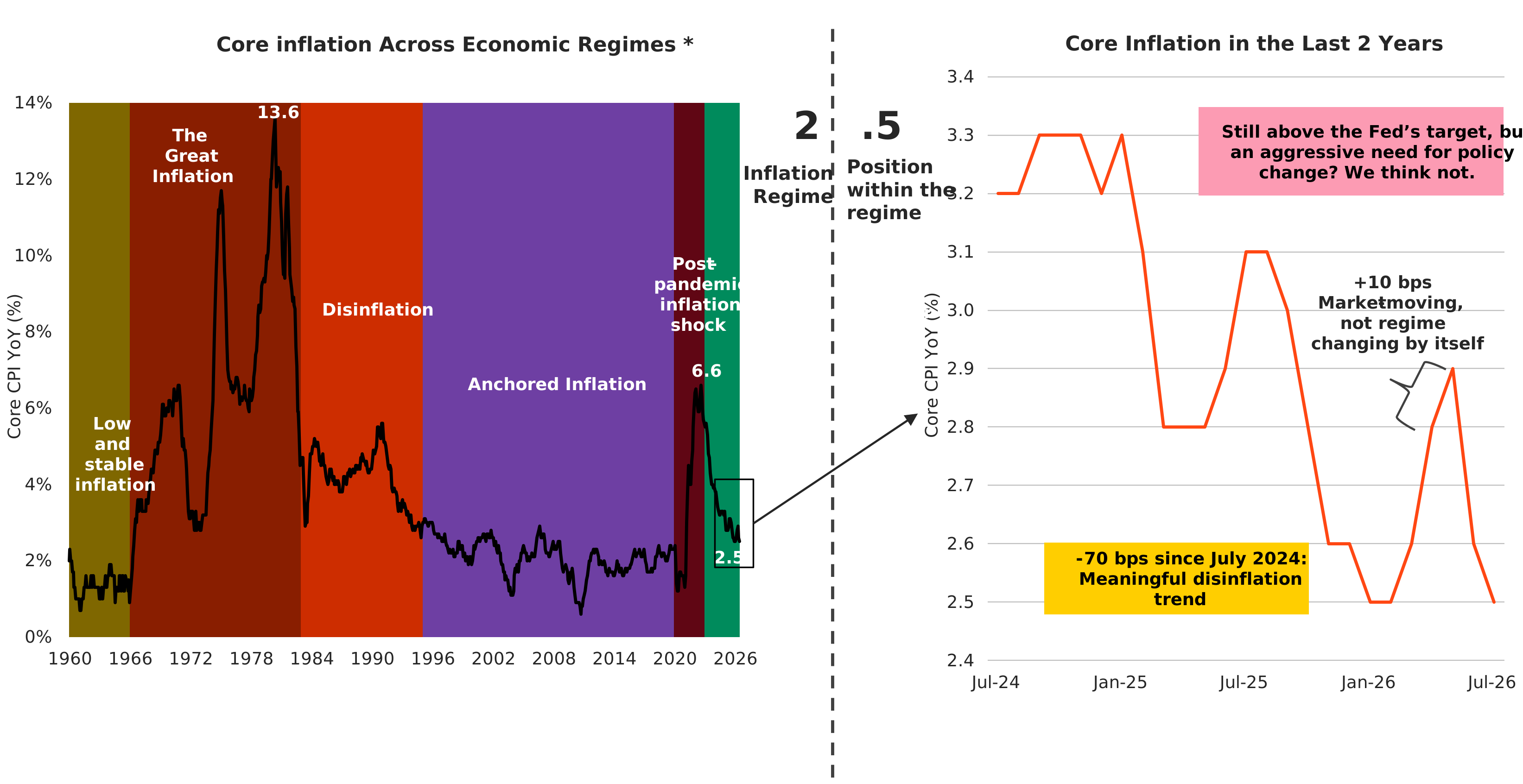
Bureau of Labor Statistics, as of 6/30/2026
The economy: fine on balance, deeply divergent underneath
The economy remains resilient, but the internal divergence is striking. The latest payroll report reinforced a low-hire, low-fire labor market: 12-month average payroll growth is just 26,000, healthcare again accounted for virtually all net hiring, and employment outside healthcare fell by 45,000 in the month. AI-related productivity is weighing on hiring in many technical and professional fields, while retirements are limiting the need for outright layoffs. Economy-wide profit per employee continues to reach new heights, yet many industries are growing without hiring at all, or even while reducing employment.
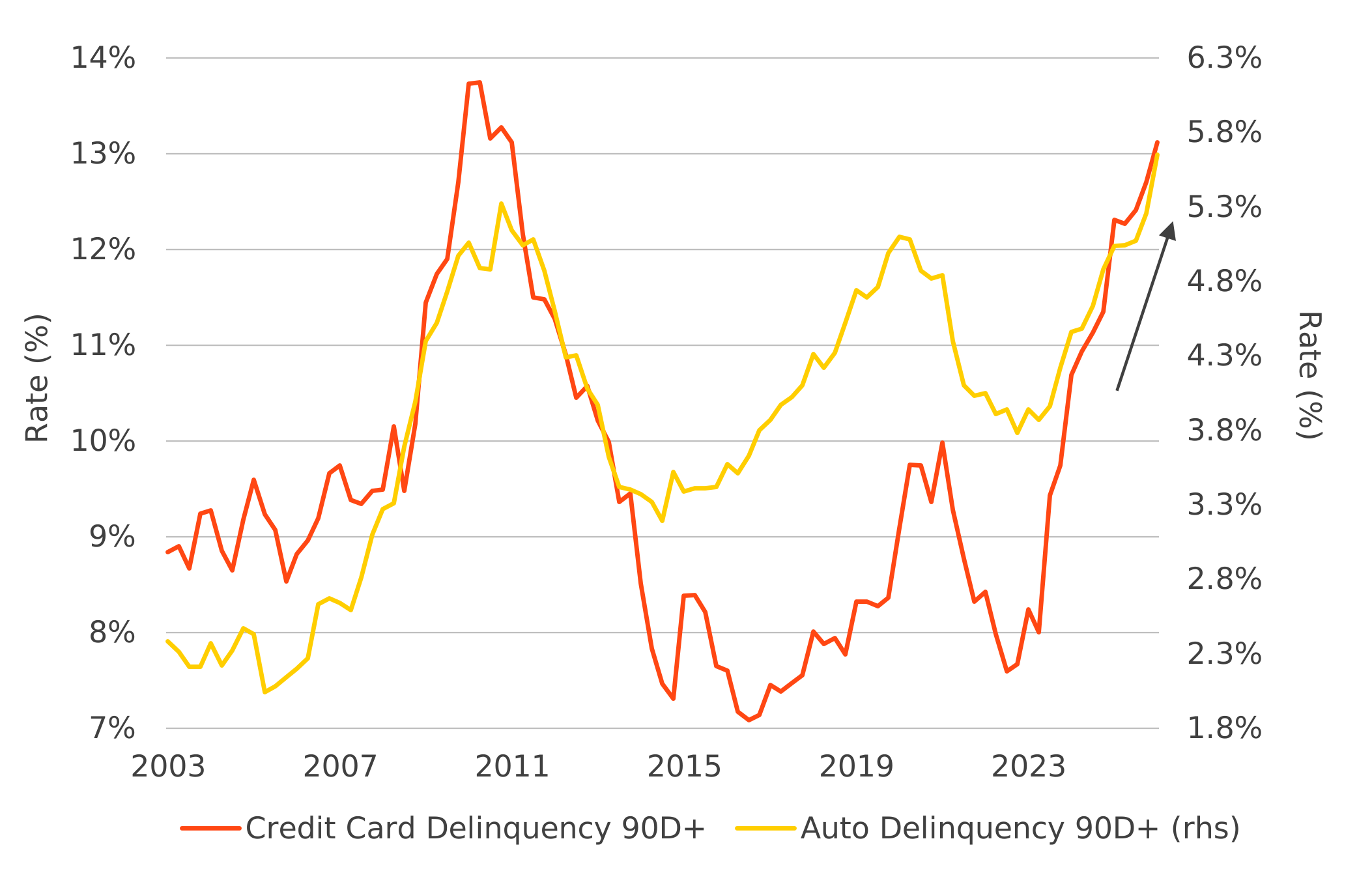
The stress is concentrated among borrowers with the least financial flexibility. Credit card balances 90 or more days delinquent have reached 13.1%, the highest on record outside two quarters in 2010. Auto loan delinquencies sit at an all-time high of 5.6%. Household savings have fallen to 3.0% from a stable 5.0% in 2025 as elevated gas prices ate into buffers. Housing turnover remains largely frozen at a 6.6% mortgage rate, with starts at the weakest pace in six years. Yet this stress has not been enough to derail aggregate growth.
Federal Reserve Bank of New York, as of 6/30/2026
That divergence is precisely why the Fed's task force approach matters. The overnight rate is a blunt instrument being asked to do precision work in an economy with highly divergent internal conditions. For now, the Fed appears more focused on the underlying inflation trend than on any single weak employment print, reinforcing the case for patience rather than an aggressive directional rate view.
Artificial intelligence financing: the interest rate does not matter (until it does)
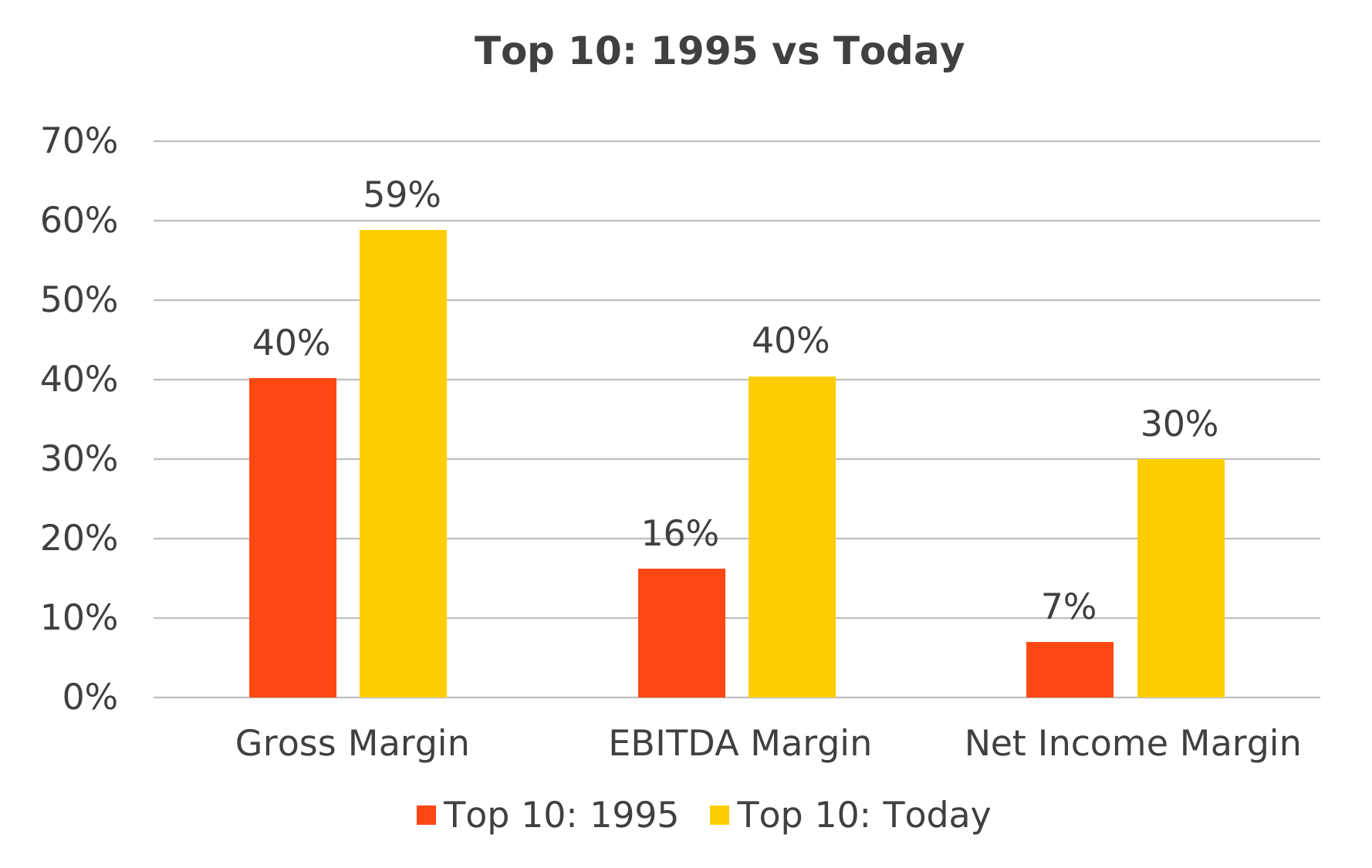
This is the other side of the divergence. The top 10 companies today carry a similar cost of debt to the top 10 in 1995 (roughly 4.3% versus 4.6%), but the similarity ends there: gross margins are 59% versus 40%, EBITDA margins are 40% versus 16%, and return on equity (ROE) is 58% versus 27%.1 Corporate decisions to borrow and build are less sensitive to interest rates today and more geared toward the potential future cash flows from artificial intelligence, which remain substantial. So while higher rates are debilitating to the borrowers who are already struggling, the interest rate tool has limited influence on the corporate investment cycle that is driving the economy forward.
Bloomberg and Company Filings, as of 3/31/2026
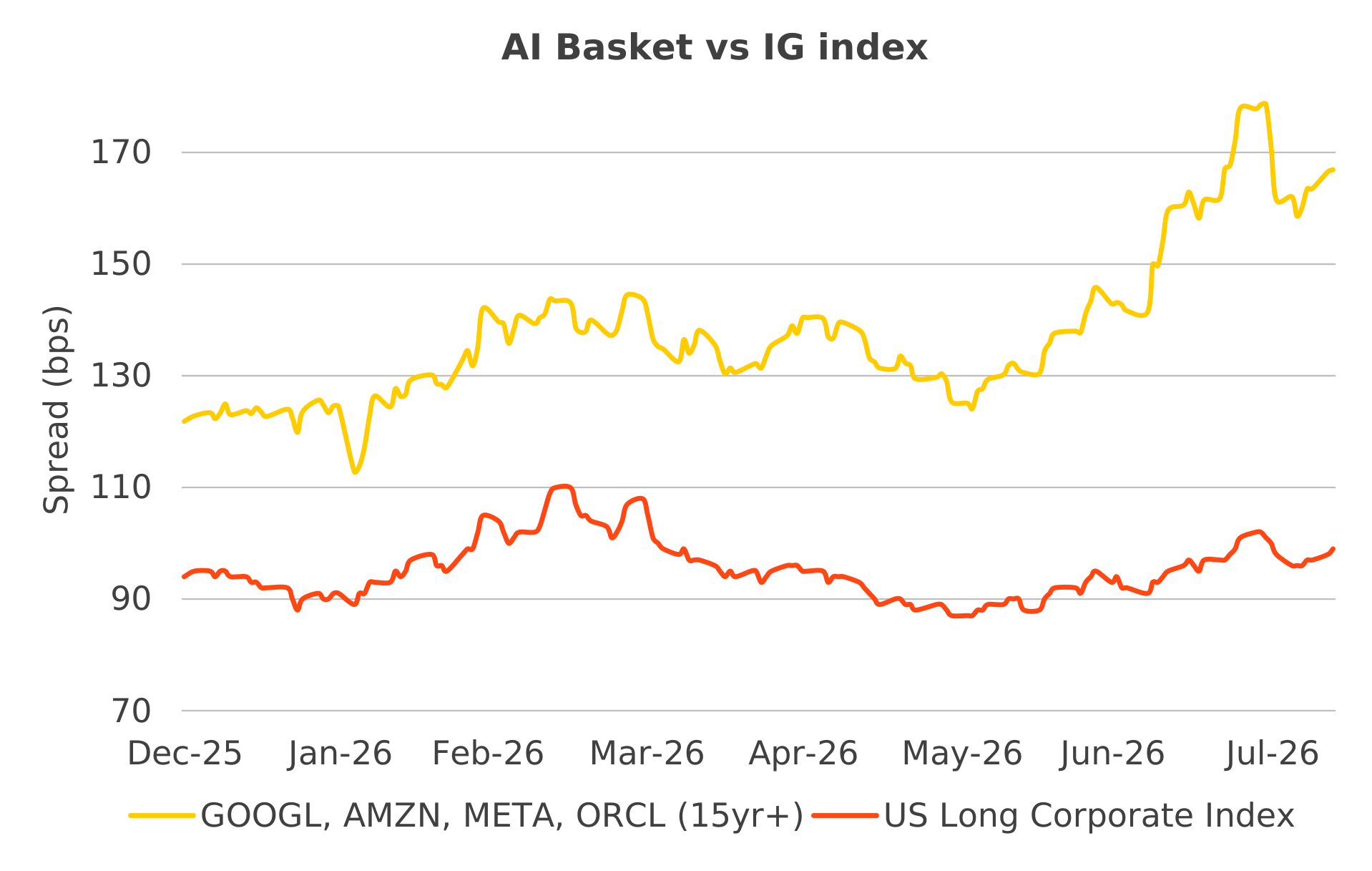
The build-out started with pristine balance sheets. Leverage has ticked up, but AI spenders remain lightly levered at 0.36 times net debt to EBITDA versus nearly 2 times for the S&P 500 excluding financials. The more important question is how this spending is being financed and whether the marginal terms are deteriorating. On the debt side, more than 40% of year-to-date issuance in the long investment-grade (IG) sector has been AI-related, and that volume is meeting weaker sponsorship, with AI-related IG spreads coming under pressure relative to the broader index. On the equity side, the visible slate of equity financing totals more than $500 billion this year through secondary offerings, IPOs, and private rounds, shifting supply and demand dynamics from extremely supportive to increasingly balanced.
Balance sheets are still healthy, but as financing costs rise and oversubscription ratios fall, the margin for error is shrinking. Not every company will generate the same return on its AI investment. The market is starting to price that differentiation in real time, and investors need to underwrite cash flows, capital structure, and financing terms rather than treating artificial intelligence as a monolithic opportunity.
BlackRock Capital Markets, as of 8/11/2026
Equities: selectivity over broad beta
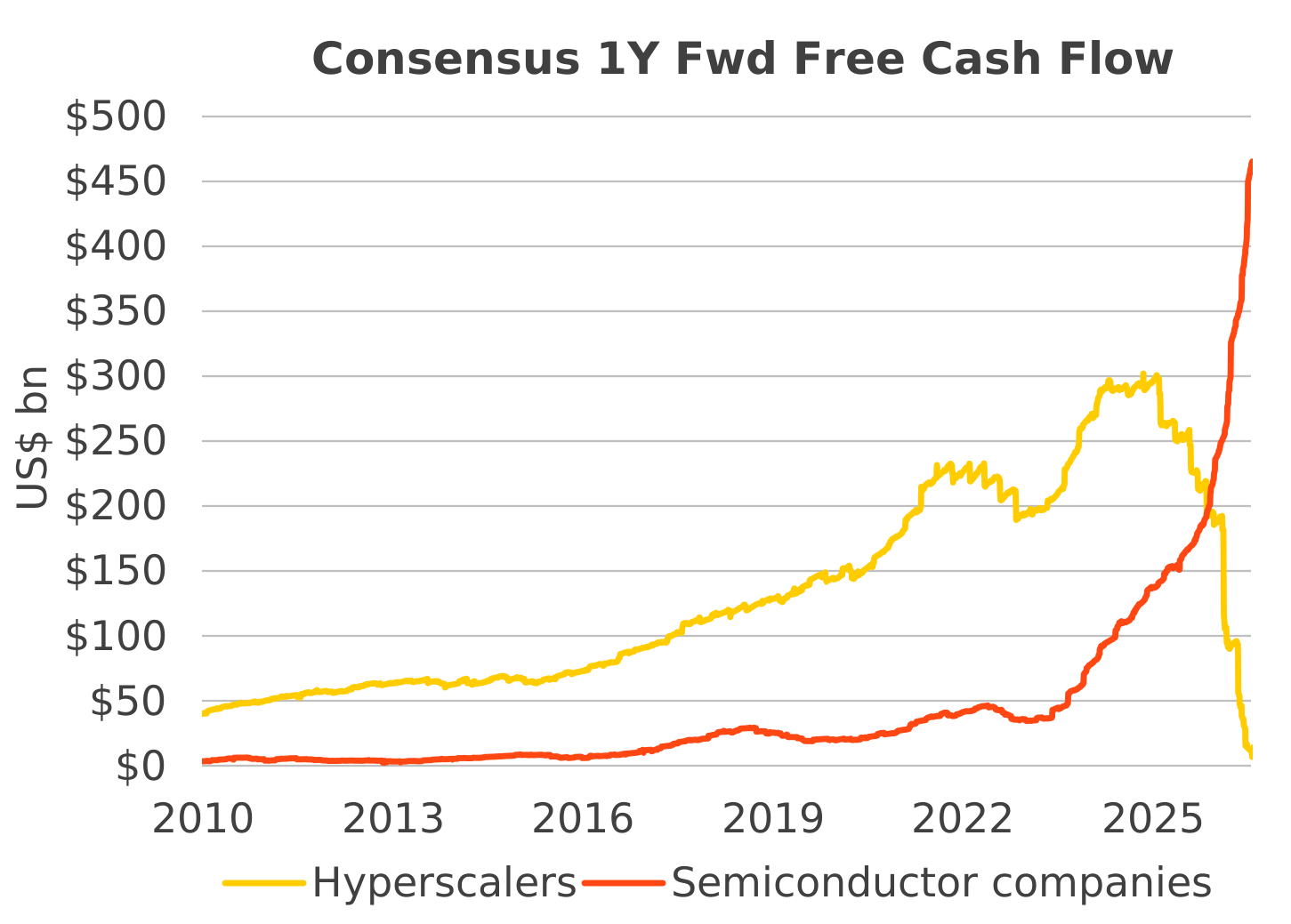
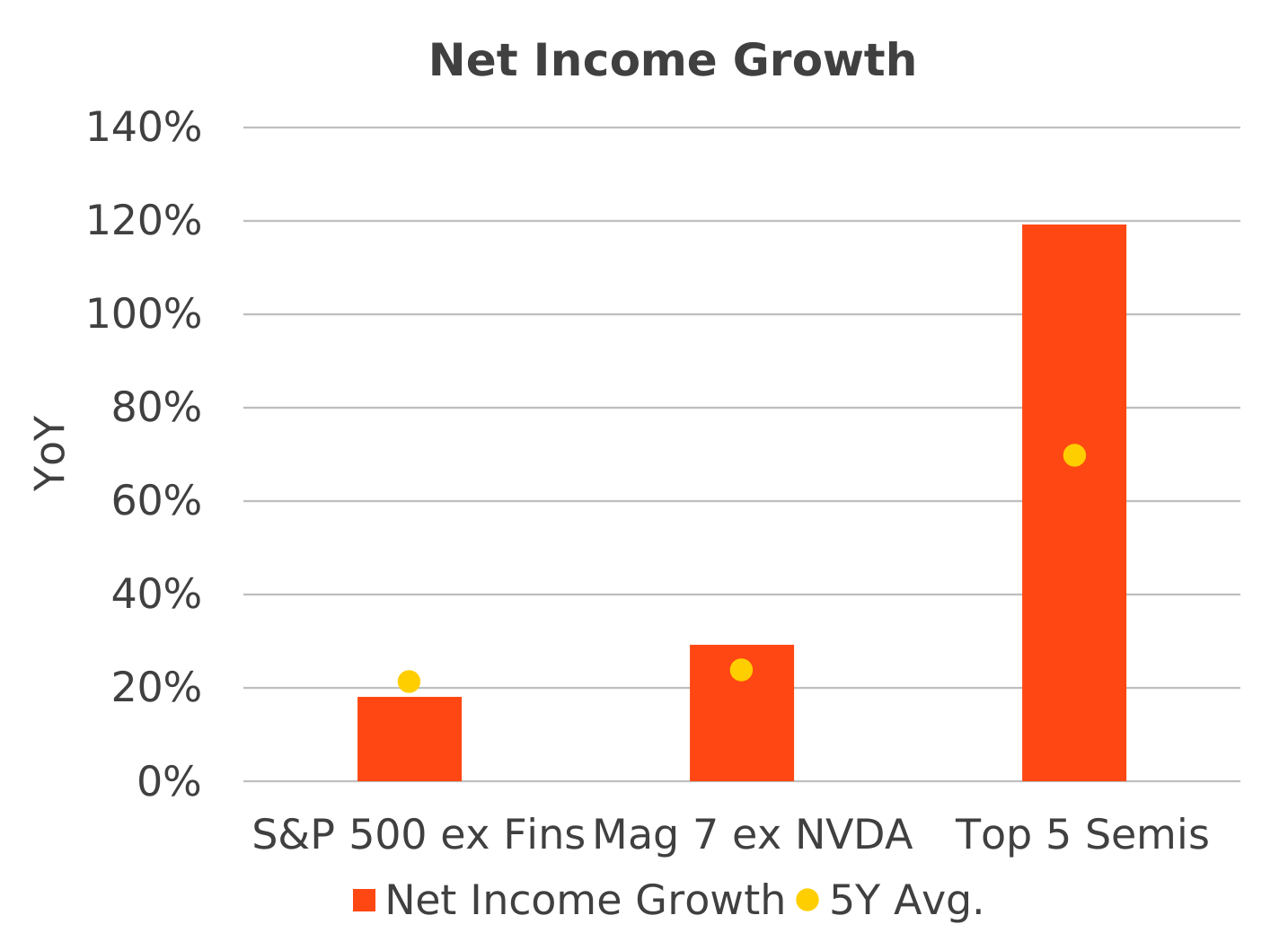
Concentration in equities is not new. From 1926 to 2025, just 46 firms accounted for 50% of all U.S. stock returns. What is changing is the source of leadership. Record hyperscaler investment has fueled record free cash flow in the AI ecosystem, and the earnings engine is visibly rotating: the largest seven technology companies have seen earnings growth normalize while semiconductor profits have accelerated sharply.
Bloomberg and Company Filings, as of 3/31/2026
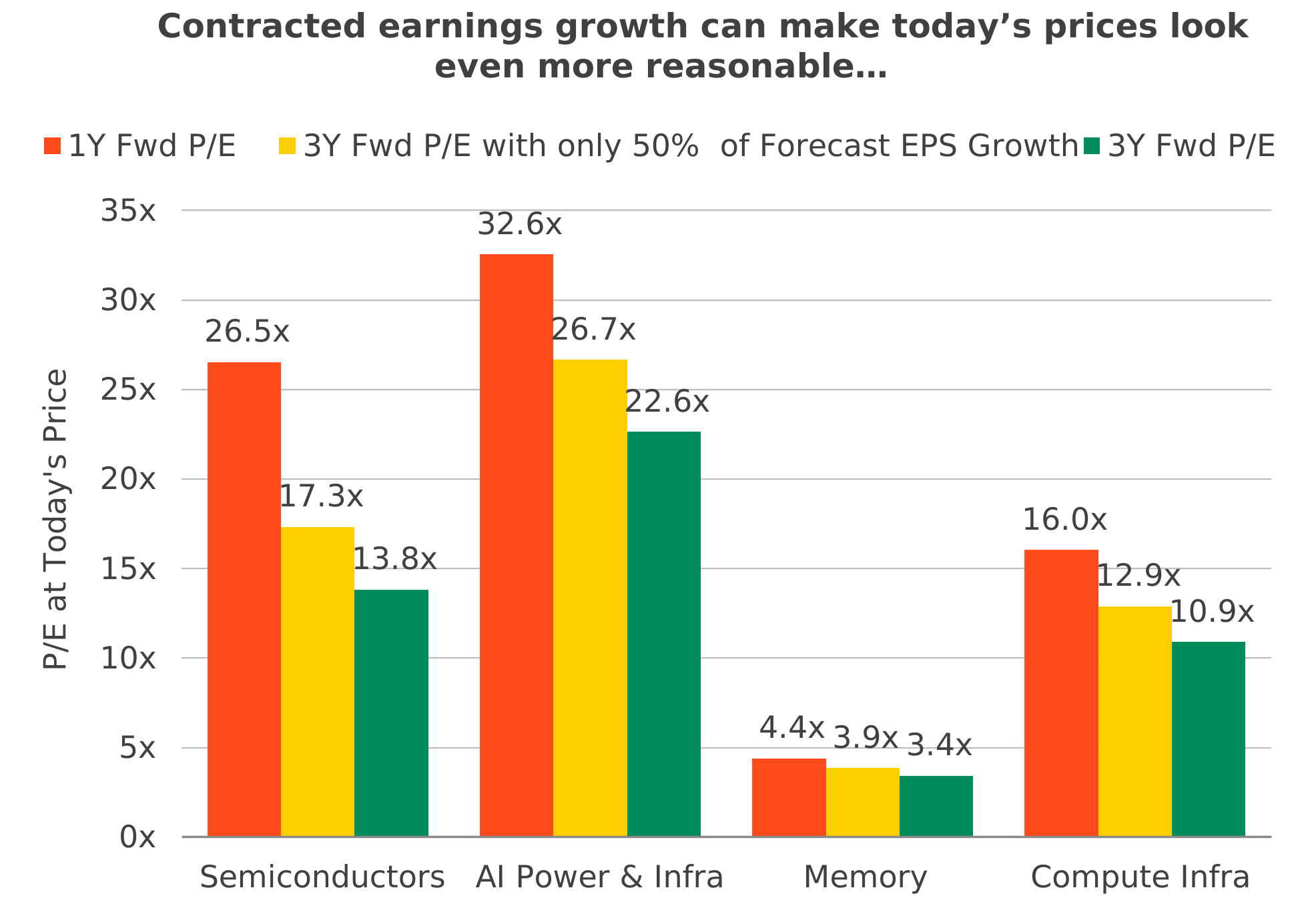
Bloomberg and Company Filings, as of 8/11/2026
Multiples across the ecosystem have re-rated roughly 5 to 20 turns lower in just six weeks, despite forward earnings expectations continuing to grow. A large portion of that growth is already under contract. We think the pullback has created an attractive entry point, but the opportunity is not about lower valuations alone. It is about identifying companies whose cash-flow durability, return on invested capital, and productivity advantages can sustain earnings growth through the next phase of the cycle. Broad market exposure has benefited from narrow earnings leadership; the next phase should reward more selective exposure.
Bloomberg, as of 8/7/2026
Fixed income: the entire fishing kit
In fixed income, portfolio construction could not look more different from equities. The principle is straightforward: when expected returns are being driven primarily by starting yield, diversify that income across several independent sleeves rather than relying on one large duration or credit call.
Thirty-year Treasury bond real yields are now near post-global-financial-crisis highs. With a more benign inflation backdrop, stock-bond correlations are likely to normalize, making selective duration a more effective portfolio management tool again. There is no rush, but the levels are becoming more attractive, and adding gradually on weakness is well supported by the macro constellation.
Bloomberg, as of 8/7/2026
Dispersion is also visible in volatility markets. Uneven pricing across rates, currencies and equities can create opportunities to buy protection where it is relatively cheap and earn premium where it is expensive, turning volatility into a potential source of both resilience and income.
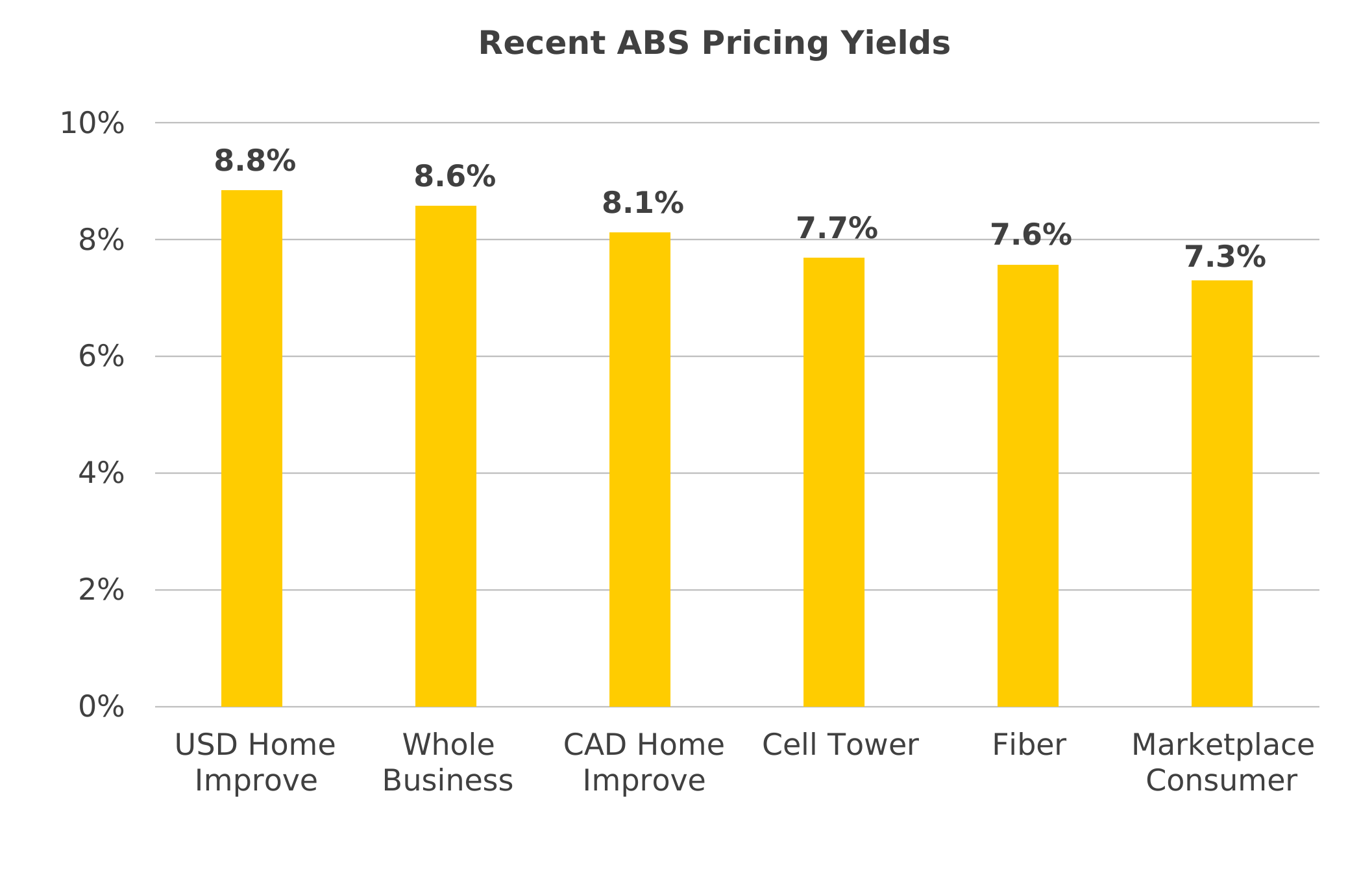
Benchmark bond credit spreads are tight, but the opportunity set is expanding well beyond the index. Correlations between investment-grade bonds are rising, meaning the broad index provides less diversification benefit. Meanwhile, bespoke financing assets, including data center asset-backed securities (ABS), whole-business securitizations, and private placements, now offer meaningfully more yield and, in many cases, considerably stronger structural protection and covenants. Origination in securitized products has broadened across aircraft, fiber, fleet lease, and cell-tower collateral, creating new sources of income that are less correlated with traditional credit. An optimized fixed income allocation can potentially compound near 7% income while offering daily liquidity and serving as a ballast that bonds can provide in a broader portfolio.
BlackRock ABS, as of 7/13/2026
What to do now
Sixty themes competed for attention this month, from AI compute super cycles to the Strait of Hormuz to Korean margin calls. Most of them are stars in the sky: interesting, but not what compounds in a portfolio. The regime that matters is one of moderating inflation, a more flexible Fed, real yields near historic levels, a corporate sector whose cash-flow engine is rotating but not disappearing, and a fixed income universe that has never offered more tools to build with.
That argues for five portfolio actions.
- Keep duration in bond allocations moderate, adding gradually on weakness.
- Diversify income beyond benchmark credit into securitized, structured, and originated assets.
- Favor equity cash flows that are contracted or already visible, where return on invested capital and earnings durability are high.
- Retain enough liquidity to use dispersion to your advantage rather than broad beta alone.
- Monetize volatility rather than simply endure it.
The right question is not how many stars or fish there are. It is which cash flows can keep compounding when the answer changes.