Strong earnings key as rates stay high
Market take
Weekly video_20260615
Ehsan Khoman
Economist
BlackRock Investment Institute
Header:
CAPITAL AT RISK. MARKETING MATERIAL.
Opening frame: What’s driving markets? Market take
Camera frame
Title slide: Strong earnings key as rates stay high
The recent equity pullback has put a central market debate back into focus: can solid earnings growth offset a higher-for-longer interest rate backdrop?
1: Tech stands out
Tech looks like one of the few parts of the market capable of outrunning pressure from higher interest rates. That’s thanks to rising earnings expectations for the sector, strengthening AI capital spending and broader conviction in the AI theme. Those factors have helped offset the would-be drag from higher rates.
But whether the sector can continue to stand out depends not only on earnings growth delivering but also on investor willingness to fund the next phase of the AI buildout.
2: Competing for capital
To be sure, tech is still gathering momentum. OpenAI’s IPO filing and SpaceX’s public market debut last week highlights sustained investor appetite for AI-related assets.
But a larger pipeline of IPOs, equity issuance and financing needs competing for limited capital highlights an important reality for markets: the same forces supporting earnings growth – namely accelerating capital spending on the AI buildout – are also helping keep rates elevated.
3: Rates in focus
The challenge for investors is that earnings growth and interest rates are rising at the same time. A solid labor market and persistent inflation pressures have led investors to scale back expectations for policy. The Middle East conflict shock only added to those concerns by raising questions about the inflation outlook.
This puts the spotlight on Federal Reserve Chair Kevin Warsh’s first policy meeting as head of the central bank this week. What’s key is the communication surrounding the meeting itself, and we’re closely watching whether the Fed will reduce reliance on forward guidance. That could potentially make the Fed’s reactions a source of volatility, while also lifting term premia and keeping upward pressure on long-term yields.
Outro: Here’s our Market take
We think it’s key for investors to focus on which assets can thrive in a higher-for-longer interest rates environment. We stay pro-risk on the accelerating AI theme.
Closing frame: Read details: blackrock.com/weekly-commentary

Markets are still digesting the trade-off between stronger earnings growth and higher interest rates. Solid tech earnings keep us positive on risk, for now.
The S&P 500 gained 1% as tech rebounded and on news that the U.S. and Iran were nearing a potential peace deal. Brent crude oil fell to a three-month low.
Eyes are on Kevin Warsh's first meeting as Fed chair and any communication changes, including whether the Fed will still provide forward guidance on rates.
The recent equity pullback has put a central debate back into focus: can solid U.S. corporate earnings growth keep offsetting a higher-for-longer interest rate environment? Equities have remained relatively resilient as bond yields jumped to one-year highs on inflation concerns as markets shifted to price in a potential Federal Reserve rate hike. The latest tech retreat suggests the balance between earnings growth and rates is a fine one – and earnings need to keep delivering.
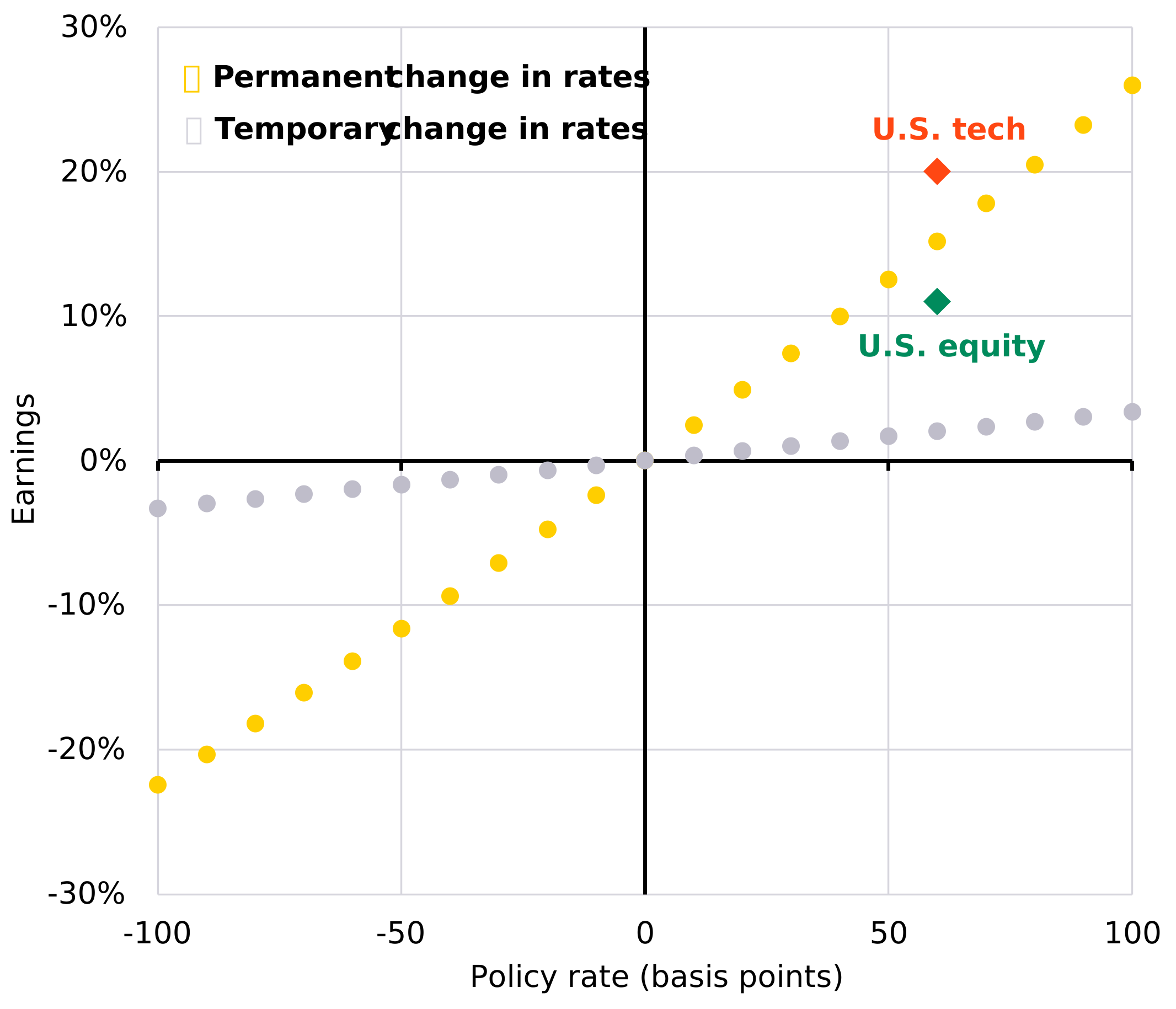
Earnings growth vs. rates
Change in 2026 U.S. expected earnings growth and short-term rate path
Source: BlackRock Investment Institute with data from LSEG Datastream, June 2026. Notes: Dots show the earnings growth needed to offset the change in valuations associated with shifts in policy rate expectations. Temporary shocks are assumed to gradually fade and be fully reversed after five years. Earnings above the curve offset valuation pressure from higher rates, while earnings below the curve imply residual valuation pressure. Diamond markers show year-to-date changes in earnings expectations for the MSCI U.S. and MSCI U.S. IT indices assuming a 60-basis-point increase in policy rate expectations.
Tech has proved a corner of the stock market able to outrun persistent pressure stemming from higher interest rates. See the chart. This reflects the strength of the forces driving earnings growth, in our view: strengthening AI investment spending and broader conviction in the AI theme. The chart shows the potential drag from a higher policy rate path on a permanent shift higher (yellow dots) and temporary one (gray dots) that fades after five years. U.S. tech earnings this year have so far outpaced that potential drag – and tech earnings have a higher hurdle to clear given their sensitivity to interest rates from the long-term nature of their earnings growth. See the orange dot. Whether tech shares can keep doing so will depend not only on the durability of earnings momentum, but also whether we see a further acceleration of the AI buildout amid the constraints.
The AI buildout has helped turbocharge U.S. tech sector earnings: growth jumped to a 52% year-over-year pace in Q1, easily beating expectations for a 36% gain at the start of the quarter and almost double the growth of the broader market, according to Blomberg data. The capital needs for the AI buildout are front and center after SpaceX’s record-beating $75 billion initial public offering (IPO) last week, the first of other big AI IPOs building in the pipeline. OpenAI's IPO filing just before SpaceX’s listing highlights sustained investor confidence in the AI theme. Yet a growing wave of equity-over-debt issuance from mega cap tech hyperscalers such as Meta and Google-parent Alphabet raises questions of where will the capital come from. We think market absorption of this supersized equity issuance is a real risk to watch but not on its own a reason to question the AI fundamentals.
Tech in the lead
This comes as U.S. growth has held up thanks to the ongoing AI buildout while inflation has proved sticky. The supply disruptions from the Middle East conflict have caused limited damage so far – just as a potential U.S.-Iran deal seems close again – but have reinforced concerns about inflation, prompting markets to price in a potential Fed rate hike this year compared with a few cuts at the start of the year.
This puts the spotlight on Fed Chair Kevin Warsh's first policy meeting as head of the central bank this week and the communication challenge the Fed faces. We’re closely watching how Warsh frames the balance between growth and inflation and any changes Warsh signals on Fed communication, such as reducing reliance on forward guidance to signal how it might act on policy rates next. That potentially makes the Fed’s policy changes a source of volatility as investors try to infer future moves from fewer clues – and could add to reasons for investors to demand more term premium for holding long-term bonds, keeping upward pressure on long-term yields. Any Warsh comments on AI-linked productivity gains will also be key – especially as productivity gains from AI signal a strong investment backdrop and competition for capital that would also push interest rates higher.
Our bottom line
Tech earnings are offsetting the pressure from higher interest rates. We stay nimble in how we implement the AI theme as the potential ways to express it evolve in different markets and regions.
Market backdrop
The S&P 500 advanced nearly 1% on a rebound in tech shares and hopes of a peace deal between the U.S. and Iran that also sent Brent crude oil prices to a three-month low. SpaceX’s record debut marked the first of several expected AI-related IPOs. U.S. 10-year Treasury yields pulled back to 4.48% as lower oil prices helped ease yields off a one-year high. Following the May CPI report, we think the data leaves very little wiggle room, if any, for the Fed heading into Warsh’s first meeting as chair.
All eyes are on next week’s Fed meeting and how Chair Kevin Warsh frames the outlook for growth, inflation and policy. Investors will be looking to see if the Fed drops its easing bias and for clues about how much forward guidance the Fed intends to provide given Warsh’s questions about its usefulness. Beyond the Fed, China credit data, a Bank of Japan policy meeting plus UK inflation data will help shape the global macro picture.
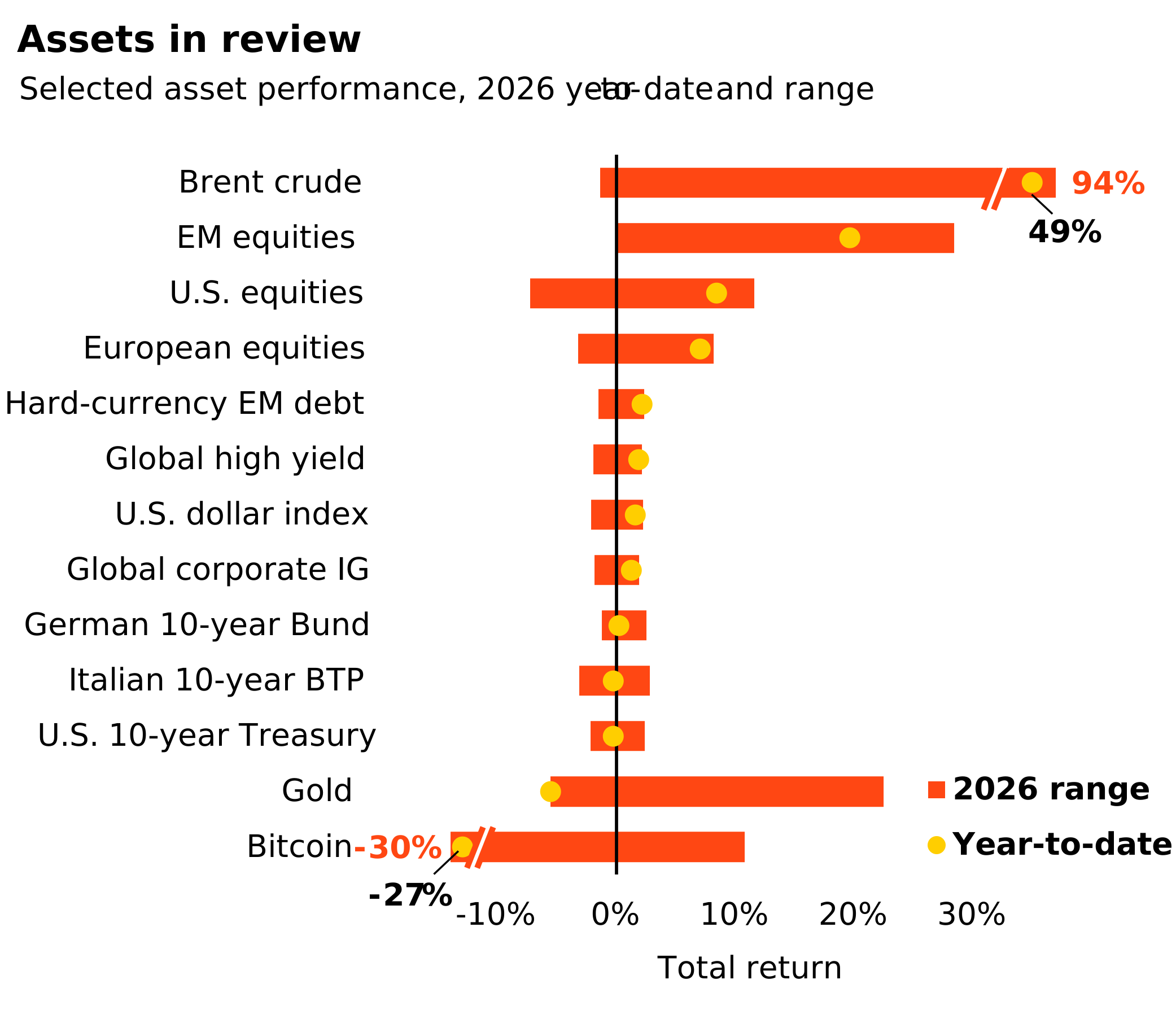
Week ahead
Past performance is not a reliable indicator of current or future results. Indexes are unmanaged and do not account for fees. It is not possible to invest directly in an index. Sources: BlackRock Investment Institute, with data from LSEG Datastream as of June 11, 2026. Notes: The two ends of the bars show the lowest and highest res at any point year to date, and the dots represent current year-to-date res. Emerging market (EM), high yield and global corporate investment grade (IG) res are denominated in U.S. dollars, and the rest in local currencies. Indexes or prices used are: spot Brent crude, ICE U.S. Dollar Index (DXY), spot gold, spot bitcoin, MSCI Emerging Markets Index, MSCI Europe Index, LSEG Datastream 10-year benchmark government bond index (U.S., Germany and Italy), Bloomberg Global High Yield Index, J.P. Morgan EMBI Index, Bloomberg Global Corporate Index and MSCI USA Index.
China total social financing
Bank of Japan policy decision
Fed policy decision; UK CPI and PPI; Japan trade
Bank of England policy decision; UK unemployment
Read our past weekly market commentaries here.
Big calls
Our highest conviction views on six- to 12-month (tactical) and over five-year (strategic) horizons, June 2026
| Reasons | ||
|---|---|---|
| Tactical | ||
| Favor AI beneficiaries | We favor infrastructure and equipment supporting the AI buildout such as semiconductors, power and data centers. We think they stand to benefit no matter AI’s eventual winners or losers. We see the AI boom lifting U.S. corporate earnings, underpinning our U.S. equity overweight. | |
| Selected international exposures | We like hard-currency EM debt on economic resilience, disciplined fiscal and monetary policy and a high ratio of commodities exporters. We’re also overweight EM equities, preferring commodity exporters and AI beneficiaries. In Europe, we favor equity sectors like infrastructure. | |
| Evolving diversifiers | We suggest looking for “plan B” portfolio hedges such as thematic opportunities related to the AI buildout and search for energy security. Long-term U.S. Treasuries no longer provide a buffer against equity market declines, and gold also has shown to be an ineffective diversifier. | |
| Strategic | ||
| Portfolio construction | We favor a scenario-based approach as AI winners and losers emerge. We lean on private markets and hedge funds for idiosyncratic returns and to anchor portfolios in mega forces. | |
| Infrastructure equity and private credit | We find infrastructure equity valuations attractive as geopolitical fragmentation and the AI buildout underpin structural demand. We still like private credit but see an increase in dispersion of returns. This highlights the importance of manager selection. | |
| Beyond market cap benchmarks | We get granular in public markets. We are underweight DM government bonds as inflationary pressure mounts. Within equities, we lean into both EM and DM equity – and are selective in both. We like stocks across both regions that are supported by the accelerating AI buildout. | |
Note: Views are from a U.S. dollar perspective, June 2026. This material represents an assessment of the market environment at a specific time and is not intended to be a forecast of future events or a guarantee of future results. This information should not be relied upon by the reader as research or investment advice regarding any particular funds, strategy or security.
Tactical granular views table
Six- to 12-month tactical views on selected assets vs. broad global asset classes by level of conviction, June 2026

We have lengthened our tactical investment horizon back to six to 12 months. The table below reflects this and, importantly, leaves aside the opportunity for alpha, or the potential to generate above-benchmark returns – especially at a time of heightened volatility.
Granular views
Six- to 12-month tactical views on selected assets vs. broad global asset classes by level of conviction, June 2026
| Asset | Tactical view | Commentary | ||||
|---|---|---|---|---|---|---|
| Equities | ||||||
| United States | We are overweight. Contained damage to global growth from the Mideast conflict and strong earnings expectations – particularly in tech – keep us risk-on. | |||||
| Europe | We are neutral. Europe’s high exposure to the energy shock from the Mideast conflict makes it vulnerable to higher inflation and lower growth. | |||||
| UK | We are neutral. Valuations remain attractive relative to the U.S., but we see few near-term catalysts to trigger a shift. | |||||
| Japan | We are neutral. Japan’s exposure to imported energy may erode strong equity gains powered by healthy corporate balance sheets and governance reforms. | |||||
| Emerging markets (EM) | We are overweight yet stay selective. We favor Asian countries that manufacture critical AI components and Latin American energy and commodity exporters. | |||||
| China | We are neutral. Trade relations with the U.S. have steadied, but property stress and an aging population still constrain the macro outlook. Relatively resilient activity limits near-term policy urgency. We like sectors like AI, automation and power generation. | |||||
| Fixed income | ||||||
| Short U.S. Treasuries | We are neutral. Shorter-term bonds are relatively attractive as the market has woken up to persistent inflation and higher rates. | |||||
| Long U.S. Treasuries | We are underweight. Yields already faced upward pressure from rising term premia, as investors demand more compensation for the risk of holding long-term debt. The recent energy price shock compounds this by aggravating pre-existing inflationary pressures. | |||||
| Global inflation-linked bonds | We are neutral. We think inflation will settle above pre-pandemic levels, but markets may not price this in the near term as growth cools. | |||||
| Euro area government bonds | We are neutral short-term European government bonds. The market has repriced the ECB policy path more in line with our view. We think increased German bond issuance to finance its fiscal stimulus package is already largely reflected in the current level of 10-year yields. | |||||
| UK gilts | We are neutral. We expect volatility in gilts over the near-term. Gas powers much of the UK’s electricity, but storage is limited – making it especially vulnerable to a resurgence in inflation. | |||||
| Japanese government bonds | We are underweight. Rate hikes, higher global term premium and heavy bond issuance will likely drive yields up further. | |||||
| China government bonds | We are neutral. China bonds offer stability and diversification but developed market yields are higher and investor sentiment shifting towards equities limits upside. | |||||
| U.S. agency MBS | We are overweight. Agency MBS offer higher income than Treasuries with similar risk, and may offer more diversification amid fiscal and inflationary pressures. | |||||
| Short-term IG credit | We are neutral. Corporate strength means spreads are low, but they could widen if issuance increases. | |||||
| Long-term IG credit | We are underweight. We prefer short-term bonds less exposed to interest rate risk over long-term bonds. | |||||
| Global high yield | We are neutral. High yield offers more attractive carry and shorter duration, but we think dispersion between higher and weaker issuers will increase. | |||||
| Asia credit | We are neutral. Overall yields are attractive and fundamentals are solid, but spreads are tight. | |||||
| Emerging hard currency | We are overweight. EM hard-currency indexes lean towards Latin American commodity exporters such as Brazil that stand to benefit as Mideast supply plummets. | |||||
| Emerging local currency | We are neutral. The U.S. dollar has been strengthening as a safe-haven currency in the wake of the Middle East conflict. This could reverse year-to-date gains driven by a falling USD. | |||||
Past performance is not a reliable indicator of current or future results. It is not possible to invest directly in an index. Note: Views are from a U.S. dollar perspective. This material represents an assessment of the market environment at a specific time and is not intended to be a forecast or guarantee of future results. This information should not be relied upon as investment advice regarding any particular fund, strategy or security.
Euro-denominated tactical granular views
Six to 12-month tactical views on selected assets vs. broad global asset classes by level of conviction, June 2026

We have lengthened our tactical investment horizon back to six to 12 months. The table below reflects this and, importantly, leaves aside the opportunity for alpha, or the potential to generate above-benchmark returns – especially at a time of heightened volatility.
| Asset | Tactical view | Commentary | ||
|---|---|---|---|---|
| Equities | ||||
| Europe ex UK | We are neutral. We would need to see more business-friendly policy and deeper capital markets for recent outperformance to continue and to justify a broad overweight. We stay selective, favoring financials, utilities and healthcare. | |||
| Germany | We are neutral. Increased spending on defense and infrastructure could boost the corporate sector. But valuations rose significantly in 2025 and 2026 earnings revisions for other countries are outpacing Germany. | |||
| France | We are neutral. Political uncertainty could continue to drag corporate earnings behind peer markets. Yet some major French firms are shielded from domestic weakness, as foreign activity accounts for most of their revenues and operations. | |||
| Italy | We are neutral. Valuations are supportive relative to peers. Yet we think the growth and earnings outperformance that characterized 2022-2023 is unlikely to persist as fiscal consolidation continues and the impact of prior stimulus peters out. | |||
| Spain | We are overweight. Valuations and earnings growth are supportive relative to peers. Financials, utilities and infrastructure stocks stand to gain from a strong economic backdrop and advancements in AI. High exposure to fast-growing areas like emerging markets is also supportive. | |||
| Netherlands | We are neutral. Technology and semiconductors feature heavily in the Dutch stock market, but that’s offset by other sectors seeing less favorable valuations and a weaker earnings outlook than European peers. | |||
| Switzerland | We are neutral. Valuations have improved, but the earnings outlook is weaker than other European markets. If global risk appetite stays strong, the index’s tilt to stable, less volatile sectors may weigh on performance. | |||
| UK | We are neutral. Valuations remain attractive relative to the U.S., but we see few near-term catalysts to trigger a shift. | |||
| Fixed income | ||||
| Euro area government bonds | We are neutral short-term European government bonds. The market has repriced the ECB policy path more in line with our view. We think increased German bond issuance to finance its fiscal stimulus package is already largely reflected in the current level of 10-year yields. | |||
| German bunds | We are neutral. Markets have largely priced in fiscal stimulus and bond issuance, and expectations for policy rates align with our view. | |||
| French OATs | We are neutral. Political uncertainty, high budget deficits and slow structural reforms could stoke volatility, but current spreads incorporate these risks and we don’t expect a worsening from here. | |||
| Italian BTPs | We are neutral. Demand from Italian households is strong at current yield levels. Spreads tightened in line with its sovereign credit upgrade, but a persistently high debt-to-GDP levels means they likely won’t tighten further. | |||
| UK gilts | We are neutral. We expect volatility in gilts over the near-term. Gas powers much of the UK’s electricity, but storage is limited – making it especially vulnerable to a resurgence in inflation. | |||
| Swiss government bonds | We are neutral. We don’t think the Swiss National Bank will slash policy rates to below zero, as markets expect. | |||
| European inflation-protected securities | We are neutral. Our medium-term inflation expectations align with those implied in current market pricing. | |||
| European investment grade | We are neutral. We favor short- to medium-term debt and Europe over the U.S. An intense re-leveraging cycle to support the AI buildout could put upward pressure on U.S. spreads, making Europe relatively more attractive. | |||
| European high yield | We are overweight. Spreads hover near historic lows, but credit losses have been limited in this cycle and better economic growth in 2026 could reduce them further. | |||
Past performance is not a reliable indicator of current or future results. It is not possible to invest directly in an index. Note: Views are from a euro perspective, June 2026. This material represents an assessment of the market environment at a specific time and is not intended to be a forecast or guarantee of future results. This information should not be relied upon as investment advice regarding any particular fund, strategy or security.
On the go?