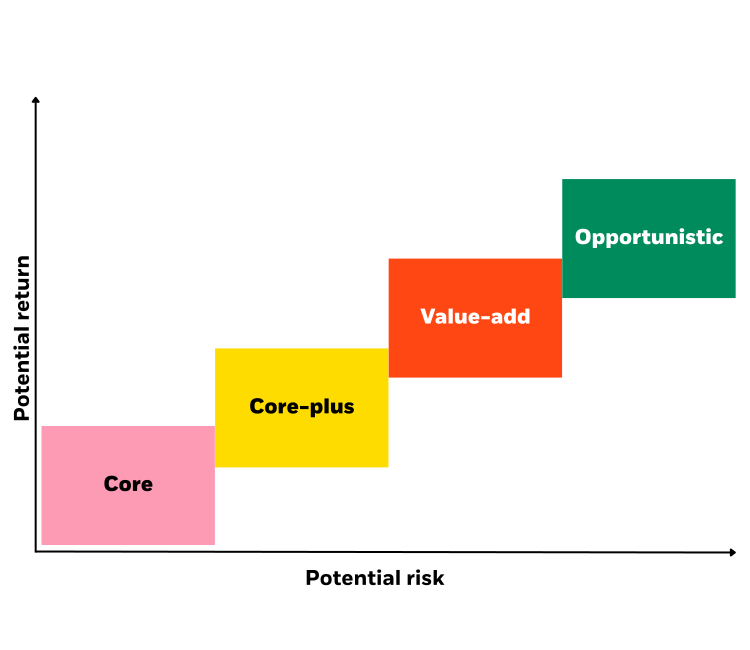
- Core
Core investment strategies generally focus on high-quality buildings that are fully leased, multi-tenant properties in well-established, diversified metropolitan areas. Typically core strategies have long hold periods and, as a result, are commonly seen in open-ended funds which can allow for much longer hold periods.
Example: A stabilized, high-quality property in a major metropolitan area.
- Core-plus
Core-plus strategies also invest in core properties that may require improvements such as renovations, repositioning or re-leasing. This is considered a potential moderate risk/ return strategy and may require a modest amount of leverage.
Example: A stabilized, undermanaged, multifamily property in a metropolitan area with potential for operational improvement.
- Value-added
Value added strategies buy lower quality properties with the intent to make improvements and sell the asset for a gain. This could be buildings that exhibit management operation problems or buildings that require physical improvements. Because the holding period on these investments is typically between 3-10 years, value-add investments are often seen in closed-end funds and require a high amount of leverage.
Example: A 50-year-old multi-family property requiring renovation, where following improvements may support repositioning and potential changes in tenant profile, rental income and asset value.
- Opportunistic
Opportunistic investments require substantial redevelopment of existing properties, construction of new developments, or investment in raw land/niche property sectors. Opportunistic investments are typically held in close end funds and have a high amount of leverage embedded into the investment.
Example: Purchase of land and construction of a new office building.
Distressed and debt real estate strategies that can encompass similar potential risk and return profiles to any of the above.
- Distressed: A building priced at a discount due to problems with the building, building management, or tenants.
- Debt: This tends to have a greater focus on income relative to real estate equity investments, depending on structure and risk profiles. Similar to corporate credit, investments may include senior debt and mezzanine or subordinated debt, which differ in their priority of repayment.
Senior debt sits at the top of the capital structure, and is the most secure in the event of default, and has priority rights over collateral. Followed by subordinated debt, which sits above equity in the capital structure, but below senior debt. Mezzanine debt sits in between subordinated debt and equity – it is essentially subordinated debt, with equity like features, such as the option to convert the debt into shares.
Why consider investing in private real estate?
Private real estate seeks to offer several compelling benefits for investors, including income generation, inflation sensitivity, and diversification. Properties may generate monthly or quarterly income, and the level of potential income is commonly assessed using the capitalization rate (or cap rate), which is calculated by dividing a property’s net operating income by its value. Even during economic downturns, some real estate investments may continue to generate rental income as tenants may have multi-year lease agreements in place. In addition, real estate may serve as an inflation hedge, as property values and rental income tend to rise with inflation; housing rents are a component of CPI*, and many tenancy contracts include inflation-linked rent increases. Finally, real estate may provide diversification benefits, offering investors exposure to a wide range of strategies, property types, and geographic markets within a single asset class.
*CPI refers to the consumer price index, which is a widely used measure of inflation.
What are the risks of investing in private real estate?
Private real estate investments are subject to several key risks, including market and interest rate sensitivity, leverage and capital risk, and operational and asset‑specific considerations. Property values and cash flows can be highly sensitive to economic conditions, interest rates, and local supply‑and‑demand dynamics, which may pressure valuations and refinancing outcomes. The use of leverage can further amplify both gains and losses, increasing exposure to income shortfalls, covenant breaches, or defaults during periods of market stress. In addition, returns depend heavily on effective property management and asset‑level factors such as tenant quality, occupancy rates, maintenance requirements, and regulatory or environmental considerations.