MARKET INSIGHTS

Weekly market commentary

Dialing down risk amid supply shock

Weekly video_20260323
Wei Li
Global Chief Investment Strategist, BlackRock
SCRIPT
Camera frame

This week, I want to talk about the changes that we’re making to BlackRock tactical investment views.

Title slide: Dialing down risk amid supply shock

1: A durable disruption
First: the backdrop. The energy forward market is now pricing in a durable disruption, reflecting the attack on energy infrastructure in the region that will take time to recover from and a possible prolonged closure of the Strait of Hormuz.

This ushers in a supercharged version of a world shaped by supply. And unless there is tangible evidence of action that could shorten the duration of this broad supply disruption, in our view there is little basis to think that the market expectations for elevated energy prices next year are too high.

These levels represent an inflation, growth and rate shock that is not consistent with overall risk asset pricing at the moment. Meanwhile, the calculus facing central banks, including the Fed, has become more challenging. And the window for the Fed to have cover for their rate cuts is closing.

2: Dialing down risk-taking – for now
Second: so, what are the changes? We dial down risk-taking tactically. In equities, we bring U.S. equities broadly from modest overweight to neutral, noting that it’s actually not that far away from the all-time high hit in January. We also bring Japanese equities down from modest overweight to neutral, given its outsized reliance on energy. It’s still up high single digits on the year, so locking in some gains here and [remembering] we went overweight in 2023 midyear. So across equities we’re now flat, neutral – for now.

In fixed income, especially in [the] Treasuries market, we continue to favor the front end and the belly of the curve over long-dated Treasuries. We also bring up short duration European government bonds from neutral to modest overweight to add a bit of cash buffer, and also [recognizing] that market repricing for ECB hikes has been very notable.

3: Looking ahead
Third: looking ahead. While things could get worse still, we’re not ruling out the possibility of de-escalation as over time we still expect the feedback mechanism from higher oil prices to bind. But with multiple parties involved, each with very different and complex objective functions, the threshold that binds may well be more painful than it looked initially in the early days of the conflict. We stay ready to dynamically adjust our risk exposure.

Closing frame: Read details: blackrock.com/weekly-commentary

A durable disruption

The escalating Mideast conflict has now caused energy markets to price in a prolonged disruption. We cut risk and turn neutral U.S. stocks.

Market backdrop

The Fed and other central banks held rates steady last week. The energy shock has further weakened the case for the Fed’s easing rates this year.

Week ahead

Global flash PMIs this week will offer the first read on how the conflict is hitting activity, as higher energy costs and uncertainty start to weigh on demand.

The escalating Middle East conflict has triggered energy markets to now price in a prolonged disruption. That means higher costs, weaker growth, elevated bond yields and more persistent inflation — on top of pressures already bubbling under the surface. Risk assets don't reflect the macro damage that energy pricing implies, in our view. We dial down tactical risk and downgrade U.S. stocks as a result – but stand ready to adjust if political pressures put an end to the conflict.

Download full commentary (PDF)

Paragraph-2,Paragraph-3,Image-1,Paragraph-4
Paragraph-5,Advance Static Table-1,Paragraph-6,Advance Static Table-2,Paragraph-7,Advance Static Table-3,Paragraph-8,Advance Static Table-4

A market disconnect
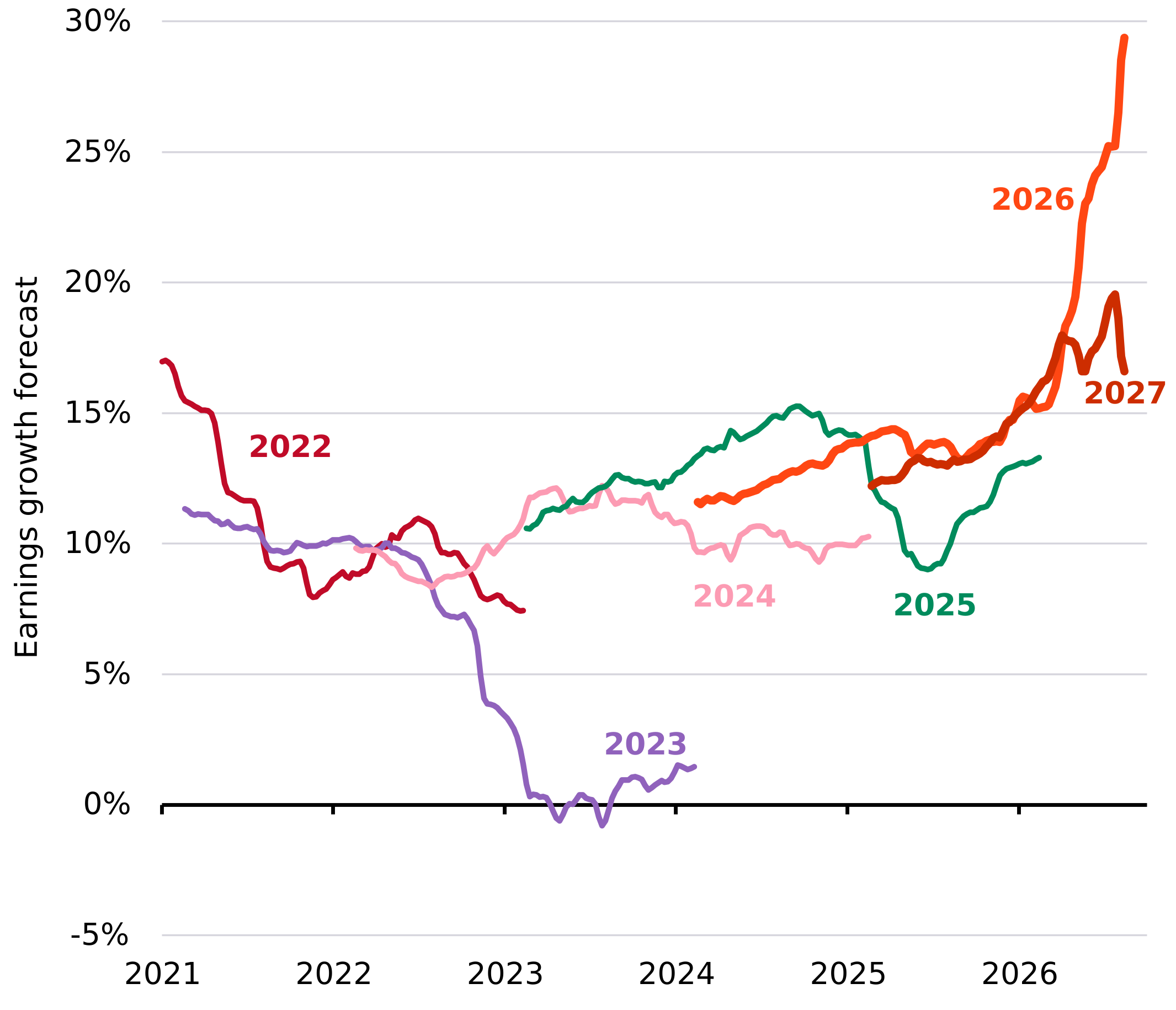
Market performance since Mideast conflict and 2026 Fed rate expectations

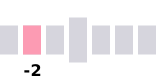
The chart shows how markets have shifted since the Mideast conflict began: Year-end price forecasts for Brent crude oil futures have soared, while expectations for Fed rate cuts have been sharply dialed back.

Source: BlackRock Investment Institute with data from Bloomberg, March 20, 2026. Notes: Performance of selected assets since the Mideast conflict started. Inset shows market-implied number of 25 basis point U.S. policy rate changes by end-2026; negative values denote cuts and positive values denote hikes.

The Middle East war has escalated, with attacks on energy infrastructure and a possible prolonged closure of the Strait of Hormuz global shipping channel. This has triggered a sharp repricing in energy markets that imply disruptions could last into next year. Year-end oil futures (the left bar in the chart) have rocketed upward – as have longer-dated contracts. The broad supply chain shock has jolted markets out of complacency about inflation pressures. Market expectations have flipped from the Fed cutting rates three times this year to veering toward a hike (see insert). Long-term government bonds have sold off, showing they are no longer the place to hide when conflicts trigger supply shocks and stoke inflation. The outlier? The S&P 500 is just 7% below record highs. We see a disconnect: A macro shock and hawkish reversal in policy expectations are not consistent with current stock prices.

Political pressures from higher energy prices could shorten the conflict, but there’s no tangible evidence yet of this happening. This means we have no basis to think market expectations for energy prices are too high. They currently imply a hit to global growth of roughly three-quarters of a percentage point, we estimate, alongside higher inflation. And things could get worse still. Markets have been jolted out of their complacent view of benign inflation as a result. Expectations for U.S. rate cuts have dissipated and swung toward multiple hikes in the euro zone and UK. Central banks held rates steady last week, but their maneuvering room has shrunk. Earlier this year, we thought a weaker jobs market might give the Fed cover for cuts. That window is closing fast. The Fed itself last week signaled the case for future rate cuts was materially weaker.

Energy infrastructure in focus

The energy shock is broader than a typical oil spike. Gas markets have been disrupted, and the near-closure of the Strait of Hormuz is feeding through to a wide range of production inputs. This amplifies the hit to growth, with Europe and Asia hit hard because of their exposure to imported energy, and ups inflation pressure. This is not an about-face for inflation, but an additional driver of the inflation outlook. That’s why we think higher yields are here to stay, even when the conflict ends. We are in a supercharged version of a world shaped by supply, where disruptions drive inflation and growth. Central banks are faced with a stark trade-off between preserving growth or reining in inflation.

All this leads us to trim risk on a tactical horizon. We turn neutral across equity markets for now because overall risk asset pricing is not consistent with the shock implied by energy markets. In fixed income, we stay underweight long-term Treasuries. We see yields rising as investors demand more compensation for holding long-term bonds amid high debt burdens. And the conflict has reinforced they are no longer a reliable buffer for geopolitical shocks or equity sell-offs. We favor less rate-sensitive short- and medium-term U.S. Treasuries instead. We upgrade short-duration European government bonds as a cash buffer, given the rapid repricing of rate hikes. We stand ready to adjust these calls. The conflict could de-escalate as economic and political pressures mount – even as the bar for this looks higher than in the conflict’s early days.

Our bottom line

We are dialing down tactical risk for now as an escalating Middle East conflict has caused energy markets to price a prolonged supply-driven shock that lifts inflation. We stand ready to reverse course quickly if the conflict de-escalates.

Market backdrop

Markets now expect the Middle East conflict to drag on. Brent crude oil rose 5% on the week, hitting $119 a barrel at one point. The Fed, the ECB and BOE held rates steady, and expectations for 2026 cuts evaporated in the U.S. and turned to multiple hikes in the UK and Europe. Yields surged to 3.89% and 4.39% on two- and 10-year U.S. Treasuries, respectively. The S&P 500 fell 2%, bringing losses since the conflict started to 6%.

We watch global flash PMIs for the first read on how the Middle East conflict is affecting activity. We expect PMIs to deteriorate as higher energy costs and uncertainty weigh on demand. It’s still too soon for the full inflationary impact of higher oil prices to show up in Japan CPI and PPI, we think.

Week ahead

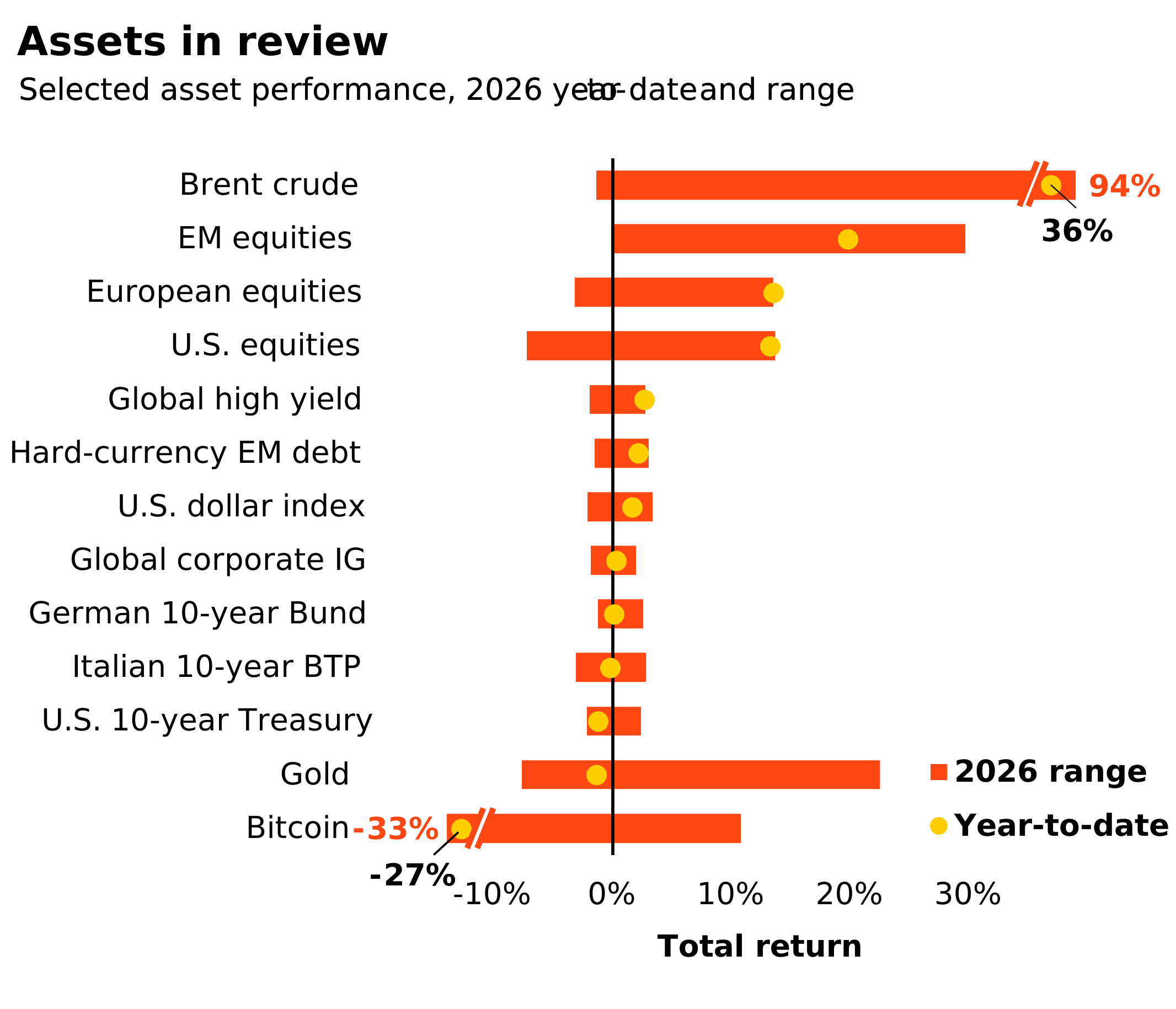
The chart shows that gold is the best performing asset year-to-date among a selected group of assets, while bitcoin is the worst.

Past performance is not a reliable indicator of current or future results. Indexes are unmanaged and do not account for fees. It is not possible to invest directly in an index.
Sources: BlackRock Investment Institute, with data from LSEG Datastream as of March 20, 2026. Notes: The two ends of the bars show the lowest and highest returns at any point year to date, and the dots represent current year-to-date returns. Emerging market (EM), high yield and global corporate investment grade (IG) returns are denominated in U.S. dollars, and the rest in local currencies. Indexes or prices used are: spot Brent crude, ICE U.S. Dollar Index (DXY), spot gold, spot bitcoin, MSCI Emerging Markets Index, MSCI Europe Index, LSEG Datastream 10-year benchmark government bond index (U.S., Germany and Italy), Bloomberg Global High Yield Index, J.P. Morgan EMBI Index, Bloomberg Global Corporate Index and MSCI USA Index.

March 23

Euro area consumer confidence; Japan CPI, flash PMI

March 24

Global flash PMIs

March 27

University of Michigan consumer sentiment

Read our past weekly market commentaries here.


Big calls

Our highest conviction views on six- to 12-month (tactical) and over five-year (strategic) horizons, March 2026

  Reasons
Tactical  
Favor AI beneficiaries: Markets are increasingly focused on identifying companies exposed to AI disruption. We favor the physical infrastructure and equipment supporting the AI buildout – such as semiconductors, power and data center assets – that we think we stand to benefit no matter the winners or losers.
Select international exposures We like hard-currency EM debt due to improved economic resilience, disciplined fiscal and monetary policy and a high ratio of commodities exporters. In Europe, we are overweight short-term European government bonds on valuation and favor equity sectors such as infrastructure.
Evolving diversifiers We suggest looking for a “plan B” portfolio hedge as long-dated U.S. Treasuries no longer provide portfolio ballast – and to mind potential sentiment shifts. We like gold as a tactical play with idiosyncratic drivers but don’t see it as a long-term portfolio hedge.
Strategic  
Portfolio construction We favor a scenario-based approach as AI winners and losers emerge. We lean on private markets and hedge funds for idiosyncratic return and to anchor portfolios in mega forces.
Infrastructure equity and private credit We find infrastructure equity valuations attractive and mega forces underpinning structural demand. We still like private credit but see dispersion ahead – highlighting the importance of manager selection.
Beyond market-cap benchmarks We get granular in public markets. We favor DM government bonds outside the U.S. Within equities, we favor EM over DM yet get selective in both. In EM, we like India which sits at the intersection of mega forces. In DM, we like Japan as mild inflation and corporate reforms brighten the outlook.

Note: Views are from a U.S. dollar perspective, March 2026. This material represents an assessment of the market environment at a specific time and is not intended to be a forecast of future events or a guarantee of future results. This information should not be relied upon by the reader as research or investment advice regarding any particular funds, strategy or security.

Tactical granular views

Six- to 12-month tactical views on selected assets vs. broad global asset classes by level of conviction, March 2026

Legend Granular

We have lengthened our tactical investment horizon back to six to 12 months. The table below reflects this and, importantly, leaves aside the opportunity for alpha, or the potential to generate above-benchmark returns – especially at a time of heightened volatility.

Past performance is not a reliable indicator of current or future results. It is not possible to invest directly in an index. Note: Views are from a U.S. dollar perspective. This material represents an assessment of the market environment at a specific time and is not intended to be a forecast or guarantee of future results. This information should not be relied upon as investment advice regarding any particular fund, strategy or security.

Euro-denominated tactical granular views

Six to 12-month tactical views on selected assets vs. broad global asset classes by level of conviction, March 2026

Legend Granular

We have lengthened our tactical investment horizon back to six to 12 months. The table below reflects this and, importantly, leaves aside the opportunity for alpha, or the potential to generate above-benchmark returns – especially at a time of heightened volatility.

Past performance is not a reliable indicator of current or future results. It is not possible to invest directly in an index. Note: Views are from a euro perspective, March 2026. This material represents an assessment of the market environment at a specific time and is not intended to be a forecast or guarantee of future results. This information should not be relied upon as investment advice regarding any particular fund, strategy or security.

On the go?

Stay informed on our latest weekly Market take. Listen wherever you get your podcasts.
podcast banner
Meet the authors
Wei Li
Global Chief Investment Strategist – BlackRock Investment Institute
Vivek Paul
Global Head of Portfolio Research – BlackRock Investment Institute
Beata Gamharter
Senior Investment Strategist – BlackRock Investment Institute
Nicholas Fawcett
Senior Economist – BlackRock Investment Institute