Back to overweight U.S. stocks
Weekly video_20260413
Wei Li
Global Chief Investment Strategist, BlackRock
Header:
CAPITAL AT RISK. MARKETING MATERIAL.
Opening frame: What’s driving markets? Market take
Camera frame
This week, I want to talk about starting to dial up risk. The signposts that we have been monitoring include tangible evidence of actions that could restart the flow through the Strait of Hormuz and also visibility on lingering macro impact being contained. The fact that they accept to start talks is concrete evidence of the economic incentives to stop the war, but for this to be ultimately positive for markets, we do need to see flow through the strait to pick up, which we are monitoring daily.
Title slide: Back to overweight U.S. stocks
AI helping drive earnings revisions
Meanwhile, equity valuations have become cheaper as earnings expectations are revised higher. U.S. and emerging markets are driving these earnings upgrades, and there is a common theme, which is AI and tech. In emerging markets, Asian companies that produce semiconductors and chips are driving the earnings upgrades. And it’s the same story in the U.S. Tech is driving earnings upgrades in the U.S. and within tech, semiconductors are driving earnings upgrades.
Outro: Here’s our Market take
So, the view changes: we’re bringing up U.S. equities and emerging markets equities from neutral to modest overweight, funding that from front-end European rates. And we continue to emphasize themes that are accelerated by events in the Middle East such as defense, power and infrastructure.
Closing frame: Read details: blackrock.com/weekly-commentary
U.S.-Iran negotiations collapsed for now, but we see talks as evidence of an economic incentive to end the conflict. We upgrade risk in U.S. and EM stocks.
A U.S.-Iran ceasefire saw oil prices slide, stocks bounce and bond yields drop. We could see a partial unwind of those moves after the breakdown in talks.
We watch U.S. PPI to see if energy-driven cost pressures keep pushing prices up. We expect modest growth in China as external demand fuels recovery.
We flagged two signposts to dial up risk-taking after the Middle East conflict led us to reduce risk and turn neutral on U.S. equities a few weeks ago. First: evidence of actions that could re-open shipping traffic in the Strait of Hormuz. Second: signs that any lingering macro impact is contained. We eye developments on both fronts. Plus, corporate earnings expectations are up even through the conflict, partly on the AI theme. We go back to modest risk taking and turn overweight U.S. stocks.
Earnings unscathed
Earnings growth expectations for 2026, year-on-year growth
Forward-looking estimates may not come to pass. Index performance returns do not reflect any management fees, transaction costs or expenses. Indices are unmanaged and one cannot invest directly in an index. Source: BlackRock Investment Institute, with data from IBES consensus, sourced from LSEG Datastream, April 2026. Indices used are MSCI USA IT and MSCI USA in US$ terms, and MSCI EMG and MSCI EMU in local currency terms.
Talks between the U.S. and Iran broke down over the weekend, but we think the fact that they began in the first place indicates that there are strong economic incentives for all parties to end the conflict. We saw two signposts that would lead us to re-up risk after reducing it a few weeks ago. First, tangible evidence of actions that would reopen flows through the Strait of Hormuz. And second, visibility on the lingering macro impact being contained. This comes as expectations for corporate earnings have climbed for both the U.S. and EM for 2026 – even since the conflict began on Feb. 28. See the chart. We see the AI theme at play in both. Companies in South Korea and Taiwan – key producers of the hardware needed for AI – are driving EM earnings upgrades. In the U.S., the forecast 80% boost to semiconductor stock earnings this year are helping drive upgrades in tech and overall, LSEG data show.
We are eyeing developments on both of these signposts. A breakdown in U.S.-Iran negotiations over the weekend could add to near-term pressure on risk assets. But both countries agreeing to start talks is concrete evidence of economic incentives to de-escalate, in our view. China’s role – and U.S. President Donald Trump’s planned summit with Chinese President Xi Jinping in mid-May – is likely factoring into those economic incentives. Flows through the Strait of Hormuz would need to pick back up for a sustained positive impact on markets. We use our proprietary tracker to monitor traffic through the strait. In terms of the macro impact, we see it as significant and don’t necessarily expect a return to the environment in place before the conflict began – but think other drivers can outweigh that impact and go back to moderate risk taking on a tactical horizon.
Valuations down, earnings expectations rising in U.S. tech
One of those drivers? Corporate earnings getting revised up, even as equities have pulled back. Tech’s valuation premium has been eroded, with the 12-month forward valuation of the U.S. IT over other sectors at its lowest level since mid-2020. At the same time, the tech sector is now seen posting earnings growth of 43% in 2026, up from 26% last year. These bright spots partly inform our upgrade to U.S. equities. AI earnings exposure also contributes to our modest EM overweight. We are funding this equity upgrade by reducing our cash-like preference of front-end euro area government bonds, which we took a few weeks ago after a sharp pricing in of European Central Bank rate hikes early in the conflict.
We will keep emphasizing thematic opportunities accelerated by events in the Middle East – and think those exposures will benefit no matter the outcome. We saw mega forces creating a world shaped by supply factors such as tariffs and labor constraints before the conflict began – and think this will persist after it ends. We see geopolitical fragmentation supporting defense and aerospace, spurring governments to push even harder for energy independence and leading companies to invest more in supply chain resilience. Along with the AI theme, that will drive demand for infrastructure and power.
Our bottom line
We see evidence of economic incentives to end the U.S.-Iran conflict. We turn moderately positive risk and like U.S. stocks as a relative preference, seeing them holding up better even if absolute performance disappoints. We also turn overweight EM stocks and still favor thematic opportunities like defense.
Market backdrop
A U.S.-Iran ceasefire saw brent crude fall below $100 a barrel, the S&P 500 gain about 3.6% on the week and 10-year U.S. Treasury yields off their highs at 4.32%. A breakdown in negotiations on Sunday could see a partial unwind of those moves. The impact of higher energy prices had yet to show in March U.S. core inflation and would need to stay higher for that to happen. But inflation is still too high to achieve the Federal Reserve’s 2% target anytime soon, dimming hopes for rate cuts in 2026.
The U.S. PPI will show if energy-driven cost pressures are still pushing prices upward after February's data came in higher than expected. The U.S. March CPI showed a surge in energy inflation at the headline level but limited impact in core inflation. In China, we expect to see signs of modest but steady growth as external demand – rather than domestic momentum – gradually powers a recovery.
Week ahead
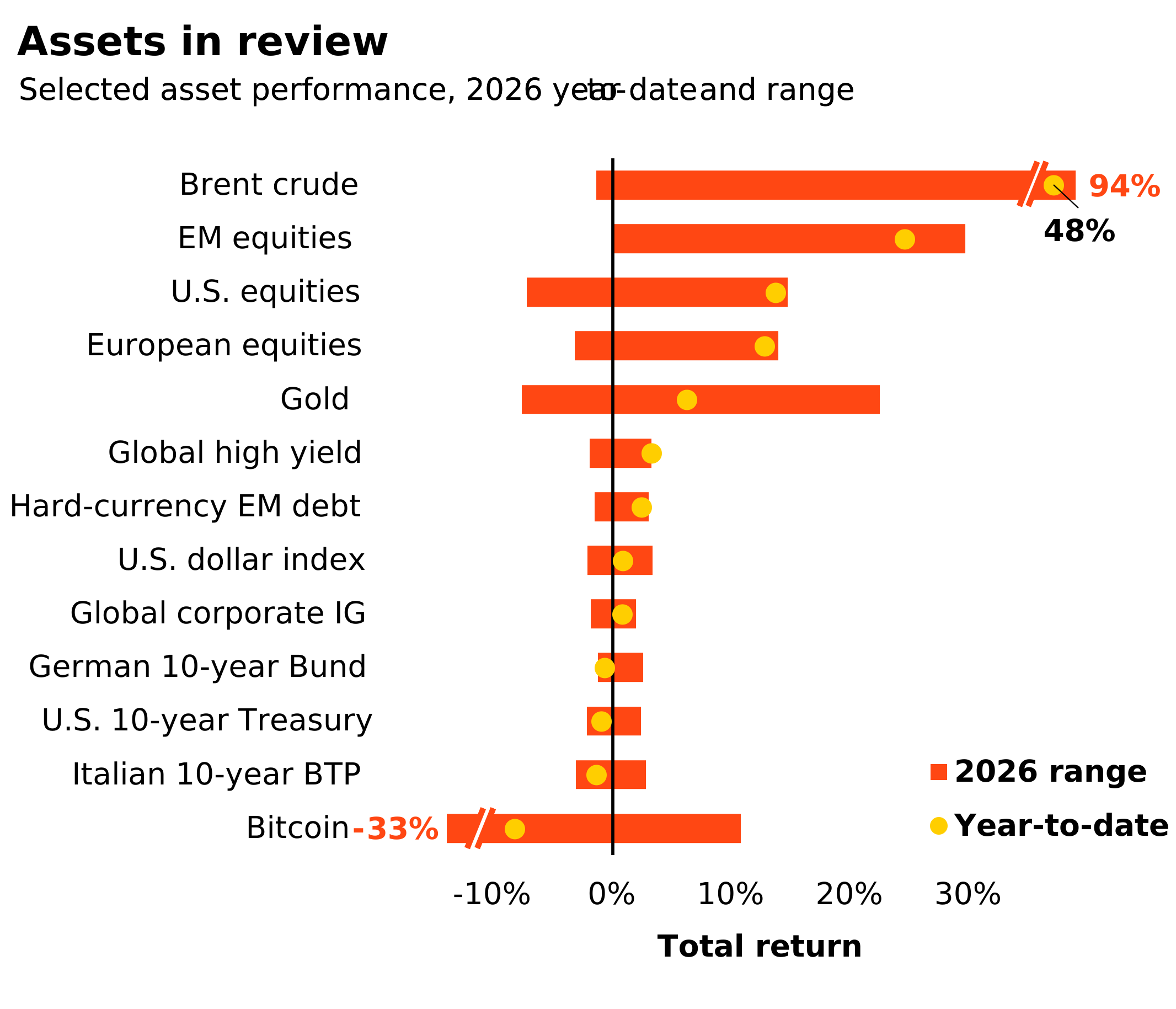
Past performance is not a reliable indicator of current or future results. Indexes are unmanaged and do not account for fees. It is not possible to invest directly in an index. Sources: BlackRock Investment Institute, with data from LSEG Datastream as of April 9, 2026. Notes: The two ends of the bars show the lowest and highest res at any point year to date, and the dots represent current year-to-date res. Emerging market (EM), high yield and global corporate investment grade (IG) res are denominated in U.S. dollars, and the rest in local currencies. Indexes or prices used are: spot Brent crude, ICE U.S. Dollar Index (DXY), spot gold, spot bitcoin, MSCI Emerging Markets Index, MSCI Europe Index, LSEG Datastream 10-year benchmark government bond index (U.S., Germany and Italy), Bloomberg Global High Yield Index, J.P. Morgan EMBI Index, Bloomberg Global Corporate Index and MSCI USA Index.
U.S. PPI; China trade balance
U.S. Philadelphia Fed survey; U.K. GDP; China GDP
EU trade balance
Read our past weekly market commentaries here.
Big calls
Our highest conviction views on six- to 12-month (tactical) and over five-year (strategic) horizons, April 2026
| Reasons | ||
|---|---|---|
| Tactical | ||
| Favor AI beneficiaries: | Markets are increasingly focused on identifying companies exposed to AI disruption. We favor the physical infrastructure and equipment supporting the AI buildout – such as semiconductors, power and data center assets – that we think we stand to benefit no matter the winners or losers. | |
| Select international exposures | We like hard-currency EM debt due to improved economic resilience, disciplined fiscal and monetary policy and a high ratio of commodities exporters. In Europe, we are overweight short-term European government bonds on valuation and favor equity sectors such as infrastructure. | |
| Evolving diversifiers | We suggest looking for a “plan B” portfolio hedge as long-dated U.S. Treasuries no longer provide portfolio ballast – and to mind potential sentiment shifts. We like gold as a tactical play with idiosyncratic drivers but don’t see it as a long-term portfolio hedge. | |
| Strategic | ||
| Portfolio construction | We favor a scenario-based approach as AI winners and losers emerge. We lean on private markets and hedge funds for idiosyncratic return and to anchor portfolios in mega forces. | |
| Infrastructure equity and private credit | We find infrastructure equity valuations attractive and mega forces underpinning structural demand. We still like private credit but see dispersion ahead – highlighting the importance of manager selection. | |
| Beyond market-cap benchmarks | We get granular in public markets. We favor DM government bonds outside the U.S. Within equities, we favor EM over DM yet get selective in both. In EM, we like India which sits at the intersection of mega forces. In DM, we like Japan as mild inflation and corporate reforms brighten the outlook. | |
Note: Views are from a U.S. dollar perspective, April 2026. This material represents an assessment of the market environment at a specific time and is not intended to be a forecast of future events or a guarantee of future results. This information should not be relied upon by the reader as research or investment advice regarding any particular funds, strategy or security.
Tactical granular views
Six- to 12-month tactical views on selected assets vs. broad global asset classes by level of conviction, April 2026

We have lengthened our tactical investment horizon back to six to 12 months. The table below reflects this and, importantly, leaves aside the opportunity for alpha, or the potential to generate above-benchmark returns – especially at a time of heightened volatility.
| Asset | Tactical view | Commentary | ||||
|---|---|---|---|---|---|---|
| Equities | ||||||
| United States | We go overweight. Contained damage to global growth from the Mideast conflict and strong earnings expectations – particularly in tech – keep us risk-on | |||||
| Europe | We are neutral. Europe’s high exposure to the energy shock from the Mideast conflict makes it vulnerable to higher inflation and lower growth. | |||||
| UK | We are neutral. Valuations remain attractive relative to the U.S., but we see few near-term catalysts to trigger a shift. | |||||
| Japan | We are neutral. Japan’s exposure to imported energy may erode strong equity gains powered by healthy corporate balance sheets and governance reforms. | |||||
| Emerging markets (EM) | We go overweight, yet stay selective. We favor Asian countries that manufacture critical AI components and Latin American energy and commodity exporters. | |||||
| China | We are neutral. Trade relations with the U.S. have steadied, but property stress and an aging population still constrain the macro outlook. Relatively resilient activity limits near-term policy urgency. We like sectors like AI, automation and power generation. We still favor China tech within our neutral view. | |||||
| Fixed income | ||||||
| Short U.S. Treasuries | We are neutral. Shorter-term bonds are relatively attractive as the market has woken up to persistent inflation and higher rates. | |||||
| Long U.S. Treasuries | We are underweight. Yields already faced upward pressure from rising term premia, as investors demand more compensation for the risk of holding long-term debt. The recent energy price shock compounds this by aggravating pre-existing inflationary pressures. | |||||
| Global inflation-linked bonds | We are neutral. We think inflation will settle above pre-pandemic levels, but markets may not price this in the near term as growth cools. | |||||
| Euro area government bonds | We go neutral short-term European government bonds. The market has repriced the ECB policy path more in line with our view. We think increased German bond issuance to finance its fiscal stimulus package is already largely reflected in the current level of 10-year yields. | |||||
| UK gilts | We are neutral. The recent budget aims to shore up market confidence through fiscal consolidation. But deferred borrowing cuts could bring back gilt market volatility. | |||||
| Japanese government bonds | We are underweight. Rate hikes, higher global term premium and heavy bond issuance will likely drive yields up further. | |||||
| China government bonds | We are neutral. China bonds offer stability and diversification but developed market yields are higher and investor sentiment shifting towards equities limits upside. | |||||
| U.S. agency MBS | We are overweight. Agency MBS offer higher income than Treasuries with similar risk, and may offer more diversification amid fiscal and inflationary pressures. | |||||
| Short-term IG credit | We are neutral. Corporate strength means spreads are low, but they could widen if issuance increases and investors rotate into U.S. Treasuries as the Fed cuts. | |||||
| Long-term IG credit | We are underweight. We prefer short-term bonds less exposed to interest rate risk over long-term bonds. | |||||
| Global high yield | We are neutral. High yield offers more attractive carry in an environment where growth is holding up – but we think dispersion between higher and weaker issuers will increase. | |||||
| Asia credit | We are neutral. Overall yields are attractive and fundamentals are solid, but spreads are tight. | |||||
| Emerging hard currency | We are overweight. EM hard-currency indexes lean towards Latin American commodity exporters such as Brazil that stand to benefit as Mideast supply plummets. | |||||
| Emerging local currency | We are neutral. The U.S. dollar has been strengthening as a safe-haven currency in the wake of the Middle East conflict. This could reverse year-to-date gains driven by a falling USD. | |||||
Past performance is not a reliable indicator of current or future results. It is not possible to invest directly in an index. Note: Views are from a U.S. dollar perspective. This material represents an assessment of the market environment at a specific time and is not intended to be a forecast or guarantee of future results. This information should not be relied upon as investment advice regarding any particular fund, strategy or security.
Euro-denominated tactical granular views
Six to 12-month tactical views on selected assets vs. broad global asset classes by level of conviction, April 2026

We have lengthened our tactical investment horizon back to six to 12 months. The table below reflects this and, importantly, leaves aside the opportunity for alpha, or the potential to generate above-benchmark returns – especially at a time of heightened volatility.
| Asset | Tactical view | Commentary | ||
|---|---|---|---|---|
| Equities | ||||
| Europe ex UK | We are neutral. We would need to see more business-friendly policy and deeper capital markets for recent outperformance to continue and to justify a broad overweight. We stay selective, favoring financials, utilities and healthcare. | |||
| Germany | We are neutral. Increased spending on defense and infrastructure could boost the corporate sector. But valuations rose significantly in 2025 and 2026 earnings revisions for other countries are outpacing Germany. | |||
| France | We are neutral. Political uncertainty could continue to drag corporate earnings behind peer markets. Yet some major French firms are shielded from domestic weakness, as foreign activity accounts for most of their revenues and operations. | |||
| Italy | We are neutral. Valuations are supportive relative to peers. Yet we think the growth and earnings outperformance that characterized 2022-2023 is unlikely to persist as fiscal consolidation continues and the impact of prior stimulus peters out. | |||
| Spain | We are overweight. Valuations and earnings growth are supportive relative to peers. Financials, utilities and infrastructure stocks stand to gain from a strong economic backdrop and advancements in AI. High exposure to fast-growing areas like emerging markets is also supportive. | |||
| Netherlands | We are neutral. Technology and semiconductors feature heavily in the Dutch stock market, but that’s offset by other sectors seeing less favorable valuations and a weaker earnings outlook than European peers. | |||
| Switzerland | We are neutral. Valuations have improved, but the earnings outlook is weaker than other European markets. If global risk appetite stays strong, the index’s tilt to stable, less volatile sectors may weigh on performance. | |||
| UK | We are neutral. Valuations remain attractive relative to the U.S., but we see few near-term catalysts to trigger a shift. | |||
| Fixed income | ||||
| Euro area government bonds | We go neutral short-term European government bonds. The market has repriced the ECB policy path more in line with our view. We think increased German bond issuance to finance its fiscal stimulus package is already largely reflected in the current level of 10-year yields. | |||
| German bunds | We are neutral. Markets have largely priced in fiscal stimulus and bond issuance, and expectations for policy rates align with our view. | |||
| French OATs | We are neutral. Political uncertainty, high budget deficits and slow structural reforms could stoke volatility, but current spreads incorporate these risks and we don’t expect a worsening from here. | |||
| Italian BTPs | We are neutral. Demand from Italian households is strong at current yield levels. Spreads tightened in line with its sovereign credit upgrade, but a persistently high debt-to-GDP levels means they likely won’t tighten further. | |||
| UK gilts | We are neutral. The recent budget aims to shore up market confidence through fiscal consolidation. But deferred borrowing cuts could bring back gilt market volatility. | |||
| Swiss government bonds | We are neutral. We don’t think the Swiss National Bank will slash policy rates to below zero, as markets expect. | |||
| European inflation-protected securities | We are neutral. Our medium-term inflation expectations align with those implied in current market pricing. | |||
| European investment grade | We are neutral. We favor short- to medium-term debt and Europe over the U.S. An intense re-leveraging cycle to support the AI buildout could put upward pressure on U.S. spreads, making Europe relatively more attractive. | |||
| European high yield | We are overweight. Spreads hover near historic lows, but credit losses have been limited in this cycle and better economic growth in 2026 could reduce them further. | |||
Past performance is not a reliable indicator of current or future results. It is not possible to invest directly in an index. Note: Views are from a euro perspective, April 2026. This material represents an assessment of the market environment at a specific time and is not intended to be a forecast or guarantee of future results. This information should not be relied upon as investment advice regarding any particular fund, strategy or security.
On the go?