

RECURSOS
Skip to content
Bem-vindo ao website BlackRock para investidores profissionais
Antes de continuar, por favor revê e aceita os seguintes Termos e Condições.
Neste website, os Investidores Profissionais são investidores que se qualificam como Cliente Profissional e como Investidor Qualificado.
Em suma, uma pessoa que possa ser classificada como cliente profissional ao abrigo da Diretiva dos Mercados de Instrumentos Financeiros e como investidor qualificado de acordo com a Diretiva dos Prospetos deverá, de um modo geral, cumprir com um ou vários dos seguintes requisitos:
(1) Uma entidade que deva ser autorizada ou regulamentada para operar nos mercados financeiros. A lista seguinte inclui todas as entidades autorizadas a exercerem as atividades características das entidades referidas, quer sejam autorizadas por um Estado do Espaço Económico Europeu ou por um país terceiro e quer sejam autorizadas ou não por referência a uma diretiva:
(a) uma instituição de crédito;
(b) uma empresa de investimento;
(c) qualquer outra instituição financeira autorizada ou regulamentada;
(d) uma companhia de seguros;
(e) um organismo de investimento coletivo ou a sociedade de gestão desse organismo;
(f) um fundo de pensões ou a sociedade de gestão de um fundo de pensões;
(g) um operador em mercadorias ou derivados de mercadorias;
(h) um local;
(i) qualquer outro investidor institucional.
(2) Uma grande empresa que cumpra com dois dos seguintes testes: (i) um balanço total de EUR 43.000.000, (ii) um volume de negócios líquido anual de EUR 50.000.000 e (iii) um número médio de funcionários durante o ano de 250.
(3) Um governo nacional ou regional, um organismo público que gira a dívida pública, um banco central, uma instituição internacional ou supranacional (como o Banco Mundial, o Fundo Monetário Internacional, o Banco Central Europeu ou o Banco Europeu de Investimento) ou outra organização internacional semelhante.
(4) Uma pessoa singular residente num Estado do Espaço Económico Europeu que permita a autorização de pessoas singulares como investidores qualificados, que peça expressamente para ser tratada como um cliente profissional e um investidor qualificado e que cumpra com, pelo menos, dois dos seguintes critérios: (i) efetuou transações em mercados de valores mobiliários com uma frequência média de, pelo menos, 10 por trimestre durante os quatro trimestres anteriores ao pedido, (ii) a dimensão da sua carteira de instrumentos financeiros, definida como incluindo depósitos em numerário e instrumentos financeiros, excede EUR 500.000, (iii) trabalha ou trabalhou durante, pelo menos, um ano no setor financeiro numa posição profissional que exija conhecimentos em matéria de investimento em valores mobiliários.
Tenha em atenção que o resumo acima é fornecido apenas para fins informativos. Se não tiver a certeza se pode ser classificado como cliente profissional ao abrigo da Diretiva dos Mercados de Instrumentos Financeiros e como investidor qualificado ao abrigo da Diretiva dos Prospetos, então deve procurar aconselhamento independente.
Investidor privado
Um investidor privado, também conhecido como cliente não profissional, é uma organização de clientes ou uma pessoa singular que não pode cumprir, ao mesmo tempo, com (i) um ou vários dos critérios de cliente profissional estabelecidos no Anexo II da Diretiva dos Mercados de Instrumentos Financeiros (Diretiva 2004/39/CE) e (ii) um ou vários critérios de investidor qualificado estabelecidos no Artigo 2.º da Diretiva dos Prospetos (Diretiva 2003/71/CE).
Em suma, uma pessoa que possa ser classificada como cliente profissional ao abrigo da Diretiva dos Mercados de Instrumentos Financeiros e como investidor qualificado de acordo com a Diretiva dos Prospetos deverá, de um modo geral, cumprir com um ou vários dos seguintes requisitos:
(1) Uma entidade que deva ser autorizada ou regulamentada para operar nos mercados financeiros. A lista seguinte inclui todas as entidades autorizadas a exercerem as atividades características das entidades referidas, quer sejam autorizadas por um Estado do Espaço Económico Europeu ou por um país terceiro e quer sejam autorizadas ou não por referência a uma diretiva:
(a) uma instituição de crédito;
(b) uma empresa de investimento;
(c) qualquer outra instituição financeira autorizada ou regulamentada;
(d) uma companhia de seguros;
(e) um organismo de investimento coletivo ou a sociedade de gestão desse organismo;
(f) um fundo de pensões ou a sociedade de gestão de um fundo de pensões;
(g) um operador em mercadorias ou derivados de mercadorias;
(h) um local;
(i) qualquer outro investidor institucional.
(2) Uma grande empresa que cumpra com dois dos seguintes testes: (i) um balanço total de EUR 20.000.000, (ii) um volume de negócios líquido anual de EUR 40.000.000 e (iii) fundos próprios de EUR 2.000.000.
(3) Um governo nacional ou regional, um organismo público que gira a dívida pública, um banco central, uma instituição internacional ou supranacional (como o Banco Mundial, o Fundo Monetário Internacional, o Banco Central Europeu ou o Banco Europeu de Investimento) ou outra organização internacional semelhante.
(4) Uma pessoa singular residente num Estado do Espaço Económico Europeu que permita a autorização de pessoas singulares como investidores qualificados, que peça expressamente para ser tratada como um cliente profissional e um investidor qualificado e que cumpra com, pelo menos, dois dos seguintes critérios: (i) efetuou transações em mercados de valores mobiliários com uma frequência média de, pelo menos, 10 por trimestre durante os quatro trimestres anteriores ao pedido, (ii) a dimensão da sua carteira de instrumentos financeiros, definida como incluindo depósitos em numerário e instrumentos financeiros, excede EUR 500.000, (iii) trabalha ou trabalhou durante, pelo menos, um ano no setor financeiro numa posição profissional que exija conhecimentos em matéria de investimento em valores mobiliários.
Tenha em atenção que o resumo acima é fornecido apenas para fins informativos. Se não tiver a certeza se pode ser classificado como cliente profissional ao abrigo da Diretiva dos Mercados de Instrumentos Financeiros e como investidor qualificado ao abrigo da Diretiva dos Prospetos, então deve procurar aconselhamento independente.
Por favor leia esta página antes de continuar, uma vez que esta explica as restrições legais à distribuição desta informação, informando sobre quais os países em que a comercialização e distribuição dos nossos fundos é autorizada. É da sua responsabilidade conhecer e cumprir as disposições legislativas e regulamentares aplicáveis e em vigor, em qualquer jurisdição.
Por favor tenha em consideração que deverá ler os termos da nossa Política de Cookies e a nossa Política de Privacidade antes de poder aceder aos nossos sítios web.
Depois de ter lido e entendido a informação legal contida neste documento e a Política de Privacidade, procederemos à colocação de um cookie no seu computador para que nos seja possível reconhecê-lo e para evitar que esta página volte a aparecer quando aceder a este ou a qualquer outro sítio da internet (website) da BlackRock, no futuro. O cookie expirará no final de seis meses, ou antes caso ocorra uma alteração material a esta informação relevante. A este propósito, por favor leia a nossa Política de Cookies.
Ao confirmar que leu esta informação relevante, estará também a: (i) Concordar que esta informação se aplicará a qualquer acesso subsequente à secção de Investidores Particulares (ou Instituições / Intermediários) deste sítio da internet (website), e que qualquer acesso subsequente estará sujeito às exclusões de responsabilidade (“disclaimers”), avisos de risco e outras informações aqui disponibilizadas; e (ii) Garantir que nenhuma outra pessoa irá aceder à secção de Investidores Particulares deste sítio da internet (website) a partir do computador e da sessão que está a utilizar neste momento.
A secção em português deste sítio da internet (website) contém informação sobre a BlackRock e informação e documentação relacionadas com os fundos registados para distribuição em Portugal, assim como sobre classes de ações em determinados fundos que estão registadas na Comissão de Mercado de Valores Mobiliários, de acordo com a transposição para o ordenamento jurídico português da Diretiva 2009/65/EC do Parlamento Europeu e do Conselho de 13 de julho, sobre Organismos de Investimento Coletivo em Valores Mobiliários (conforme alterada) (a “Diretiva UCITS”). Poderá aceder à lista de distribuidores de cada fundo na página www.cmvm.pt.
Os fundos offshore descritos nas secções de outros países deste sítio da internet (website) são administrados e geridos por sociedades do Grupo BlackRock e são comercializados apenas em determinadas jurisdições. É da sua responsabilidade conhecer disposições legislativas e regulamentares aplicáveis no seu país de residência. Está disponível informação adicional sobre cada fundo, no respetivo Prospeto ou noutros documentos constitutivos. Se for um cidadão português a aceder a qualquer secção da BlackRock de outros países, por favor tenha em consideração que estará a agir sob sua própria conta e risco e sob sua responsabilidade, devendo qualquer investimento realizado nesses termos ser considerado como um investimento não solicitado.
A presente informação não constitui uma oferta ou solicitação de venda de ações em qualquer dos fundos referidos neste sítio da internet (website), por qualquer pessoa, em qualquer jurisdição em que essa oferta, solicitação ou distribuição seja considerada ilegal; ou em que a pessoa que faz essa oferta não esteja qualificada para a fazer; ou seja ilegal fazer essa oferta ou solicitação à pessoa a quem a oferta ou solicitação esteja a ser feita.
Especificamente, os fundos apresentados não estão disponíveis para distribuição ou investimento por parte de investidores norte-americanos. As participações/ações não serão registadas sob o US Securities Act de 1933, conforme alterado, (o "Securities Act") (US Securities Act of 1933, as amended) e, exceto numa transação que não viole o Securities Act ou qualquer outra lei de valores mobiliários dos Estados Unidos da América (os “EUA”) (incluindo, mas não limitado a, qualquer lei de qualquer Estado dos EUA), não poderão ser, direta ou indiretamente, oferecidas ou vendidas nos EUA ou em qualquer área ou território sujeito à sua jurisdição, ou em benefício de um cidadão norte-americano.
Os fundos apresentados não foram nem serão qualificados para distribuição ao público no Canadá, não tendo sido submetido nenhum prospeto para esses fundos a qualquer comissão de valores mobiliários ou autoridade reguladora no Canadá ou em qualquer província ou território daquele país. Este sítio da internet (website) não é, e sob nenhuma circunstância será entendido como, um anúncio ou a qualquer outro passo no sentido de uma oferta pública de ações no Canadá. Nenhum residente no Canadá para efeitos do Income Tax Act do Canadá (Income Tax Act (Canada)) poderá adquirir ou aceitar a transferência de ações nos fundos apresentados, a não ser que essa pessoa seja elegível para o fazer de acordo com a aplicação das leis do Canadá ou das províncias daquele país.
Os requerimentos para investimento em qualquer fundo apresentado no presente sítio da internet (website), deverão apenas ser realizados com base no documento da oferta relativo ao investimento específico (por exemplo, um prospeto, prospeto simplificado, documento com informações fundamentais para o investidor ou outros termos e condições aplicáveis).
Em resultado da aplicação de regulamentação relativa ao branqueamento de capitais, poderá ser requerida documentação adicional para efeitos de identificação, no momento em que realize o investimento. As informações constarão dos Prospetos relevantes ou noutros documentos constitutivos.
Se não estiver certo sobre o significado de qualquer informação fornecida, por favor consulte o seu consultor financeiro ou qualquer outro consultor profissional.
A informação contida neste sítio está sujeita a direitos de autor com todos os direitos reservados. A informação não deverá ser reproduzida, copiada ou redistribuída, no todo ou em parte.
A informação contida neste sítio da internet (website) é publicada de boa fé, mas nenhuma declaração ou garantia, expressa ou implícita, relativamente à sua precisão ou completude, é feita pela BlackRock (Netherlands) B.V. ou por qualquer outra pessoa, nem deverá ser interpretada como tal. A BlackRock (Netherlands) B.V. não será responsável, exceto por qualquer responsabilidade que a BlackRock (Netherlands) B.V. tenha resultante da aplicação do Holandês Wet financieel toezicht (Wft) (ou de qualquer legislação que a substitua, se a referida legislação permitir que essa declaração seja feita), ou da aplicação do Decreto-Lei no. 486/99, de 13 de novembro, conforme alterado, que publicou o Código dos Valores Mobiliários português, ou, conjuntamente, de qualquer outra legislação portuguesa aplicável, por qualquer perda, dano ou prejuízo resultante do uso ou confiança na informação disponibilizada, incluindo, sem limitação, qualquer lucro cessante ou outro dano, direto ou consequente. Nenhuma informação neste site constitui recomendação de investimento, fiscal, legal ou de qualquer outra natureza.
Pelo presente acorda em reembolsar totalmente a BlackRock, no caso de ser proposta por terceiro uma ação contra a BlackRock relacionada com o uso do presente sítio da internet (website), por todas as perdas, custos, ações, procedimentos, reclamações, danos, prejuízos e despesas (incluindo custos e despesas legais razoáveis), ou responsabilidades, sofridos ou incorridos diretamente pela BlackRock, como consequência da utilização imprópria deste sítio da internet (website). Nenhuma parte será responsável perante a outra por qualquer perda, dano ou prejuízo que a outra parte possa sofrer por qualquer causa que extravase o controlo razoável da primeira parte, incluindo, sem limitar, qualquer falha ou corte de energia elétrica. Reconhece e concorda que é da sua responsabilidade manter segura e confidencial qualquer password que nós lhe emitamos, a si e aos seus trabalhadores autorizados, e não permitir que essa(s) password(s) cheguem a ser do conhecimento público. Se alguma(s) password(s) for(em) conhecida(s) por qualquer outra pessoa além de si e dos seus trabalhadores autorizados, deve alterar imediatamente essa(s) password(s) específica(s), utilizando a funcionalidade para este efeito disponível no sítio da internet (website).
Ao aceder a determinados links no sítio da internet (website), poderá deixar de utilizar o sítio da internet (website) da BlackRock (Netherlands) B.V.. Ao fazê-lo, poderá estar a ser reconduzido ao sítio da internet (website) de uma organização não regulada nos termos do HolandêsWet financieel toezicht (Wft)ou da legislação portuguesa equivalente. A BlackRock (Netherlands) B.V. não analisou qualquer desses sítios da internet (websites) e não assume qualquer responsabilidade pelos conteúdos desses sítios da internet (websites) nem pelos serviços, produtos ou itens oferecidos através desses sítios da internet (websites).
A BlackRock (Netherlands) B.V. não terá qualquer responsabilidade derivada de erros na transmissão de dados, como a perda ou dano de dados, ou alteração de qualquer tipo, incluindo, sem limitar, dano, direto, indireto ou consequente, emergente do uso dos serviços fornecidos no âmbito do presente documento.
- O desempenho passado não garante resultados futuros.
- O valor dos investimentos e o rendimento que deles advém pode descer ou subir e não é garantido.
- Poderá não recuperar o montante que investiu.
- Qualquer benefício fiscal de um produto (incluindo, entre outros, as Normas Internacionais de Contabilidade) está sujeito a legislação governamental e como tal poderá não ser mantido.
- Os níveis, bases e isenções fiscais mudaram no último Orçamento e poderão ser alteradas no futuro.
- As taxas de câmbio podem fazer aumentar ou diminuir o valor dos investimentos.
- A flutuação poderá ser particularmente marcada no caso de fundos de elevada volatilidade e o valor de um investimento pode cair súbita e substancialmente.
- Para sua proteção, as conversas telefónicas são, em geral, gravadas.
Por favor note que embora alguns dos fundos da BlackRock sejam circunscritos a um perímetro de proteção ("ring-fenced"), outros constituem parte de uma única sociedade, e não estão circunscritos a tal perímetro. Para os fundos da BlackRock que não tenham um estado de responsabilidade segregada, no caso de um fundo individual da BlackRock não ser capaz de cumprir com as suas responsabilidades atribuíveis a esse fundo, através dos ativos atribuíveis a esse fundo, o excesso de responsabilidade não satisfeita poderá ser coberto através dos ativos atribuíeis a outro fundo da BlackRock na mesma sociedade. Para obter mais informações detalhadas a respeito desta questão, por favor aceda e leia o prospeto ou outros termos e condições relevantes de cada fundo da BlackRock.
Os entendimentos aqui expressos não refletem necessariamente o entendimento da BlackRock, no seu conjunto ou em parte, nem constituem assessoria ou recomendação de investimento ou de qualquer outra natureza.
Qualquer pesquisa encontrada nestas páginas foi obtida e pode ter sido usada pela BlackRock para os seus próprios fins.
Os entendimentos aqui expressos não refletem necessariamente o entendimento da BlackRock, no seu conjunto ou em parte, nem constituem assessoria ou recomendação de investimento ou de qualquer outra natureza.
Qualquer pesquisa encontrada nestas páginas foi obtida e pode ter sido usada pela BlackRock para os seus próprios fins.
Este sítio da internet (website) é gerido e emitido pela BlackRock (Netherlands) B.V., que está autorizada e regulada pela Autoriteit Financiële Markten (número de registo 1201423). Pode ter acesso às regras e recomendações da Autoriteit Financiële Markten através do seguinte link: http://www.afm.nl. A BlackRock (Netherlands) B.V. Limited é uma sociedade registada em Holanda, sob o nº. 17068311. Sede Social: Amstelplein 1, 1096 HA, Amsterdam. BlackRock é uma designação comercial da BlackRock (Netherlands) B.V.. Número de IVA 007883250. As questões genéricas sobre este sítio da internet (website) deverão ser enviadas para o endereço EMEAwebmaster@blackrock.com. Este endereço de correio eletrónico não deverá ser utilizado para quaisquer questões relacionadas com investimentos.
Informação Relevante
Uma classificação de fundos S&P Capital IQ (S&P Capital IQ fund grading) representa apenas uma opinião e não deverá servir de base a uma tomada de decisão. O desempenho passado não é indicativo de resultados futuros. As taxas de câmbio podem afetar o valor dos investimentos. Copyright © 2019 por McGraw-Hill international (UK) Limited (S&P), uma subsidiária da The McGraw-Hill Companies, Inc. Todos os direitos reservados.
© 2019 Morningstar. Todos os direitos reservados. A informação, dados, análises e opiniões contidas neste documento (1) incluem a informação de propriedade exclusiva da Morningstar, (2) não poderão ser copiados nem redistribuídos, (3) não constituem assessoria ou recomendação de investimento concedida pela Morningstar, (4) são providenciados apenas para efeitos informativos e portanto não constituem uma oferta para comprar ou vender valores mobiliários e (5) não se garante que sejam corretos, completos ou exatos. A Morningstar não será responsável por qualquer decisão de negociação, danos, prejuízos ou quaisquer outras perdas resultantes ou relacionadas com a presente informação, dados, análises ou opiniões, ou com a sua utilização. A qualificação do Analyst Rating™ da Morningstar é de natureza subjetiva e reflete a expectativa atual da Morningstar sobre futuros eventos/comportamentos relacionados com um fundo particular. Por certos eventos/comportamentos poderem vir a ser diferentes do expectável, a Morningstar não garante que um fundo terá um desempenho em linha com a qualificação do Analyst Rating da Morningstar. Do mesmo modo, o Analyst Rating da Morningstar não deve ser entendido como qualquer forma de garantia ou avaliação de fiabilidade creditícia de um fundo ou dos seus valores mobiliários subjacentes e não deve ser usado como única base para a tomada de uma decisão de investimento.

Inside alternatives
Portfolio Construction with Alternatives

Hi, I’m Rafael Iborra, BlackRock’s Head of Model Portfolio Solutions, International.
Portfolio construction is about making clear choices - balancing risk and return over time, with each part of the portfolio playing a defined role. Here are three things to consider as private markets become a more important part of that conversation.
First, private markets introduce differentiated return drivers.
Unlike public equities and bonds, returns are shaped by long term capital, active ownership, and less liquid assets. This leads to different performance patterns and greater dispersion - creating opportunities that behave differently across market cycles.
Second, they expand the opportunity set beyond public markets.
Private investments provide access to companies, sectors, and value creation levers that aren’t available in public markets, giving investors new ways to pursue growth, income, and diversification.
Third, when integrated thoughtfully, private markets can strengthen portfolio outcomes.
Alongside public markets, they can improve diversification, support more stable outcomes over time, and help align portfolios with long term objectives – in turn contributing to more resilient portfolios and enhanced return potential.
Hear from Rafael Iborra, BlackRock’s Head of Model Portfolio Solutions, as he shares three key themes on thoughtfully incorporating alternatives into portfolios.
Key takeaways
Capital at risk. The value of investments and the income from them can fall as well as rise and are not guaranteed. Investors may not get back the amount originally invested.
- As capital markets evolve, the opportunity to add private market assets to traditional portfolios also grows.
- Private market investments have historically enhanced portfolio returns by offering unique opportunities as well as characteristics that complement public exposures.
- One strategy for incorporating private markets into portfolios takes the traditional 60/40 allocation to a “modernized” 50/30/20 framework.
New thinking for a new marketplace
Traditional diversified portfolios are typically anchored to broad public benchmarks. While public indexes are transparent, there are limitations from a portfolio construction perspective:
- Equity indexes are market-capitalization weighted and, as such, concentrate exposure in the largest companies and sectors.
- Bond indexes are weighted by issuer and can expose portfolios to unintended duration and credit concentration.
This means a traditional 60% equity/40% bond (60/40) portfolio can be structurally overexposed to two primary return drivers: equity beta and bond duration.
However, a wider range of investors are gaining access to a broader range of capital markets, and this translates to greater opportunity to potentially enhance portfolio outcomes by targeting new sources of risk and return.
A place for private markets
Private markets are becoming critical exposures for those looking to access a broader set of portfolio building blocks, particularly as the proportion of opportunities shift from public to private markets.
While the number of public companies has been shrinking in recent decades, the number of private companies is on the rise. In the U.S., the number of large private companies (those with 100+ employees) has grown by 46% over the past 30 years, while the number of public companies has fallen by 24%.1 The trend is not isolated to the U.S., as research shows the number of listed companies has declined across many developed economies.
Companies are also increasingly seeking private funding, with just 25% of the leveraged loan market funded by banks in 2024 compared to 72% 30 years earlier.2
Taken together, this illustrates that modern capital formation extends beyond public exchanges, creating a larger role for private markets and allowing portfolios to participate more fully in an evolving and expanding investment landscape.
The private markets toolkit
Private equity and private credit are two of the most common private market exposures. Both have delivered higher returns than traditional asset classes over the past decade, as shown in the chart below.
An opportunity for enhanced returns: Ten-year average annual returns as of year-end 2024
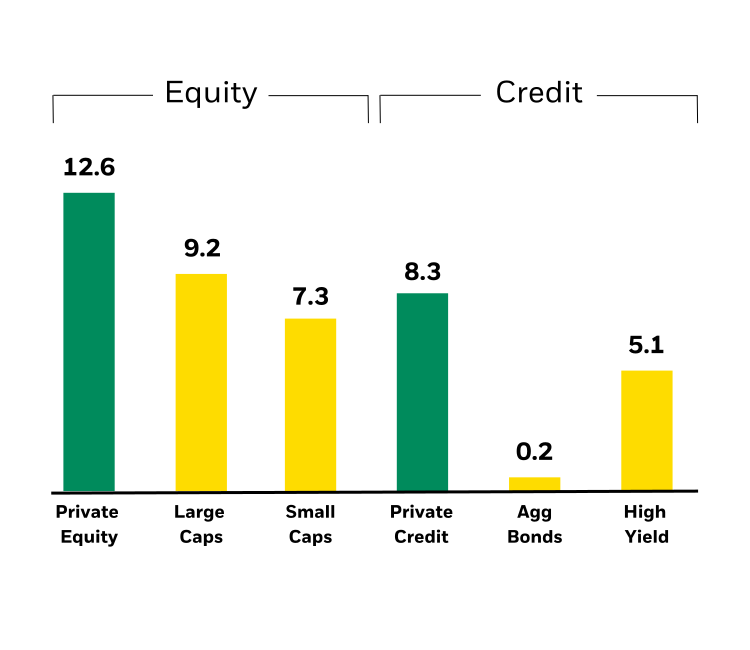
Source: Bloomberg, MPI, measuring returns from 12/31/14 through 12/31/24. “Private Equity” represented by the Preqin Private Equity Index as of 9/30/24. “Large Caps” represented by the MSCI ACWI NR Index, “Small Caps” represented by the MSCI ACWI Small Cap NR. “Private Credit” refers to the Preqin Private Debt Index, “Agg Bonds” refers to the Bloomberg Global Aggregate TR Index, and “High Yield” refers to the ICE BofA US High Yield TR Index. Past performance does not guarantee or indicate future results. Index performance is shown for illustrative purposes only. It is not possible to invest directly in an index.
Real estate and infrastructure are two other popular private asset classes. Their role in portfolios is often to provide a mix of potential capital appreciation and income, as well as an inflation hedge given that they are real assets with tangible economic value.
Returns in private markets are driven by different structural factors than public markets, which can make them compelling complements in a diversified portfolio:
- Illiquidity of underlying assets often offers a premium which can help offset potential over-indexing to more liquid structures (and associated sacrifice of return potential).
- Periodic valuation rather than continuous pricing can mean less transparency, but potentially less sensitivity to headline-related market volatility.
- Wider dispersion of outcomes across managers, making manager selection a potential differentiator.
- Varying capital commitment structures or hold periods, which also means more choice for managing around investment time horizons and goals.
From 60/40 to 50/30/20
The “optimal” allocation to private markets will depend on the individual investor’s goals and risk tolerance. For example, is the investor seeking long-term growth or income, and are they sensitive to tax considerations?
While the decision can be decidedly individual, today’s market landscape does challenge the continued applicability of a traditional 60/40 portfolio. It may mean that the definition of ‘diversification’ needs to evolve along with the investing backdrop.
A 50/30/20 framework provides one way to reflect today’s broader opportunity set:
- 50% public equities
- 30% public, fixed income
- 20% alternatives, including private markets and liquid alternatives
Effectively, this model suggests that equity exposure is moderated from 60% to 50% and fixed income is reduced from 40% to 30%, opening a 20% opportunity to add other diversified return drivers.
The funding of this new allocation will have a meaningful impact on a portfolio’s risk/return profile. Many of our BlackRock Portfolio Constructors suggest a like-for-like funding strategy wherever possible: funding strategies with equity-like risk profiles from equities and bond-like risk profiles from bonds.
Sourcing higher-risk allocations from bond sleeves can increase portfolio risk, while sourcing lower-risk allocations from stock sleeves could decrease risk and potentially also impact expected returns.
Stepping into private markets
Modern capital markets extend well beyond traditional public equity and investment-grade bond benchmarks. Private markets offer access to unique opportunities that can complement positions in traditional assets.
According to a recent BlackRock survey, wealth professionals expect allocations to private markets to increase significantly by 2030, with over 70% of wealth investors projected to allocate between 5–20% of their portfolios. This compares with today, where around two‑thirds of wealth investors are believed to allocate just 0–5% to private markets.3
Whether working toward a 20% allocation or another level better suited to client needs, we offer a four-step framework for thinking about and incorporating a private markets strategy:
- Choose private market exposures
Select alternative asset classes that further portfolio objectives.
- Determine your allocation
Decide the size of your allocation, based on risk/return assumptions and liquidity budget.
- Choose the right investment
Pick the right vehicle to access your target exposures. - Fund from “like” asset classes
Source from traditional asset classes based on risk, return and correlations to equity.
Sign up for the private markets quarterly newsletter
Get timely updates on private markets with curated insights from BlackRock. By subscribing, you’ll receive market updates, product launches, thought leadership, and webinars designed to keep you informed.
Please try again

Explorar mais
Sobre nós
Produtos
-
TIPO DE PRODUTO
-
Produtos destacados
Perspectivas
Visão de mercado
Recursos
-
RECURSOS

© 2026 BlackRock, Inc. All rights reserved.
1. Source: U.S. Census Bureau – Statistics of U.S. Businesses, The World Bank World Federation of Exchange Databases as of December 2023. Represents the latest data available.
2. Source: S&P LCD, Pitchbook LCD as of March 31, 2024.
3. The survey was conducted at BlackRock’s Private Markets Wealth Summit in London on 27 March 2025, with 70 wealth professionals from 17 countries across.
Europe and the Middle East. “Wealth investors” here are respondents’ clients. There is no guarantee that any forecasts made will come to pass. For illustrative purposes only.
MKTG0526-5467940-EXP0527