The global chips investment boom flows through DM Asia
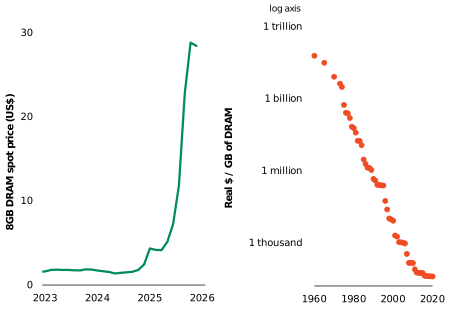
Developed Asia is the production epicenter for the world’s most advanced microchips – centered around TSMC in Taiwan. The region also controls the global production of less sophisticated but no-less-critical integrated circuits – with South Korea alone producing nearly 75% of the global DRAM chips. Those Dynamic Random Access Memory chips inspired the title of my favorite Daft Punk album but, more importantly, are a necessary component for all electronic devices. DRAM chips store data for rapid retrieval for AI data centers, military equipment, your iPhone, and any other good that touches the digital economy.
Terms-of-trade (ToT) is the ratio of a country’s export prices to its import prices. An improving ToT corresponds to a gain in international competitiveness and a rise in a country’s national income relative to its trading partners. The sources of ToT improvements are manifold – an appreciation of the exchange rate, shifts in product and commodity prices, or the deployment of new technologies. Typically associated with exchange rate appreciations, sustained ToT improvements make a country’s stocks and bonds attractive in the global cross-section as the rising national incomes support corporate earnings and debt sustainability.
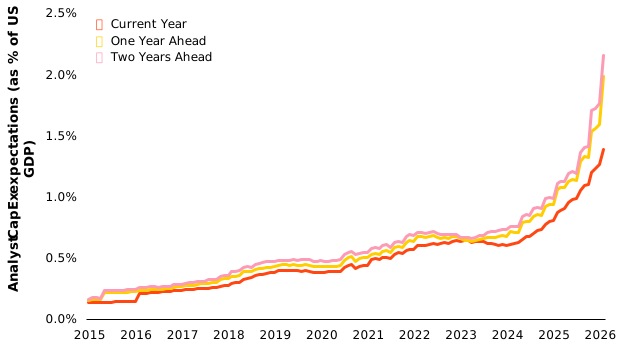
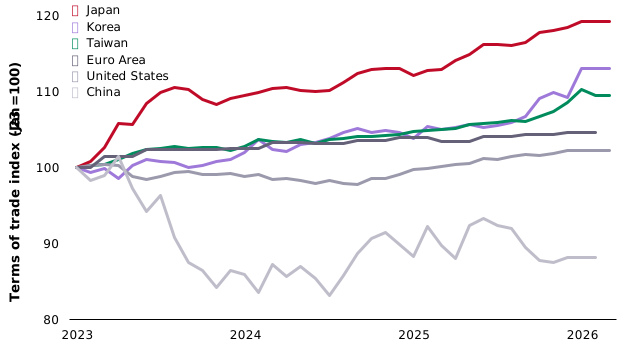
The plot below helps to visualize how the price rises of high-tech goods has generated a sustained improvement in of DM Asia’s terms-of-trade relative to the large economies of the US, China, and the Eurozone. Despite having relatively weak currencies, Japan, South Korea, and Taiwan export goods – industrial goods like semiconductors, high tech machinery, and automobiles – that have been steadily rising in value in the global marketplace. Corporations in these countries have thus been able to grow margins and profits as their customers have been willing to ante up for the critical inputs fueling the simultaneous AI capex and defense spending booms. The governments in these countries have also benefitted from rising national incomes that have bolstered their debt sustainability dynamics.
Changes in ToT in the last few years have benefitted DM Asia economies