Samara Cohen
Global Head of Market Development
We outline an approach for investors thinking about how to include bitcoin in a multi-asset portfolio
Bitcoin is maturing as a large-scale digital asset, becoming more accessible to investors via exchange-traded products and other funds.
Bitcoin’s value rises when its predetermined supply is met with growing demand – making its potential for widespread adoption central to the case for bitcoin.
Bitcoin may offer diversification benefits in multi-asset portfolios. Yet, its volatility, fractured trading exchanges and uncertainty over future adoption demand a cautious approach.
We believe a 1-2% allocation to bitcoin is a reasonable range for a multi-asset portfolio if investors believe it will become more widely adopted and can bear the risk of potentially rapid price plunges.
|
Instead of relying on traditional macro anchors, we tap into the mega forces driving returns today – from artificial intelligence to geopolitical fragmentation. |
Bitcoin has boomed since its inception in 2009, LSEG data shows, helping spur the launch of a wide variety of cryptocurrencies. Past performance is not a reliable indicator of current or future results. Over its short history, bitcoin has seen both major surges and selloffs. This volatility, plus bitcoin’s unique characteristics, raises the question of what role it should play in portfolios.
Predetermined supply & demand: Bitcoin’s fixed issuance schedule means value depends almost entirely on demand, which is shaped by investor confidence in bitcoin’s potential to become more widely adopted. Case in point: Bitcoin’s run-up to record highs after the U.S. election result reflects investors upping the chance of greater adoption given President-elect Donald T rump’s statements and personnel picks supportive of cryptocurrencies.
Adoption inflection: We believe the greatest return potential lies in the period before widespread adoption, when expectations and narratives may drive repricing.
So, what could spur wider adoption of bitcoin?
Geopolitical fragmentation: In an era of geopolitical fragmentation, bitcoin’s decentralized nature and cross-border utility could enhance its appeal.
Diversification: Since the drivers of bitcoin’s value are quite different than those for other assets, bitcoin may be less correlated with major risk assets over the long term.
Investors should also be alert to bitcoin’s risks.
Extreme volatility: Bitcoin remains highly volatile and vulnerable to sharp selloffs. Over its short history, bitcoin has seen major selloffs of 70-80% from peak to bottom during its climb to record highs.
Unstable correlations: Bitcoin’s correlation with stocks has typically been low in the short history available. Yet there’s been brief periods when bitcoin’s value has followed risk assets much more closely. This shows that investors may not be able to rely on it as reliable cushion against risk-off sentiment hitting other parts of the portfolio.
Structural uncertainty: Bitcoin may not ultimately achieve broader adoption which could impair value potential.
We think there’s a case for including bitcoin in multi-asset portfolios – provided investors believe it will become more widely adopted in the future and are comfortable bearing the risk of potentially rapid price plunges.
So how can investors think about a bitcoin allocation?
Risk budgeting: We use a risk budgeting approach: sizing the allocation based on how much it would contribute to total portfolio risk – measured by its long-run volatility and correlation to other assets. A 1–2% allocation contributes to overall portfolio risk at levels comparable to a single “Magnificent 7” stock in a 60/40 portfolio.
“We use a risk budgeting approach: sizing the allocation based on how much it would contribute to total portfolio risk – measured by its long-run volatility and correlation to other assets.”
-BlackRock Investment Institute
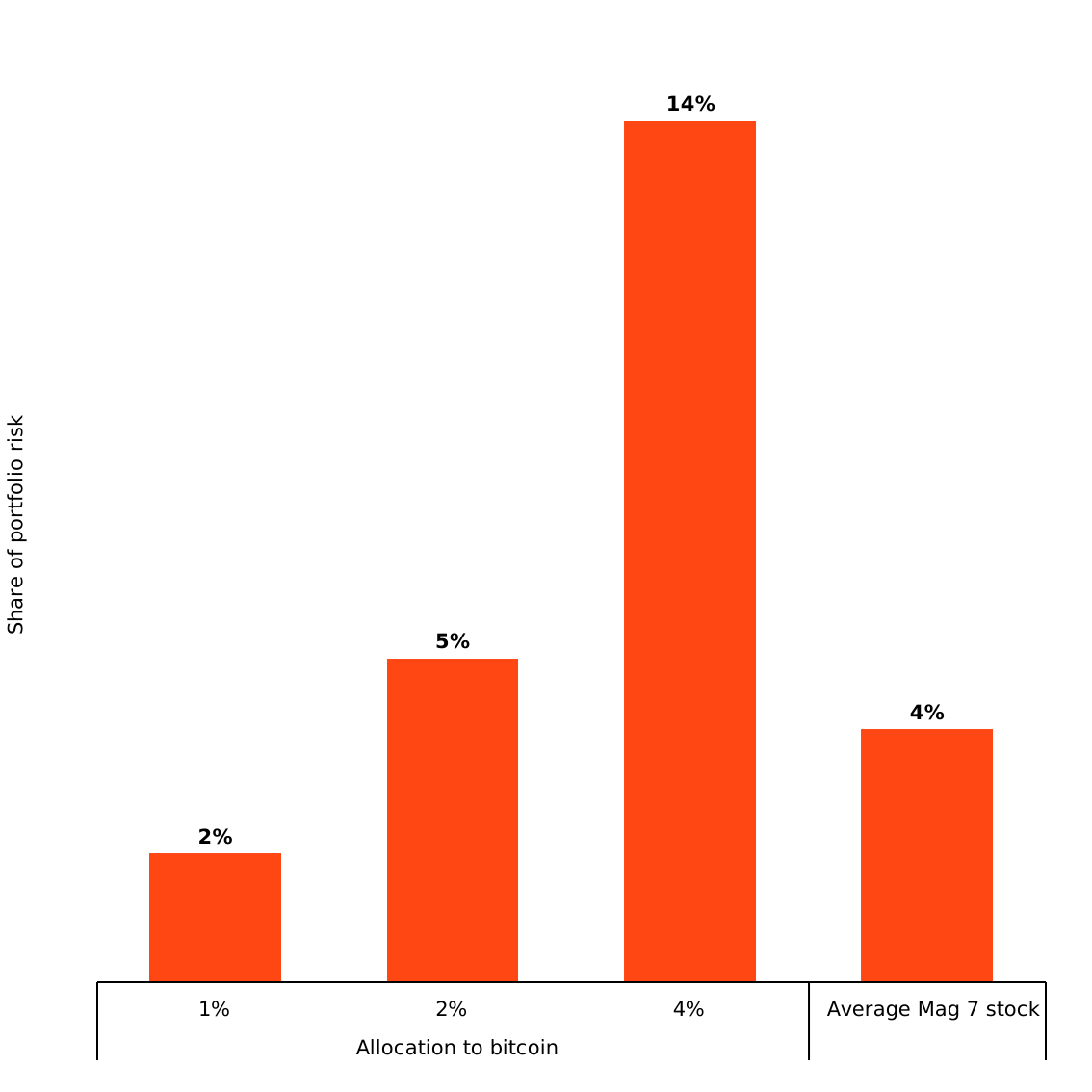
Past performance is not a reliable indicator of current or future results. This information is not intended as a recommendation to invest in any particular asset class or strategy or as a promise - or even estimate - of future performance. Source: BlackRock Investment Institute with data from Bloomberg, December 2024. Notes: The chart shows bitcoin’s share of portfolio risk in a hypothetical 60-40 stock-bond portfolio at different allocations based on risk contribution. It also shows what share “magnificent 7” stocks (Alphabet, Amazon, Apple, Meta, Microsoft, Nvidia and Tesla) add to overall risk on average based on their current index weights. Indexes used: Bloomberg Developed Markets Large and Mid Cap for equities and the Bloomberg Global Aggregate for bonds. Risk contribution is estimated using weekly returns between May 2012 and July 2024. Reference to individual stocks is for illustrative purposes and should not be construed as investment advice or a recommendation.
Setting a 2% cap: Allocations beyond 2% elevate portfolio risk disproportionately, given bitcoin’s volatility and unstable correlations.
Tactical use: If broad adoption occurs, bitcoin could become less volatile and have a more stable low correlation with stocks. But widespread adoption would dull bitcoin’s key driver for further sizable price rises. It would also make the case for a permanent holding less clear and investors may prefer to use it tactically to hedge against specific risks, in a similar fashion to gold.
For institutional investors with sufficient governance and risk tolerance, we believe a portfolio allocation of around 1-2% to bitcoin could be reasonable – provided investors believe in its widespread adoption. Larger allocations would skew portfolio risk excessively, we find. Ultimately, its investment case depends mostly on the potential for future widespread adoption.
We think investors who choose to allocate to bitcoin should regularly review bitcoin’s changing nature and their allocation.




Deepen your understanding with related thinking from more experts at BlackRock.