Wei Li
Global Chief Investment Strategist – BlackRock
Inflation's outlook
We see headline inflation cooling in 2027, even as markets price in more Fed hikes than we expect. We favor short- and medium-term U.S. Treasuries.
Market Backdrop
The Nasdaq plunged 10% into bear market territory last week as solid Nvidia earnings and Anthropic’s record IPO failed to lift AI sentiment.
Week Ahead
We eye October PCE data to assess whether services inflation remains a key sticking point – and if the figures keep further Fed tightening in play.
Markets are largely pricing in a December Federal Reserve rate hike, in line with our view, plus as many as two more next year. We think the latter is overdone. We expect headline U.S. inflation to cool next year while economic growth moderates as oil prices, the effects of tariffs and AI-related price pressures ease. That gives the Fed room to tighten less than markets expect. We favor short- and medium-term U.S. Treasuries for solid income and greater protection against rate swings.
Energy price impact on annual headline inflation by region, 2026–2028
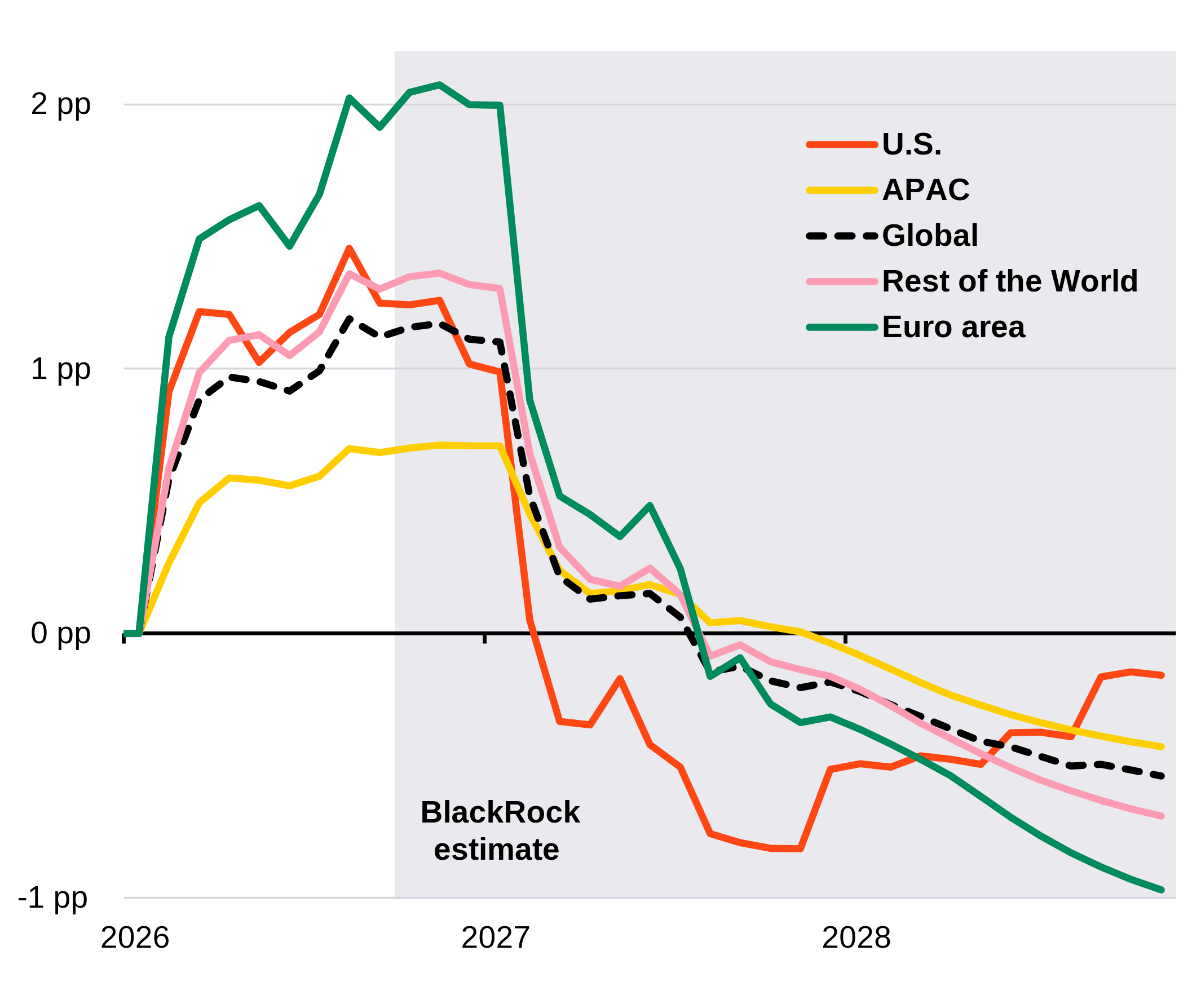
Forward-looking estimates may not come to pass. Source: BlackRock Investment Institute with data from Bloomberg, LSEG Datastream, S&P Global Commodity Insights, U.S. Energy Information Administration and the World Bank, November 2026. Note: The chart shows the estimated impact of energy prices on year-on-year headline inflation, in percentage points, relative to a counterfactual in which energy prices stay at pre-conflict levels. Estimates are based on current energy futures curves. Shaded area indicates forecasts.
We think the energy shock's impact on U.S. inflation has peaked. Brent crude oil, gasoline and diesel prices have all fallen sharply this month, which should help ease headline inflation and core inflation through lower prices for transportation services. We estimate the shock added 1.5 percentage points to headline U.S. inflation at its September peak. That contribution should reverse, from boosting inflation this year to lowering it by 0.8 percentage points by year-end 2027. See the chart. While price pressures from tariffs and the AI buildout should ease next year, that relief will be uneven. In Europe, earlier increases in natural gas prices are still feeding through to consumers, prolonging inflationary pressures relative to the U.S. In the U.S., a tight labor market is stoking wage growth, keeping core services inflation elevated even as energy price pressures abate.
The economy is currently strong, while the labor market remains tight and core inflation is elevated. Against that backdrop, we expect core inflation to remain closer to 3% than the Fed’s 2% target. That supports further Fed tightening and suggests the neutral interest rate may be higher than previously assumed – consistent with the new regime we’ve long described. Yet we think markets have recently extrapolated today's economic strength and inflation pressures too far and priced in more Fed rate hikes than will be needed. Falling energy prices reduce the risk of lasting effects on core inflation, while tighter financial conditions and uncertainty around the AI buildout could temper demand and hiring in 2027 and, with it, core inflation.
We expect U.S. growth to moderate next year, even as the economy remains resilient. Growth is on track to reach 2% to 2.5% this year. Solid hiring and wage growth of around 4% – above the 2%–2.5% pace we see as consistent with the Fed’s target – point to strength beyond AI. With the breakeven pace of job creation now much lower, even modest hiring keeps the labor market tight. We see growth moderating but staying above 2% next year, as AI spending grows at a slower pace and the boost from President Donald Trump's tax cuts fades. The U.S. remains better placed than Europe to withstand the energy shock because it is a net energy exporter with more limited exposure to fluctuations in natural gas prices. That outlook underpins our expectation for a more measured Fed rate path. Market pricing suggests as many as three quarter-point hikes over the next 12 months. We think a quarter-point hike in December is likely and we currently expect one more hike in the first half of 2027. We also expect the European Central Bank to raise rates next month, but the outlook beyond December depends on whether energy-driven price pressures keep feeding through to underlying inflation.
With two- and 10-year U.S. Treasury yields hitting multidecade highs this year, much of the structural rise in rates we have long anticipated is now reflected in bond yields. That underscores our preference for short- and medium-term Treasuries, which offer attractive income opportunities and more protection against higher rates. We recently strengthened our strategic overweight on inflation-linked bonds to hedge against supply-driven inflation risks.
We expect U.S. growth to hold steady and headline inflation to cool next year, even as core services price pressures remain elevated. We favor short- and medium-term U.S. Treasuries for solid income.
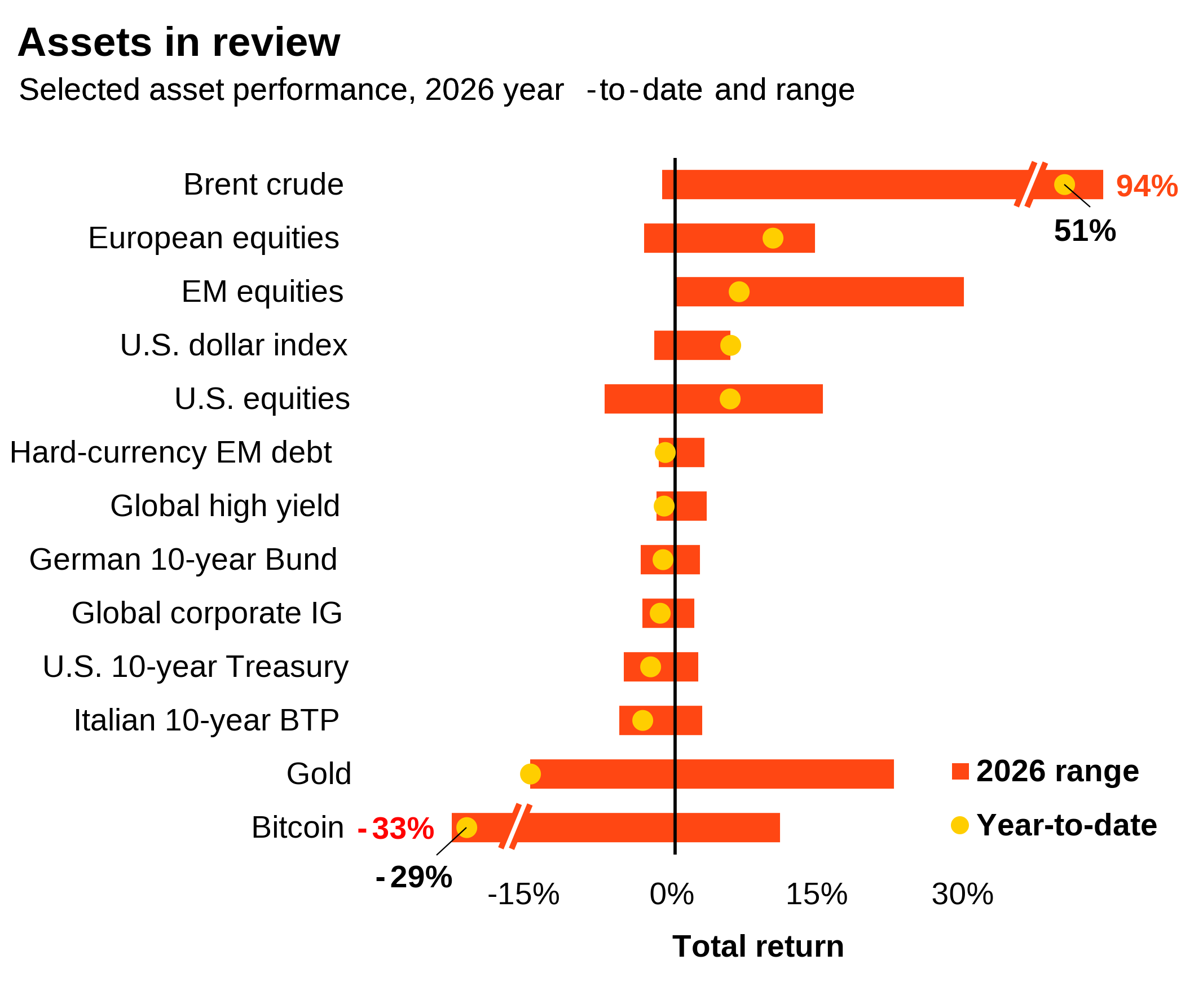
Anthropic’s record debut and Nvidia earnings failed to lift AI sentiment last week. The Nasdaq slid 10%, notched its worst week since the Covid-19 pandemic and slipped into bear market territory. The S&P 500 fell 9% and confirmed a correction. The sell-off suggests concerns around company-specific CEO succession and circular financing deals persist. U.S. 10-year Treasury yields fell to 4.94%, about 40 basis points below October’s 24-year high. Two-year yields slipped to 4.64%.
We’re watching U.S. PCE data – the Fed’s preferred inflation gauge – for signs that persistent services inflation is keeping further Fed tightening in play. U.S. consumer confidence and the second estimate of GDP growth will offer a check on the resilience of the broader economy beyond the AI boom, while global flash PMIs will provide further insight into growth momentum.
Nov. 23
Global S&P flash PMI
Nov. 24
Japan flash PMI; U.S. consumer confidence
Nov. 25
U.S. GDP; U.S. PCE
Nov. 27
Japan CPI (Tokyo)
Read our past weekly market commentaries here
Since we launched our mega forces framework, it has become clearer how their intersection shapes almost all our investment views and opens up alpha opportunities. They cut across asset class labels, spurring a rethink of portfolio construction. Investors need to be deliberate about the economic or thematic exposures they own, the vehicles they use to implement them and their investment horizons.
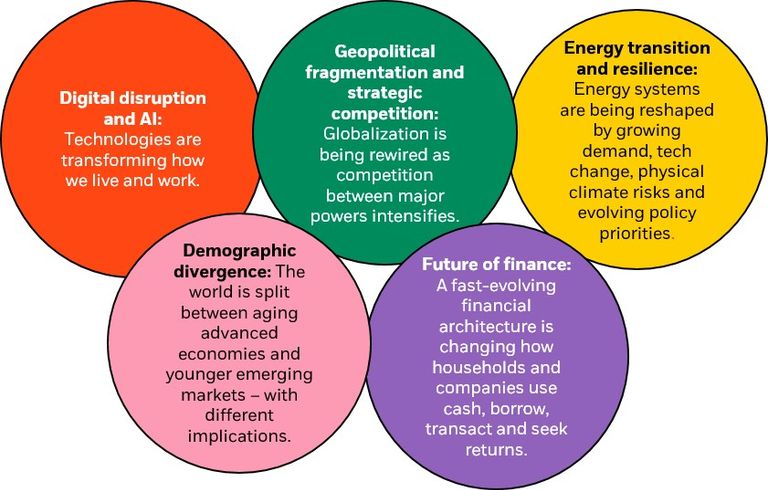
Our highest conviction views, November 2026
Note: Views are from a U.S. dollar perspective, November 2026. This material represents an assessment of the market environment at a specific time and is not intended to be a forecast of future events or a guarantee of future results. This information should not be relied upon by the reader as research or investment advice regarding any particular funds, strategy or security.
Six- to 12-month tactical positioning, November 2026
This shows the implementation of our key investment views from the previous page through an asset class lens.

Past performance is not a reliable indicator of current or future results. It is not possible to invest directly in an index. Note: Views are from a U.S. dollar perspective. This material represents an assessment of the market environment at a specific time and is not intended to be a forecast or guarantee of future results. This information should not be relied upon as investment advice regarding any particular fund, strategy or security.
Six to 12-month tactical views on selected assets vs. broad global asset classes by level of conviction, November 2026
We have lengthened our tactical investment horizon back to six to 12 months. The table below reflects this and, importantly, leaves aside the opportunity for alpha, or the potential to generate above-benchmark returns – especially at a time of heightened volatility.
Past performance is not a reliable indicator of current or future results. It is not possible to invest directly in an index. Note: Views are from a euro perspective, November 2026. This material represents an assessment of the market environment at a specific time and is not intended to be a forecast or guarantee of future results. This information should not be relied upon as investment advice regarding any particular fund, strategy or security.

Stay informed on our latest weekly Market take. Listen wherever you get your podcasts.