Wei Li
Global Chief Investment Strategist – BlackRock
An evolving conflict
The Middle East conflict is exposing longer-term energy constraints as buffers that absorbed the initial shock weaken. Selectivity is key in this environment.
Market Backdrop
The Nasdaq fell nearly 1% last week and U.S. Treasuries rallied as investors sought safety from the tech stock selloff. Brent crude oil hit a six-month high.
Week Ahead
We eye the Fed’s second-to-last policy meeting of 2026. We expect another hike by year-end but see market pricing for further tightening as overly hawkish.
The global economy and markets have proved resilient to the Middle East energy shock. Strong AI investment and fiscal spending have cushioned the hit to growth, while supply buffers helped absorb much of the initial shock. Now, renewed attacks targeting energy sites and shipping in the Gulf are testing these buffers just as they’re thinning, while supply constraints are moving downstream. Selectivity is key as new vulnerabilities emerge across regions, sectors and asset classes.
Selected oil industry sub-sector equity performance, 2026
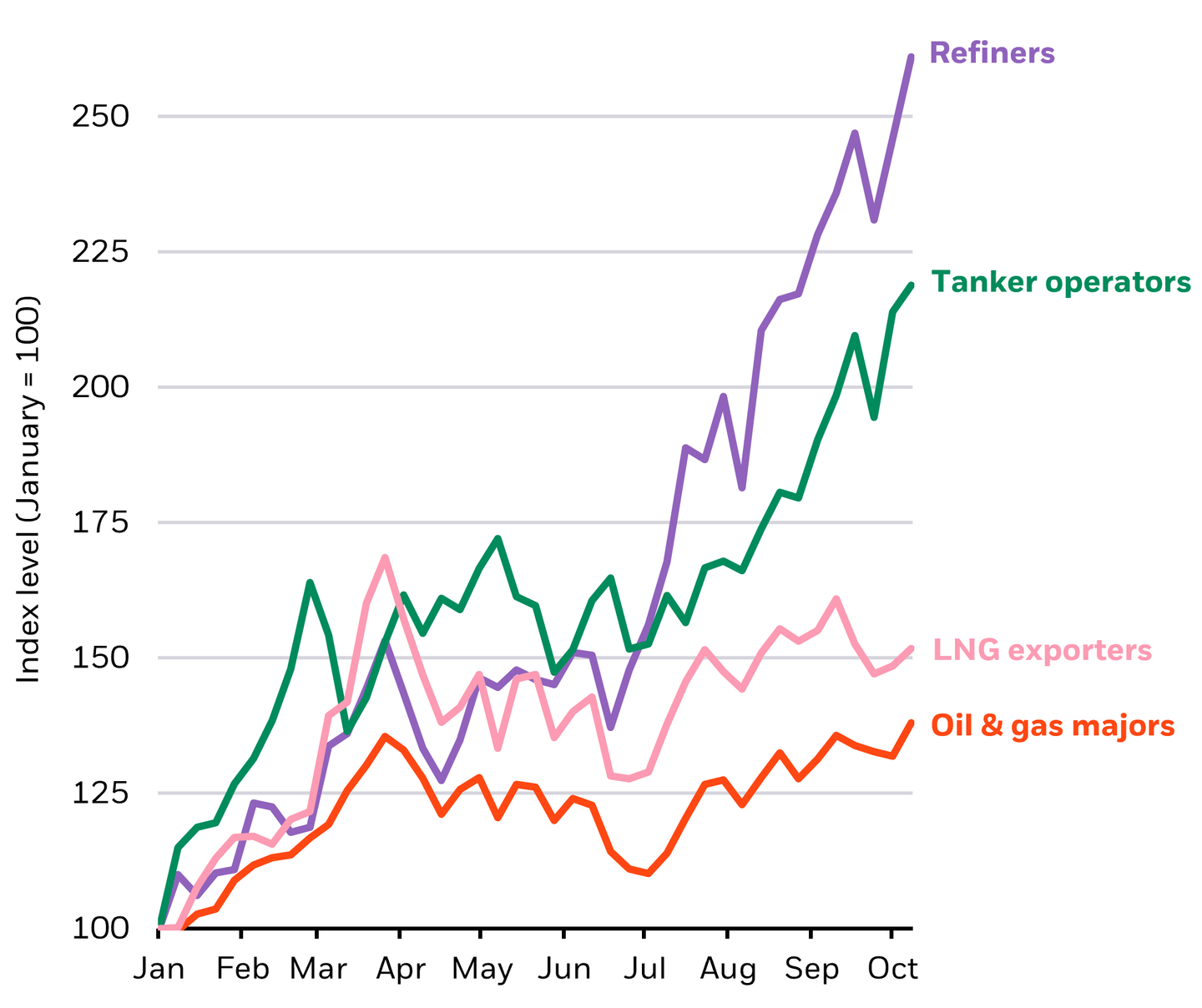
Past performance is not a reliable indicator of current or future results. Source: BlackRock Investment Institute with data from Bloomberg, October 2026. The chart shows the equal-weighted average equity returns of selected companies across four oil industry sub-sectors, rebased to 100 on Jan. 2, 2026. Returns are based on weekly observations and exclude dividends.
Brent crude oil surged back to around $117 a barrel last week, its highest since April. But oil prices tell only part of the story of how the energy shock has evolved. The initial disruption centered on crude supply, but rerouted shipments, inventories and strategic reserves helped absorb much of the shock. Now scarcity has shifted downstream. Even as crude supplies recover, refining and shipping bottlenecks have pushed the delivered cost of fuel from the Middle East to Asia to more than twice prewar levels. This helps explain why shares of refiners have jumped some 160% this year, while shares of tanker operators have climbed 120%. See the chart. Both have far outpaced the 40% gain in major oil and gas producers, even as energy has become the top-performing sector globally. But after such sharp gains, how much further these stocks can run depends on which bottlenecks persist, even if the conflict ends.
Global growth has held up thanks to strong AI investment and government spending. Much of the initial inflation shock is already reflected in headline inflation, but higher fuel costs are starting to feed into some core inflation categories. As we’ve previously noted, the energy shock has uneven effects: we estimate it’s reduced GDP by about 0.5% in Europe, compared with just 0.1% in the U.S. Those differences could become even more pronounced. Europe looks particularly vulnerable, with natural gas storage at around 75% – its lowest seasonal level since recordkeeping began in 2011 – while disrupted supplies of liquefied natural gas complicate efforts to rebuild reserves. A colder winter could push European energy prices, already up 170% this year, higher. The U.S. is better insulated as a net energy exporter, while strong tech exports have cushioned Asia from higher import costs. The shock’s uneven impacts are accelerating efforts to bolster energy resilience and security.
That is creating new investment opportunities – but at a cost. The geopolitical fragmentation mega force we’ve long described reinforces this shift, raising the value of infrastructure that protects against future shocks. Energy importers are diversifying both traditional fuel supplies and electrification, underscoring the energy transition and resilience mega force. Exporters, including those in the Middle East, are investing in alternative routes to bypass vulnerable chokepoints. We see this as a structural shift that could outlast the conflict. Yet building these contingencies requires substantial investment, which could intensify competition for capital and put further upward pressure on sovereign bond yields.
We favor opportunities where energy constraints and profit margins look durable and valuations remain attractive. For now, existing energy equity exposures could deliver strong earnings as oil prices and refining margins stay elevated. But after this year’s oil rally, we also see opportunities in select U.S. and European utilities hit by rising bond yields. In bonds, higher yields support our recent upgrade to U.S. Treasuries. We prefer short-term bonds for income, as growing energy security investment could increase competition for capital and push longer-term yields higher.
The Mideast energy shock is exposing longer-term constraints that could outlast the conflict. We favor selective exposure to energy infrastructure and short-term income over broad market bets.
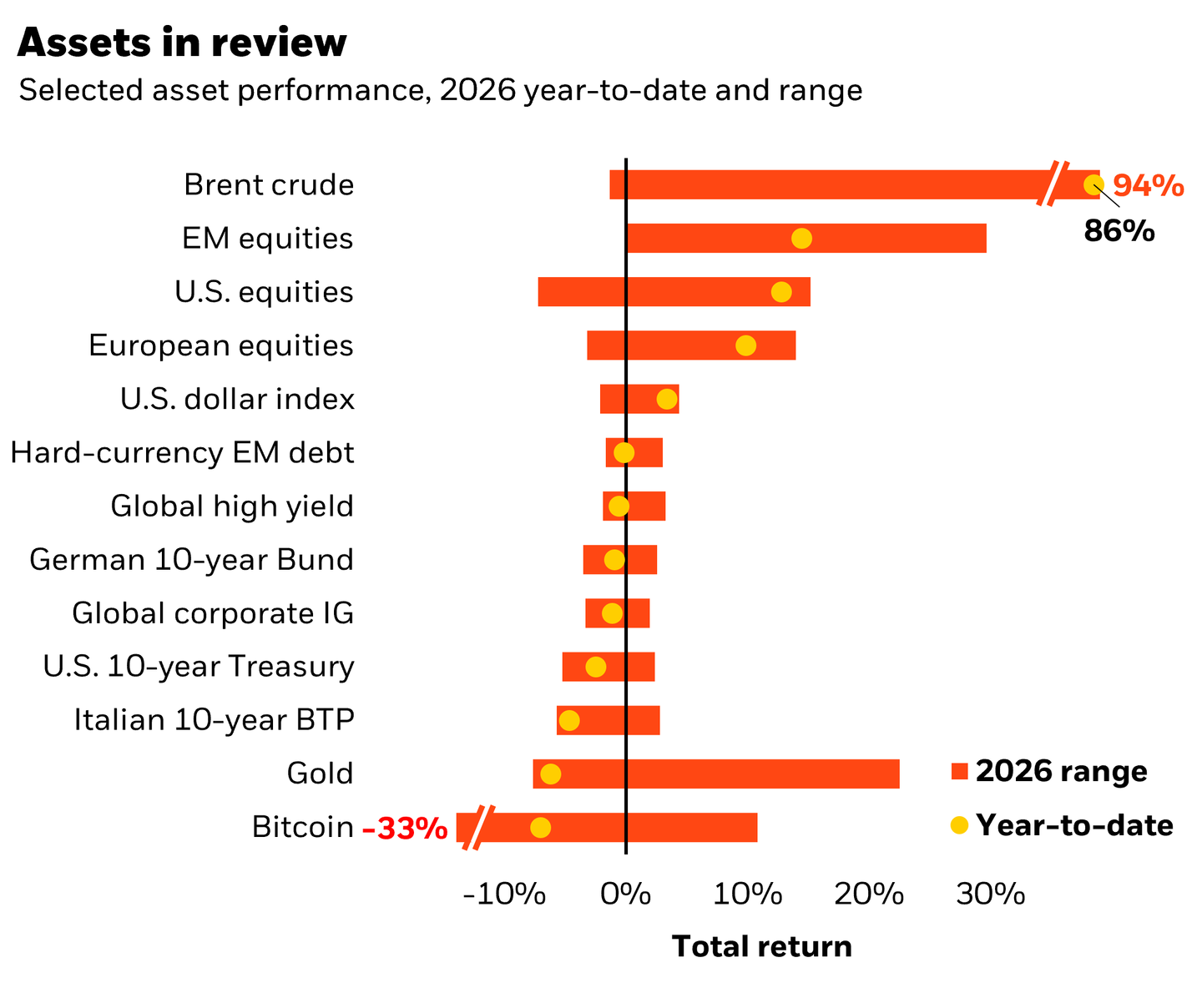
Tech stocks swung sharply last week as investors stepped up scrutiny of the AI trade, pushing the Nasdaq down roughly 1% despite strong earnings from some of the sector’s biggest names. The S&P 500 fell 0.4%, with a rotation into defensive sectors helping limit losses. U.S. 10-year Treasury yields slipped below 5% as investors sought refuge from the tech selloff. Brent crude oil touched a six-month high of $117 a barrel on concerns about further disruption to Middle East energy flows.
The Federal Reserve’s interest rate decision takes center stage this week after a hotter-than-expected September CPI report showed price pressures broadening. Even as we expect another hike by year-end, we don’t view recent tightening as the start of a sustained hiking cycle. Markets have partially scaled back expectations for further hikes since the September meeting, moving closer to our view.
Oct. 27
U.S. consumer confidence; Japan services PPI
Oct. 28
U.S. Fed rate decision
Oct. 29
U.S. GDP & PCE
Oct. 30
EU flash GDP & unemployment; BoJ rate decision; Japan CPI
Read our past weekly market commentaries here
Since we launched our mega forces framework, it has become clearer how their intersection shapes almost all our investment views and opens up alpha opportunities. They cut across asset class labels, spurring a rethink of portfolio construction. Investors need to be deliberate about the economic or thematic exposures they own, the vehicles they use to implement them and their investment horizons.
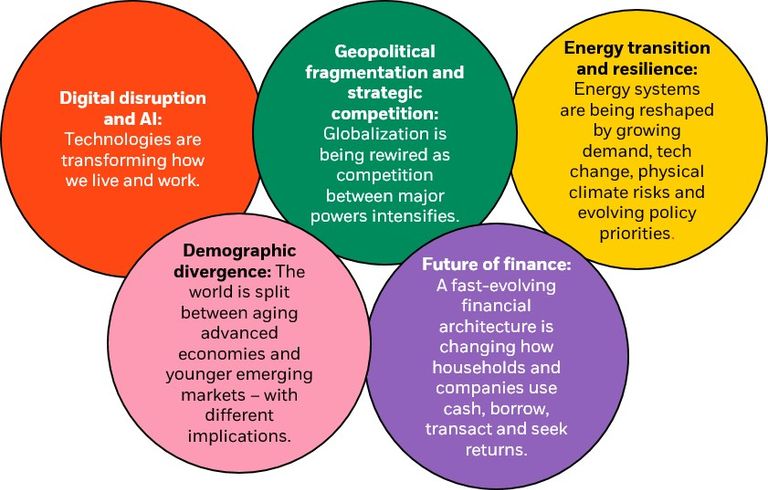
Our highest conviction views, October 2026
Note: Views are from a U.S. dollar perspective, October 2026. This material represents an assessment of the market environment at a specific time and is not intended to be a forecast of future events or a guarantee of future results. This information should not be relied upon by the reader as research or investment advice regarding any particular funds, strategy or security.
Six- to 12-month tactical positioning, October 2026
This shows the implementation of our key investment views from the previous page through an asset class lens.

Past performance is not a reliable indicator of current or future results. It is not possible to invest directly in an index. Note: Views are from a U.S. dollar perspective. This material represents an assessment of the market environment at a specific time and is not intended to be a forecast or guarantee of future results. This information should not be relied upon as investment advice regarding any particular fund, strategy or security.
Six to 12-month tactical views on selected assets vs. broad global asset classes by level of conviction, October 2026
We have lengthened our tactical investment horizon back to six to 12 months. The table below reflects this and, importantly, leaves aside the opportunity for alpha, or the potential to generate above-benchmark returns – especially at a time of heightened volatility.
Past performance is not a reliable indicator of current or future results. It is not possible to invest directly in an index. Note: Views are from a euro perspective, October 2026. This material represents an assessment of the market environment at a specific time and is not intended to be a forecast or guarantee of future results. This information should not be relied upon as investment advice regarding any particular fund, strategy or security.

Stay informed on our latest weekly Market take. Listen wherever you get your podcasts.