What are Canadian plan participants and retirees telling us about retirement readiness, and what could help turn savings into retirement security?
Turning Savings into Security

Key takeaways
01.
Canadians are saving, but gaps remain
61% of participants feel on track for retirement, yet many still have questions about what today’s savings could support in the future.
02.
Economic pressures are making it harder to stay on track
Amongst participants, 77% say higher inflation and market volatility have made it harder to stay on track with their retirement savings.
03.
Canadians are looking for more clarity
Nearly three-quarters (74%) struggle to understand how today's savings will support them in the future.
Confidence today, questions about tomorrow.
Most Canadians are confident about their future retirement
61% of working plan participants say they are ‘on track’ to achieve the retirement lifestyle they expect.
Amongst those who do not feel on track for retirement, or are unsure
56% of participants say they should be saving more for retirement than they currently are.
But concerns about making savings last remain
Nearly seven in ten surveyed Canadians (68%) worry about outliving their retirement savings.
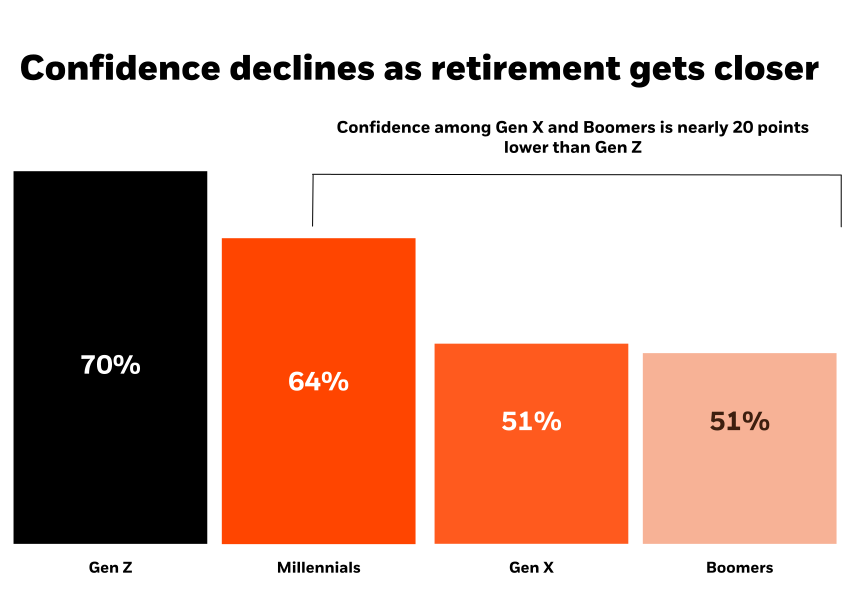
Generations are split on retirement confidence
Retirement readiness evolves over time. Early-career participants focus on building saving habits amid competing priorities. Mid-career participants balance family, housing and debt pressures. As retirement nears, attention shifts from accumulating wealth to making key decisions about income, risk and spending.
Building a foundation amid competing priorities
With retirement still further away, early-career savers have time and optimism on their side. However, near-term priorities can make consistent saving difficult: 70% of Gen Z participants feel on track, while 81% say planned expenses may affect their ability to save.

Maintaining momentum as responsibilities grow
As financial responsibilities accumulate, mid-career participants must balance immediate demands with longer-term goals while beginning to ask what their current savings could ultimately support in retirement. Nearly 77% of millenial participants expect they may need to reduce retirement contributions in the coming year.

Turning savings into an envisioned retirement
As retirement comes into focus, decisions about timing, spending, market risk and longevity become more immediate, with 67% of Gen X respondents worrying about outliving savings.

Living on accumulated savings
After retirement, the focus shifts from building balances to understanding how workplace savings, personal assets and public benefits can work together to support ongoing needs.

Participants seek clarity, resilience and adaptable solutions
Participants want a clearer view of what their savings could support, confidence that their investment approach can evolve as retirement approaches, and help navigating the decisions placed on them along the way.
74%
Want more clarity on how today’s savings may support them in retirement
90%
Would feel more confident if their plan helped smooth financial ups and downs over time
78%
See value in investments that automatically adjust as they move through different life stages
The next opportunity for Canada’s retirement ecosystem
The findings suggest a broader opportunity to help participants connect today's savings with tomorrow's retirement outcomes. For the industry, this raises questions about improving clarity, helping participants prepare for changing needs over time, and guiding them through increasingly complex decisions.
Additional resources
Stay informed with the latest retirement insights, research and thought leadership.
Re-examining "To versus Through"
Explore what the latest research reveals about the long‑standing “to vs. through” debate and how different glidepath approaches shape retirement outcomes.
BlackRock Canada's LifePath® Portfolios
BlackRock Canada’s LifePath® portfolios are continuously evolving to help deliver the retirement outcomes your plan members need.
Optimizing Retirement Outcomes
Explore how enhanced inflation modeling and fixed income diversification can improve retirement outcomes for plan members across their lifecycle.