Discover fixed maturity ETFs.

iBonds ETFs

What are iBonds ETFs?
iBonds ETFs (Exchange Traded Funds) are an innovative suite of bond funds that have a fixed maturity date. They hold a diversified portfolio of bonds with similar maturity dates, are designed to provide regular income payments and distribute a final payment in their stated maturity year. For more information on the final payment see the below section on ‘when the iBonds ETF matures’.
Capital at risk. The value of investments and the income from them can fall as well as rise and are not guaranteed. Investors may not get back the amount originally invested.
Discover our latest iBonds ETFs launches

Investment grade corporate iBonds ETFs
Explore our new iBonds € and $ investment grade corporate 2035 maturities. With an offering spanning 10 years, the funds allow investors to build scalable bond ladders.

€ Crossover Corporate iBonds ETFs
Explore our new iBonds € Crossover Corporate ETFs — offering access to a basket of investment grade and high yield corporate bonds maturing in the same year.

$ Corporate high yield iBonds ETFs
Explore our new iBonds $ High yield corporate ETFs — offering access to a basket of high yield corporate bonds maturing in the same year.
What are iBonds ETFs designed to do?

Mature like a bond
iBonds have a specified maturity date. The ETFs distribute the final payment at maturity, similar to traditional bonds.

Trade like a stock
iBonds can be bought and sold like a share, giving flexibility to trade in and out over time.

Diversify like a fund
iBonds provide a diversified bond exposure to a desired asset class in a single trade. Diversification and asset allocation may not fully protect you from market risk.
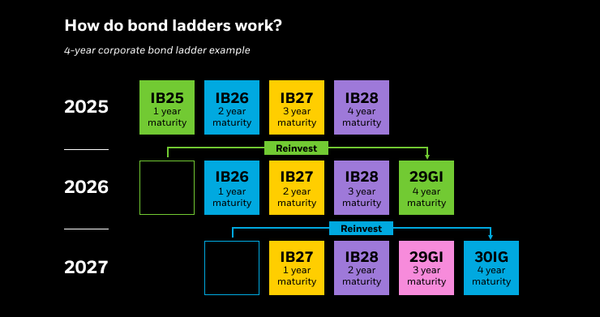
Bond laddering made easy with iBonds ETFs
Investors like the concept of bond ladders for the predictable cash flow they provide as bonds mature at regular intervals. iBonds ETFs make bond laddering simpler and more time-efficient vs. having to research, purchase and track individual bonds.
Benefits of iBonds ETFs
The unique features of iBonds ETFs can help you easily access bond markets, pick points in time or could even match expected cash flow needs in the future.
- Diversified access to bond markets - iBonds trade on an exchange, giving all investors access to bond markets, traditionally a market difficult to navigate, while maintaining diversification.
- Pick points in time - iBonds ETFs offer diversified exposure to bonds that mature in the calendar year of the fund's name, allowing you to target specific points on the yield curve.
- Match expected cash flows - iBonds ETFs mature at a specific date. So, investors could expect a final payment at maturity, which could help fund life stage planning, such as buying a car or a house, college tuition or retirement.
iBonds ETFs combine the best features of individual bonds and ETF investing offering investors an efficient tool that matures like an individual bond while trading on an exchange at low cost like a traditional bond ETF.
At time of purchase of the iBonds ETF
When you are ready to purchase an iBonds ETF, we have tools to help you understand the estimated net acquisition yield of the fund. The estimated net acquisition yield provides a yield estimate, net of fees and market price impact, if the fund is held to maturity.
On each iBonds ETFs product page, the Estimated Net Acquisition Yield Calculator can provide a yield estimate if you enter a projected market price.
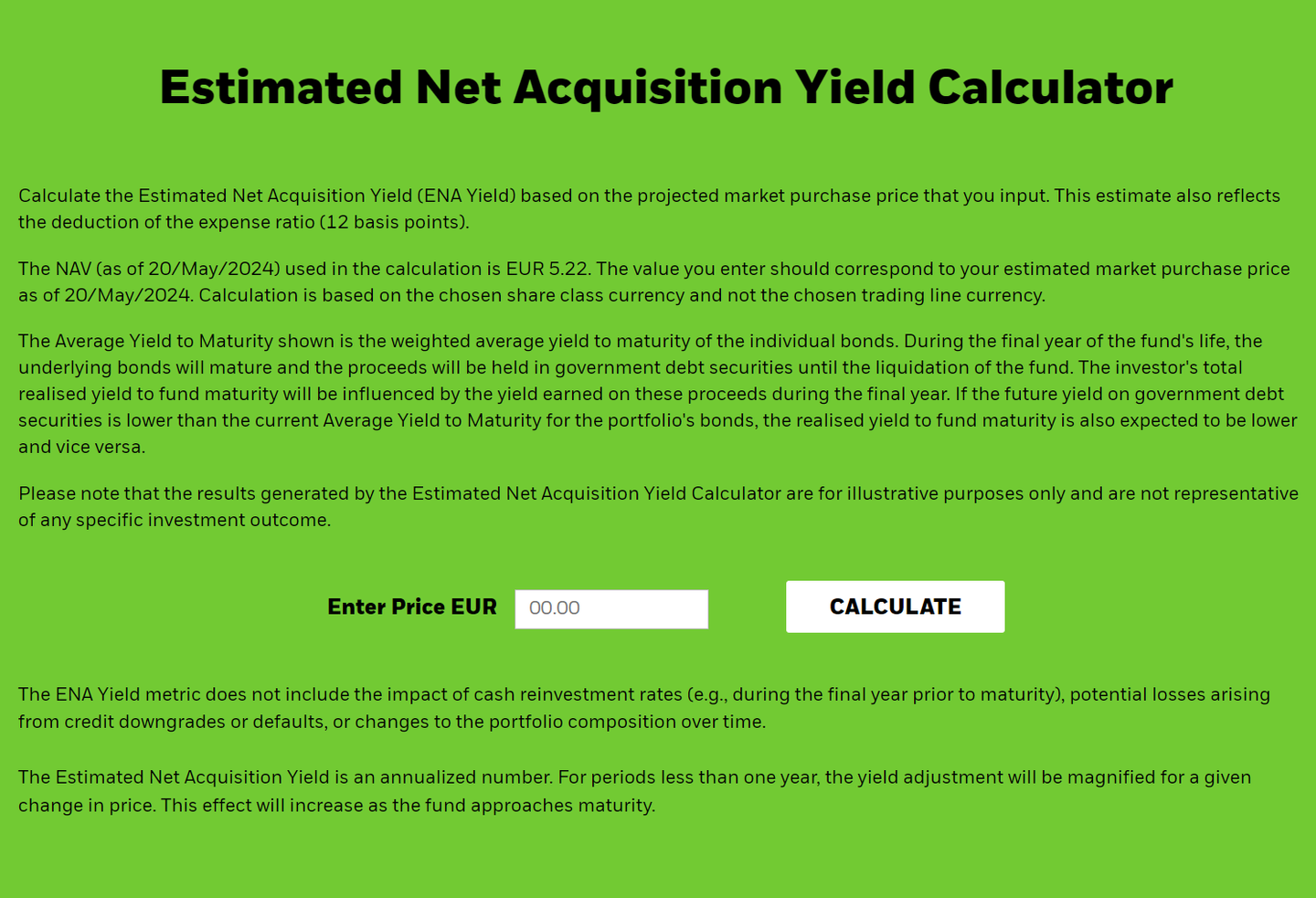
For illustrative purposes only.
During the holding period of an iBonds ETF
iBonds ETFs are designed to provide a yield-to-maturity ("YTM") profile comparable to that of the underlying bond portfolio. The funds seek to preserve an investor’s anticipated yield-to-maturity through a combination of regular distributions and a final end-date distribution.
When the iBonds ETF matures
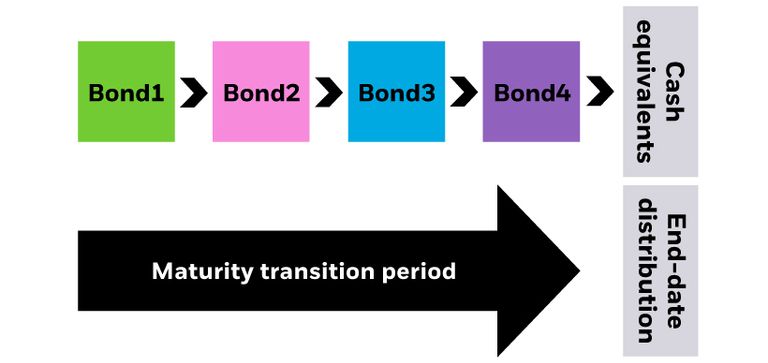
iBonds ETFs terminate in December of the year in the fund’s name. In the final months when the bonds in the portfolio mature (maturity transition period), the fund's holdings transition to cash and cash equivalents. After all the bonds in the portfolio mature, the ETF is closed and shareholders receive a final payment.
The final payment that an investor will receive includes the initial investment (principal amount) along with any income generated by the ETF, such as interest payments from the underlying bonds. The fund’s liabilities such as fees and accrued expenses will get deducted from this final payment.
Fixed income investing
Changing market conditions have brought new challenges for fixed income investors.
Navigate our fixed income range
Explore our range of fixed income ETFs and index funds.
BlackRock®
As a global investment manager and fiduciary to our clients, our purpose at BlackRock is to help everyone experience financial well-being. Since 1999, we've been a leading provider of financial technology, and our clients turn to us for the solutions they need when planning for their most important goals.
© 2026 BlackRock, Inc. All Rights Reserved.