Discover fixed maturity ETFs.
iBonds ETFs

What are iBonds ETFs?
iBonds ETFs are bond ETFs that have a fixed maturity date. An iBonds ETF holds a diversified basket of bonds with similar maturity dates and distributes a final payment at maturity. For more information on the final payment see the below section on ‘when the iBonds ETF matures’.
iBonds ETFs combine the benefits of investing in ETFs and individual bonds, offering an efficient tool that matures like an individual bond, while trading on a stock exchange at low cost.
Capital at risk. The value of investments and the income from them can fall as well as rise and are not guaranteed. Investors may not get back the amount originally invested.
Discover our latest iBonds ETFs launches

Investment grade corporate iBonds ETFs
Explore iBonds € and $ investment grade corporate ETFs with maturities through 2036 and 2037, offering exposure to corporate bonds to help plan investments around future dates.

€ Crossover Corporate iBonds ETFs
Explore iBonds € Crossover Corporate ETFs, which invest in a mix of investment grade and higher‑risk corporate bonds that all mature in the same year.

$ Corporate high yield iBonds ETFs
Explore iBonds $ High Yield Corporate ETFs, investing in higher‑risk corporate bonds with a set maturity year and potential for higher income, but greater volatility.
What are iBonds ETFs designed to do?

Mature like a bond
iBonds have a specified maturity date. The ETFs distribute the final payment at maturity, similar to traditional bonds.*

Trade like a stock
iBonds trade on stock exchanges, just like single stocks. ETFs also offer flexibility to enter and exit a trade at any time during trading hours.

Diversify like a fund
iBonds offer investors access to multiple bonds in one trade, helping diversify their investments and avoid the risk of exposure to one single issuer.
Risk: Diversification and asset allocation may not fully protect you from market risk.
*The final payment that an investor will receive includes the initial investment (principal amount) along with any income generated by the ETF, such as interest payments from the underlying bonds. The fund’s liabilities such as fees and accrued expenses will get deducted from this final payment.
Two main risks related to fixed income investing are interest rate risk and credit risk. Typically, when interest rates rise, there is a corresponding decline in the market value of bonds. Credit risk refers to the possibility that the issuer of the bond will not be able to repay the principal and make interest payments.
Benefits of iBonds ETFs
The unique features of iBonds ETFs can help you access bond markets, pick points in time, or could even match expected cash flow needs in the future.
- Easily access bonds – iBonds ETFs provide easy access to bonds, with one trade, you gain exposure to a selection of bonds and could generate regular income.
- Be flexible – iBonds ETFs are available in a range of maturities, so you can choose how long you want to invest your money for. If your needs change, so can your investment. You can buy or sell iBonds ETFs at any time on the stock exchange (during trading hours).
- Diversify at low cost – iBonds ETFs provide exposure to a selection of bonds across various regions and parts of the bond market, at relatively low cost compared to trading individual bonds.
- Match expected cash flows - iBonds ETFs mature at a specific date. So, investors could expect a final payment at maturity, which could help fund life stage planning, such as buying a car or a house, college tuition or retirement.
iBonds ETFs combine features of individual bonds and traditional bond ETFs by offering a set maturity date alongside diversification and exchange trading.
As with all bond investments, key risks include interest rate risk and credit risk. Bond prices typically fall when interest rates rise, and there is a risk that bond issuers may not be able to make payments. This means the value of an iBonds ETF can change before maturity, and returns are not guaranteed.
Two main risks related to fixed income investing are interest rate risk and credit risk. Typically, when interest rates rise, there is a corresponding decline in the market value of bonds. Credit risk refers to the possibility that the issuer of the bond will not be able to repay the principal and make interest payments.
Bond laddering made easy with iBonds ETFs
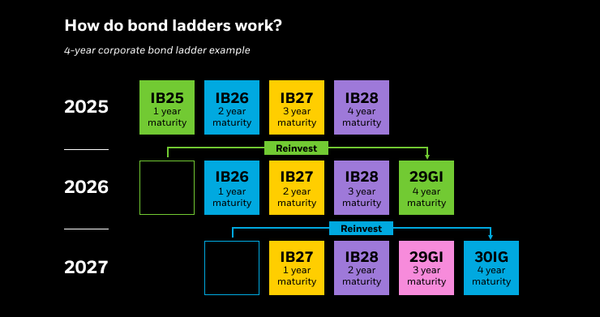
Investors like the concept of bond ladders for the predictable cash flow they provide as bonds mature at regular intervals. iBonds ETFs make bond laddering simpler and more time-efficient vs. having to research, purchase and track individual bonds.
What happens at the time of purchase of an iBonds ETF?
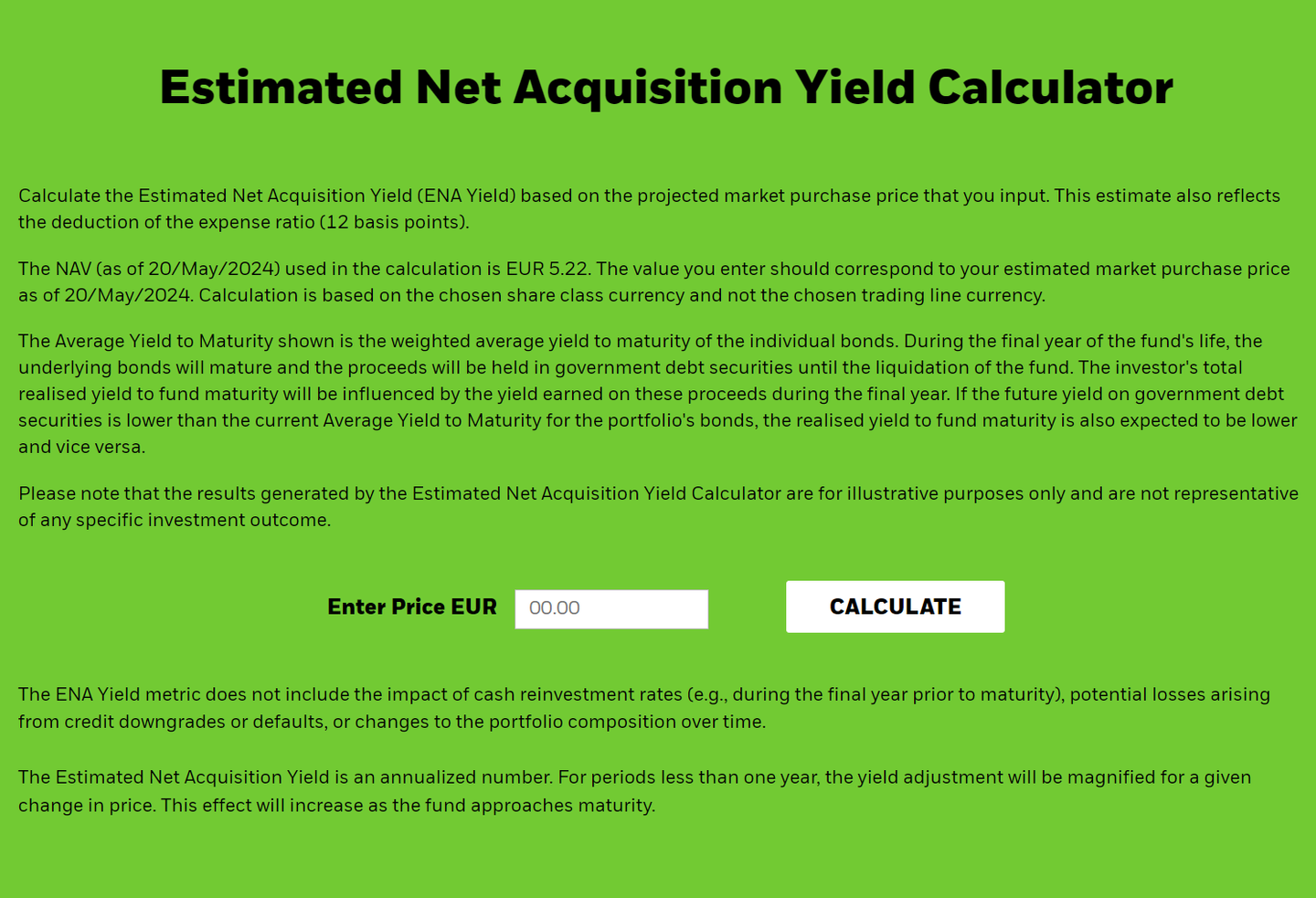
When you are ready to purchase an iBonds ETF, we have tools to help you understand the estimated net acquisition yield of the fund. The estimated net acquisition yield provides a yield estimate, net of fees and market price impact, if the fund is held to maturity.
On each iBonds ETFs product page, the Estimated Net Acquisition Yield Calculator can provide a yield estimate if you enter a projected market price.
For illustrative purposes only.
What happens during the holding period of an iBonds ETF?
iBonds ETFs are designed to provide a yield-to-maturity ("YTM") profile comparable to that of the underlying bond portfolio. The funds seek to preserve an investor’s anticipated yield-to-maturity through a combination of regular coupon distributions (regular payment that bond holders provide for lending their money to the bond issuer) and a final payment.
Yield to maturity (YTM) is a financial term used to describe the total return anticipated on a bond if it's held until its maturity date.
What happens when the iBonds ETF matures?
iBonds ETFs terminate in December of the year in the fund’s name. In the final months when the bonds in the portfolio mature (maturity transition period), the fund's holdings transition to cash securities and cash equivalents (such as treasury bills and commercial papers). After all the bonds in the portfolio mature, the ETF is closed and shareholders receive a final payment..